Deep kitchen cabinets look generous until you live with them. The front fills with everyday bowls and pans, the back becomes invisible, and eventually you buy a second jar or container because the first one disappeared behind something else.
The problem is not depth itself. The problem is access without unloading. A deep cabinet only works when you can reach the back without removing half the shelf first. For a related step-by-step approach, see A Toy Rotation System for Small Homes That Parents Can Actually Maintain.
This guide uses a simple system: front zone → pull-forward zone → back reserve zone. You organize by reach and frequency before buying organizers.
Why deep cabinets become black holes
Most deep cabinets fail for one of four reasons: small items are stored loose, front items block the back, vertical space is wasted, or heavy categories are stacked so deeply that nobody wants to retrieve them.
Start by identifying which problem your cabinet actually has. A shelf riser will not solve a heavy-pot problem. A turntable will not solve a stack of baking sheets. A bin will not help if it becomes too heavy to pull forward.
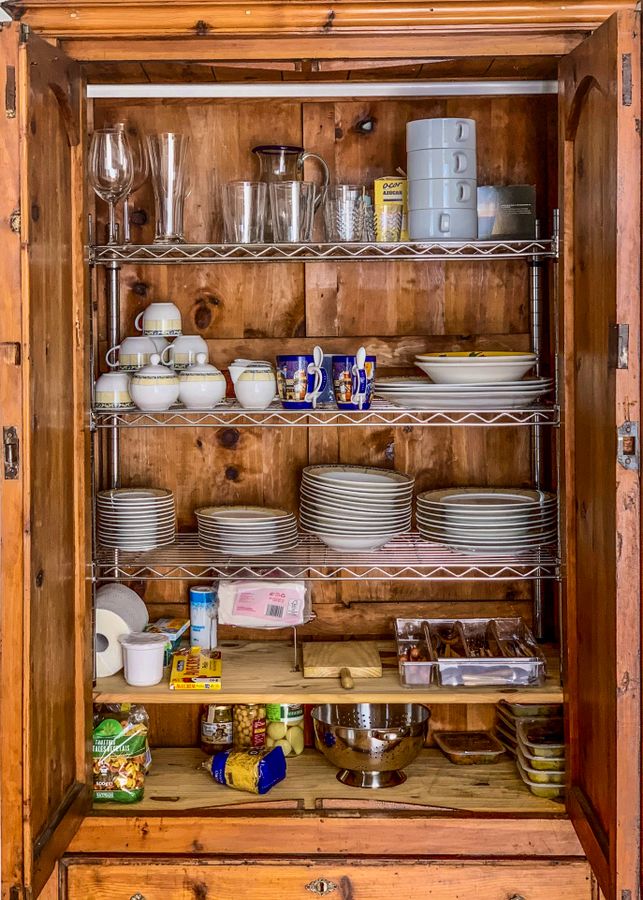
Step 1: empty one cabinet, not the whole kitchen
Work one cabinet at a time. Put its contents on a table or counter, wipe the shelf, then sort the items into four groups:
- daily or several-times-weekly use,
- weekly or occasional use,
- backup or seasonal use,
- does not belong here.
This prevents a cabinet project from turning into a kitchen-wide mess.
Step 2: build three depth zones
Front zone: daily reach
Keep the things you reach for most at the front: everyday pans, lunch containers, mixing bowls, breakfast items, or frequently used pantry staples.
Middle zone: pull-forward groups
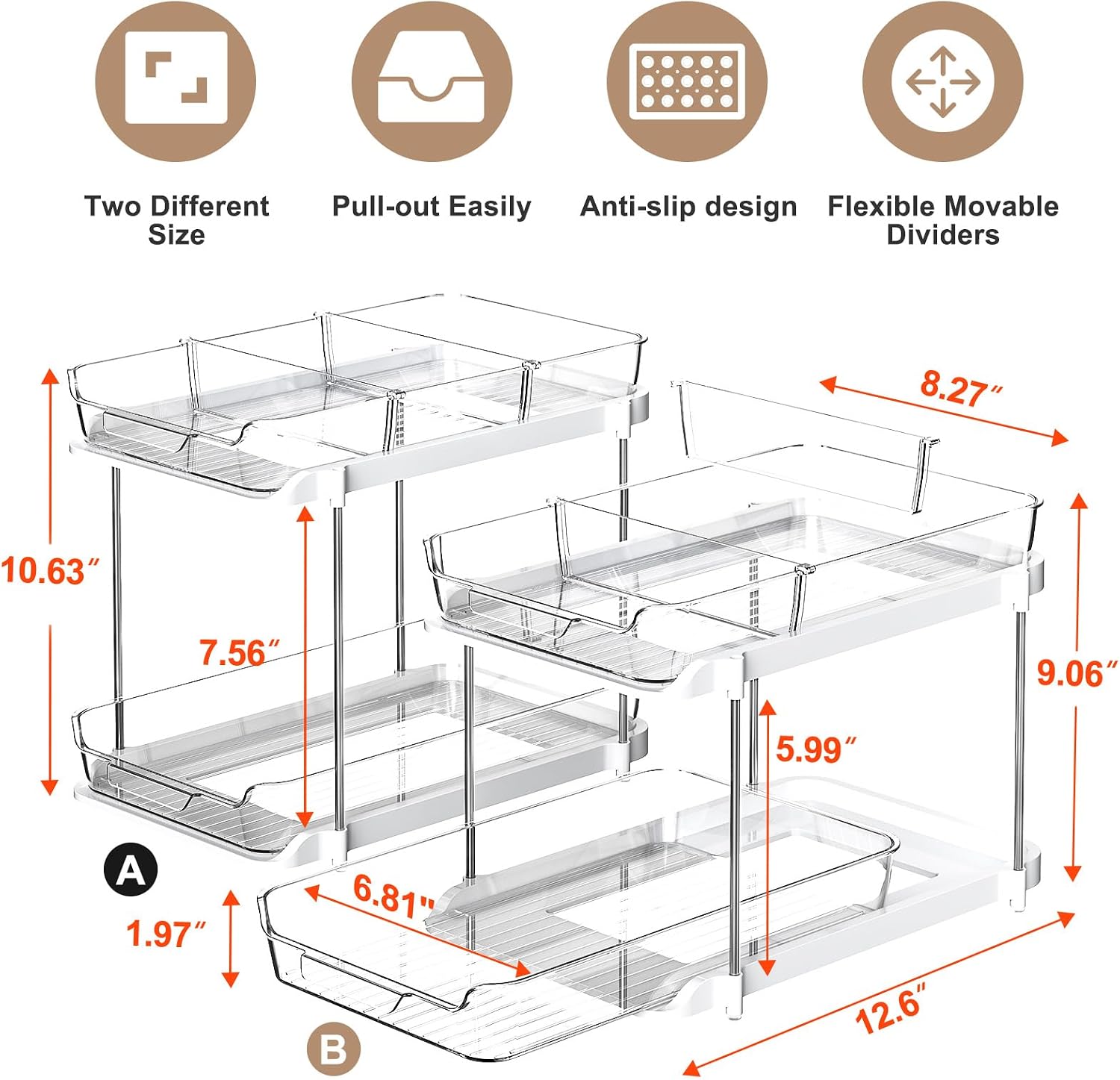
The middle is where contained categories work best. A bin, basket, tray, or removable group lets you pull several related items forward as one unit.
Back zone: intentional reserve
The back should hold items you use less often but still want to keep. It should not become a random overflow zone.
A useful rule is nothing loose in the back. If an item is behind another item, it should belong to a removable group or a clearly defined occasional-use category.
Step 3: match the organizer to the problem
Do not buy an organizer because it looks tidy. Buy it because it changes access.
| Problem | Better tool |
|---|---|
| Small cans disappear behind each other | Tiered riser or shallow pull-forward bin |
| Bottles are hard to reach in a corner | Turntable if clearance allows |
| Heavy cookware nests too deeply | Shallower stack or pull-out shelf |
| Lids collapse into a pile | Vertical divider |
| Baking sheets are stacked flat | Vertical file-style divider |
| Backstock gets forgotten | One labeled reserve bin |
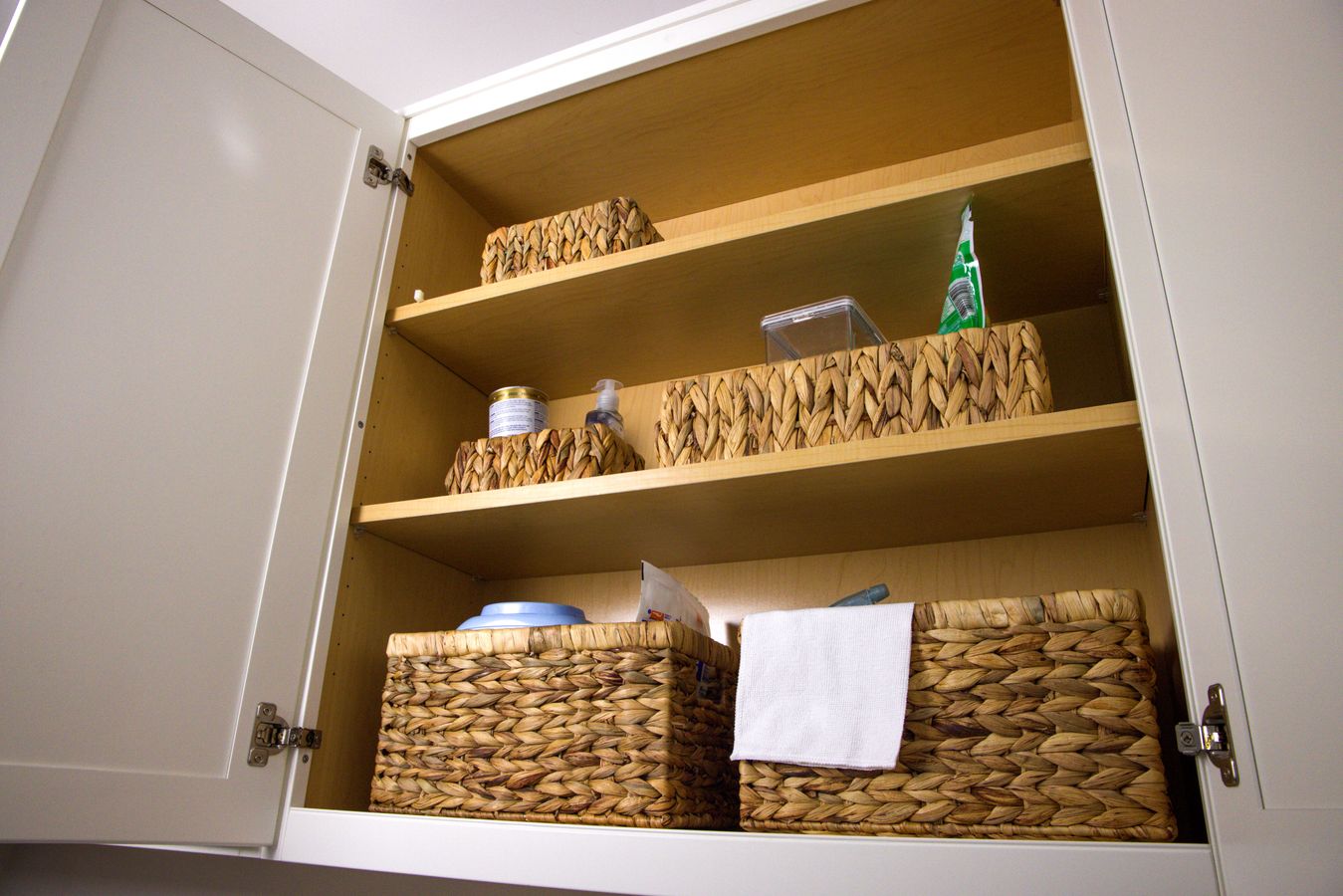
Organize upper and lower deep cabinets differently
Upper cabinets are primarily a visibility problem. Lower cabinets are usually an access and weight problem.
Upper cabinets
Use the eye-level area for daily items. Put lighter, less-used items higher. Avoid deep rows of tiny loose containers.
Lower cabinets
Keep heavy cookware where it can be lifted safely without reaching around other objects. Pull-outs, shallow stacks, and vertical dividers usually work better than deep nested piles.
Use front-back pairs
If two categories share a shelf, pair them by frequency. For example, daily mixing bowls can stay at the front while holiday serving bowls sit behind them in one removable group. You may also find How to Organize a Small Closet When Two People Share It useful for a closely related small-home problem.
This keeps the front useful without wasting the depth behind it.
Stop stacking categories that must be used independently
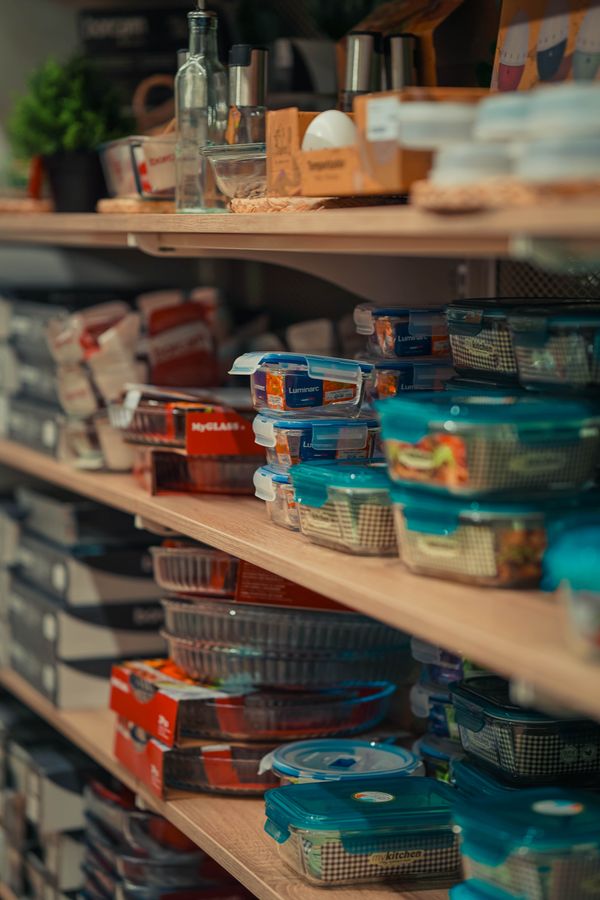
If you have to remove three pans to get the one you want, the stack is too dependent. The same applies to food containers, casserole dishes, and serving bowls.
Reduce stack height or use vertical separation so one item can leave without moving everything above it.
Deep pantry shelves need inventory visibility
Food storage becomes expensive when the back row is forgotten.
- Group by meal or ingredient type.
- Keep older food forward.
- Use one reserve area for duplicates.
- Avoid buying more until the reserve group has space.
A monthly five-minute check is usually more useful than a perfect label system.
Do not use every inch
A deep cabinet packed completely full is difficult to reset. Leave enough room to lift a bin, rotate a turntable, or slide a pan forward. If you are working on the same space, A Room-by-Room Organization Plan for a Small Home covers the next decision in more detail.
Usable capacity is more important than theoretical capacity.
A no-buy cabinet reset
Before purchasing anything, try this:
- Remove obvious duplicates and items that belong elsewhere.
- Move daily items forward.
- Group occasional items behind them.
- Use existing boxes or trays temporarily to test categories.
- Live with the layout for a week.
Only then measure for organizers.
What belongs in the back?
Good back-zone items include seasonal bakeware, occasional serving pieces, refill supplies, or equipment used for a specific recurring task.
Poor back-zone items include medications, food you need to rotate frequently, daily cookware, and anything you repeatedly forget exists.
The 10-minute monthly reset
- Pull forward one reserve bin.
- Check food dates and duplicates.
- Return migrated items to their zones.
- Remove one organizer that is not helping.
- Wipe visible crumbs or spills.
A small reset keeps deep storage from slowly collapsing back into a pile.
If your counters are crowded too
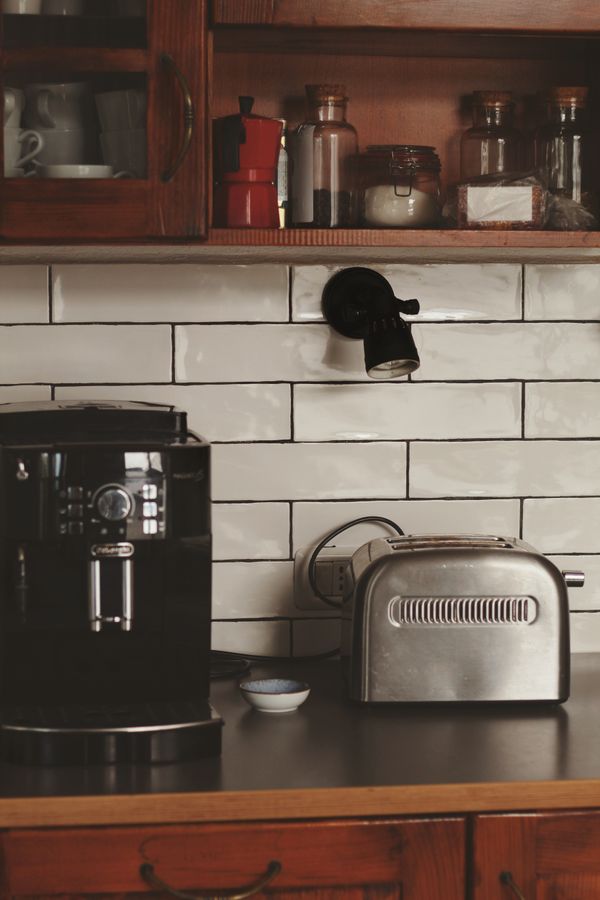
Do not move every countertop appliance into a deep cabinet just to make the counter look empty. An appliance used every morning may deserve accessible counter space more than a rarely used serving platter deserves prime cabinet space.
For the countertop side of the problem, see How to Clean a Small Kitchen Without Moving Everything Off the Counters.
Frequently asked questions
Should I use clear bins?
Clear bins can improve visibility, but the more important feature is whether the bin is easy to pull out when full.
Are turntables good for deep cabinets?
They are useful for bottles, jars, or small groups when there is enough clearance to rotate them. They are less useful for heavy cookware or categories that do not fit the circular footprint.
Should daily items ever go in the back?
Only if the cabinet has a pull-out mechanism that brings the back forward easily. Otherwise daily items should stay in the easiest reach zone.
Make depth work like a drawer, not a tunnel
The goal is not to fill every inch. It is to make every category retrievable without unloading the shelf.
Keep daily items forward, contain the middle, make the back intentional, and use organizers only when they improve access. Once the cabinet works by reach instead of by random stacking, the depth becomes useful storage instead of a place where things disappear. You may also find How to Create a Calm Living Room When Kids Use It All Day useful for a closely related small-home problem.