Small kitchen cabinets often fail for one of three reasons: there is unused height, too much depth, or too many small items behaving like loose inventory. Shelf risers, stackable bins, and pull-out drawers solve different versions of those problems. If you are working on the same space, Open Shelving vs. Closed Cabinets in a Small Kitchen: What Actually Works Better? covers the next decision in more detail.
The mistake is buying one organizer type for the whole kitchen. A shelf riser is excellent in a short-dish cabinet and nearly useless in a deep pantry cabinet where the real problem is the back row. For the broader setup, How to Organize a Small Kitchen Utensil Drawer Without Buying a Giant Organizer is a useful next read.
Diagnose the cabinet before buying anything
Empty one problem cabinet and ask what space is actually being wasted.
- Is there twelve inches of vertical clearance above six-inch objects?
- Do items disappear behind one another?
- Do small packages scatter?
- Is the shelf carrying heavy cookware?
The answer determines the organizer.
Shelf risers: best for unused height
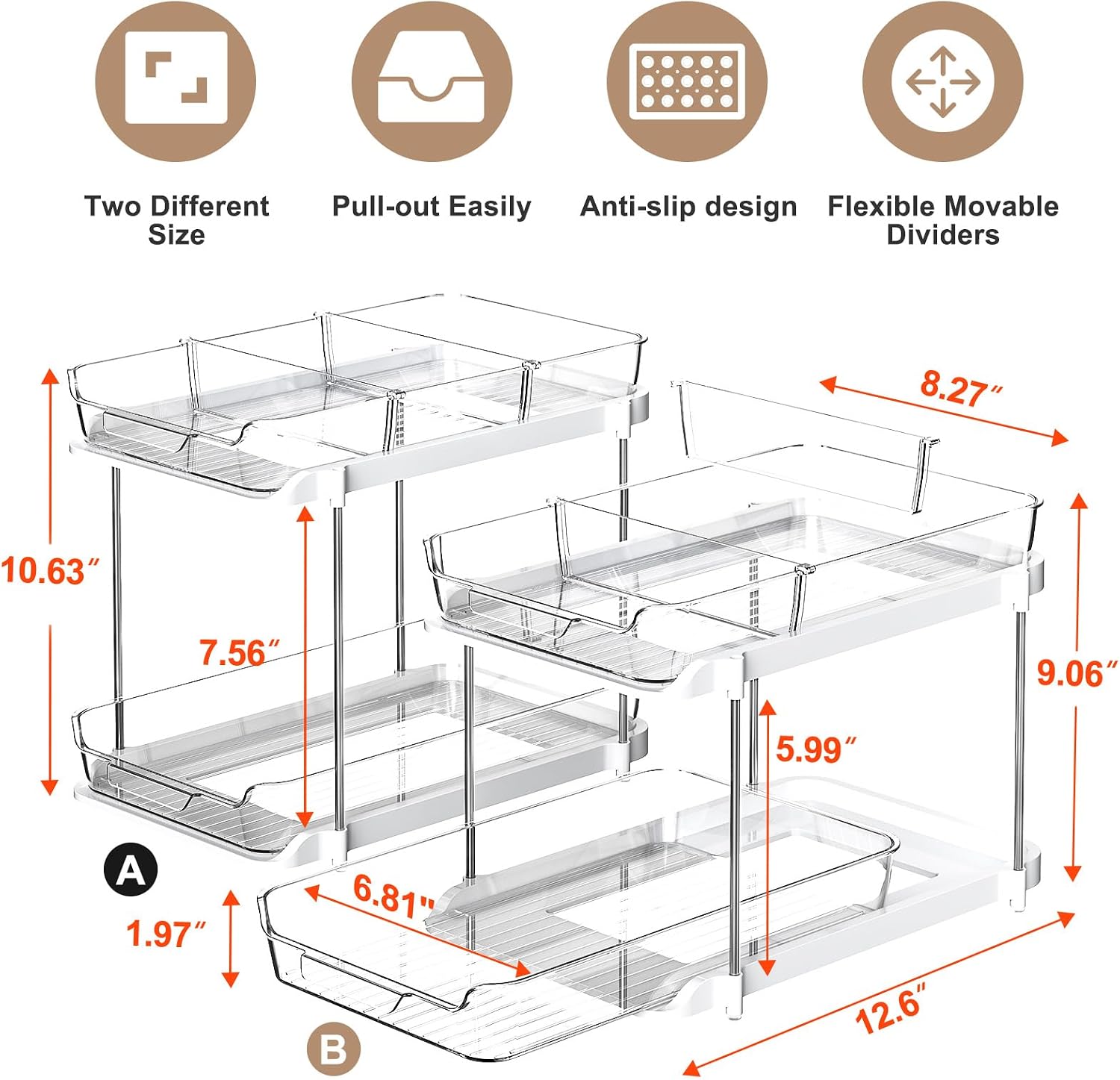
A shelf riser creates a second level without changing the cabinet. It is especially effective for mugs, plates, bowls, spice jars, or short pantry items where the shelf above sits too high. If you are working on the same space, How to Organize Spices in a Small Kitchen Without Buying Matching Jars covers the next decision in more detail.
I like risers because they are simple, reversible, and visually obvious. You can see both levels at once if the proportions are right. For the broader setup, Laundry Folding Review: Bed, Dining Table, Countertop—or No Folding Station at All? is a useful next read.
Where shelf risers fail
They fail when the lower level is so deep that you still cannot see the back. They also fail when tall items need the full shelf height.
Do not add a riser simply to create more surfaces. If the cabinet already holds an appropriate amount, extra layers can increase visual density without improving access.
Stackable bins: best for contained secondary categories
Stackable bins can use vertical height while keeping groups separate. They are useful for small baking supplies, snack backstock, packets, or lesser-used accessories.
But they introduce a retrieval tax. If you need the lower bin, you may need to move the upper one.
That is why I reserve stacked bins for categories used less frequently or for systems where each bin slides independently.

Pull-out drawers: best for deep cabinets
Pull-outs turn depth into access. Instead of reaching behind the front row, the entire category comes toward you.
This is especially useful in lower cabinets, deep pantry cabinets, and under-sink areas where the back is otherwise difficult to see.
The broader guide to organizing deep kitchen cabinets uses this same access-first principle.
Where pull-outs fail
They consume some internal width, may require installation, and must be appropriate for the weight and cabinet construction. A poorly sized pull-out can reduce capacity more than it improves access.
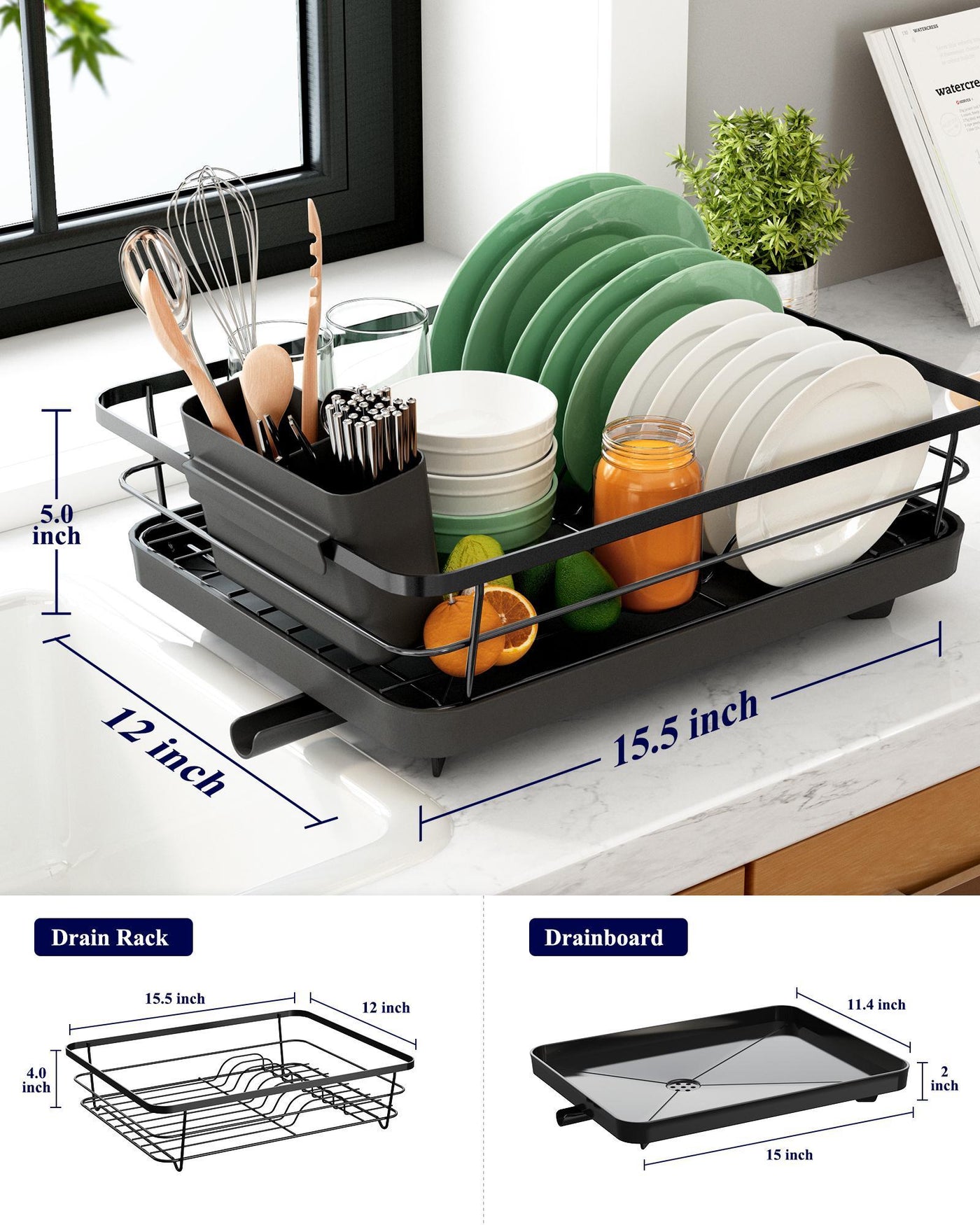
For dishes: shelf risers usually win
Plates and bowls are predictable, shallow categories. A riser can separate two types without forcing a tall stack.
Pull-outs are rarely necessary unless the cabinet is unusually deep or difficult to reach.
For snacks and packets: bins usually win
Loose packets need containment more than additional shelves. One bin per broad category can prevent small items from sliding behind larger packages.
For families, keep the active snack layer separate from backstock. The family snack station article shows why active inventory should remain bounded.
For heavy cookware: access matters more than layers
Pots, pans, and appliances should not be stored in a way that requires lifting several heavy pieces to reach one item.
A sturdy pull-out designed for the load may be useful, but hardware and cabinet construction matter. Sometimes the better solution is simply a less dense shelf arrangement.
The existing pots, pans, and lids guide focuses on eliminating repeated restacking.

For pantry backstock: avoid over-engineering
Backstock usually needs clear category boundaries and visibility. Bins can help, but too many specialized organizers make changing grocery inventory harder.
Use adjustable systems where possible. Food categories expand and contract more than plates or cookware.
The renter question
Freestanding shelf risers and bins are highly reversible. Pull-out hardware may require installation or may not suit the existing cabinet.
Renters should check permissions where needed and favor removable solutions unless the access problem is significant enough to justify a more permanent change.
For broader renter ideas, see making a small rental kitchen work without adding cabinets.

Measure usable dimensions, not cabinet dimensions
Door hinges, frames, plumbing, shelf lips, and interior hardware can reduce usable width and height. Measure the actual opening and the path the organizer must travel.
A pull-out that fits inside but cannot clear the door opening does not fit.
My scoring framework
Shelf riser: high score for vertical efficiency, reversibility, and visibility; lower score for deep-cabinet access.
Stackable bins: high score for containment and flexibility; lower score for frequent lower-bin access.
Pull-out drawer: high score for deep access; lower score for installation complexity and lost internal width.
The “one problem, one tool” rule
Do not install a riser, bins, and a pull-out in the same cabinet unless each solves a distinct problem. Too many organizing layers make a small cabinet smaller.
Explore this topic
Browse more practical guidance in the Home Organization hub. Room focus: Kitchen.

Expert conclusion
Shelf risers solve height. Stackable bins solve containment. Pull-outs solve depth.
Once you identify which dimension is causing friction, the choice becomes much easier. In a small kitchen, the best organizer is rarely the most elaborate one. It is the smallest intervention that turns wasted space into usable access.