Disclosure: As an Amazon Associate, Small Home Rhythm may earn from qualifying purchases. Product availability and listing details can change.
A vanity cabinet looks generous until the basin drops into it, supply lines cross the back, the drain claims the center, valves need access, and hinges steal front corners. For the broader setup, How to Organize Under a Small Bathroom Sink Without Losing Everything in the Back is a useful next read.
The best organizer fits the remaining geometry after plumbing. It should improve access without hiding a leak or making a shutoff unreachable. For the broader setup, Best compact air purifier for small bedroom is a useful next read.
Make a cabinet map
Measure interior width, depth, height, basin drop, drain, supply lines, valves, hinges, center stile, and tall bottles. Mark fixed and movable zones.
For drawers, measure complete travel while doors are open. For shelves, calculate the height lost above and below each level.
Quick comparison
| Pick | Format | Best for | Risk |
|---|---|---|---|
| Delamu | Pull-out tiers | Grouped products | Pipe interference |
| Vtopmart | Clear drawers | Small items | Overstacking |
| Simple Houseware | Expandable shelf | Irregular pipes | Open clutter |
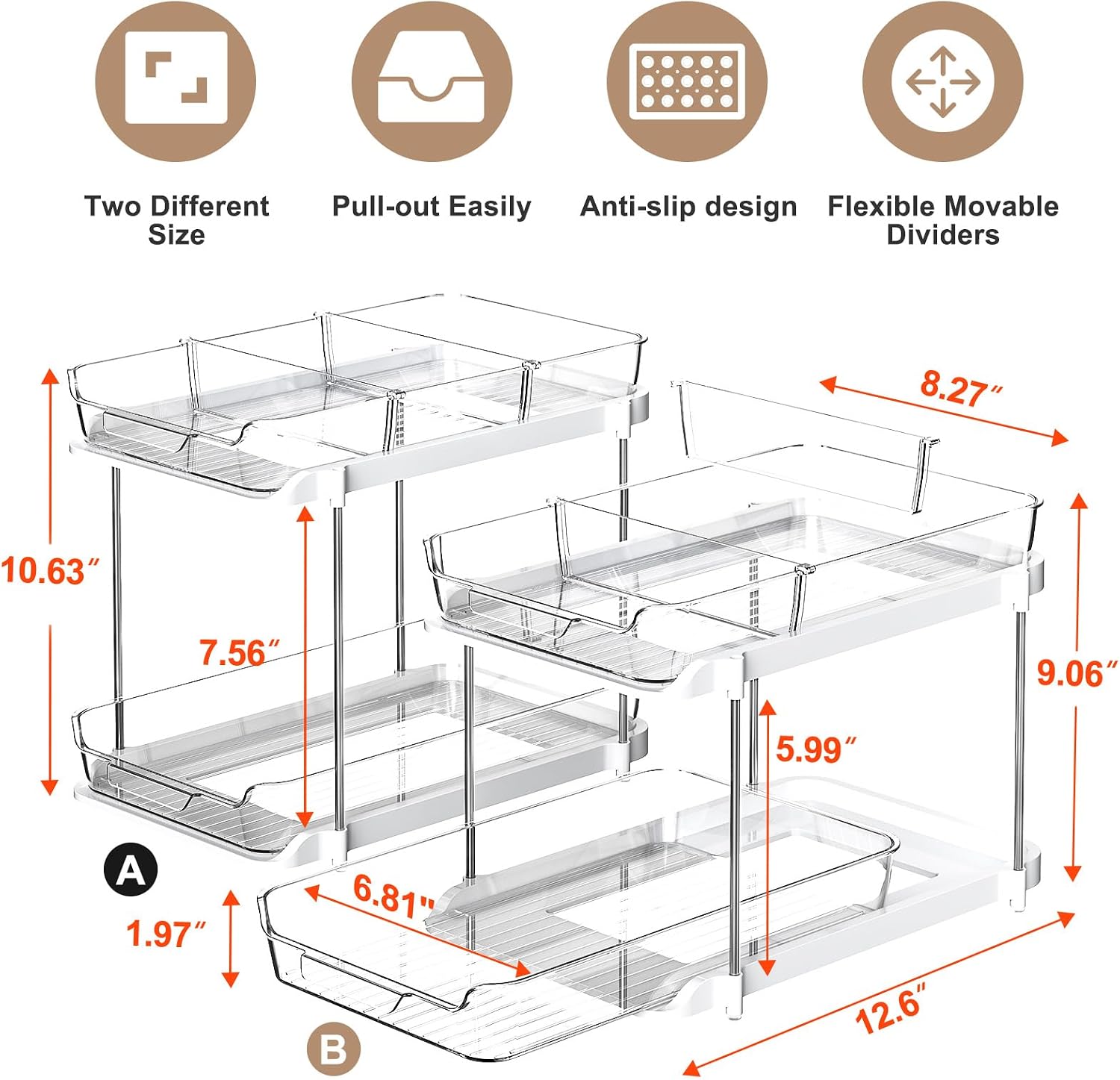
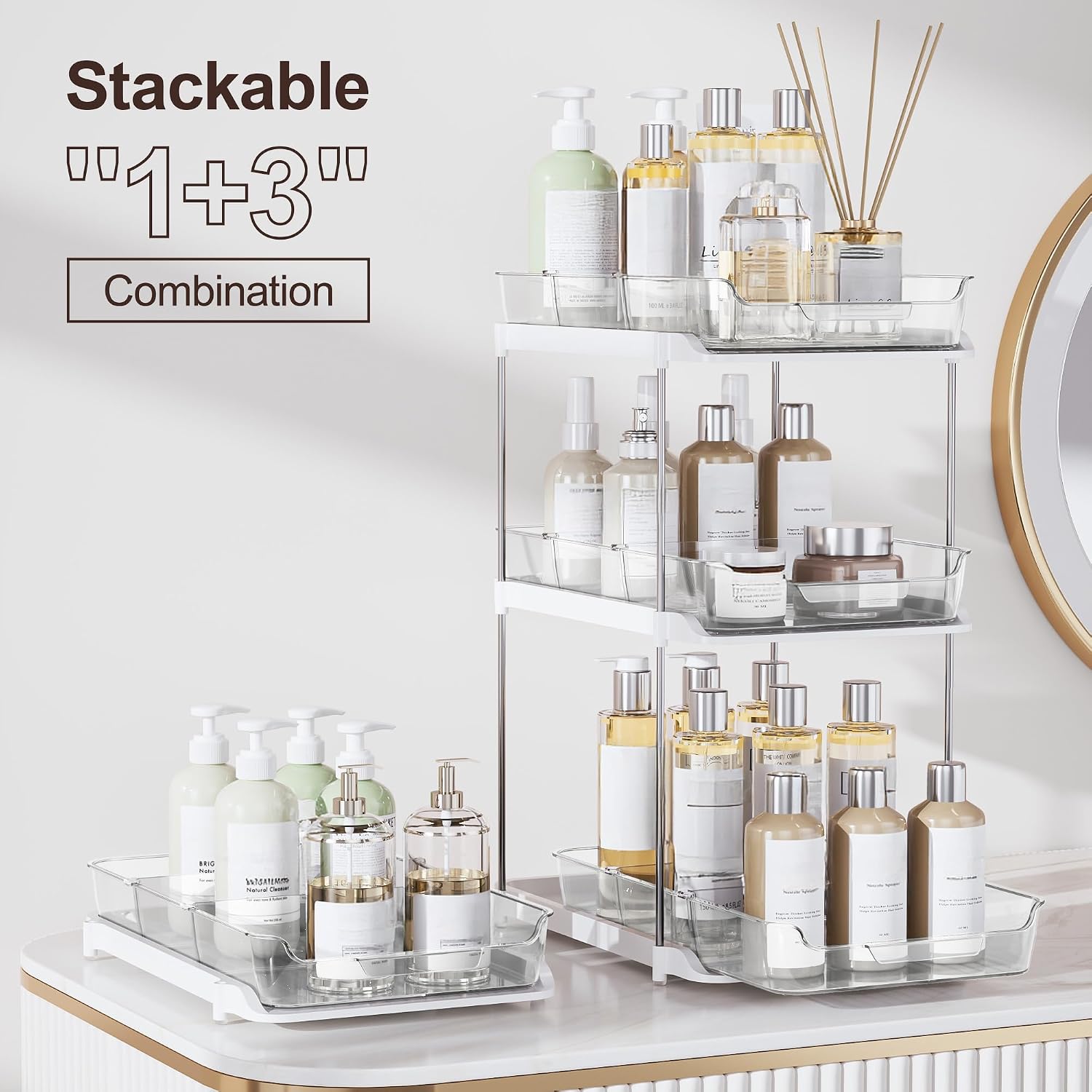
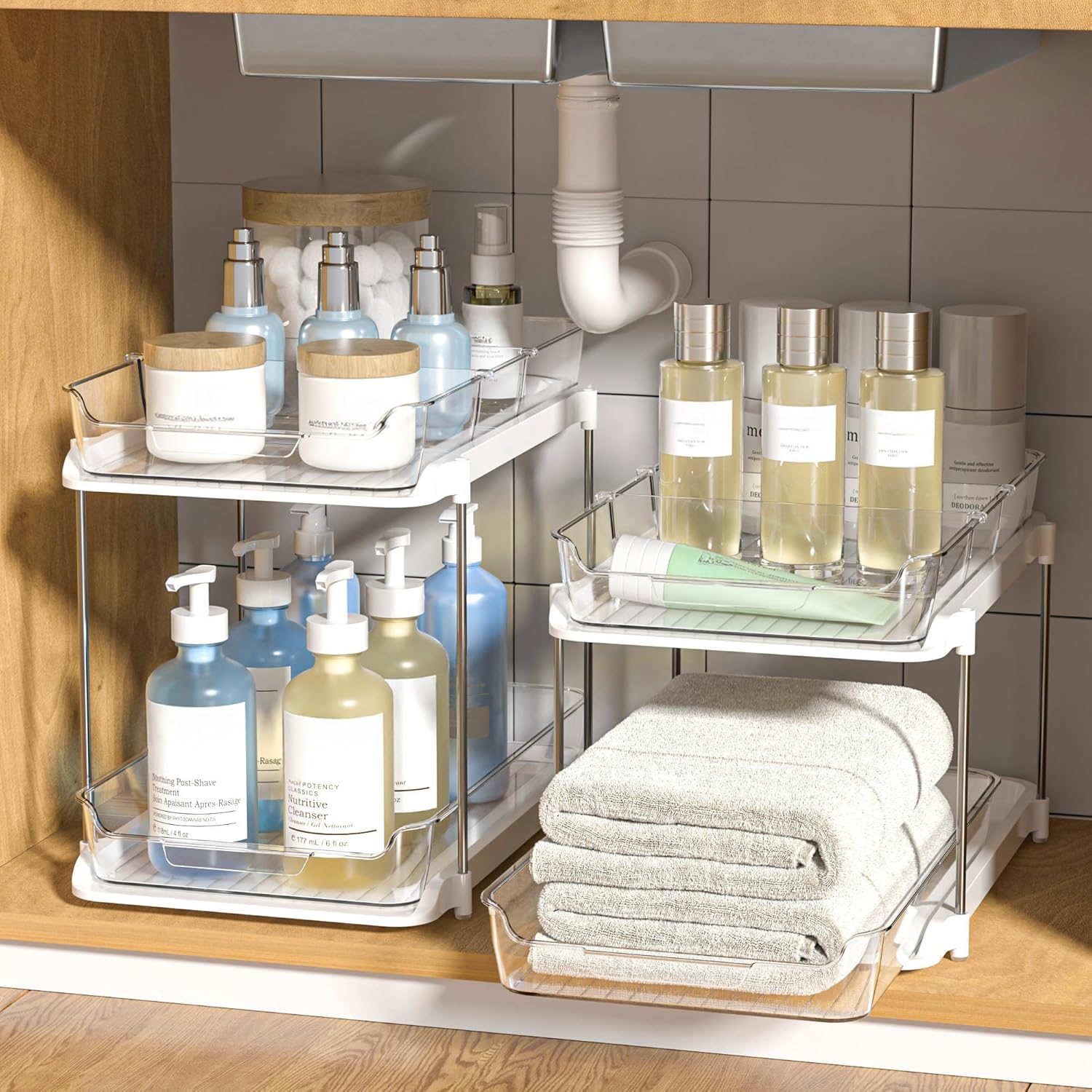
Delamu: best pull-out category system
The two-tier format brings lower contents toward you and dividers support hair care, dental backstock, or family toiletries.
The path must remain clear of the drain, valves, hinges, and doors. Check the current Amazon listing.
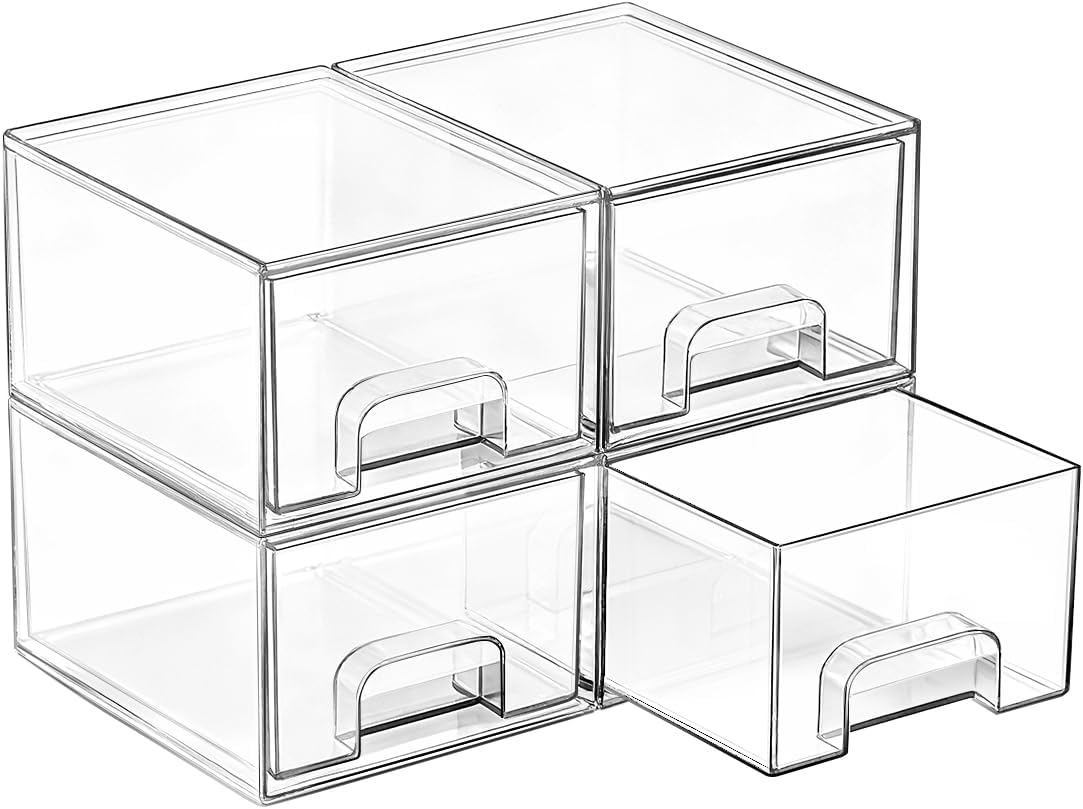
Vtopmart: best for small-item visibility
Clear drawers suit many little items rather than tall bottles. Visibility can reduce duplicate purchases and clarify assigned family categories.
Transparency also exposes mixed categories, so give each drawer one job. Check the current Amazon listing.
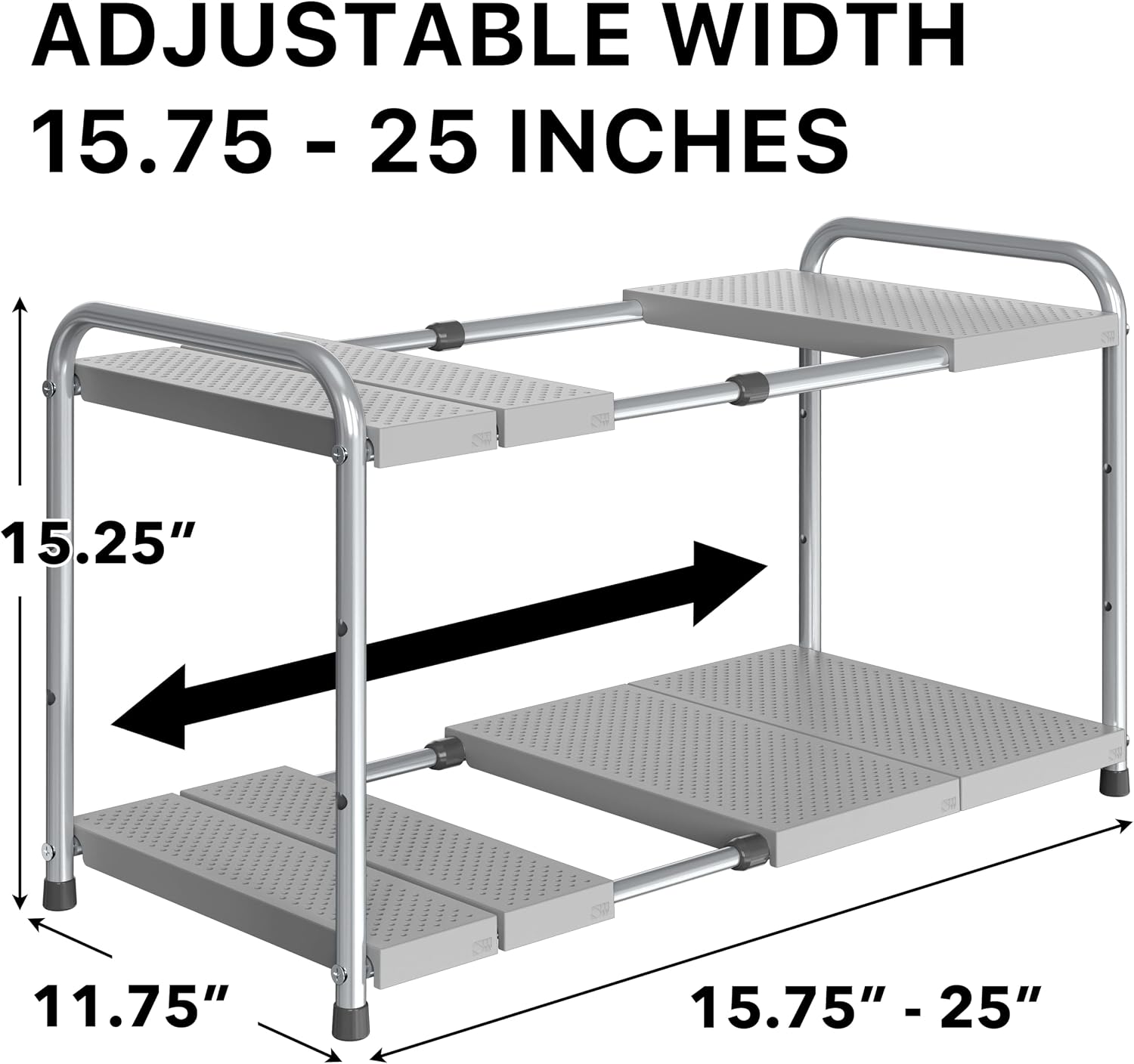
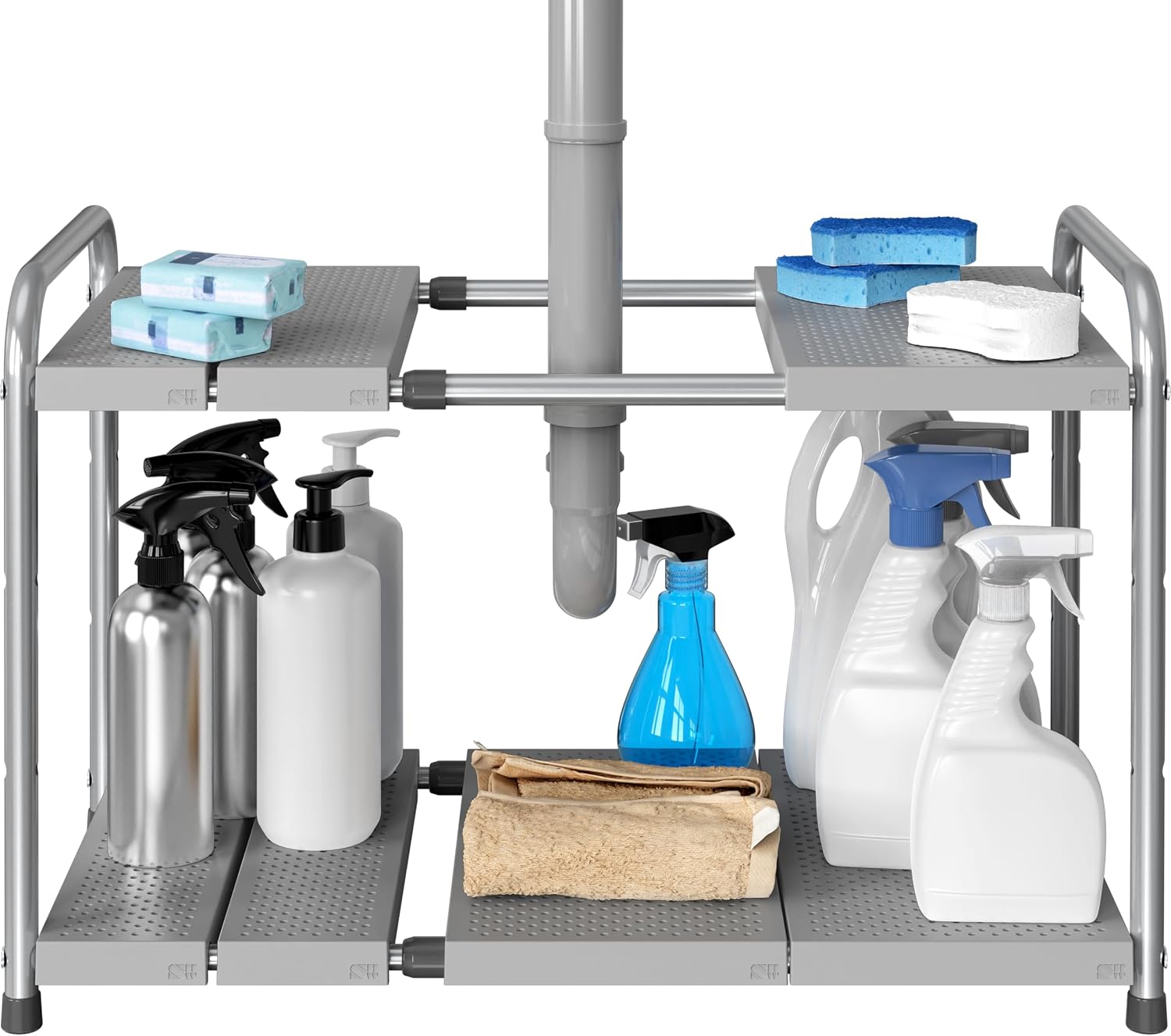
Simple Houseware: best around pipes
An expandable shelf can bridge side areas while removable panels work around a pipe zone. It uses height without forcing a drawer into the center.
Small loose items still need containment. Check the current Amazon listing.
Decide what belongs there
Daily toiletries, sealed backstock, and suitable grooming items may fit. Medicines, heat-sensitive products, and items requiring child-controlled storage may belong elsewhere. You may also find Best storage solutions for small homes useful for a closely related small-home problem.
Do not let organizer capacity override product safety instructions.
Preserve leak and service access
Leave the drain, connections, valves, and cabinet floor inspectable. Choose units that lift or slide out without unloading the entire room. If you are working on the same space, How to Organize a Family Medicine Cabinet in a Small Home Without Mixing Everything Together covers the next decision in more detail.
Inspect after plumbing work and during a weekly reset. Never use storage to conceal staining or swelling.

Plan for cleaning and moving
Bathrooms collect hair, dust, and product residue. Smooth removable units are easier to clean than frames wedged around pipes.
Renters should ask whether the system adapts to another vanity. First read the non-product under-sink method.
Use a paper-footprint test
Mark each organizer footprint with paper or painter’s tape, open both doors, simulate drawer travel, and reach every valve. Place actual bottles inside the outline. If one item forces the whole arrangement out, change formats before ordering.
Match categories to vertical height
Before selecting tiers, arrange the actual products by height: short jars, medium bottles, tall sprays, and tools. Measure the tallest item in each group with the cap or pump fully installed. A shelf can technically fit the cabinet yet make half the products unusable.
Place the tallest frequently used category in the easiest open zone and use upper tiers for shorter, lighter items. Heavy refill bottles belong low.
Design for removal, not permanent installation
Even a perfect organizer must move for leak inspection, cleaning, or plumbing service. Test whether a full unit can lift out through the door opening without hitting hinges or the center stile. If it cannot, choose smaller modules.
Keep a small absorbent liner only if it does not hide moisture and is easy to remove. It should reveal a leak, not silently hold water against the cabinet.
When simple bins win
Two handled bins can outperform a complex tiered system when the plumbing is irregular, products are tall, or the household moves often. One bin can hold daily care and the other backstock, leaving the center open for pipes.
The product with the most engineering is not automatically the most practical. Easy inspection and one-motion access are legitimate buying criteria.
Continue through the right silos
Browse Buying Guides and the verified Bathroom hub.
My conclusion
Choose Delamu for pull-out categories, Vtopmart for small visible items, and Simple Houseware for irregular plumbing. Preserve inspection, service, cleaning, and real bottle height.
Frequently asked questions
Are pull-outs always better?
Only when pipes, valves, hinges, and doors allow full travel.
Should the cabinet be full?
No. Preserve inspection and service space.
Are clear drawers better?
They improve visibility; opaque bins reduce visual noise.
Sources
- Delamu — https://www.amazon.com/dp/B0BNQ56MH5
- Vtopmart — https://www.amazon.com/dp/B09ZKYQMVD
- Simple Houseware — https://www.amazon.com/dp/B01LWX3P9O