One small bathroom shared by a family has a different problem from a small bathroom used by one person. The room is not just short on space; it has to absorb several routines at the same times of day. For a related step-by-step approach, see What to Keep in a Small Bathroom—and What to Store Somewhere Else.
The most useful system is not “more shelves.” It is clear ownership plus shared limits.
Divide the bathroom into personal, shared, and backup zones
Every item should belong to one of three groups.
- Personal: toothbrush, skincare, hair products, personal tools.
- Shared: hand soap, toilet paper, basic first-aid or grooming supplies used by everyone.
- Backup: unopened replacements and bulk supplies.
Daily bathroom storage should mostly serve personal and shared items. Backups can live elsewhere if the room is too small.
Give each person one contained personal zone
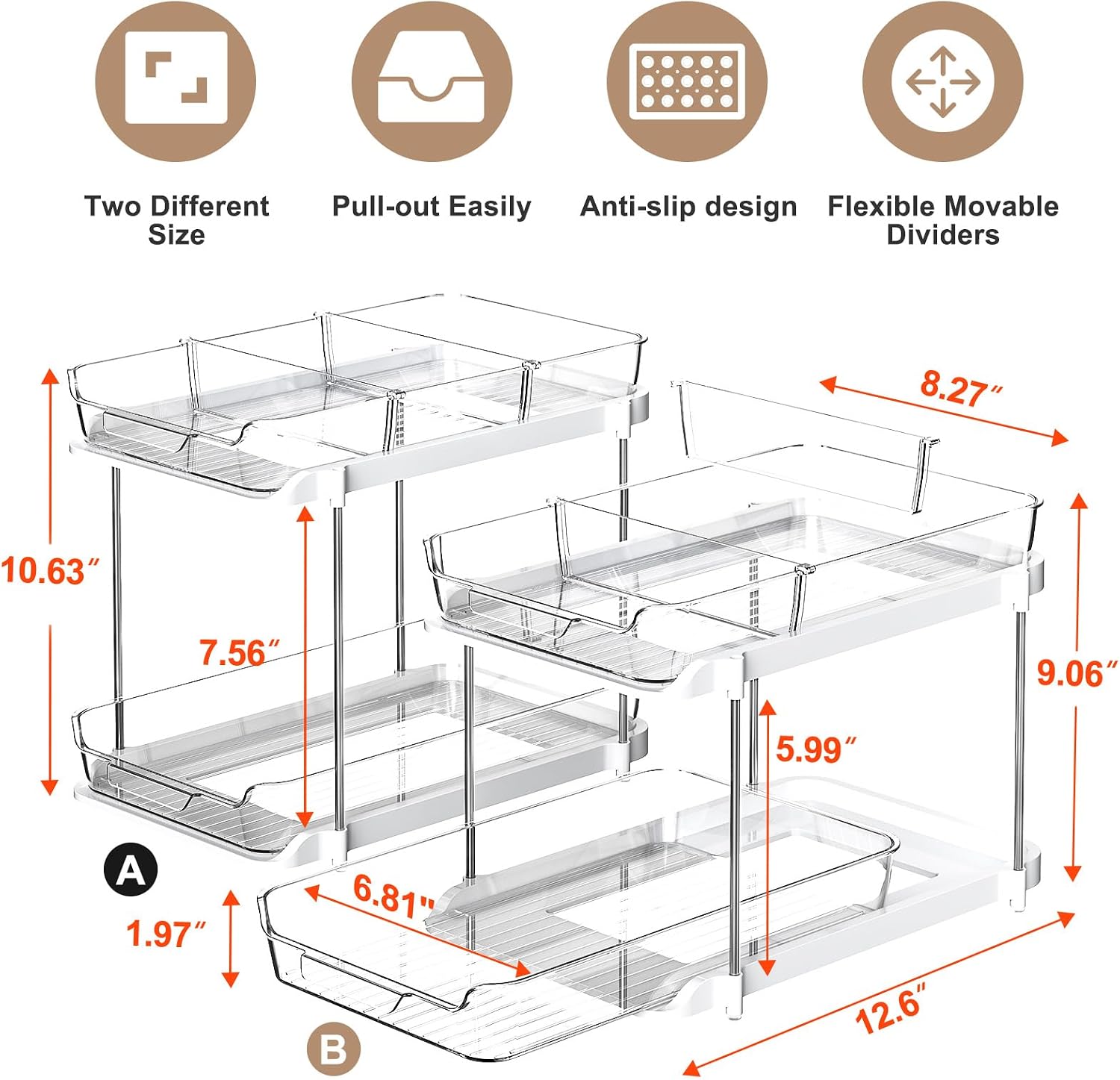
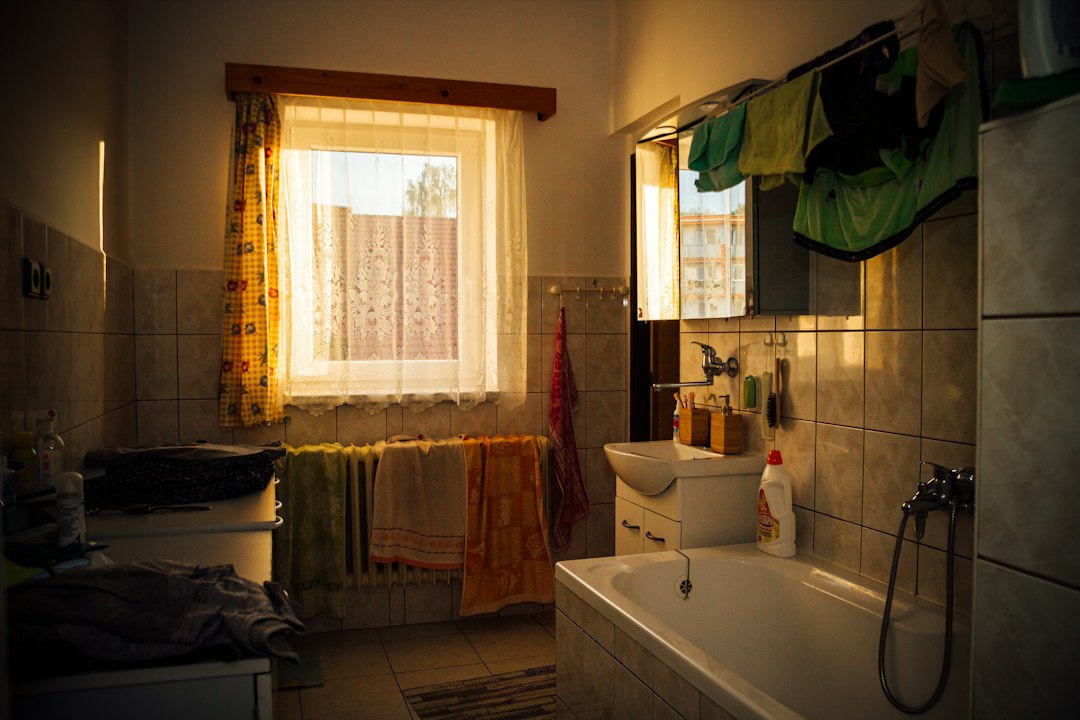
A drawer section, small bin, caddy, shelf, or basket can work. The goal is not equal volume at all costs; it is that everyone knows where their things return.
If one person’s zone overflows, edit that zone instead of borrowing space from everyone else.
Keep the sink for current use, not permanent inventory
Try to leave the sink edge mostly clear. A shared bathroom becomes easier to wipe and faster to use when five routines are not permanently displayed on the counter.
If certain products must stay out, use one tray as a hard boundary.
Separate morning traffic from storage
Think about the busiest 20 minutes of the day. What do family members actually reach for? Those items deserve the easiest access.
Less frequent products should not block toothbrushes, deodorant, combs, or other everyday essentials.
Use portable caddies when counter space is tiny
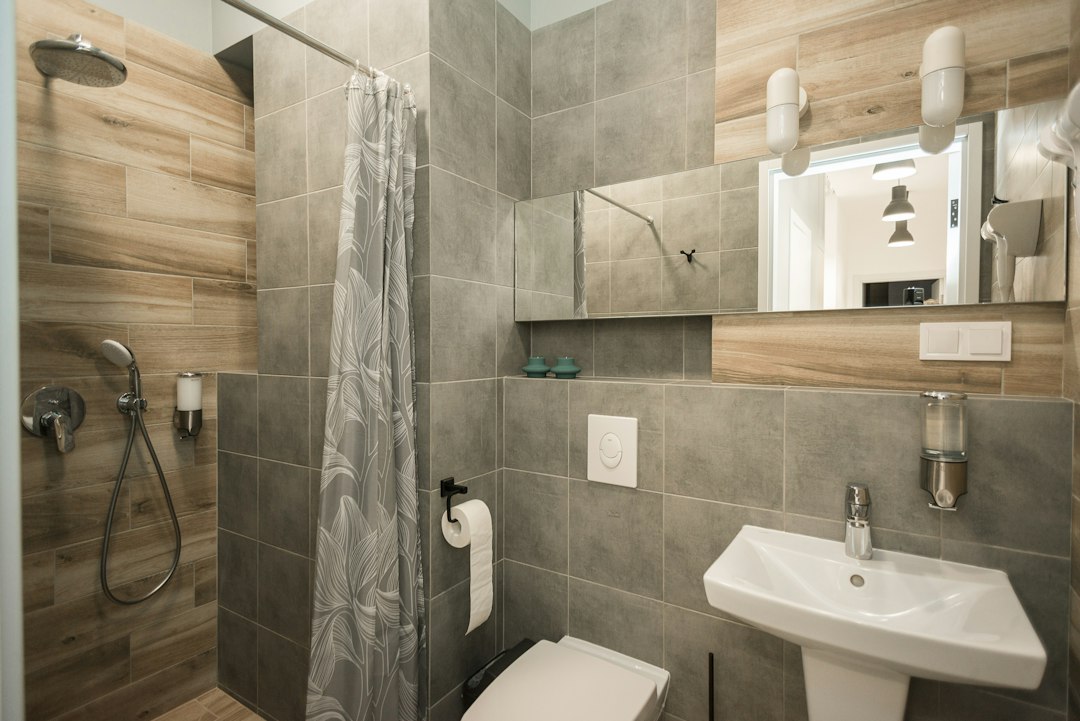
A caddy can move personal products into the bathroom and back to a bedroom or closet. This works especially well for older children or adults with larger personal-care routines. For a related step-by-step approach, see How to Store Towels in a Small Bathroom With No Linen Closet.
The caddy must have a real parking place outside the bathroom, or it simply becomes floor clutter.
Assign towel spots by person
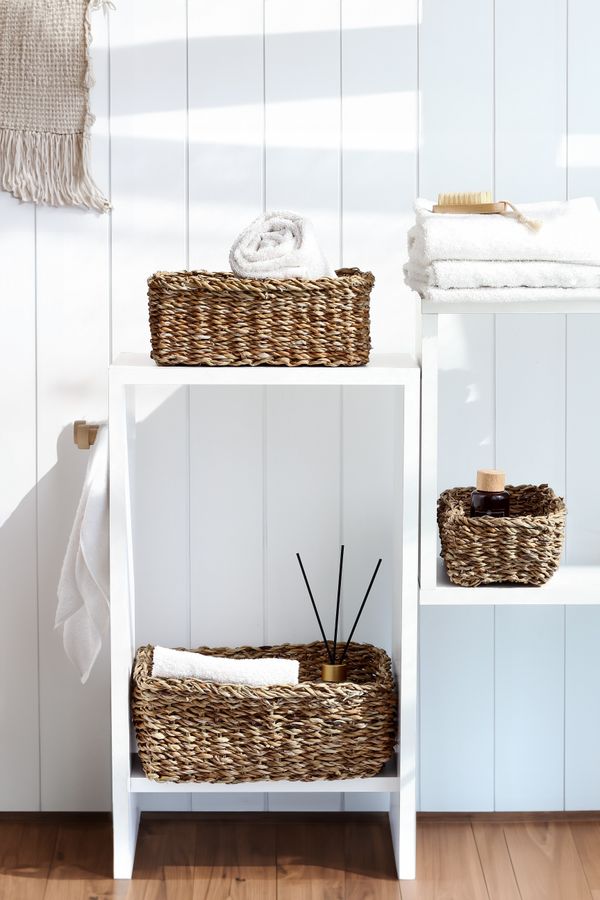
Use individual hooks or clearly separated towel bars where possible. Towels need enough space to dry appropriately rather than staying bunched together.
Keep backups out of the prime zone
Toilet paper for the next few uses may belong in the room. A large multipack of shampoo or household bulk purchase often does not.
One small backup zone prevents daily storage from turning into inventory storage.
Protect under-sink access
Use the under-sink cabinet for categories that genuinely belong there and fit around plumbing. Avoid forcing every bathroom product into one dark cabinet.
For the cabinet itself, use How to Organize Under a Small Bathroom Sink Without Wasting Space.
Give hair tools a cool-down plan
Hot tools should be handled and stored according to their manufacturer instructions. The practical storage question is what happens after use so cords and tools do not permanently occupy the counter.
Create one “leave the bathroom” basket
Clothes, toys, empty packaging, and personal items that belong elsewhere can collect in one small return basket. Empty it during the evening reset.
The 5-minute family bathroom reset
- everyone returns personal products,
- hang towels,
- remove clothes and trash,
- clear the sink,
- restock one or two shared essentials,
- wipe obvious standing water or mess as appropriate.
Make the system easy for children
Daily child-owned items should be reachable without unsafe climbing. Use broad categories and simple containers. Avoid systems that only work when an adult refolds, relabels, or rearranges everything. For a related step-by-step approach, see How to Store Extra Bedding in a Small Home With No Linen Closet.
What to do when bathroom storage is genuinely too small
Move low-frequency categories out. Spare towels can live in a bedroom closet. Bulk toiletries can live in household storage. Makeup or hair supplies can live in a personal caddy. For a related step-by-step approach, see How to Make a Small Bedroom Feel Less Cluttered Without Buying More Storage.
The bathroom does not have to contain every item used in a bathroom.
Frequently asked questions
Should every family member get the same amount of bathroom storage?
Not necessarily. Give everyone a clear boundary, then allocate extra space based on genuine daily needs.
Where should kids’ bath toys go?
Use a limited draining/drying container and keep only the active set in the bathroom.
How do I stop the counter getting crowded again?
Reduce what is allowed to live there permanently and give personal products an easier return location.
A shared bathroom works better when ownership is obvious
When every person has a defined zone, shared supplies have limits, and backups move out of prime space, a tiny bathroom can support several routines without looking like everyone’s products arrived at once.