
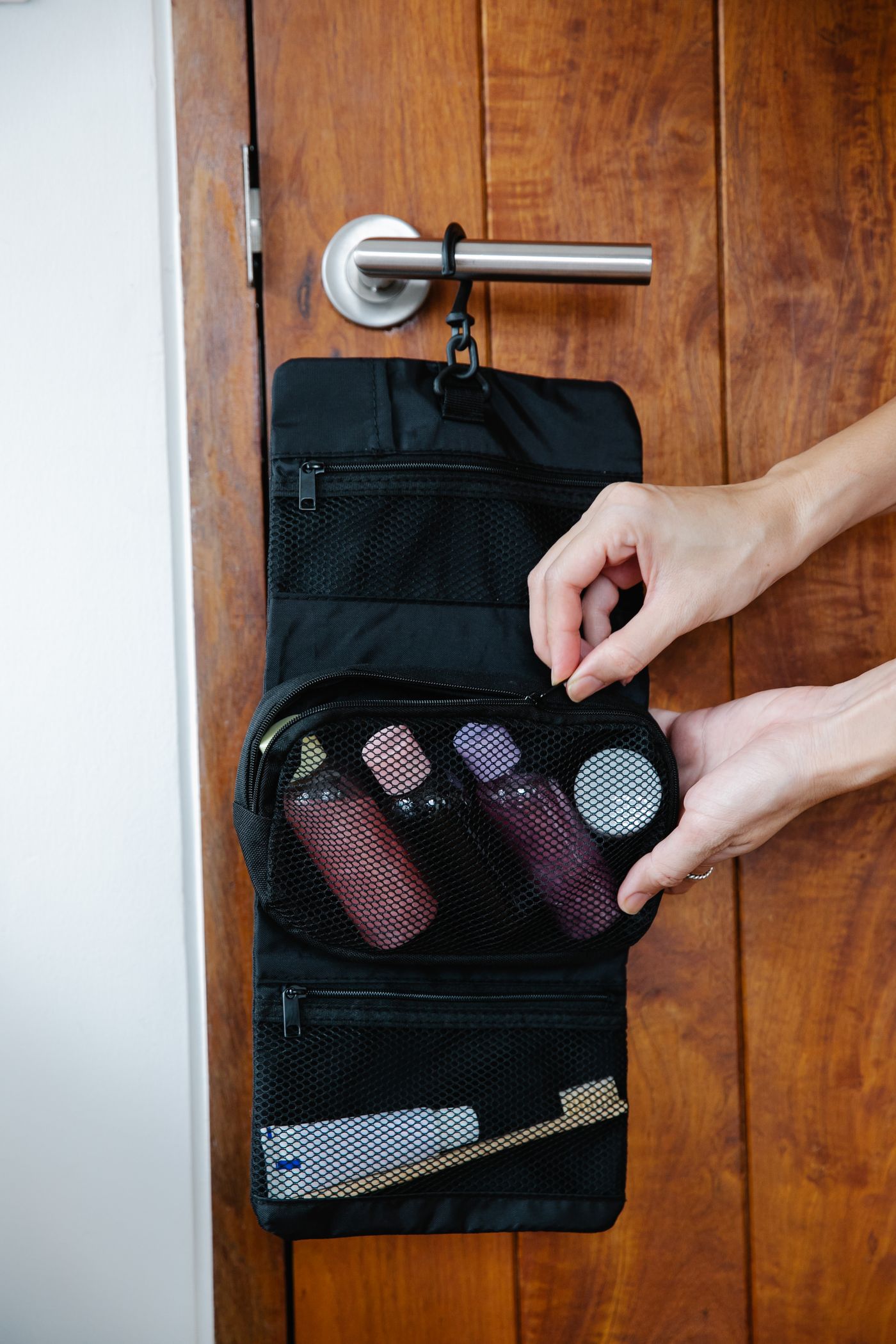
A travel-toiletry kit should let you identify what you are packing without opening every cap or searching old order emails. In a small bathroom, that is often a more useful goal than collecting a perfectly matched set of miniature bottles. Start with the products you actually take away, retain the information needed to recognize them, and give the complete kit one modest place to return after each trip.
The practical direction fits the attention to lived-in, adaptable homes in Houzz’s fall 2026 design report. This article applies that idea to an ordinary bathroom task; it does not claim travel toiletries are a measured search trend. The aim is a kit that remains understandable when the person packing is tired, another household member is helping, or the next trip happens months later.
Start with one real overnight routine
Choose a recent trip and recall what came out of the bag. Separate those items from hotel samples, novelty containers, and products carried because there was still space. An overnight visit and a longer stay may need different quantities, but they do not necessarily need completely separate storage systems. A short written list of your own essentials is a better starting point than an empty case with many compartments.
Keep this exercise about toiletries. Medication, medical devices, documents, and travel rules need their own appropriate handling; an attractive bathroom pouch is not a reason to move them into an improvised system. Likewise, an unfamiliar sample should not become a personal essential simply because the package is small. Work from products whose identity and intended use you already understand.
Our small-room test before buying another organizer helps if you are tempted to purchase the case first. Put the intended items together in an existing suitable pouch and see what actually needs a division. You may discover that the problem is one loose cap or a missing name, rather than a shortage of pockets.
Preserve identity before matching the containers
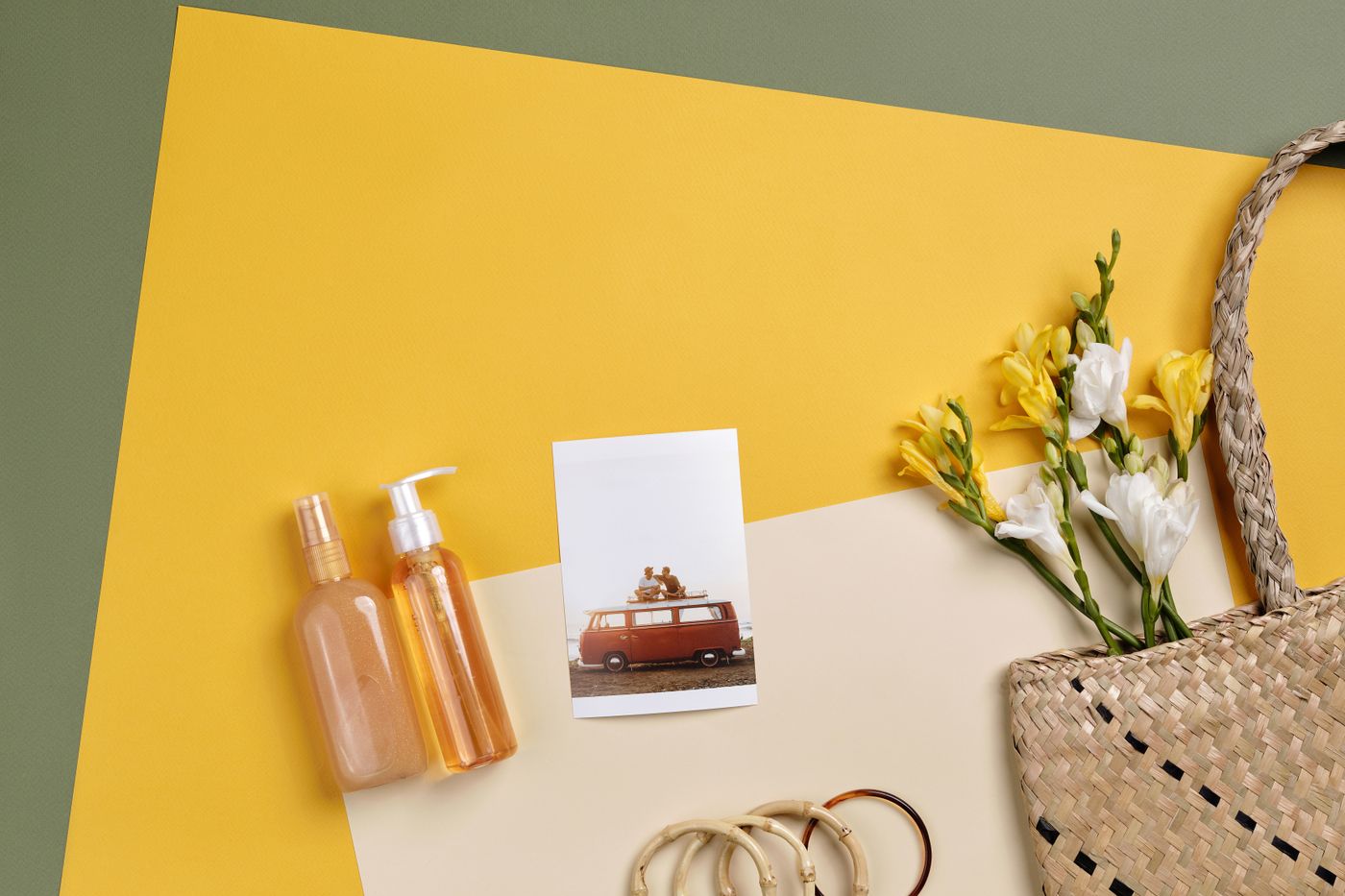
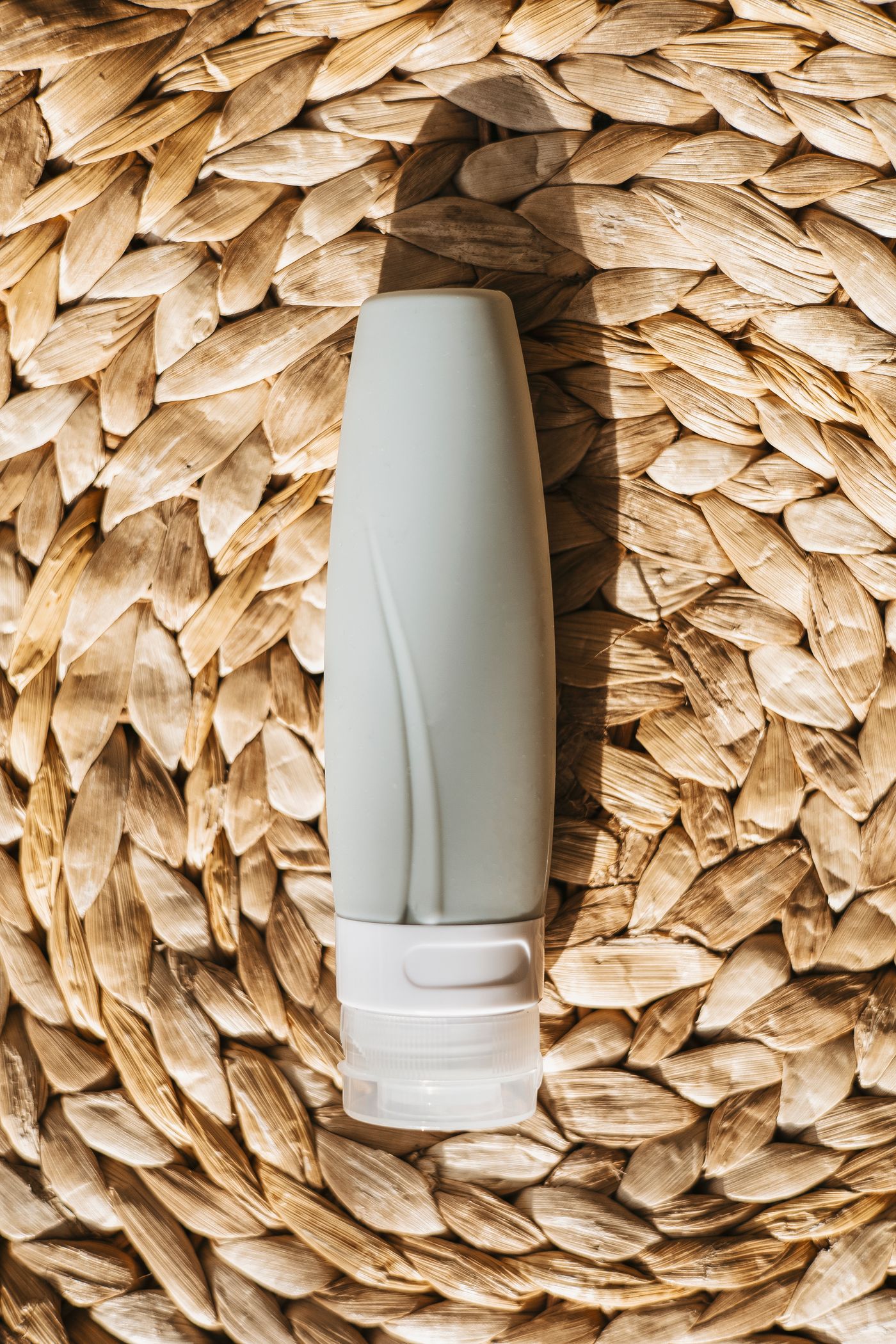
Original packaging often carries useful product information that a plain bottle does not. Retain readable names and relevant directions rather than choosing a coordinated appearance at the expense of knowing the contents. If you use a permitted refillable container, follow both the product and container instructions. Do not assume that every formula belongs in every travel bottle or that appearance alone identifies what is inside.
Avoid combining leftovers to clear the shelf. An almost-empty container and a similar-looking product are still separate products unless their instructions establish otherwise. If the contents are unknown, do not guess from color, scent, or the bottle’s position in the pouch. Set that item aside for an appropriate decision instead of carrying the uncertainty into another trip.
Write only what you need to prevent confusion: the actual product name, the intended user when relevant, and any information the directions require you to retain. A label cannot make an unsuitable transfer suitable. Our guide to choosing useful labels can help with legibility, while the product’s own packaging and instructions remain the authority on its use.
Separate ownership from shared convenience
Two people may use similar bottles while taking different products. Decide which things are personal and which are intentionally shared before putting everything into one large case. A clearly named small pouch can be easier to hand back than five individually marked objects scattered through a family wash bag. The best division is the one the actual users can follow without a lengthy explanation.
Keep a borrowed toiletry item recognizable as borrowed. A guest leaving a tube behind does not automatically add it to the household’s travel stock. Contact its owner when appropriate and keep it separate while that decision is pending. This prevents a spare-products drawer from becoming a mixture of personal supplies, forgotten belongings, and products nobody chose.
If you normally pack for someone else, ask what they want included rather than silently changing their routine. The kit should support a familiar task. A neatly arranged case that contains the wrong product still creates work at the destination, even if every pocket is filled and every bottle matches.
Give ready and unfinished items different positions
An empty travel bottle looks very much like a full one when both are closed inside a case. Make the status visible while you are at home. Keep the ready kit together and put the few unresolved items in a separate, temporary position. A short note such as “replace the broken cap” is more actionable than putting the defective bottle back and hoping to remember it.
Do not treat the temporary position as another permanent collection. If the product is no longer used, remove it from the intended packing list. If a suitable replacement is needed, record the exact item rather than buying a multipack of unrelated minis. Readiness means the chosen contents are usable and identifiable, not that the bag contains the largest possible assortment.
Use a small capacity limit for unused extras. Our capacity-ceiling approach helps assign that limit without spreading samples across several bathroom drawers. When the space is full, make a decision about what is already there before bringing more in. Free samples can consume paid-for storage space even when they cost nothing at the counter.
Check the bag in the position you use it
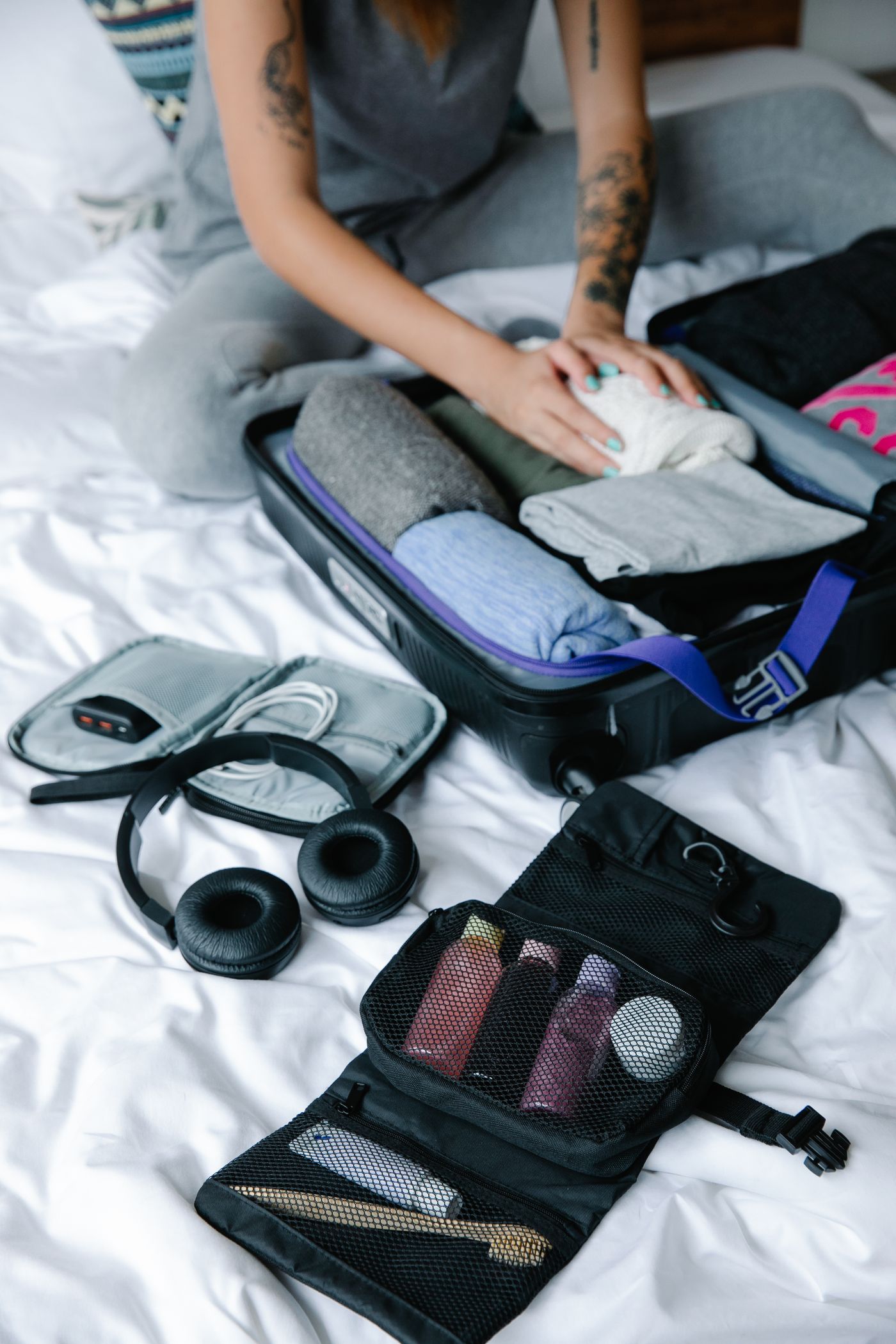
Set the pouch on a suitable dry surface and open it as you would when getting ready. Can you see the contents without balancing bottles along the sink edge? Does a hanging design have an appropriate place to hang, following its instructions, or does the bag work better laid flat? A photographed hanging arrangement does not establish that every bathroom fixture is a suitable support.
Look for damage, loose closures, and residue using the actual products’ care directions. A separate suitable containment layer can make a packing arrangement easier to manage, but it is not a promise that nothing will leak. Do not overfill a container or rely on the case to compensate for a closure that no longer works.
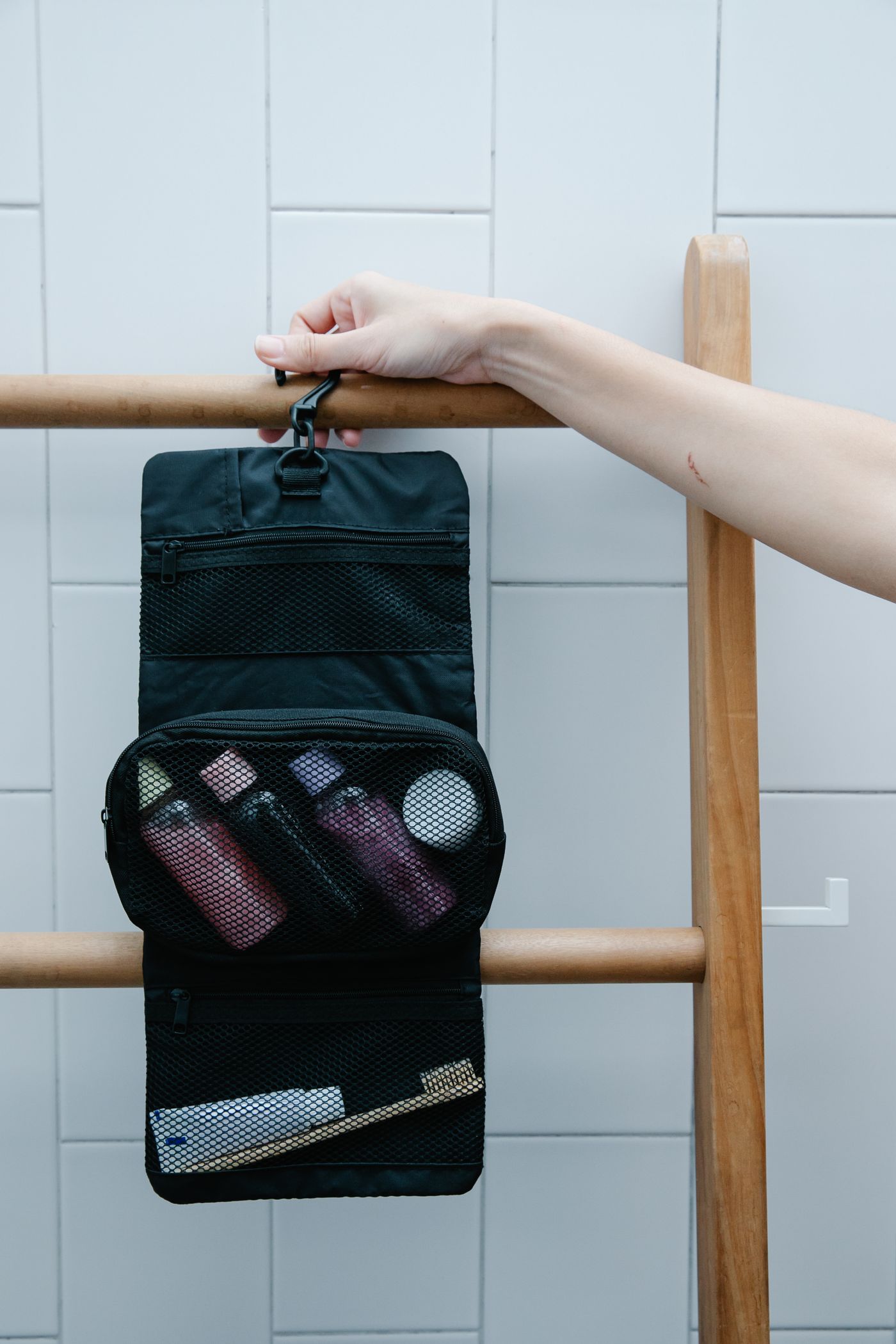
Check access with the case partly empty too. A flexible bag may fold across small items once larger bottles are removed. Keep the pieces you need first easy to retrieve without unloading the whole kit. If organizing inserts make the bag harder to close or clean, remove the insert before deciding that the pouch itself is too small.
Make the return home part of the system
After the trip, unpack the kit before it disappears into a wardrobe. Return everyday products to their normal positions, handle used items according to their directions, and allow permitted cleaning and drying to finish before closing the bag away. The next packing session should not begin with discovering the damp pouch you forgot after the last visit.
Check the written essentials list against what actually returned. Replace an item because it is needed and appropriate, not merely because it once occupied a pocket. Put the kit back in its assigned bathroom or nearby storage space only when you can tell which contents are ready and which decisions remain open.
If the trip exposed a broader storage problem, our comparison of shared bathroom storage options can help decide where the ready kit belongs. Choose a suitable accessible home without requiring other people to unload their everyday products to reach it. A travel kit earns its place when it reliably shortens packing and unpacking, even if the containers remain an unmatched collection.
Keep the next departure simple
Before leaving again, compare the kit with the coming trip rather than rebuilding it from habit. Remove anything that belongs to a previous traveler or a discontinued routine. Check current transport requirements separately when they apply. A clear identity, a usable closure, and a known owner are more valuable than squeezing in another item for an unlikely scenario.
The finished arrangement can be very ordinary: one suitable pouch, a few recognizable products, and a short replacement note outside the ready contents. When that works, there is no additional organizing purchase to make. The success is being able to pack confidently and return the kit to the bathroom without creating a second pile of mystery bottles.
Explore related decisions in our Home Organization hub.
Sources and editorial scope
Editorial research checked October 21, 2026. Published trend reports are context for these editorial applications, not verified live keyword rankings. Practical household guidance; photographs do not document a tested household or authenticate pictured materials.
