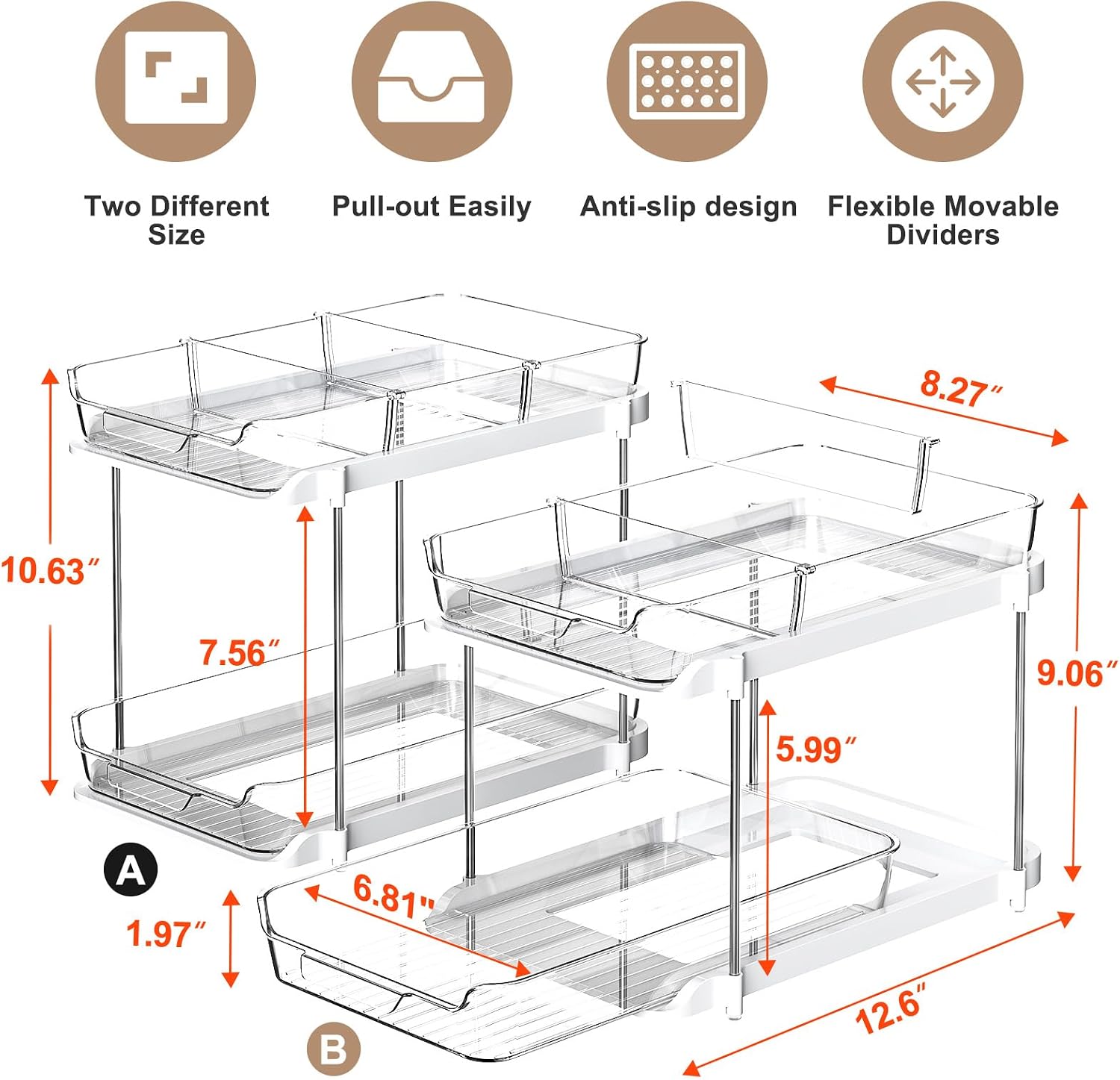
Under-sink bathroom cabinets look larger than they function. Pipes cut through the middle, the back is hard to reach, bottles vary in height, and small items disappear behind cleaning products. If you are working on the same space, How to Store Outgrown Kids’ Clothes and Gear Without Taking Over the House covers the next decision in more detail.
The goal is not to fill every inch. It is to create usable access around the plumbing.
Empty the cabinet and map the obstacles
Before buying organizers, note:
- pipe location,
- door hinges,
- usable width on each side,
- height below the sink bowl,
- depth to the back,
- anything that must remain accessible.
Measure the actual usable zones rather than the cabinet’s outside dimensions.
Sort products by frequency
Create three groups:
- daily/weekly: used often enough to deserve front access,
- backup: unopened replacements,
- rare/specialty: travel, seasonal, or occasional products.
The cabinet front should serve the first group.
Use the sides of the plumbing first
Narrow bins or drawers can fit on each side of the pipe while leaving the center accessible. Avoid one giant bin that has to wrap awkwardly around the plumbing.
Group by routine, not package shape
Examples:
- hair tools and products,
- oral care backups,
- skin/body backups,
- bathroom cleaning supplies,
- first-aid items if this is your chosen household storage and the location is appropriate.
Each container should represent a job, not simply “small bottles.”
Limit backups before adding vertical organizers
If the cabinet contains six unopened versions of the same product, stacking solutions may only hide overstock. Decide how many backups the household actually needs.
Use height only when retrieval stays easy
A small shelf riser or stackable drawer can make use of vertical space, but avoid towers that require removing several containers to reach the bottom.
Access matters more than maximum density.
Keep tall bottles in one stable zone
Place tall products where the sink basin and plumbing allow enough clearance. Do not force bottles into a spot where they tip every time the door opens.
Keep cleaning products contained
If bathroom cleaning products live under the sink, keep them together and follow product-label storage instructions. In homes with children, use storage appropriate to your household and product safety requirements.
Do not overuse cabinet doors
Door-mounted organizers can help lightweight categories if they do not hit interior bins, pipes, or shelving when the door closes. Check clearance before installation.
Create a “front row”
The first six to eight inches should contain the items you retrieve most often. Backstock can live behind or above only if it remains easy to see and reach.
Use one overflow rule
If the assigned container is full, do not add a second hidden layer. Review duplicates, expired or unwanted products, and items that belong in another room. For a related step-by-step approach, see A Room-by-Room Organization Plan for a Small Home.
What should not live under the sink?
Avoid using the cabinet as a default location for every bathroom-related object. Bulky towels, rarely used appliances, large bulk packs, and unrelated household supplies may fit better elsewhere. If you are working on the same space, How to Store Towels in a Small Bathroom With No Linen Closet covers the next decision in more detail.
The monthly 5-minute reset
- pull out the front bins,
- wipe obvious dust or spills as appropriate,
- remove empties,
- combine duplicates only when safe and appropriate for the product,
- move overflow out,
- return each routine bin.
Link the cabinet to the daily bathroom reset
The under-sink area should make the counter easier to clear. If daily-use products never return to the cabinet because access is annoying, move them to a more convenient zone.
See How to Keep a Small Bathroom Clean Between Deep Cleans.
A small under-sink checklist
- ☐ plumbing remains accessible,
- ☐ front zone holds frequent items,
- ☐ backups have a limit,
- ☐ tall bottles stand securely,
- ☐ containers can be removed without unloading the cabinet,
- ☐ door closes without collision,
- ☐ spills are visible enough to notice.
Frequently asked questions
Should I use clear bins?
Clear bins can help visibility, but handles, fit, and access matter more. Opaque bins can also work if categories are obvious.
Are pull-out drawers worth it?
They can be useful for deep cabinets when the dimensions fit around pipes and hinges. Measure first.
How many backups should I store?
Use your household’s purchase rhythm and available space. Prime bathroom storage should not become bulk inventory by default.
Organize around access, not empty inches
The best under-sink cabinet is not packed to capacity. It lets you reach what you use, see what you own, keep plumbing accessible, and reset the bathroom counter without digging through a dark pile of products. If you are working on the same space, What to Keep in a Small Bathroom—and What to Store Somewhere Else covers the next decision in more detail.