A small utensil drawer can hold an astonishing number of objects until the day it stops closing. Then you discover the whisk has rotated sideways, the pizza cutter is wedged beneath the peeler, and three wooden spoons are acting like a structural support beam. If you are working on the same space, How to Organize a Small Freezer for a Busy Family covers the next decision in more detail.
The instinct is often to buy a better organizer. Sometimes that helps. But a drawer insert cannot solve a volume problem. The first job is deciding which tools deserve the most convenient shallow storage in the kitchen. For a related step-by-step approach, see How to Organize Foil, Food Wrap, and Reusable Bags in a Small Kitchen.
Empty the drawer completely
This is one of the few organizing projects where emptying everything makes sense because drawer clutter is defined by shape. You need to see the full collection together: spatulas, peelers, openers, measuring spoons, thermometers, whisks, clips, chopsticks, and gadgets.
Wipe the drawer before returning anything. Crumbs and sticky residue are much easier to remove when the space is empty.
Sort by function, then by frequency
Create broad groups: cooking utensils, prep tools, measuring, opening/cutting, small gadgets, and duplicates. Then ask which items are used weekly.
The daily drawer should favor frequent tools. A specialty zester used twice a year can live in a secondary kitchen-storage zone.
Duplicates are often the real space problem
Three can openers, five vegetable peelers, eight wooden spoons, and four sets of measuring spoons do not become efficient because they are lined up neatly. Keep the versions that work best and the quantity your cooking routine actually uses.
Do not automatically keep every utensil that came in a set. Sets are a retail package, not an organizing rule.
Separate long utensils from small utensils
Long spatulas and spoons create diagonal chaos in shallow drawers. If another narrow drawer, vertical crock, or deep drawer is available near the stove, moving long tools there can transform the main utensil drawer.
This is especially useful when you are trying to keep the kitchen counter clear. Use a crock only for a small set of high-frequency tools, not every utensil you own.
Measure the drawer before buying any insert
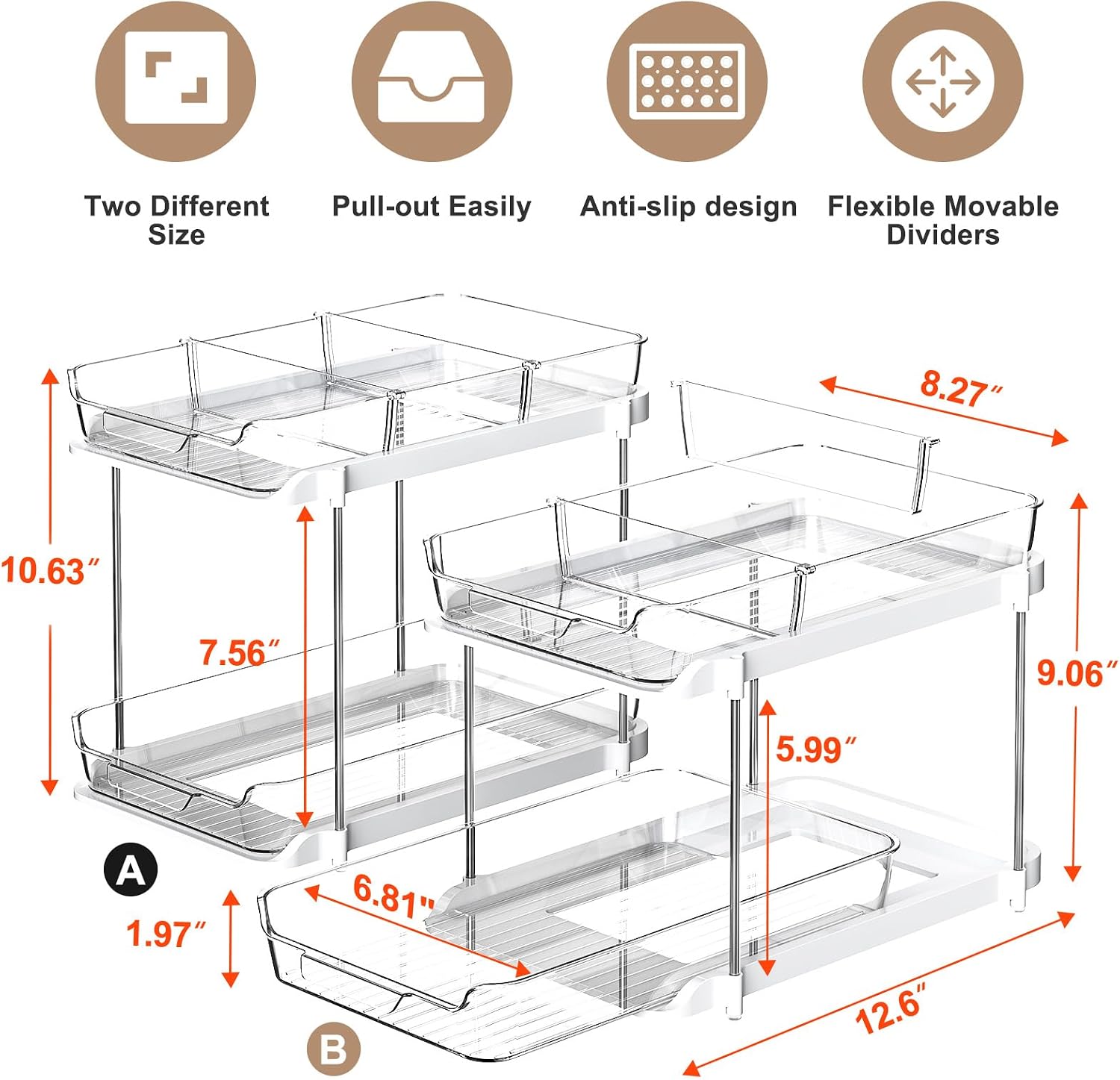
Measure internal width, depth, and usable height. Check whether the drawer narrows around hardware. Many organizers look perfect online but waste an inch on every side in a small cabinet.
An adjustable divider system may use space more efficiently than a large molded tray.
Do not create more compartments than you need
Tiny sections are satisfying at first, but they can lock the drawer into a specific inventory. If one compartment fits exactly three peelers and you later keep only one, you have built wasted space into the system.
Use a few flexible categories. Small kitchen storage needs adaptability.
Store by hand motion
Put the most-used tools near the front or on the side your hand naturally reaches first. The garlic press used once a month does not need to block the measuring spoons used every morning.
Organization should reduce movements, not just make a drawer look segmented.
Keep cooking tools close to the cooking zone
If the utensil drawer is across the room from the stove, consider moving categories between drawers. The best location is determined by use, not by the label the builder imagined for that drawer. For the broader setup, How to Dry Laundry in a Small Apartment Without Letting Clothes Take Over the Room is a useful next read.
Point-of-use storage is especially valuable in small kitchens where two people may be working in the same narrow aisle.

What about knives?
Knives need appropriate, secure storage that protects both the blade and the person reaching into the drawer. Use a suitable knife block, in-drawer holder, magnetic system, or other storage designed for the purpose and household.
Do not let loose sharp blades share a general utensil compartment.
Move single-purpose gadgets out of prime space
An avocado slicer, strawberry huller, corn tool, specialty opener, or other gadget may be useful, but frequency determines location. If it does one task once a month, a secondary bin may be a better home.
Prime drawers should contain tools that support many meals.
Keep measuring tools together only if that matches how you cook
Bakers may want measuring cups and spoons in the same drawer. Other households use measuring spoons constantly but large cups rarely. Do not force a category to stay together if splitting it makes the frequent items easier to reach.
Use vertical crocks carefully
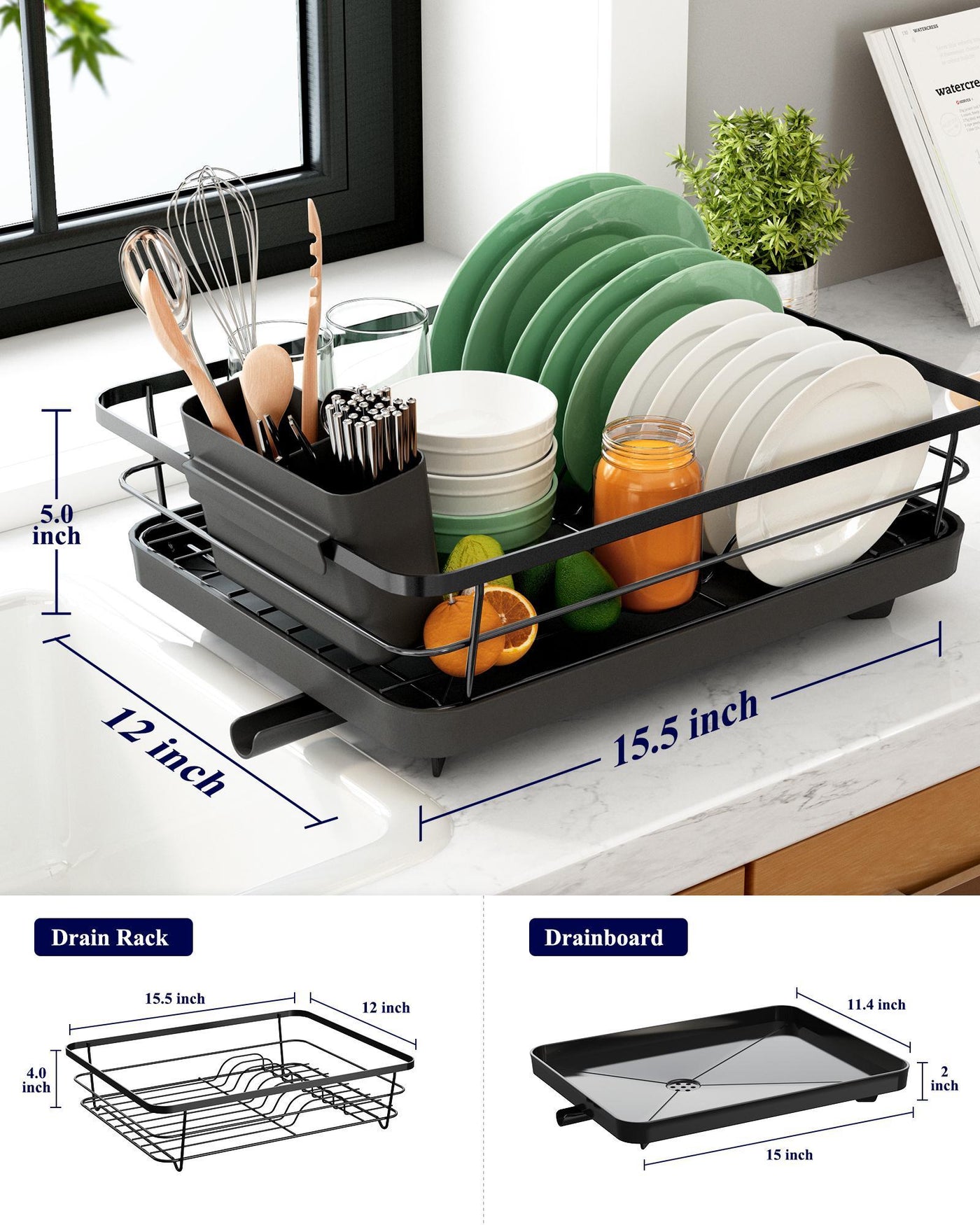
A countertop utensil crock is convenient but can expand until it becomes a dense forest of handles. Limit it to the tools used at the stove several times a week.
If you have been working on clearer surfaces, use the same principle as How to Keep Kitchen Counters Clear in a Small Home: visible items should earn their footprint.
Give odd-shaped items their own strategy
Pizza wheels, large scissors, thermometers, bag clips, and funnels may not fit elegant compartments. A shallow open section can be better than forcing every object into a precise slot.
The drawer should accommodate real objects, not make you shop for replacement objects that fit the organizer.
Maintain a small “questionable tool” box for one month
If you are unsure whether you use a gadget, move it to a temporary box outside the prime drawer. When you need something, retrieve it. After a month or two, the items never retrieved are easier to evaluate honestly.
This works better than standing over the drawer trying to predict future cooking.
Do not overfill the improved drawer
A well-organized drawer needs clearance above the tools and small gaps between categories. If everything fits only when aligned perfectly, daily use will destroy the layout.
Build in tolerance for the way real people put things away.
A practical drawer hierarchy
- Front: daily peelers, opener, measuring spoons, scissors where safely stored.
- Middle: common prep tools.
- Back: less frequent small gadgets.
- Elsewhere: long cooking utensils, specialty tools, duplicates, and rarely used equipment.
Explore this topic
Browse more practical guidance in the Home Organization hub. Room focus: Kitchen.
Related published guides
- How to Organize a Small Kitchen Junk Drawer So It Stays Useful
- How to Organize Spices in a Small Kitchen Without Buying Matching Jars
Frequently asked questions
Should I buy a custom drawer organizer?
Only after editing the contents and measuring the real drawer. Adjustable dividers often use narrow space more efficiently.
What should I do with utensils I rarely use?
Move them to secondary kitchen storage and keep prime drawers for frequent tools.
How do I stop utensils from sliding around?
Use appropriately sized dividers or trays and avoid leaving one large open field of mixed tools. But do not subdivide so tightly that the system becomes rigid.

The drawer should close easily on an ordinary day
That is my favorite test. Not whether the drawer looks perfect immediately after organizing, but whether someone can cook, toss tools back into their categories, and close it without arranging every whisk at a particular angle. In a small kitchen, ease of return matters more than visual precision. You may also find How to Organize Pots, Pans, and Lids in a Small Kitchen Without Restacking Everything useful for a closely related small-home problem.