A small kitchen counter can become unusable without ever looking dramatically messy. A coffee maker takes one corner. The fruit bowl takes another. A drying rack occupies the area beside the sink. Add a school water bottle, unopened mail, a grocery bag that still needs to be put away, and one appliance that is “too annoying” to lift out of a cabinet. Suddenly the kitchen has counters, but no actual workspace. For the broader setup, How to Organize Pet Supplies in a Small Home Without Creating a Pet Closet is a useful next read.
This is why I do not think “keep the counters completely empty” is useful advice for most small family homes. It sounds tidy, but it ignores how kitchens are used. A better goal is to protect enough uninterrupted working surface for the next real kitchen task. For the broader setup, How to Organize a Small Freezer for a Busy Family is a useful next read.
Start by deciding what the counter is for
Before moving a single object, identify the job your counter must perform. In a small kitchen, one surface may need to handle meal prep, lunch packing, coffee, grocery unloading, dish staging, and homework overflow. If every job claims permanent territory, the counter becomes a parking lot.
Choose one primary prep zone. It does not need to be large. Even 24 to 36 inches of consistently clear counter can change how the kitchen feels because you no longer have to begin cooking by relocating clutter.
The most important rule: not everything convenient deserves permanent counter space
Convenience is a spectrum. A toaster used every morning may deserve a permanent home. A blender used twice a week may not. A stand mixer used twice a month almost certainly does not need prime real estate unless lifting it is physically difficult.
A useful test is simple: if removing the item would create daily friction, keep it accessible; if removing it creates occasional friction, consider storing it. This is more practical than following a minimalist rule about how many appliances are allowed.

Create a counter-space budget
Think of the counter as limited storage you spend deliberately. Divide the surface into four kinds of territory:
- Permanent: daily-use items that genuinely earn the space.
- Active: food prep, dishes, lunch packing, or another task currently happening.
- Temporary landing: groceries, mail, or objects that need to move elsewhere.
- Protected empty space: the portion that stays available for work.
Most clutter problems begin when “temporary landing” quietly becomes “permanent.” The answer is not always a new organizer. Often the answer is a time limit.
Give temporary clutter an expiration time
Groceries can land on the counter while you unload them. Packages can sit there while you open them. School forms can wait while dinner is happening. The problem is not that items touch the counter; it is that they never leave.
Set one reset point, usually after dinner or before bed. At that point, temporary items must be processed, relocated, or deliberately assigned a next step.
Do not use baskets to disguise unresolved decisions
A basket can make clutter look calmer, but it can also become a delayed-decision box. If the basket contains keys, receipts, batteries, vitamins, coupons, chargers, and three objects nobody knows where to store, the counter is not organized. It is compressed.
Use a counter basket only for a narrow category with a clear routine—for example, current lunch-packing items or produce that needs airflow. Mixed-category baskets should live somewhere else or be eliminated.
Make the coffee zone small on purpose
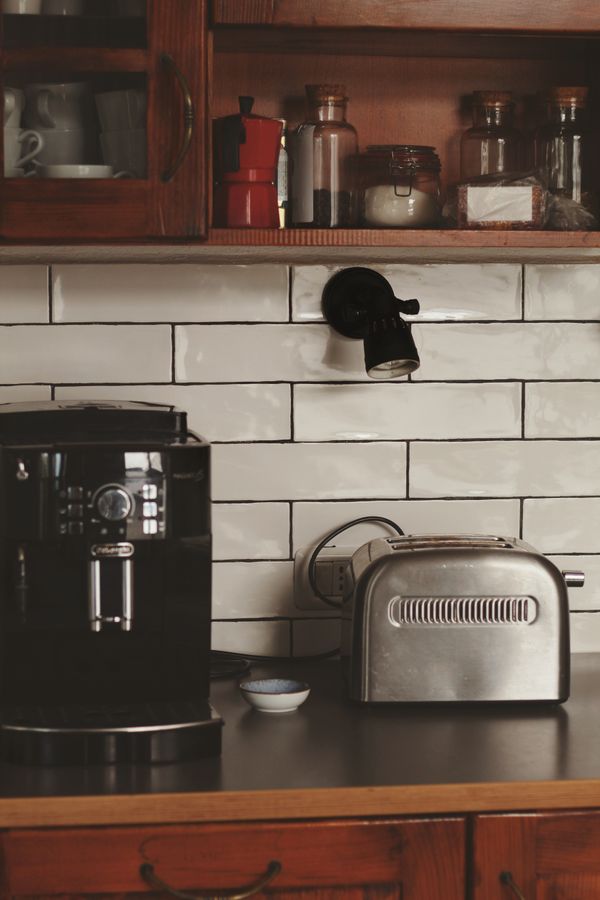
Coffee stations expand easily: machine, grinder, pods, filters, mugs, syrups, sweeteners, spoons, canisters, travel cups. In a small kitchen, keep only the operational layer on the counter. Refills and backups can live in a nearby cabinet.
The distinction matters. A counter should hold what you use to make coffee today, not the entire inventory needed to make coffee for the next three months.
Handle the drying rack honestly
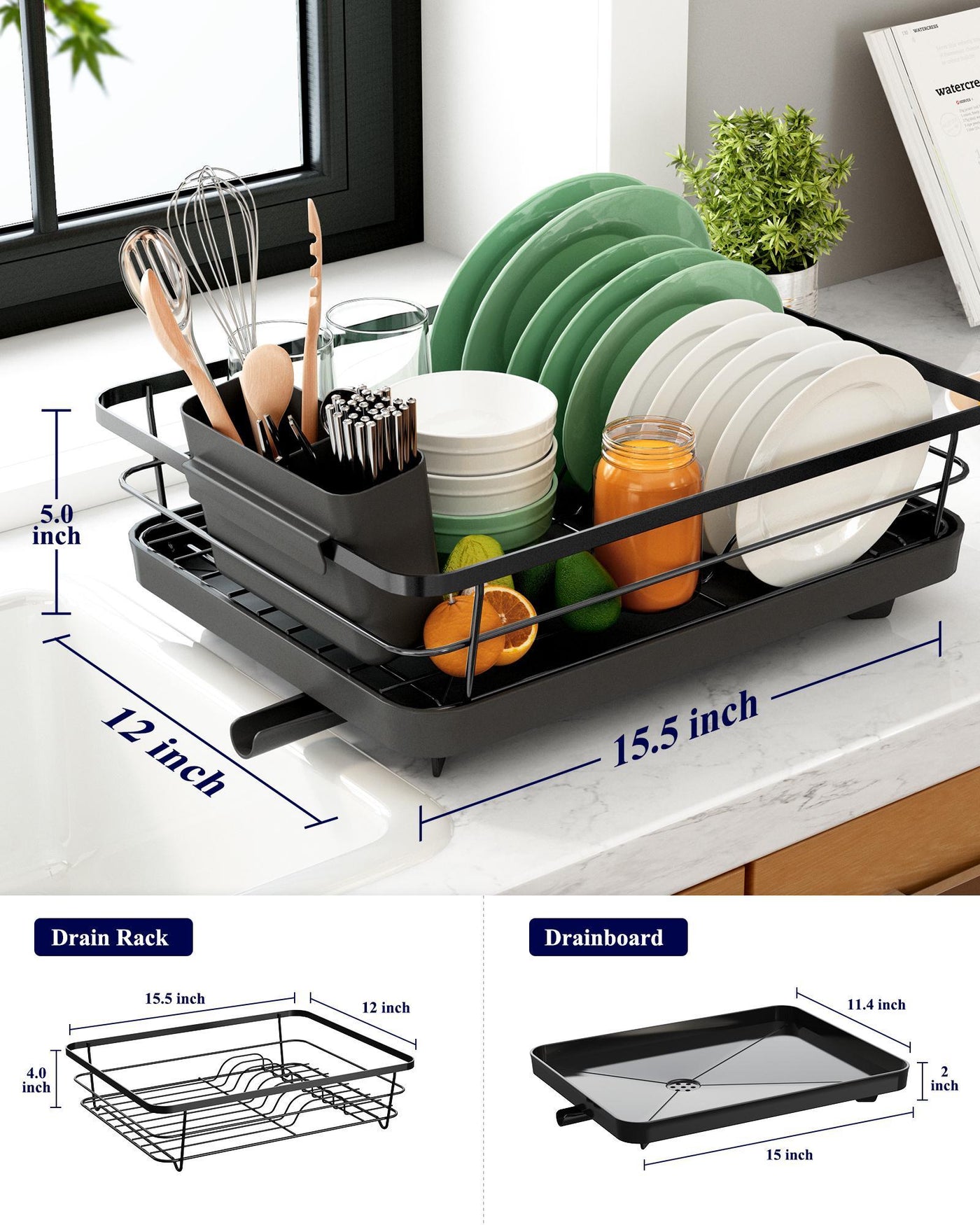
For many homes, the drying rack is the largest permanent object on the counter. If you hand-wash frequently, pretending you do not need it is unrealistic. Instead, reduce its footprint or decide when it is allowed to be full.
A rack that is emptied every morning behaves like a tool. A rack that stores clean dishes for three days behaves like a cabinet without doors.
Use vertical storage only where it reduces motions
Wall rails, magnetic strips, under-cabinet hooks, and shelves can free counter space, but vertical storage is not automatically better. Too many exposed objects create visual noise and can make cleaning harder.
Use the wall for a small number of items that are reached for constantly. The point is to improve workflow, not to relocate every object from the horizontal plane to the vertical one.
Protect the area beside the stove
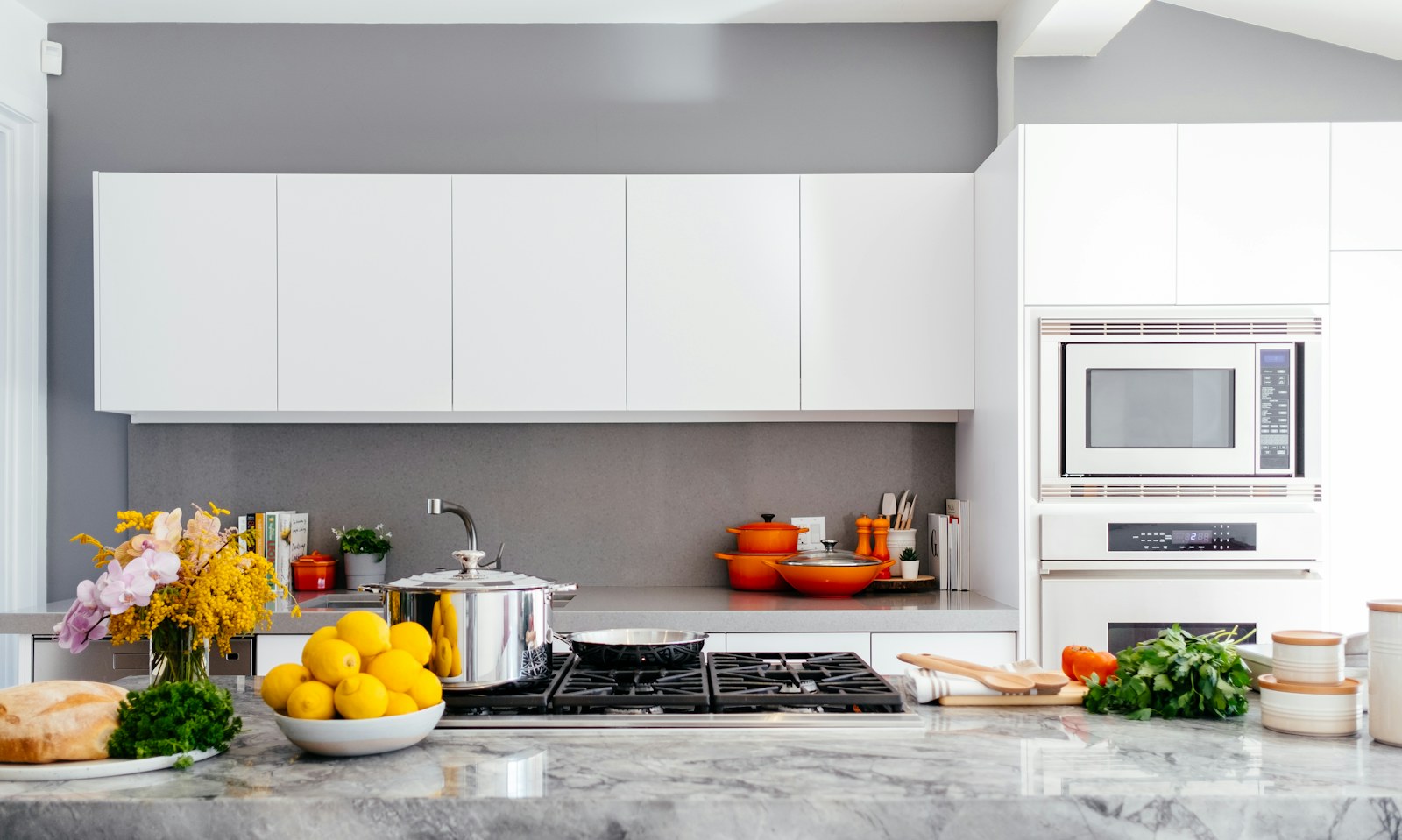
One of the most useful small-kitchen upgrades is preserving a safe landing space near the stove. You need somewhere to place a cutting board, hot pan, bowl, or plate. If that zone is filled with decorative canisters, oil collections, or appliances, cooking becomes more awkward than it needs to be. You may also find How to Organize a Small Kitchen Junk Drawer So It Stays Useful useful for a closely related small-home problem.
Keep one or two frequently used cooking items nearby; move the backups and decorative extras elsewhere.

Build a five-minute closing sequence
A practical nightly kitchen close does not require a full cleaning session. Try this order:
- Put food away.
- Move dishes into the dishwasher, sink routine, or drying rack.
- Return non-kitchen items to a departure basket or their actual rooms.
- Wipe the main prep surface.
- Restore one clear zone for breakfast.
The last step is the key. You are not cleaning for appearance; you are preparing the kitchen for the next use.
What about fruit, bread, vitamins, and everyday food?
These categories often sit out because the household uses them constantly. That is reasonable. The mistake is allowing every everyday category to become visible at once.
Choose a hierarchy. Perhaps fruit stays out because the family actually eats more of it when visible. Bread goes in a cabinet. Vitamins live in one small bin near breakfast supplies. The counter should reflect your routines, not a generic photo of an ideal kitchen.
When storage is genuinely insufficient
Sometimes counter clutter is not a habit problem. It is a capacity problem. If cabinets are full of duplicates, oversized serving pieces, rarely used appliances, and food no one is eating, decluttering storage can create more counter space than any countertop organizer. You may also find How to Organize Foil, Food Wrap, and Reusable Bags in a Small Kitchen useful for a closely related small-home problem.
But if the cabinets are already edited and the kitchen still lacks storage, accept that some objects will remain visible. The goal then becomes orderly function: one coffee zone, one fruit area, one drying zone, and one protected prep zone.
A realistic small-kitchen standard
I would judge a small counter by three questions:
- Can you make a basic meal without clearing a pile first?
- Can you unload a grocery bag somewhere?
- Can you wipe the main surface without moving twenty objects?
If the answer is yes, the kitchen is functioning. It does not need to look empty.
If countertop appliances are the category consuming most of your usable surface, see How to Organize Countertop Appliances in a Small Kitchen for a more focused keep-out-versus-store-away system.
Frequently asked questions
How many appliances should stay on a small kitchen counter?
There is no universal number. Keep the appliances used often enough that storing them would create meaningful daily friction, while preserving one usable prep area.
Is it better to put everything away?
Not always. If an item is genuinely used several times a day, hiding it can make the kitchen more annoying. The better standard is intentional visibility.
Why does my counter get cluttered again every day?
Usually because it is functioning as a landing zone for categories that do not have a quick next step. Identify which items repeatedly arrive and give those categories a nearby home or a specific reset time.
The counter should support the next action
A small kitchen does not need to win a styling contest. It needs to let you make breakfast, chop vegetables, set down a hot pan, and clean up without negotiating with clutter first. Protect the working surface, make permanent items earn their place, and treat temporary clutter as temporary. That is a much more durable system than chasing the fantasy of an always-empty counter.