A snack station sounds like one of those ideas that should automatically make family life easier. Sometimes it does. Sometimes it just creates a new cabinet full of individually wrapped food that nobody was eating before.
In a small kitchen, the most useful version is not a display. It is a small decision zone: a place where family members can quickly see a few approved options, take one, and leave the rest of the kitchen alone. You may also find How to Organize Countertop Appliances in a Small Kitchen useful for a closely related small-home problem.
The key is to design the station around how your family already eats, not around a picture of color-coded bins.
Start with the actual snack problem
Ask what is going wrong now. Are kids opening every cabinet? Are lunch snacks scattered through the pantry? Are fresh options forgotten in the refrigerator? Are adults buying duplicates because nobody can see what is already open?
The station should solve one of those problems. If snacks are already easy to find and the kitchen is calm, you may not need a snack station at all.
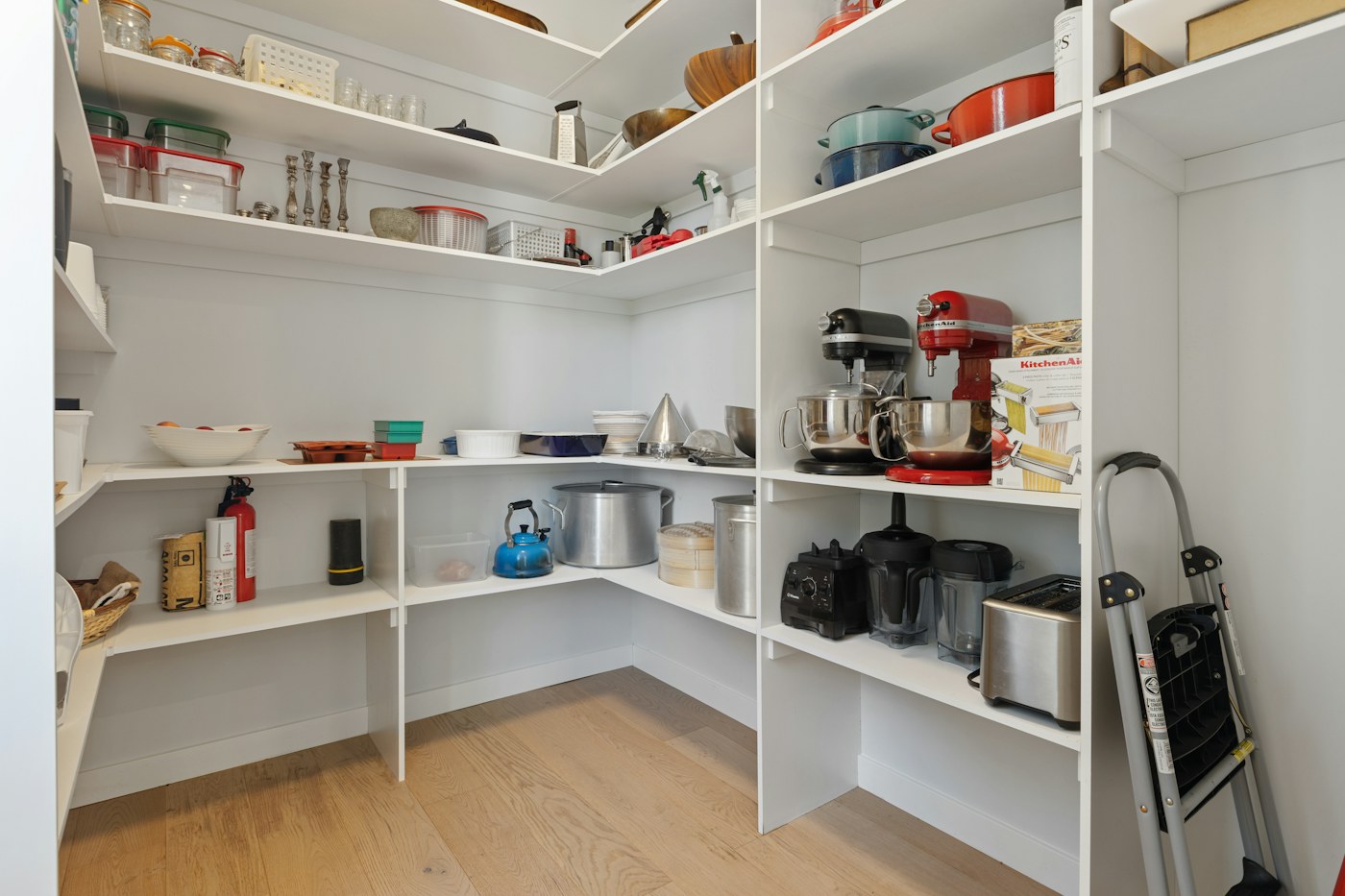
Choose one dry zone and, if useful, one cold zone
A compact dry snack zone can live in one drawer, one shelf, or one bin. A cold zone can be a small refrigerator bin or shelf section for items your family regularly chooses.
Keeping those two zones small is more important than making them perfectly symmetrical.
Use broad categories, not dozens of mini-bins
A small kitchen does not need separate containers for crackers, granola bars, fruit snacks, nuts, pretzels, cookies, and every other category.
Try broader groups such as:
- grab-and-go,
- school/lunch,
- pair-with-fruit or yogurt,
- special/treat.
The household should be able to understand the system without reading ten labels.
Make the station child-accessible only when that is the goal
Some families want children to choose independently. Others want adult-managed snack timing. The storage height and access should reflect that. For the broader setup, How to Store Gift Wrap, Gift Bags, and Party Supplies in a Small Home is a useful next read.
Organization should support household rules rather than accidentally rewriting them.
Do not move every snack into single-serve packages
Single portions can be convenient for school mornings, but creating individual packs from every bulk item adds labor, packaging, and another refill task.
Use single-serve storage where it genuinely helps departure or independence. Keep other foods in their normal packaging or appropriate containers.
Use “open first” as the front row
The snack station is a good place to practice a simple inventory rule: opened boxes and older packages stay easiest to see.
When a new grocery bag arrives, do not bury the half-finished crackers behind the new box.
This is less glamorous than decanting, but it prevents the quiet multiplication of nearly empty packages.
Keep lunch snacks and home snacks connected
If the same snacks are used for school lunches, give the lunchbox routine easy access to the station. That prevents one set of snacks living in the pantry while another identical set lives in a school-supply cabinet.
See How to Store Lunchboxes, Water Bottles, and Reusable Bags Without Kitchen Clutter.
Include a fresh-food path, not only packaged food
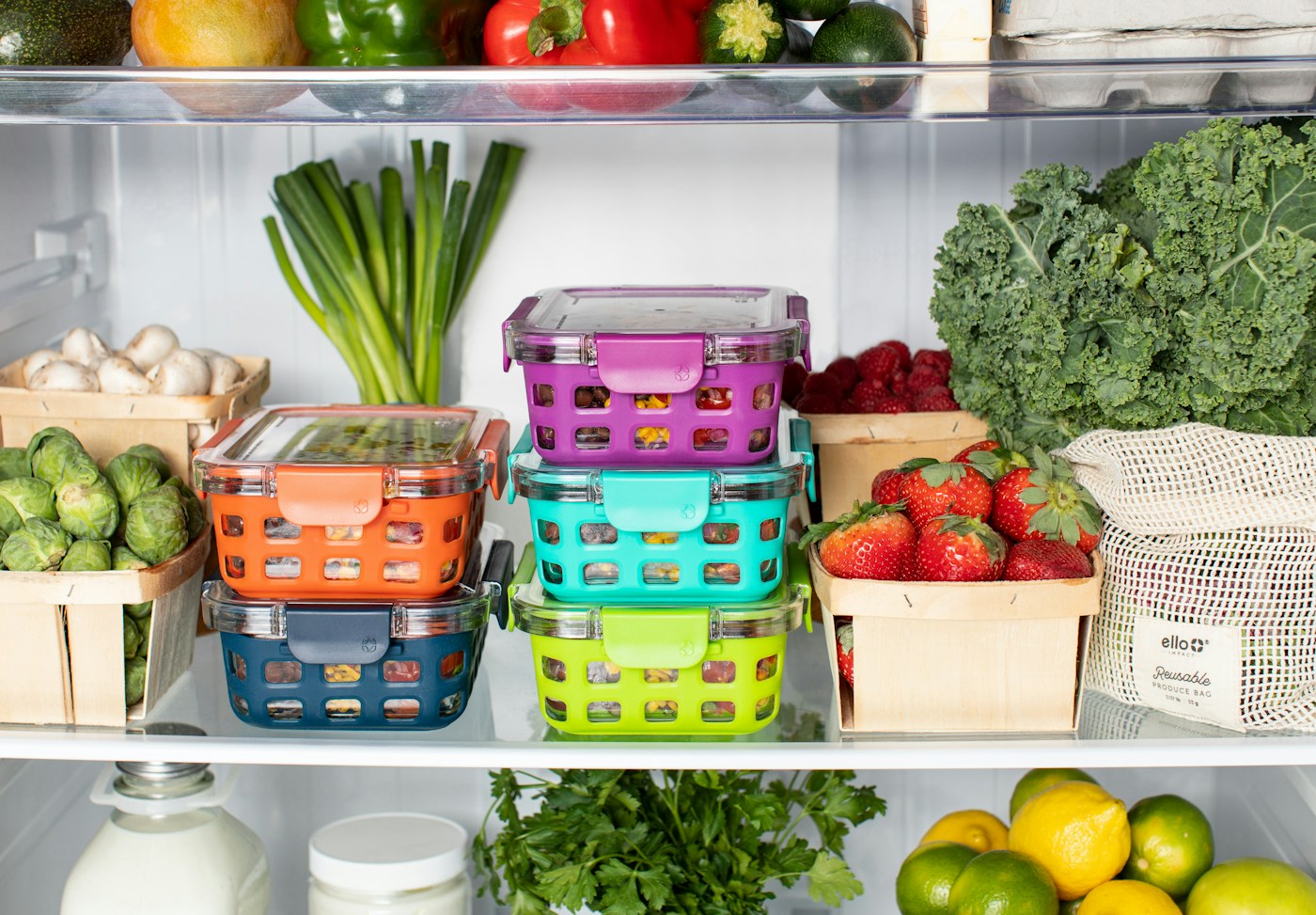
A dry pantry station is naturally more visible than produce, yogurt, cheese, or other refrigerated choices. If your household wants those options in regular rotation, make the cold zone easy to see too.
The snack system should not accidentally make the most heavily packaged foods the easiest foods simply because they stack better.
Set a capacity that grocery shopping has to respect
One of the best things a snack station can do is tell you when you already have enough.
If the bin is full, that is not a signal to buy a second bin. It is a signal to use what is there.
I prefer physical limits like this because they reduce the number of decisions the family has to make later.
Do not let “variety” become six open boxes
Families often buy several flavors so everyone has options. In a small kitchen, too many simultaneous choices can create more stale leftovers and more visual clutter.
Keep a few active choices and rotate in unopened options as current ones are finished.
Create a simple refill rhythm
Refill the station from grocery backstock once or twice a week rather than topping it up every time one item disappears.
If you keep household extras elsewhere, use How to Store Grocery Backstock in a Small Home Without Turning Every Closet Into a Pantry.
Make the station visually boring enough to last
This may sound like an odd goal, but it matters. Systems that require constant facing, color matching, and decanting tend to degrade when the family is busy. You may also find How to Organize a Small Freezer for a Busy Family useful for a closely related small-home problem.
A boring system—one shelf, four broad groups, visible open packages—usually survives real life better.
A practical setup for young children
If independent access is appropriate in your household, keep only a limited selection within reach. Adults can rotate what appears there rather than putting the entire pantry at child height.
This creates choice without creating unlimited inventory access.
A practical setup for older kids and teens
Older kids may need after-school food, sports snacks, and school-lunch options. Give them clearer ownership of restocking water bottles, returning wrappers, and telling the household when a category is low.
The station becomes more useful when responsibility grows with access.
The five-minute weekly snack reset
- Move open packages forward.
- Remove empty boxes and wrappers.
- Combine duplicates only when appropriate.
- Check the cold snack zone.
- Refill from backstock rather than opening new categories.
- Add only genuinely low items to the grocery list.
What I would avoid
I would avoid buying a wall of clear bins before knowing the snack volume, creating fifteen labels, and decanting every cracker into containers that hide product information and require extra washing.
I would also avoid creating a giant “kids snack” zone that is larger than the family’s vegetable drawer. The station should make family life easier, not distort how the kitchen is used.
Judge the station by what gets eaten—not by how full the bins look
After two or three weeks, look at what repeatedly remains. A snack station can reveal family preferences more accurately than a grocery plan.
If one category is always empty, decide whether you need a slightly larger supply or whether the family is simply taking it too quickly. If another category never moves, stop buying it just because it feels like a snack you “should” have.
The waste pattern is useful information. Good organization should help purchasing become more accurate over time.
For siblings with different ages, use shared structure and different access
A preschooler and a teenager do not need identical access or portions. You can keep the overall system shared while placing some categories higher, lower, or in an adult-managed section.
This avoids creating one entire snack station per child, which is usually unnecessary in a small kitchen.
Make after-school snacks a transition, not an open-ended grazing zone
If after-school hunger is the moment your kitchen becomes chaotic, connect the station to a simple routine: bags land, hands are washed as appropriate, one snack choice is made, wrappers or dishes are handled, and the kitchen returns to normal. For the broader setup, How to Organize Foil, Food Wrap, and Reusable Bags in a Small Kitchen is a useful next read.
The organizing value is not just food storage. It is giving a predictable shape to a high-friction part of the afternoon.
Keep school policies and household needs separate from the storage system
Schools, activities, and individual households may have rules or dietary needs that affect what can be packed. The snack station should make those choices easier to identify rather than mixing every option into one unlabeled basket.
A small “school-safe for our situation” section may be useful if the family repeatedly needs it. Do not create one unless it solves a real packing decision.
Use the grocery list as the station’s exit ramp
When the last item in a genuinely useful category is opened, add it to the list. Do not keep an empty box in the bin as a reminder.
Empty packaging is a surprisingly common source of pantry visual noise. The list should remember for you.
Signs the snack station is making life harder
- You spend more time decanting snacks than packing lunches.
- Family members still search other cabinets first.
- There are several open boxes of the same type of food.
- The station needs daily “styling” to stay organized.
- Backstock is larger than the active snack zone.
- Food expires or goes stale because too much variety is open at once.
If several of these are true, simplify. Remove bins before adding them.
\nDo a “decision count” test during a busy afternoon
Watch what happens when someone asks for a snack while an adult is making dinner or packing lunches. How many doors get opened? How many questions are asked? How many packages have to be moved?
A good station reduces that decision count. A child who can see three appropriate choices needs less help than a child facing a deep pantry with thirty options. An adult packing lunches should not need to open the pantry, refrigerator, backstock closet, and junk drawer to complete one bag.
This is why I favor small, edited zones. The value is not visual order; it is fewer interruptions during already busy parts of the day.
Do not confuse stockpiling with preparedness
Having enough family snacks for the week is useful. Having several months of snack inventory because each sale felt like an opportunity may create a different problem: stale food, forgotten flavors, and storage pressure.
Let the station and one modest backstock area define preparedness for your household. If buying a bargain requires a new storage location, the bargain is asking the home to pay part of the price.
\nFrequently asked questions
Where is the best place for a snack station?
Use one shelf, drawer, or pantry section near where snacks are usually packed or eaten. Choose accessibility based on the ages and routines in your household.
Should I decant snacks into clear bins?
Only when visibility or package shape creates a real problem. Original packaging is often simpler and keeps product information attached.
How many snack choices should be available?
Enough for realistic variety without opening so many categories that food gets forgotten. Let the size of the station set the limit.
How do I stop kids from leaving wrappers everywhere?
Pair access with one clear cleanup expectation: wrappers go directly to trash/recycling as appropriate, and empty packages leave the station.
The best snack station reduces decisions rather than creating another display to maintain
If the family can open one drawer, see what is available, choose something appropriate, and close it again, the system is doing its job. It does not need to look like a miniature grocery store.