Important family papers have a habit of spreading through a small home. A birth certificate ends up in a bedroom drawer, insurance paperwork sits in a kitchen cabinet, tax documents fill a tote on a closet shelf, and a school form waits under a pile of mail.
The answer is not necessarily a larger filing cabinet. In a small home, the better goal is a compact system that makes the papers you truly need easy to find while keeping sensitive originals protected. If you are working on the same space, Small Apartment Paper Organization: A Simple System That Stays Tidy covers the next decision in more detail.
A useful family paper system has three distinct jobs: protect difficult-to-replace originals, hold the records you need to reference, and keep temporary papers from joining the permanent archive. Once those jobs are separated, the system can stay surprisingly small.
Start With the Papers That Would Be Hardest to Replace
Do not begin by emptying every paper pile in the house. That quickly turns a manageable project into an all-day sorting session.
Start with documents that would cause a real problem if you could not find them. These may include birth certificates, Social Security cards, passports, marriage or divorce records, vehicle titles, property or lease documents, insurance records, tax files, and selected medical or legal documents.
Gather those papers from the places where your family currently keeps them. Check desk drawers, bedroom storage, kitchen cabinets, old folders, lockboxes, bags used for travel, and any filing container you already own.
At this stage, the goal is not to decide the future of every sheet of paper. It is simply to bring the important records into one controlled system.
Use Three Paper Zones Instead of One Giant Filing System
One of the easiest ways to overfill a small filing setup is to ask a single box or binder to handle every kind of paper. A more practical approach is to divide family paperwork into three zones.
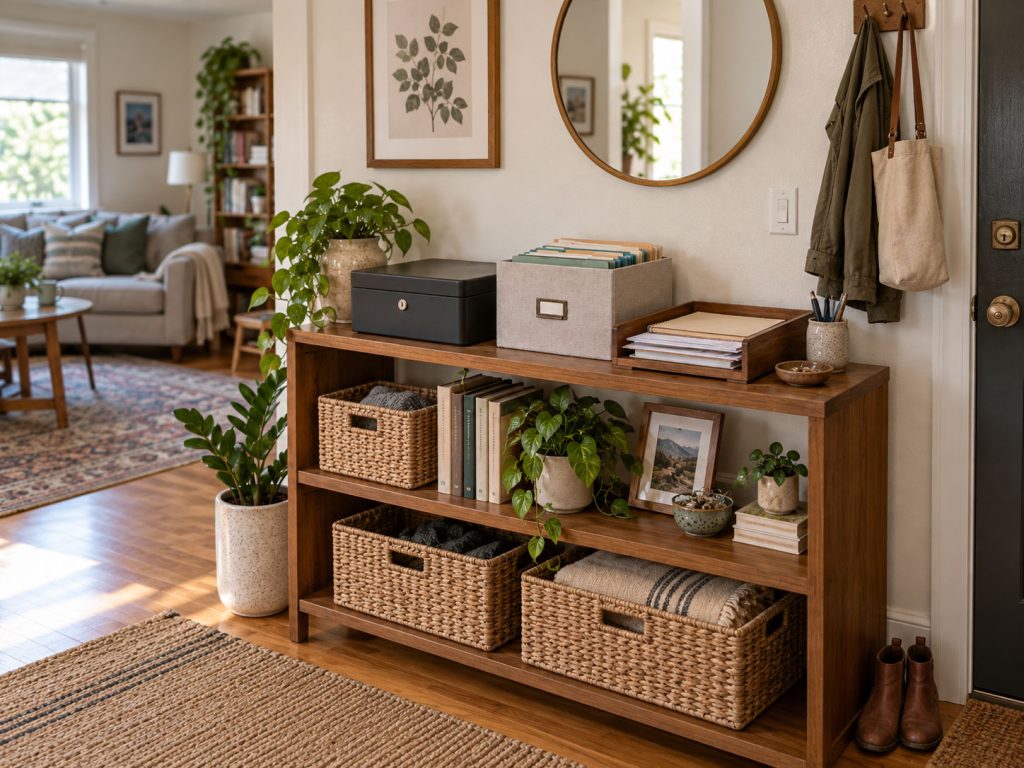
1. Protected originals
This is the smallest and most secure part of the system. It holds original documents that are important, sensitive, or difficult to replace. If you are working on the same space, How to Build a Home Binder System That Actually Works in a Small Space covers the next decision in more detail.
Keep these papers in a protected location that is not part of everyday household traffic. The container should be secure from casual access, especially if documents include Social Security numbers, identity information, financial information, or records belonging to children.
In areas where flooding is a realistic risk, emergency-preparedness guidance also recommends protecting important documents from water damage. For the broader setup, Where to Store Important Documents in a Small Apartment is a useful next read.
2. Reference files
This section holds papers you may need again but that do not require the same level of protection as vital originals. Depending on your household, that might include current insurance information, tax documentation, home records, selected medical paperwork, warranties, or vehicle records. If you are working on the same space, Small Apartment Storage Ideas That Don’t Require Drilling covers the next decision in more detail.
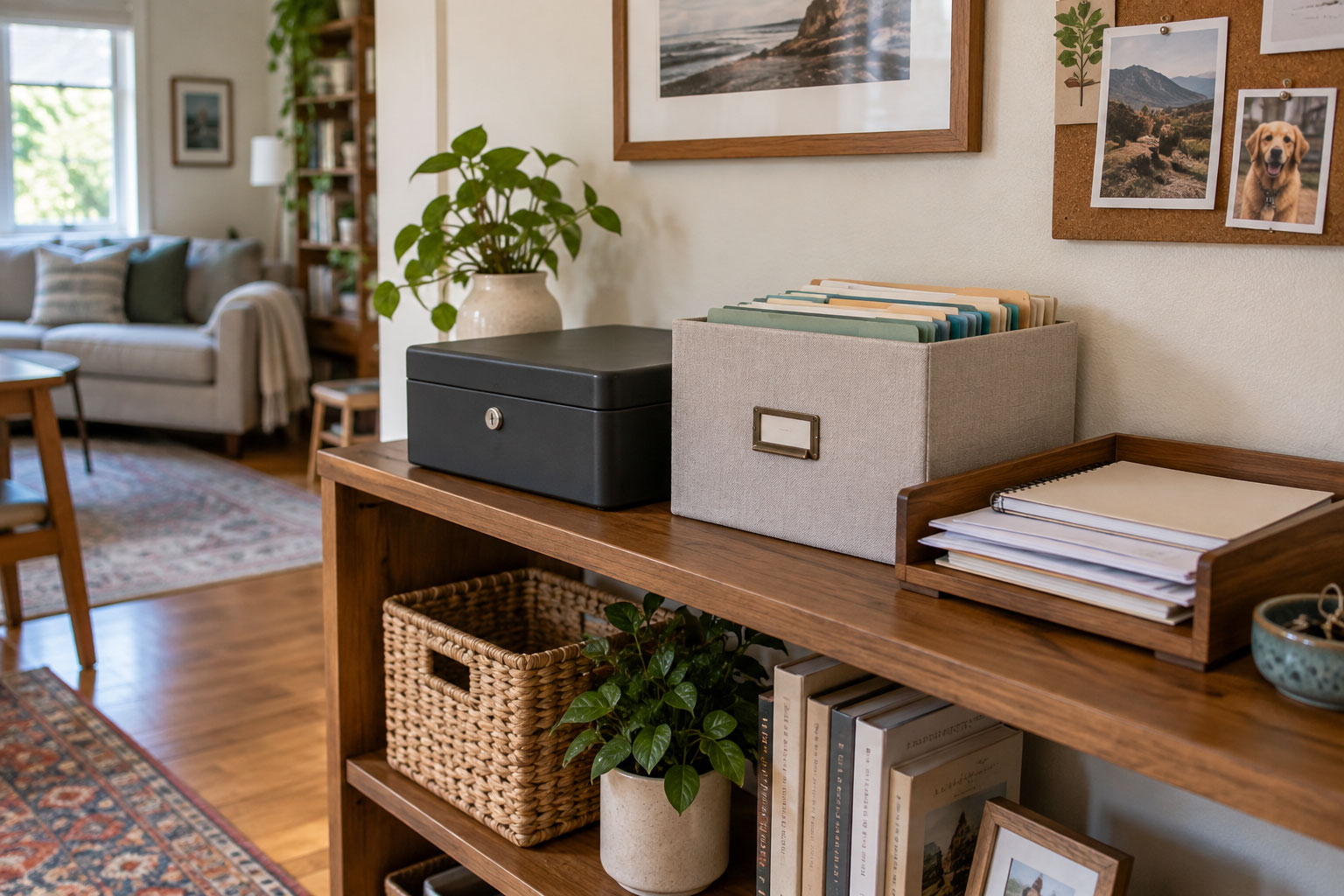
In a small home, this can often fit into a compact lidded file box rather than a full-size cabinet.
3. Working papers
These are papers that still require a decision or action: a form to sign, a bill that needs attention, a document to bring to an appointment, or paperwork waiting to be filed.
Working papers should not disappear into the permanent files. Give them a separate inbox or slim folder and process them on a regular schedule.
Choose Broad Categories You Can Remember Without Thinking
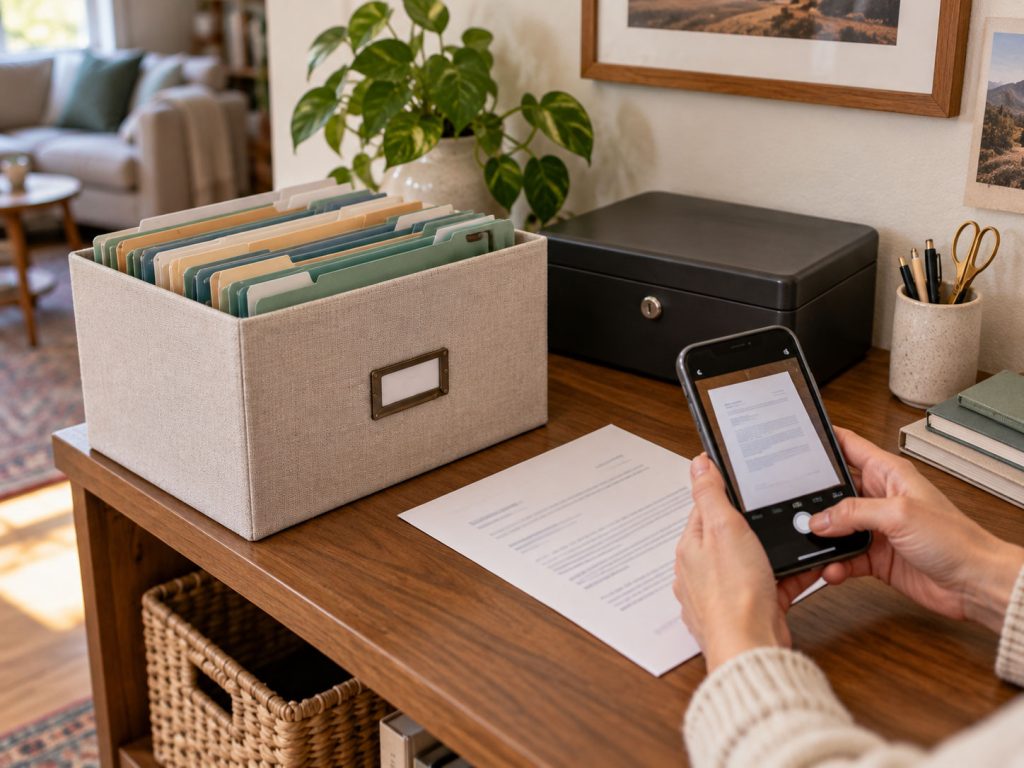
A filing system becomes harder to use when every document requires a tiny decision about where it belongs. Broad labels usually work better for a busy household.
A simple starting structure might look like this:
- Identity & Vital Records: birth certificates, Social Security cards, passports, marriage or divorce documents, citizenship records, and similar identity papers.
- Home & Property: lease documents, deeds, mortgage records, major home improvement records, and household ownership paperwork.
- Vehicles: titles, registration-related records, financing documents, and important service records you have a reason to retain.
- Insurance: home or renters, auto, health, life, and other current policy information.
- Tax & Financial: tax returns, supporting tax documents, and financial records that still need to be retained.
- Health & Legal: selected medical records, legal documents, powers of attorney, and other records your family needs to preserve.
You do not need every category. Use only the ones your household actually needs. The goal is to make retrieval obvious, not to create a professional records archive.
Separate Originals From Copies
A passport and a utility bill do not need the same storage treatment. Neither do a birth certificate and a paid medical statement.
As you sort, ask a simple question: Would I need this exact original, or do I mainly need the information on it?
Difficult-to-replace originals belong in the protected part of the system. Papers that mainly provide information may belong in your reference files, may be available electronically, or may not need to remain on paper at all.
This distinction matters in a small home because permanent paper storage should be reserved for documents that earn the space they occupy.
Do Not Use One Retention Rule for Every Document
Paper clutter often grows from the fear that everything might be needed later. The problem is that there is no single retention period that works for every type of family record.
For example, current IRS guidance says the length of time to keep tax records depends on the event or item the record supports. Three years is common in many ordinary tax situations, while longer periods can apply in specific circumstances. Property-related records may need to be retained much longer.
The Federal Trade Commission also distinguishes between documents that may only need short-term retention and records connected to major life events, ownership, or identity that should be kept much longer.
Instead of writing “keep seven years” on every folder, check the current guidance that applies to the document before discarding it. Insurance companies, lenders, employers, attorneys, or other organizations may also have their own requirements.
Create Digital Backups for the Documents That Matter Most
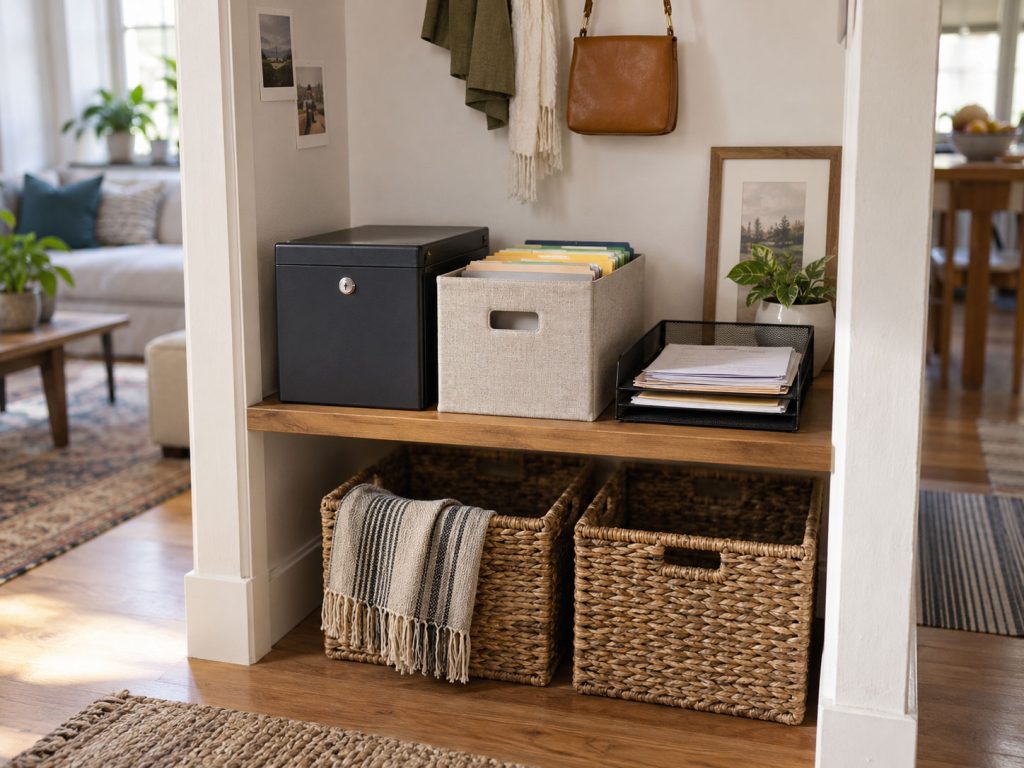
Digital copies can make a compact paper system more resilient, but scanning every page in the house is usually unnecessary.
Prioritize documents that would be difficult to replace or useful to access during an emergency. A clear scan of an important record can help you identify what was lost and may make replacement easier, even when an original is still required for an official process.
Store sensitive digital copies somewhere protected rather than in a loosely named folder on a shared computer. Emergency-preparedness guidance recommends password-protected digital copies of important documents.
Use file names that another authorized adult in your household could understand. A format such as Document Type – Family Member – Year is often enough. There is no benefit to building a complicated digital hierarchy that only one person can navigate.
Make the System Small on Purpose
Small homes benefit from physical limits. Instead of asking how much paperwork you can store, decide how much space the system is allowed to take.
For many households, a compact setup may include one protected document container, one small file box for reference records, and one slim inbox for active papers.
Avoid spreading family records across several storage solutions just because empty space is available. One half-full box in a known location is more useful than five beautifully labeled containers hidden around the home.
Good locations are places that are accessible to authorized adults but protected from children, moisture, spills, and everyday clutter. Avoid making the kitchen counter, dining table, entryway console, or an open shelf the permanent home for sensitive documents.
Give Each Family Member a Simple Place Inside the System
Some categories belong to the whole household, while others are easier to retrieve by person.
Inside a broader health or identity section, for example, a folder for each family member may be clearer than mixing everyone’s records together. This can be especially useful when managing children’s school enrollment documents, medical information, or identification records.
Do not create individual folders automatically for every category. Use them only where they make retrieval faster.
Keep Incoming Paper Out of the Archive Until It Earns a Place
The permanent filing system should not also be the landing zone for mail, school notices, receipts, and forms.
Give incoming paper one temporary inbox. When you process it, each piece should leave that inbox in one of four ways:
- Act on it.
- File it because there is a real reason to keep it.
- Digitize it if a secure digital copy is enough.
- Discard or shred it when it no longer needs to be retained.
That simple decision path prevents the important-document box from becoming a storage place for unresolved paper.
Shred Sensitive Papers Instead of Dropping Them in the Trash
Documents containing personal, financial, medical, or identifying information deserve more careful disposal than ordinary paper.
The Federal Trade Commission recommends shredding documents with sensitive personal information before throwing them away. This is particularly important for papers containing account information, Social Security numbers, medical details, or other information that could be misused.
Keep a small shred pile only if you process it regularly. A large bag of “papers to shred someday” is simply another form of paper clutter.
Use a Short Maintenance Rhythm
A good family paper system should require minutes, not a weekend, to maintain.
Once or twice a month, empty the working-paper inbox. File what still matters, remove outdated versions, shred sensitive papers that are no longer needed, and return important originals to their protected location.
Once a year, review the permanent files. Check whether insurance documents have been replaced, whether old warranties still matter, whether tax records have reached the appropriate retention point, and whether your digital backups are still accessible.
This annual review is also a good time to make sure another trusted adult knows where important records are kept and how to access them if needed.
What a Small-Home Family Paper System Should Feel Like
You should not need a label maker, a wall of matching binders, or an afternoon of searching to find one important document.
A well-organized system should answer three questions quickly: Where are the originals? Where are the records we still need? What paper still needs action?
If those answers are clear, the system is doing its job.
Keep the protected archive small. Let temporary papers remain temporary. Back up the documents that matter most. And give every important record one predictable home.
That is usually enough to make family paperwork work in a small space without allowing the paperwork itself to become another storage problem.
Sources
- Protecting your personal information: Which documents to keep and which to shred — Federal Trade Commission — https://consumer.ftc.gov/consumer-alerts/2025/06/protecting-your-personal-information-which-documents-keep-which-shred
- How long should I keep records? — Internal Revenue Service — https://www.irs.gov/businesses/small-businesses-self-employed/how-long-should-i-keep-records
- Floods — Ready.gov — https://www.ready.gov/floods
- Get copies of vital records and ID cards — USAGov — https://www.usa.gov/request-documents