Vacuums, mops, brooms, dustpans, steam cleaners, and buckets share one frustrating trait: they are all shaped badly for storage. They are tall but unstable, narrow but awkward, and they often come with hoses, cords, heads, pads, bottles, or charging docks that refuse to behave like normal household objects.
In a small apartment, the usual advice—“put them in the utility closet”—is not helpful if you do not have one. The real question is where these tools can live without becoming visual clutter, blocking a door, staying damp, or being so inconvenient that nobody wants to use them. If you are working on the same space, How to Store Suitcases and Travel Gear in a Small Apartment covers the next decision in more detail.
Start with frequency, not appearance
The tool you use three times a week should not live behind holiday decorations. The carpet cleaner used twice a year can tolerate deeper storage. This sounds obvious, but many homes organize by size instead of use frequency. For the broader setup, How to Reset a Small Apartment After a Trip Without Living Out of a Suitcase for a Week is a useful next read.
Rank cleaning tools as daily/weekly, monthly, or occasional. Give the easiest position to the first group.
The best location is often near the dirt source
If most debris enters through the front door, storing a stick vacuum near the entry can make more sense than hiding it in the bedroom closet. If the bathroom floor gets wet frequently, a compact mop nearby may be more useful than storing every cleaning tool together. You may also find How to Keep Kitchen Counters Clear in a Small Home Without Hiding Everything useful for a closely related small-home problem.
Centralizing all cleaning supplies is tidy in theory. Decentralizing a few high-frequency tools can be more functional in practice.
Option 1: a narrow slice beside a refrigerator or cabinet
A gap only a few inches wide can hold a broom, flat mop, or folding step stool. This works well when the area is easy to reach and does not expose the tools to stove heat or food splatter.
Use simple clips or a freestanding narrow holder so handles do not slide onto the floor.
Option 2: the inside of a closet wall
You may not have a cleaning closet, but a coat or bedroom closet can sometimes give up a vertical strip along one side. Mounting renter-safe tool clips or using an over-door organizer can convert unused vertical space into functional storage.
Do not fill the entire back of the door if coats, bags, or laundry already need that movement zone. A storage solution that prevents the door from closing is not a solution.
Option 3: behind a door—but only if the clearance works
Behind-door storage is popular because the floor area feels free. Measure the door swing first. A vacuum head or bucket that gets crushed every time the door opens will eventually damage the wall, tool, or both.
This placement works best for thin brooms, dusters, and flat mops.

Option 4: a dedicated vertical cabinet
If you own or can add furniture, a narrow tall cabinet is one of the cleanest solutions. It can hide tools, replacement pads, bags, and small bottles in one footprint.
But do not buy a cabinet before measuring the tools fully assembled. Many “utility” cabinets look tall enough until the vacuum handle, hose loop, or charging mount is included.
Option 5: under the bed for occasional tools
Under-bed space can hold a compact handheld carpet cleaner, folded steam mop, or spare vacuum attachments, but I would not use it for a wet mop or an everyday vacuum. The friction of kneeling and pulling out a large tool makes frequent cleaning less likely. You may also find How to Store Seasonal Items in a Small Apartment Without Losing Everyday Space useful for a closely related small-home problem.
Under-bed storage is better for accessories and occasional equipment than the primary floor-cleaning tool.
What to do with a cordless stick vacuum
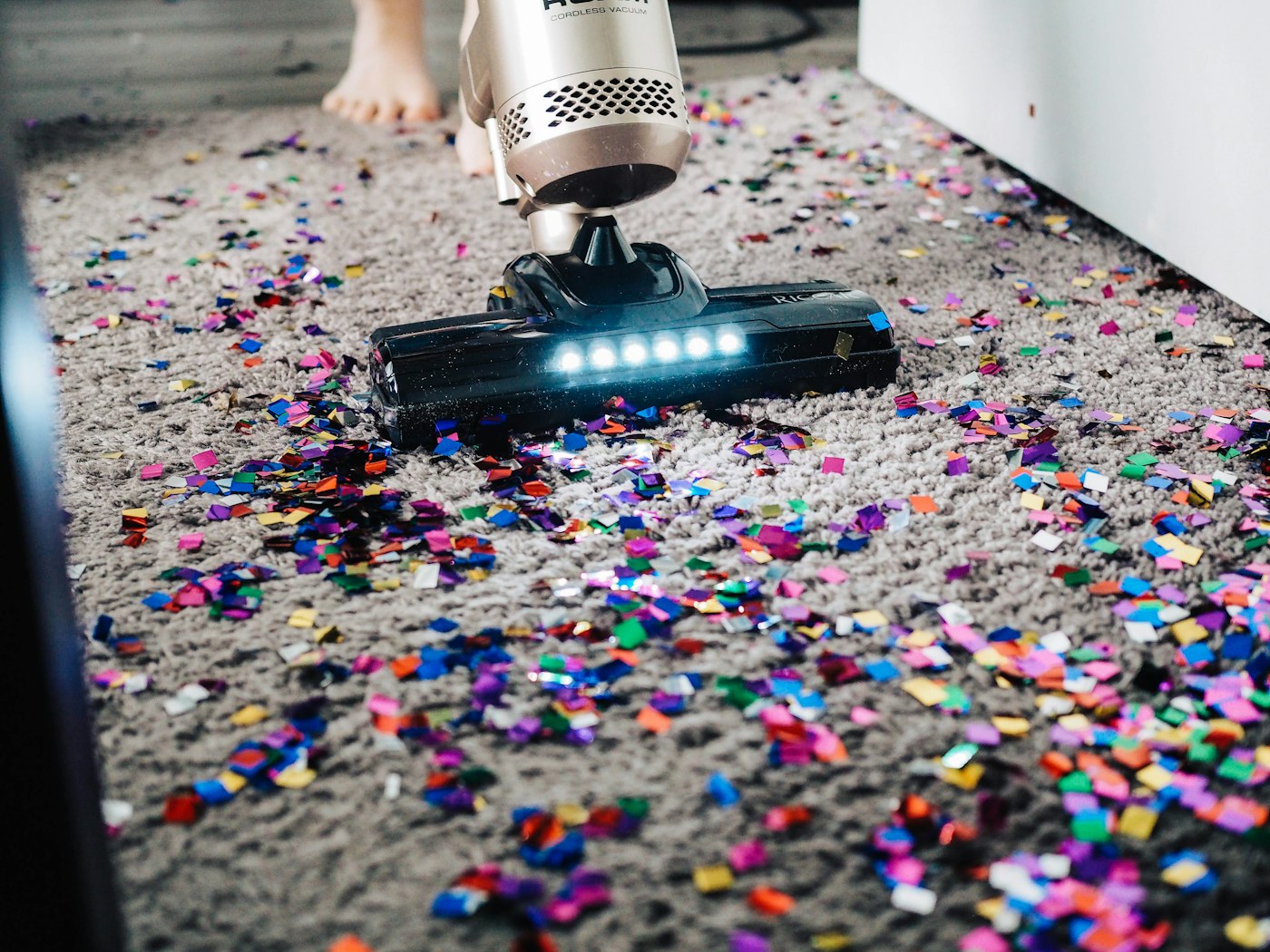
Cordless stick vacuums are easier to store vertically but introduce charging. The ideal location needs both a slim wall area and safe access to power.
Do not run a charging cord across a walkway. If you cannot wall-mount in a rental, consider a freestanding charging stand or place the dock inside a closet only if ventilation and outlet placement are appropriate.

Wet mops need drying space before storage
This is one of the most overlooked parts of cleaning-tool organization. A damp mop head stored immediately inside a dark cabinet can smell and remain wet longer than it should.
Create a drying stage: hang the mop in the bathroom, laundry area, balcony area where allowed, or another ventilated spot until fully dry. Then return it to storage. “Where does the mop dry?” and “where does the mop live?” do not have to be the same answer.
Keep the bucket useful between cleaning sessions
A large bucket is mostly empty volume when stored. Use it to contain washable mop pads, rubber gloves, or non-hazardous cleaning accessories. Avoid turning it into a mixed chemical bin if leaks or incompatible products are a concern.
If the bucket is rarely used, ask whether you need a full-size one at all. Many small homes function with a collapsible bucket or sink-based routine.

Separate chemicals from long-handled tools when safety requires it
It is tempting to build one “cleaning station,” but households with children or pets may need chemicals secured in a higher or locked area while the broom and vacuum remain accessible.
Organization should follow safety needs before visual symmetry.
Do not make the vacuum too difficult to retrieve
A vacuum that requires moving three coats, a laundry hamper, and a storage bin will be used less often. This is not laziness; it is friction.
For frequent cleaning, aim for one or two motions: open door, lift tool. If the process is more complicated, move less-used objects instead of burying the cleaning tool.
Use attachments as a separate category
Vacuum attachments are small enough to disappear and oddly shaped enough to clutter a shelf. Store them in a labeled pouch, small bin, or basket near the vacuum. Keep only attachments that fit the current machine.
Old nozzles from a previous vacuum are classic “maybe useful” clutter. If they do not fit, they do not belong in the current system.

Renter-friendly wall mounting
If your lease limits drilling, do not assume every adhesive hook can safely hold a vacuum. Check the tool weight and the hook rating. Lightweight brooms are one thing; a motorized stick vacuum is another.
When in doubt, use freestanding holders, tension-based systems designed for the load, or furniture you can take with you.
A simple storage hierarchy
- Everyday vacuum: easiest accessible vertical location.
- Broom/dustpan: narrow wall or door zone near kitchen/entry.
- Mop: dry first, then store vertically.
- Bucket: low shelf or nested with compatible accessories.
- Rare deep-cleaning tools: high shelf, under bed, or deeper closet zone.
If the awkward part is not the full-size tools but the smaller heads, nozzles, and accessories, How to Organize Vacuum Attachments and Small Cleaning Accessories covers that secondary storage problem in more detail.
Frequently asked questions
Can I store a vacuum in a bedroom closet?
Yes, if it is clean, dry, easy to retrieve, and not crushing clothes or blocking daily items. A slim section along one closet wall can work well.
Should I keep cleaning tools together?
Not necessarily. Keep the system convenient. Long-handled tools, chemicals, and frequently used handheld items may need different locations.
Where should a wet mop dry in an apartment?
Use a ventilated area where drips can be controlled—often a bathroom, laundry area, or suitable balcony space—before putting it into enclosed storage.
The best storage is the one that makes cleaning easier to start
Small-apartment storage often focuses on hiding things. For cleaning tools, accessibility matters more. If the vacuum is easy to grab, the mop can dry properly, and the broom is not falling over every time you open a closet, the system is working—even if the solution is not completely invisible.