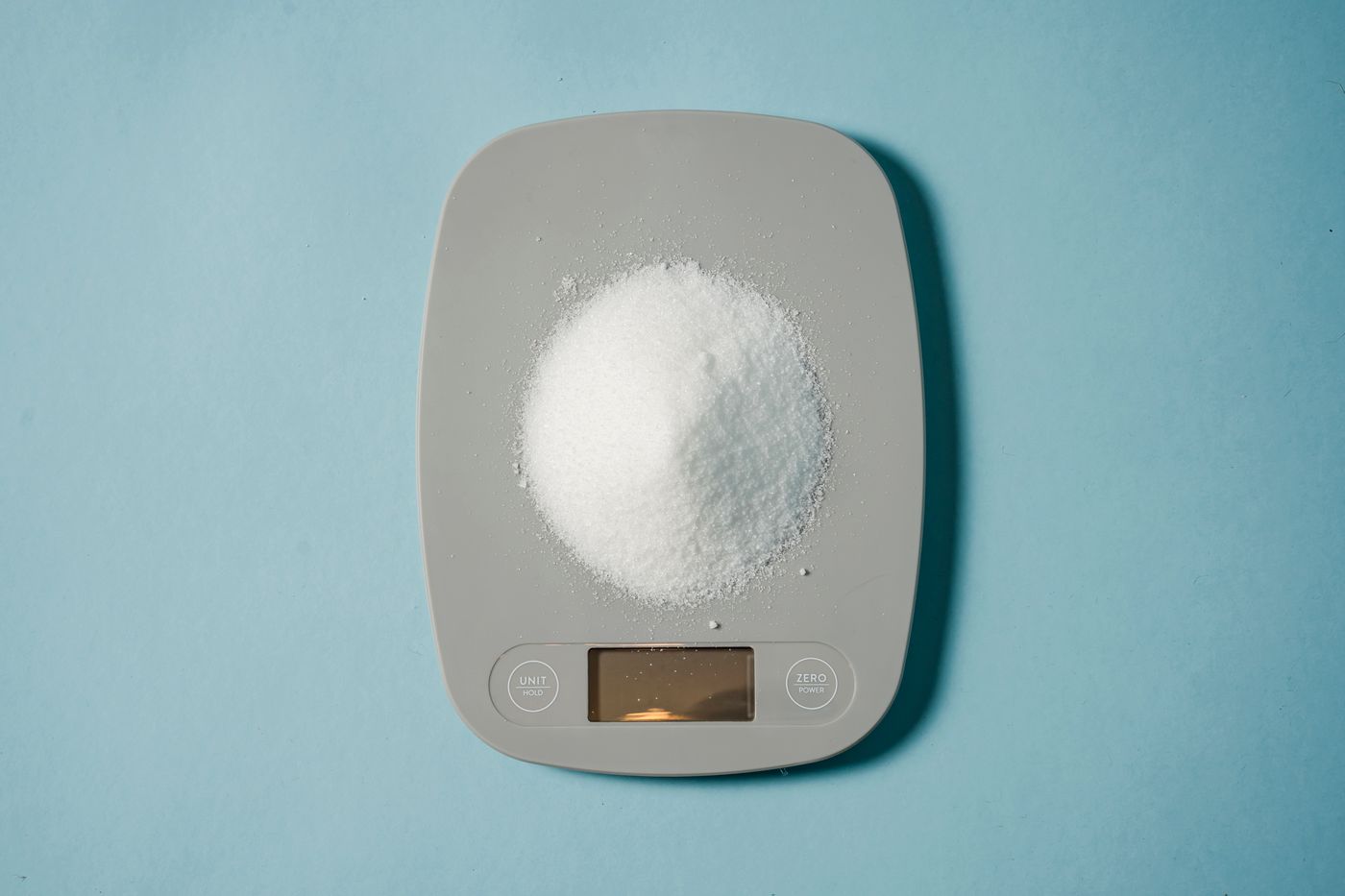
Flour around a scale’s display is easy to overlook while baking. The bowl comes off, the recipe moves on, and the scale goes into a drawer with residue still around its buttons or under the platform edge. A quick rinse may seem convenient, but a digital scale needs its own care method rather than the treatment given to the mixing bowl.
Check the instructions for the actual scale, remove ordinary residue through the permitted method, and let the affected surfaces reach the required dry condition before storage. Keep this separate from calibration, repair, or a claim that an attractive glass top makes the whole device washable.
Identify the scale and its permitted care
Find the model information and the maker’s care instructions before adding liquid. A kitchen scale may have a fixed platform, a removable cover, a separate bowl, a pull-out display, or another arrangement. Those differences matter when deciding which parts can be handled separately.
Do not infer water resistance from a smooth control panel or a sealed-looking edge. Likewise, a removable component should be removed only through the intended method. A platform is not necessarily detachable simply because a gap is visible beneath it.
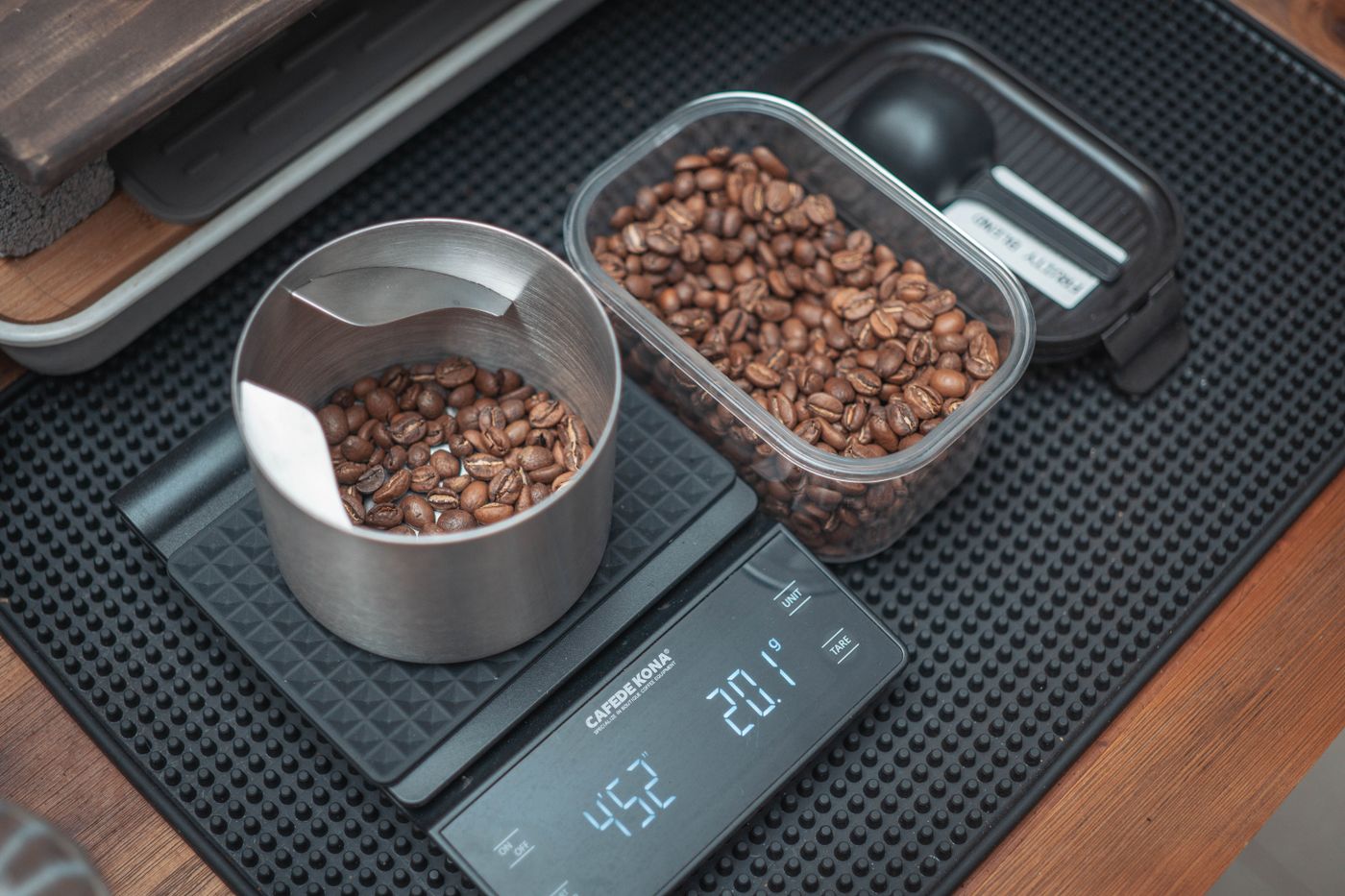
The Pinterest autumn creator report includes at-home cafe routines. Caring for a scale used for coffee or baking is one practical editorial application of that interest, not evidence that scale cleaning itself is a trending query.
As a specific manufacturer example, the OXO 11-pound glass-scale booklet instructs users to wipe its platform with a damp cloth and keep that scale out of running water and the dishwasher. Use the instructions for your own model; another OXO scale or a different brand may have a different platform arrangement.
Clear the work surface and finish the weighing task
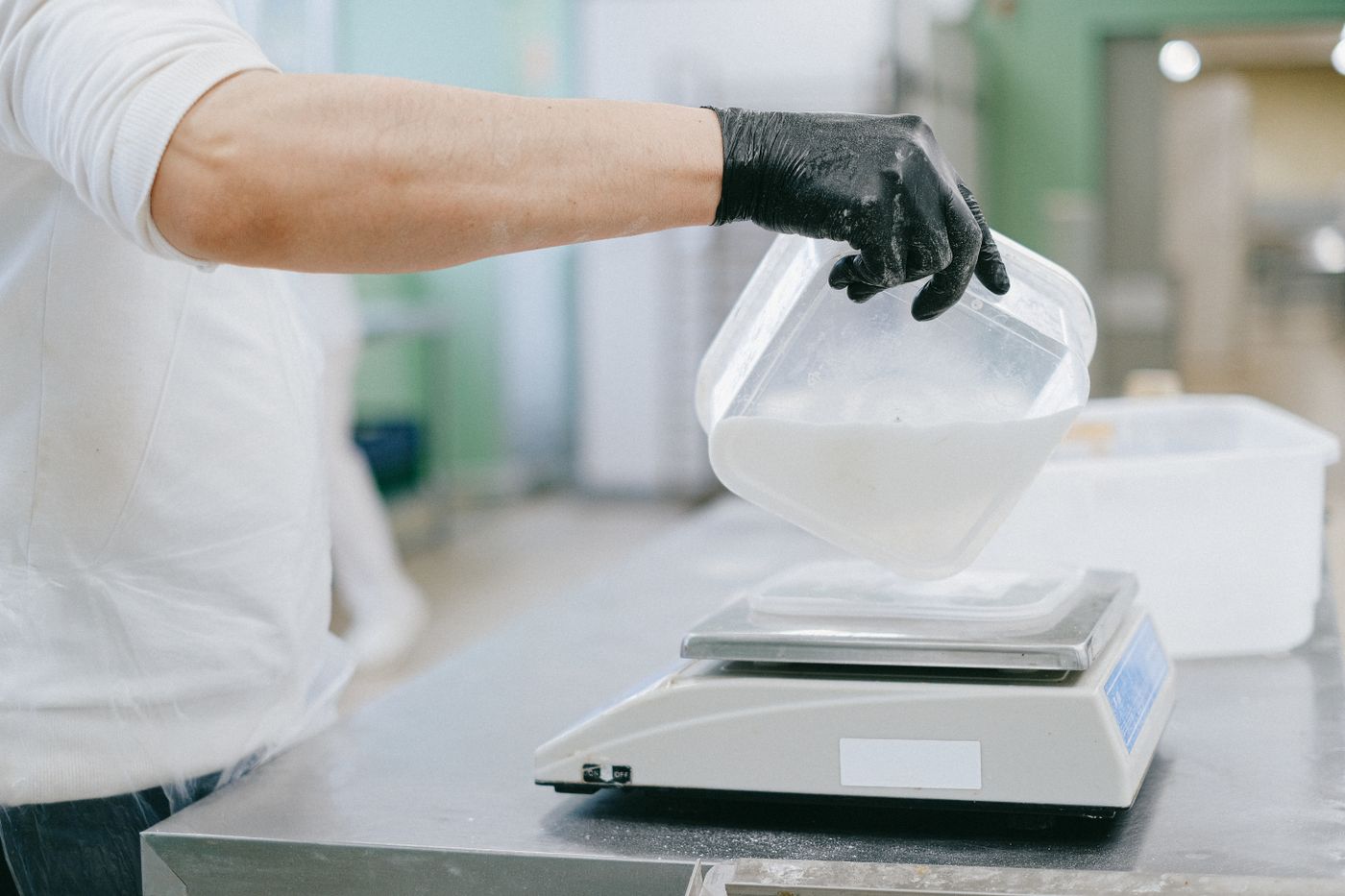
Remove the bowl and ingredients, and deal with the food through your normal appropriate process. Turn off or otherwise prepare the scale exactly as its instructions require. Keep the cleaning area separate from exposed food and from equipment already ready for the next recipe.
If a cable or power connection is present, follow the relevant power and cleaning directions before proceeding. This is not a reason to open the device or remove components not identified as user-serviceable. Battery replacement and internal repair are separate tasks.
Place the scale where it is supported without pressing against the platform or leaning on a pull-out display. Keep any removed component in a distinct position so it does not become mixed with the dishes. A suitable empty space is more useful than balancing the device over a crowded sink.
Notice what kind of residue is present. Loose flour, sticky syrup, dried batter, and moisture in an opening are different conditions. Begin with the ordinary accessible residue the permitted care covers; stop and consult the manufacturer when a spill may have reached an area that needs special attention.
Remove accessible loose residue without pushing it inside
Follow the maker’s directions for clearing dry debris. Work gently around edges and controls rather than forcing flour into seams with a pointed tool. Do not assume a visible gap should be filled with a brush, cloth corner, or cleaning liquid.
Use a suitable clean cloth or other permitted tool. An abrasive kitchen pad can alter a finish, and a cloth carrying residue from another task can transfer that residue to the scale. Choose for the surface rather than using whatever happens to be beside the sink.
Avoid heavy pressure on the weighing platform. A clean exterior and accurate weighing are different questions; pressing hard while cleaning is not a useful test of either. If the scale has been overloaded or damaged, follow the maker’s guidance rather than assuming wiping will restore it.
For a removable bowl or cover, follow its separate instructions away from the scale body. Dishwasher permission for that part, if explicitly given, does not extend to the electronic base. Reassemble only when each component is in the condition required by the instructions.
Wipe the platform through the allowed method
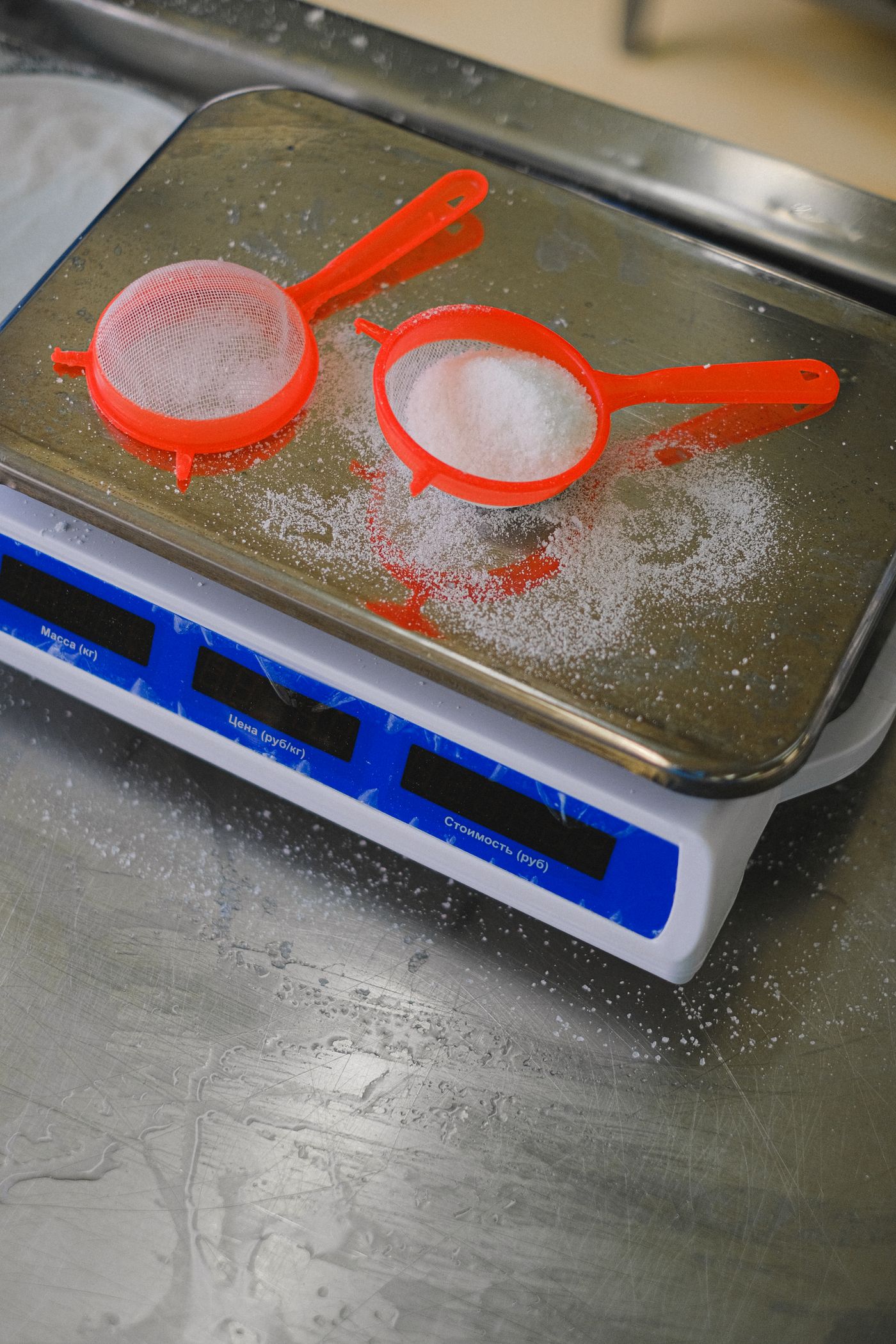
If the maker permits a damp-cloth wipe, keep the cloth controlled enough to work on the intended surface without flooding openings. Follow its guidance on any cleaning agent and residue removal. Do not substitute an unspecified chemical simply because the ingredient mark looks stubborn.
Work in small reachable areas and change to a clean cloth surface as it collects residue. Around the display, buttons, and platform boundary, keep the movement deliberate. Spraying freely over the whole scale makes it harder to keep liquid where the permitted method belongs.
The OXO booklet cited here illustrates why a glass surface should not be mistaken for a dish. Its care instruction concerns the scale as supplied. The material’s appearance does not override the product’s cleaning directions.
If an ordinary permitted wipe does not remove a mark, pause before escalating. A stain, scratch, etched area, or damaged finish may remain visible after cleaning. Repeated scrubbing to achieve a photographically perfect surface can create a different problem.
Clean controls and moving details without changing the setup
Look at the controls in their normal positions. A button can collect residue around its edge even when the platform looks clean. Wipe only as directed, keeping liquid away from areas whose permitted care has not been established.
If your model has a pull-out display, move it only as intended and support the device throughout. Do not pull a cable or flexible connection to gain more reach. The cleaning task should end with the display correctly returned, not with its movement altered.
Do not peel off a protective layer, label, or printed marking because it resembles residue. Preserve the information needed to identify and operate the scale. If a layer is lifting or a control appears damaged, ask the maker about the appropriate response.
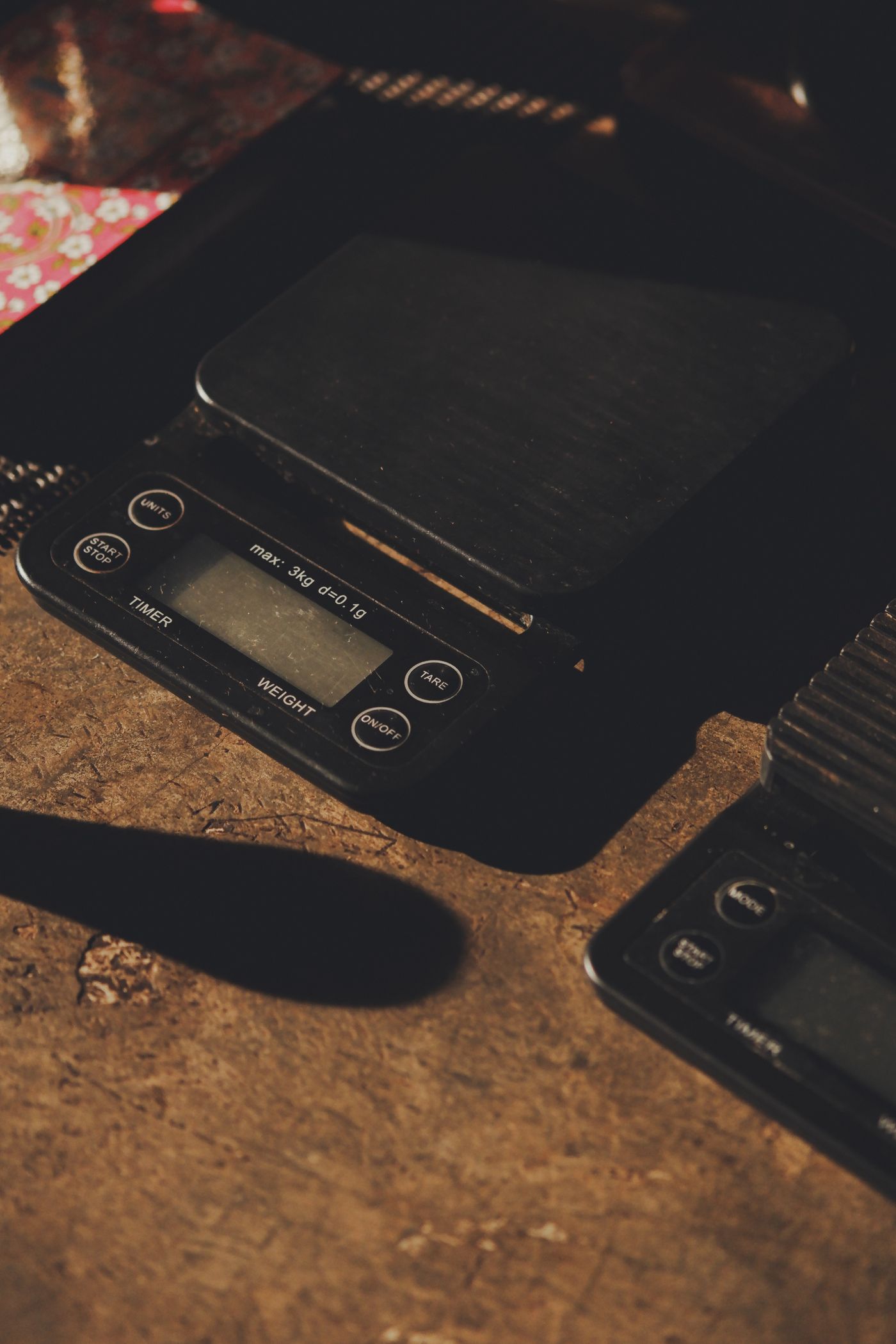
Cleaning also does not establish calibration. If readings are questionable, follow the product’s troubleshooting or calibration directions separately. Do not report that the scale is accurate merely because its exterior is clean or its display returns to zero.
Let the scale be ready before it returns to a drawer
Check the platform, accessible edges, and any separately handled components according to the maker’s drying requirements. Do not close the scale into a drawer with a damp cloth still resting on it or a washed cover fitted before it is ready.
Return it to a location that supports the product appropriately. OXO’s booklet warns against storing heavy objects on its scale; check your own model’s storage requirements rather than using a kitchen scale as a permanent shelf for another appliance.
Keep the next use visible in the arrangement. You should be able to remove the scale without dragging it through a stack of baking tins or losing a detachable part. A clear home for the whole device can prevent another round of unnecessary handling before weighing begins.
If cleaning revealed damage, keep the scale out of the ready collection until the question is resolved. A note identifying the model and concern is more useful than quietly putting it back and letting the next person discover the same problem.
Fit the task into a larger baking or coffee reset
Clean the scale when the weighing stage is finished and appropriate care can be completed. That is easier than remembering which old residue came from which recipe. It also leaves the work surface available for the next stage rather than letting cleaning supplies compete with food preparation.
Related tools still need their own methods. Our reusable cookie-cutter guide considers shapes and nesting, while the moka-pot cleaning guide addresses a cooled drink-making device with its own components. Neither process should be transferred wholesale to a digital scale.
For small food-contact accessories, the reusable-straw cleaning guide also plans the full route through cleaning, drying, and return. The shared habit is completing the task rather than leaving a partly cared-for item beside the sink.
Keep the routine proportionate
You do not need a specialist cleaning kit unless the scale’s actual instructions or condition call for one. Keep the correct manual reference available, use suitable existing supplies, and avoid turning ordinary flour removal into an internal maintenance project.
A successful result is an appropriately cleaned, ready scale with its components accounted for and its care requirements respected. It can still show normal wear. The useful change is that the next person can weigh ingredients without first guessing whether the scale is clean, damp, incomplete, or awaiting attention.
Explore related decisions in our Cleaning hub.
Sources and editorial scope
Editorial research checked October 28, 2026. Published trend reports are context for these editorial applications, not verified live keyword rankings. Practical household guidance; photographs do not document a tested household or authenticate pictured materials.