Workout gear often arrives one piece at a time: a mat, bands, a roller, then dumbbells. The collection feels small until the living-room floor must be cleared before meals, play, or relaxation. For the broader setup, How to Keep Books and Magazines From Taking Over a Small Living Room is a useful next read.
Begin with physics. Heavy, round, elastic, and damp items need different homes. One decorative basket is rarely safe or efficient for all of them.
Audit gear by behavior
Group heavy items, long items, small accessories, and anything needing drying. Mark what is used several times a week versus occasionally.
Daily gear deserves a quick setup route; unused gear should not occupy the living room for an imagined future routine.

Keep heavy items low
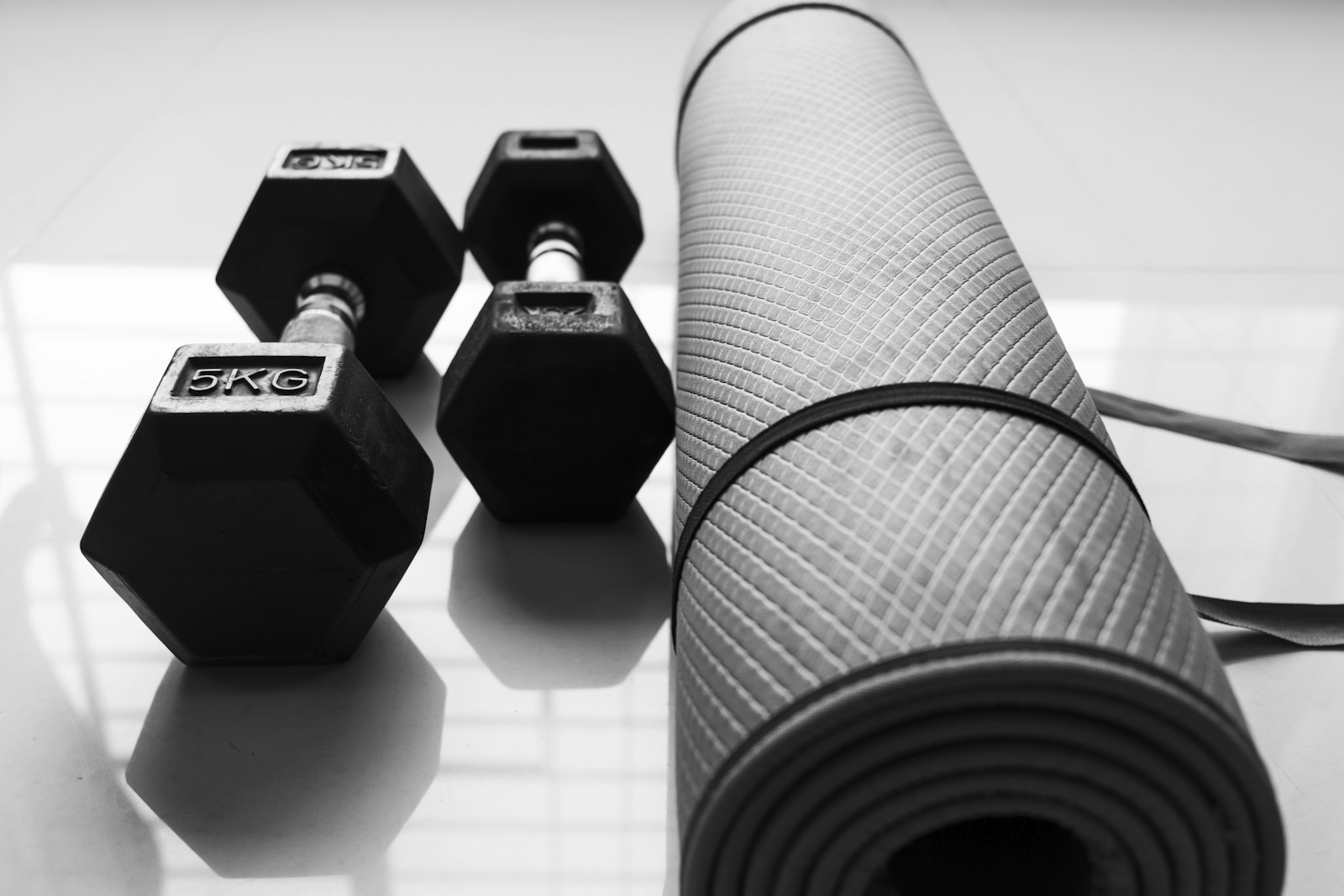
Dumbbells and weighted accessories belong on a stable low surface designed for the load. Prevent round items from rolling and never store heavy equipment high where lifting and dropping risk increase. For the broader setup, How to Store Batteries, Light Bulbs, and Small Maintenance Supplies Safely is a useful next read.
A hollow decorative bench is not automatically a weight rack. Follow equipment and furniture limits.

Protect the walking path
Open doors, extend recliners, move chairs, and walk the route to exits. Storage must not turn a late trip through the room into an obstacle course.
A floor corner is not storage if equipment migrates into circulation.
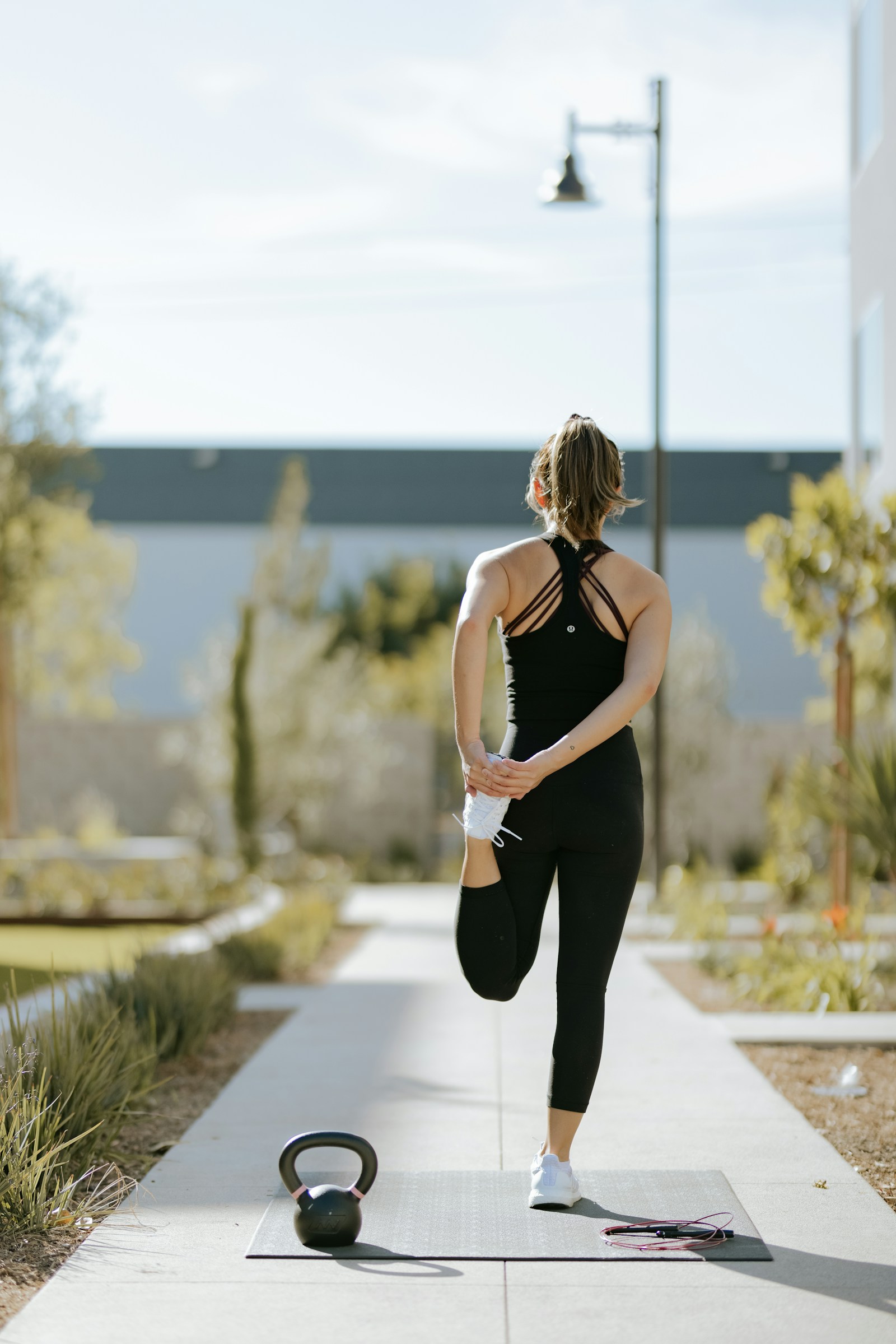
Store mats according to drying needs
A clean, dry mat can roll into a tall container or use compatible hanging storage. A damp mat should not be rolled tightly and hidden.
Let it dry according to care instructions and keep it away from heat sources and blocked vents.
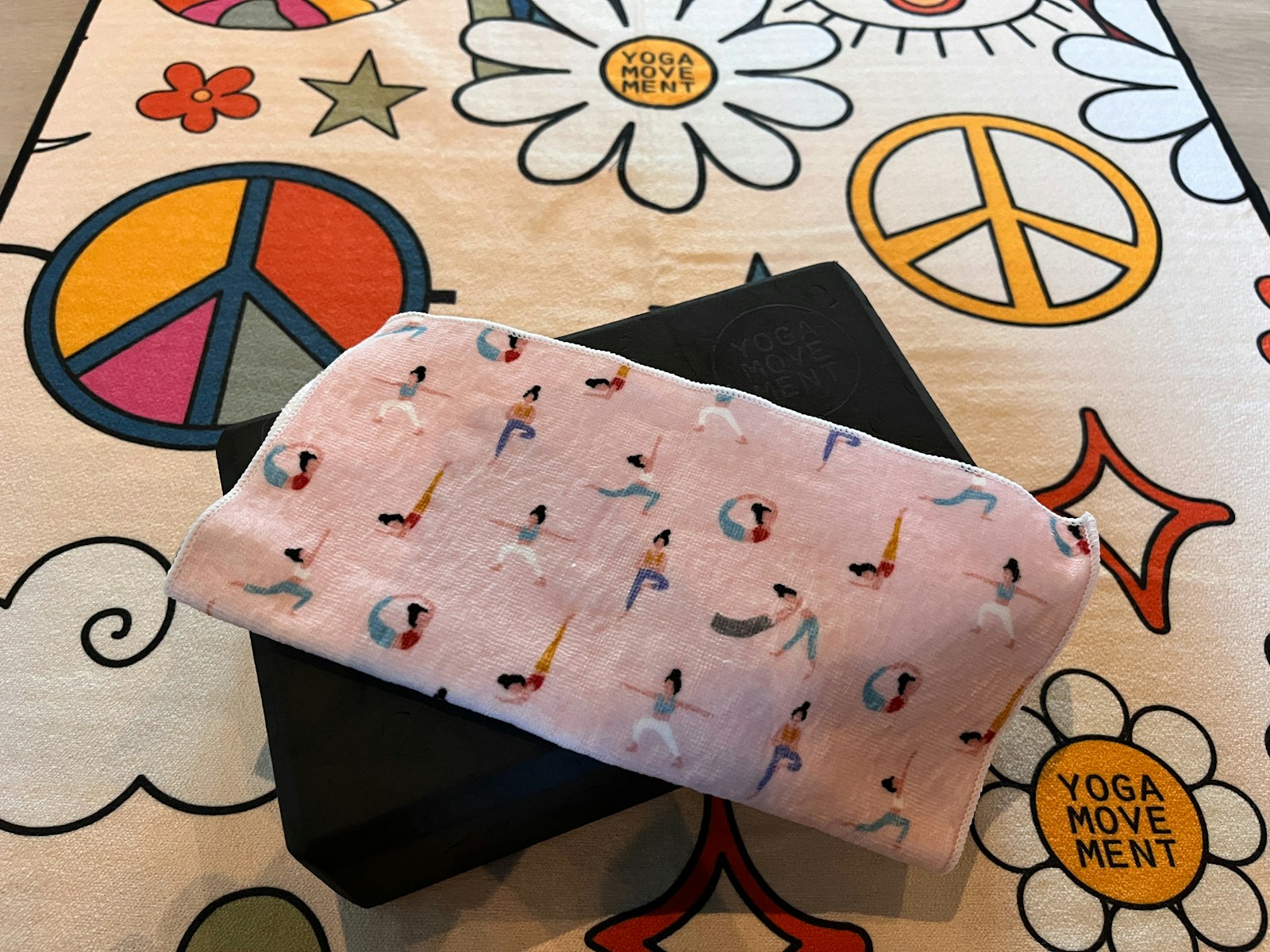
Contain and inspect resistance bands
Bands can tangle and attract children or pets. Keep them in a pouch, drawer, or closed bin. Inspect for cracks, tears, or degraded material and retire damaged bands.
Do not store bands under tension unless designed for it.

Build one portable accessory kit
Put sliders, straps, small balls, timers, and a workout notebook in one handled bin. It should move to the workout area and back in one trip.
Remove unrelated household objects so the kit retains one job.
Evaluate furniture honestly
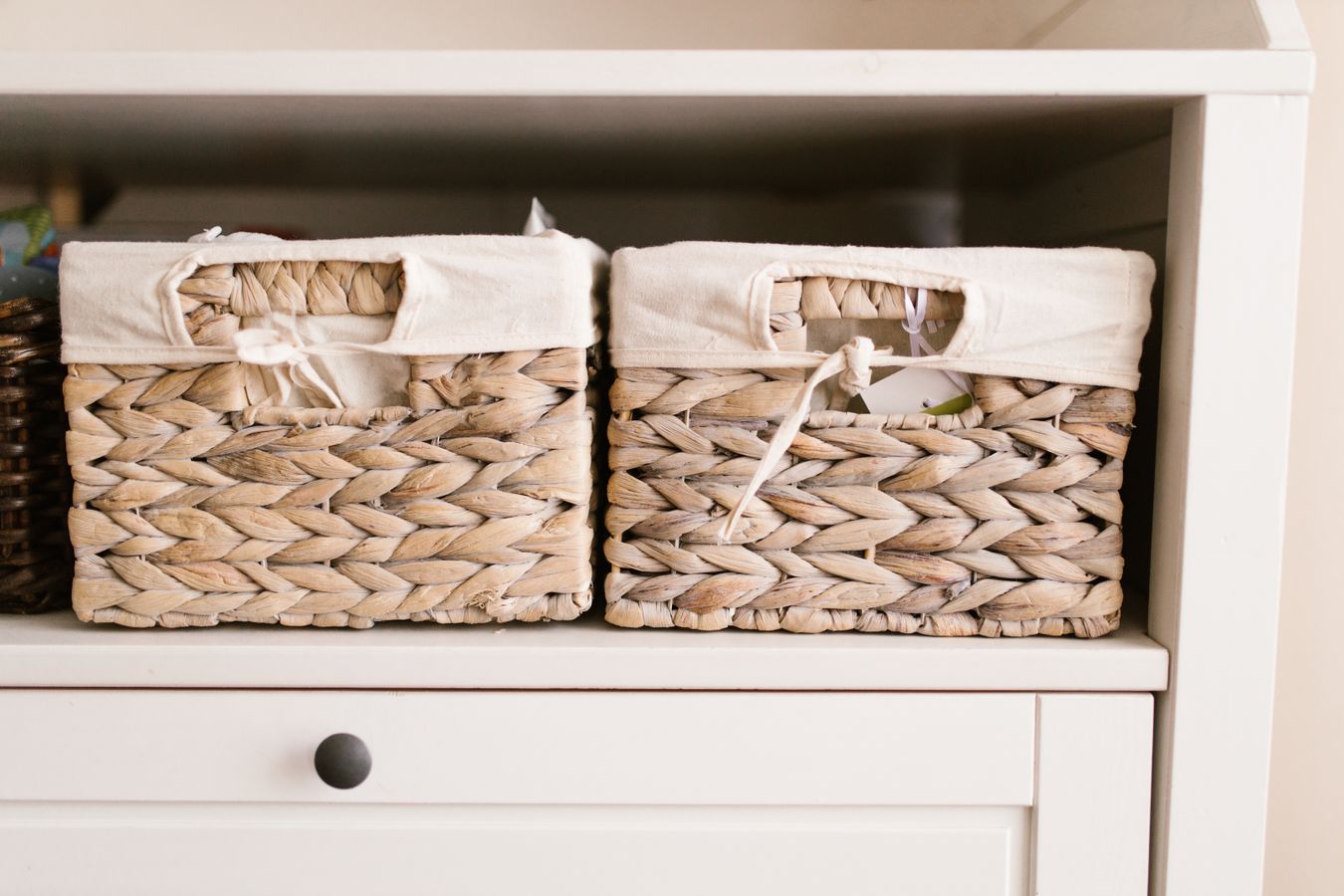
A low cabinet hides clutter but needs correct dimensions. A bench works only if designed for sitting and the equipment load. An open basket suits light towels, not loose weights.
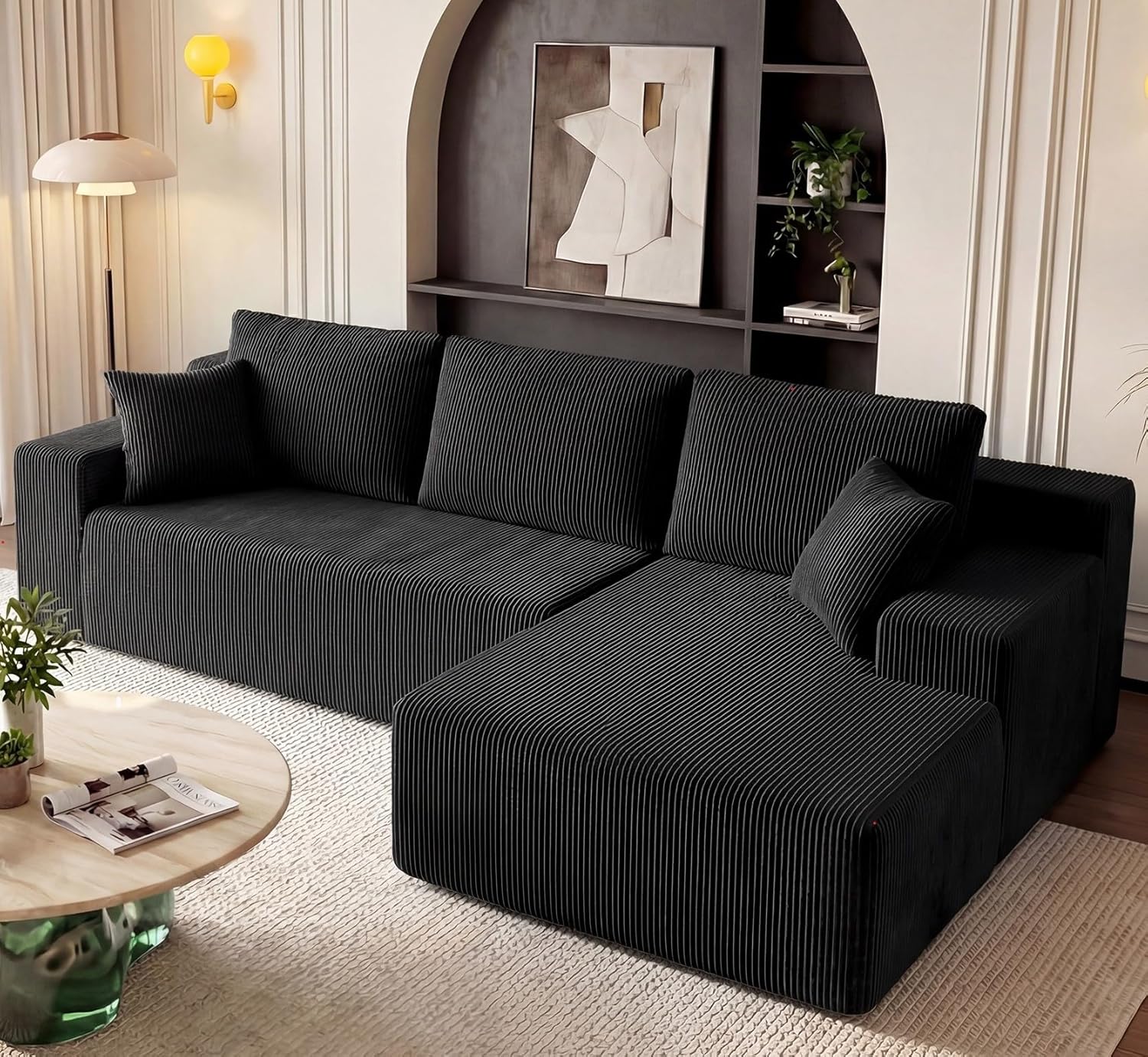
Behind-sofa storage works only when reachable and not a forgotten dust channel.
Treat wall storage as installation
Wall racks need correct mounting, load ratings, wall construction, rental permission, and safe projection into the room. Adhesive hooks are not heavy-equipment supports.
Choose stable low freestanding storage when proper mounting is unavailable.
Use a seven-minute post-workout reset
Return weights, air the mat, close the accessory kit, route towels to laundry, restore furniture, and inspect the walking path.
Compare the remaining visual load with blanket and pillow storage.

Match storage to each equipment type
Dumbbells: low, stable, and restrained from rolling. Foam rollers: vertical or horizontal where they cannot fall into traffic. Mats: fully dry before rolling. Bands: closed and untensioned. Shoes: routed with normal footwear rather than stored inside the equipment bin.
Separating by behavior prevents a heavy object from crushing a foam roller or a damp mat from enclosing bands and towels.
Protect floors without creating another layer of clutter
If equipment can mark flooring, use purpose-appropriate protection during the workout and store it afterward. A permanent stack of interlocking tiles may consume more living-room volume than the equipment itself. For the broader setup, How to Make a Small Living Room Feel Bigger Without Buying New Furniture is a useful next read.
Check that any mat or protector stays flat, does not curl into a trip edge, and suits the flooring finish. Trapped moisture and grit can damage some surfaces.
Use setup time as the real performance measure
Time one normal workout from deciding to begin until the space is ready. Then time the reset. If either phase takes longer than the workout habit can tolerate, reduce the equipment in the room or simplify the storage path. For a related step-by-step approach, see How to Create Quiet-Time Zones When the Whole Family Shares a Small Home.
Continue through the right silos
Browse Home Organization, Small-Space Living, and the verified Living Room hub.
My conclusion
Keep heavy gear low, contain anything that rolls, separate drying from storage, and give small accessories one portable home. Exercise should become easier without making family movement less safe.
Frequently asked questions
Can dumbbells go in an ottoman?
Only if the manufacturer’s load guidance and construction support it.
Where should a mat dry?
In a ventilated place that follows care instructions and blocks no route, vent, or heater.
Is wall storage renter-friendly?
Not automatically; heavy storage needs permitted, properly rated mounting.