The OXO Good Grips Dish Brush and Scotch-Brite Soap Control Dishwand solve the same daily task with different amounts of equipment. OXO keeps the brush separate from the soap supply. Scotch-Brite puts a refillable reservoir and dispensing control into the handle. For a small kitchen, the decision is less about which design looks more advanced and more about which one fits your sink, cleanup habits, and willingness to maintain a refillable tool. For a related step-by-step approach, see OXO Compact Toilet Brush and Canister Review: A Better Fit Beside a Small Toilet?.
Choose the OXO if you want a straightforward brush and already have a soap routine that works. Consider the Scotch-Brite if on-tool dispensing would remove a recurring interruption and you are willing to manage the reservoir and compatible replacement parts. Neither choice guarantees cleaner dishes or makes a cramped sink area automatically easier to use.
Research scope: This comparison uses the exact linked listings and manufacturer information. We have not physically tested cleaning performance, leakage, bristle life, or comfort. Household examples and buying recommendations are our practical analysis, rather than measured outcomes. Affiliate disclosure: As an Amazon Associate, we earn from qualifying purchases.
The two exact products compared
The OXO item is the plain Good Grips Dish Brush with scraper, ASIN B00004OCIZ. It is not OXO’s soap-dispensing brush, a bottle brush, or a refill pack. The Scotch-Brite item is the Soap Control brush dishwand, ASIN B07LGVV4M8. Product names and pack configurations can change, so confirm the selected item and included parts before checkout.
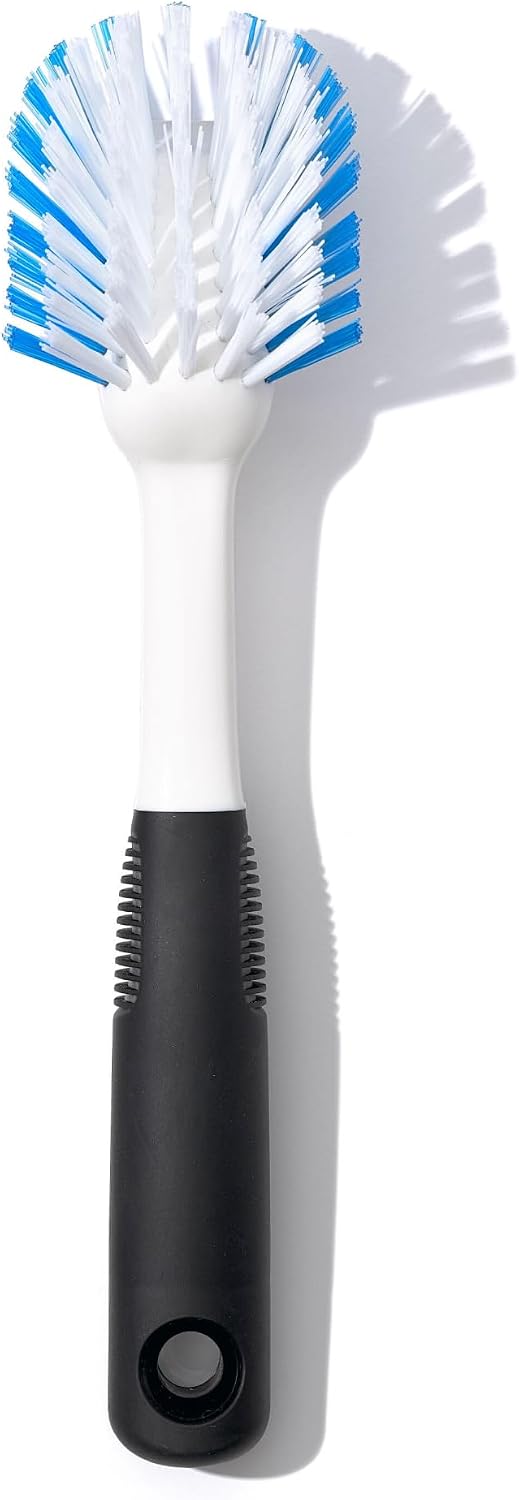
Check the plain OXO Dish Brush on Amazon.
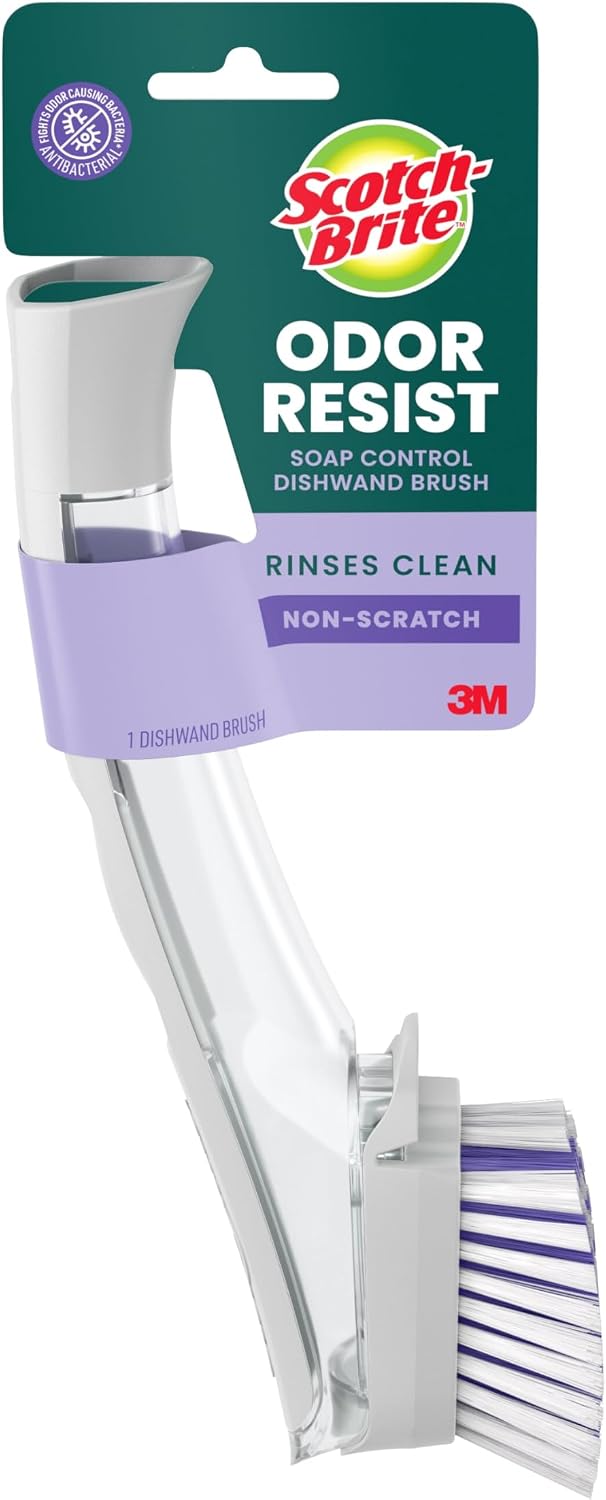
Check the Scotch-Brite Soap Control Dishwand on Amazon.
Start with the soap handoff that annoys you
Observe one normal washing session before buying. Are you repeatedly putting the brush down to reach a soap bottle? Does the bottle sit awkwardly behind drying dishes? Or is soap already available beside the sink with little interruption? A dispenser in the handle is useful only if it improves a real handoff.
If you wash a small number of items after each meal, a separate bottle and simple brush may already form a short routine. If you frequently move between several pans or wash in a tight corner where the bottle is inconvenient, on-tool dispensing may be worth considering. Those are household scenarios, not evidence that one product universally saves time.
Our guide to keeping a kitchen clean when cooking daily addresses the broader sequence. A brush purchase should improve that sequence rather than introduce another object you have to manage.
What the plain OXO design changes
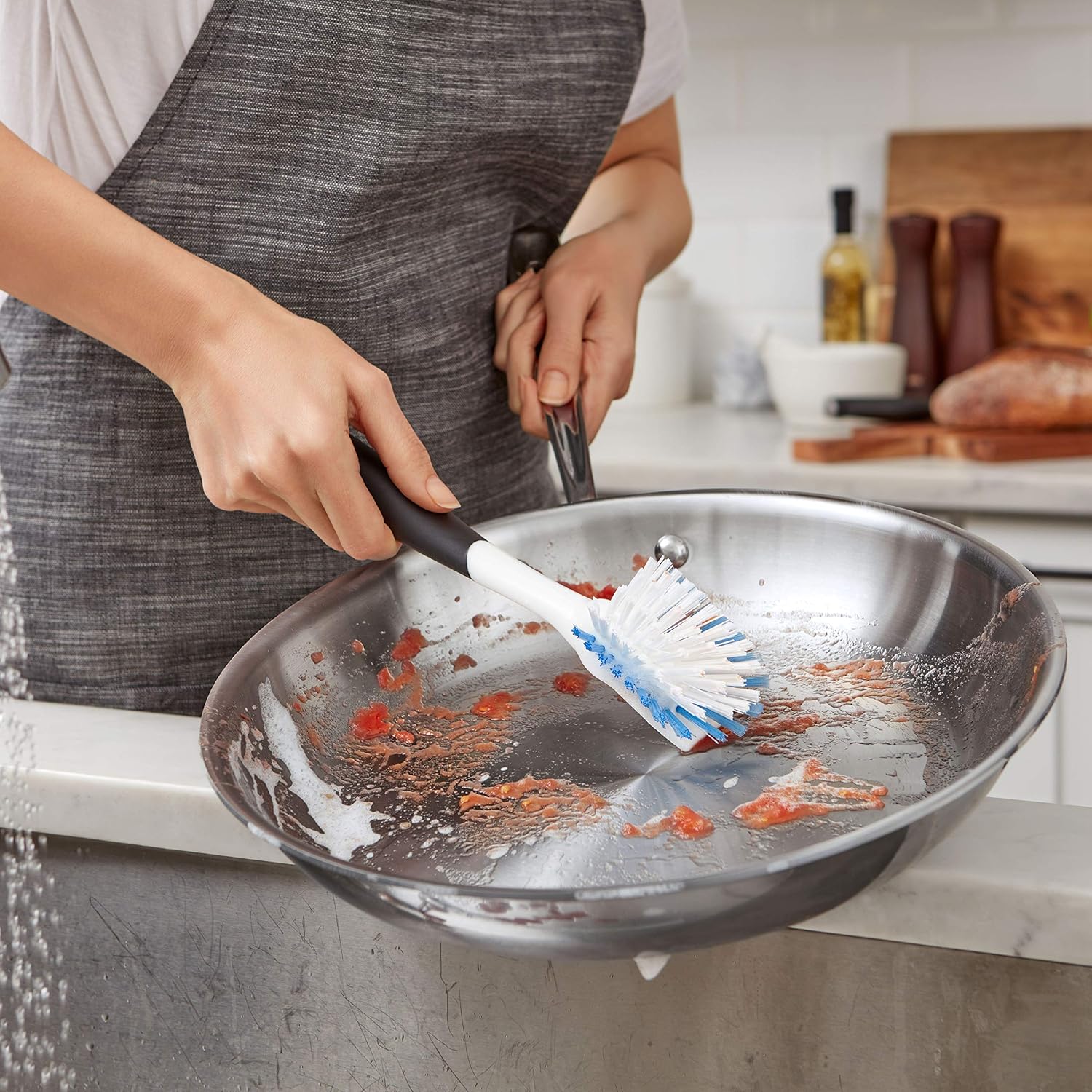
OXO lists nylon bristles, a flared head, a built-in scraper, a non-slip handle, and dishwasher-safe care for the linked brush. Its central practical advantage is the absence of a soap reservoir: there is no reservoir to refill, no internal soap level to track, and no dispensing control to include in the routine. For the broader setup, Microplane Premium Classic vs. OXO Etched Zester: Fine Grating, Care, and Drawer Fit is a useful next read.
That simplicity does not establish superior durability. Bristles and handles still wear, and the appropriate replacement point depends on the product’s condition and care guidance. We have not measured how long either brush remains useful. Treat fewer components as fewer maintenance tasks, not a tested lifespan claim.
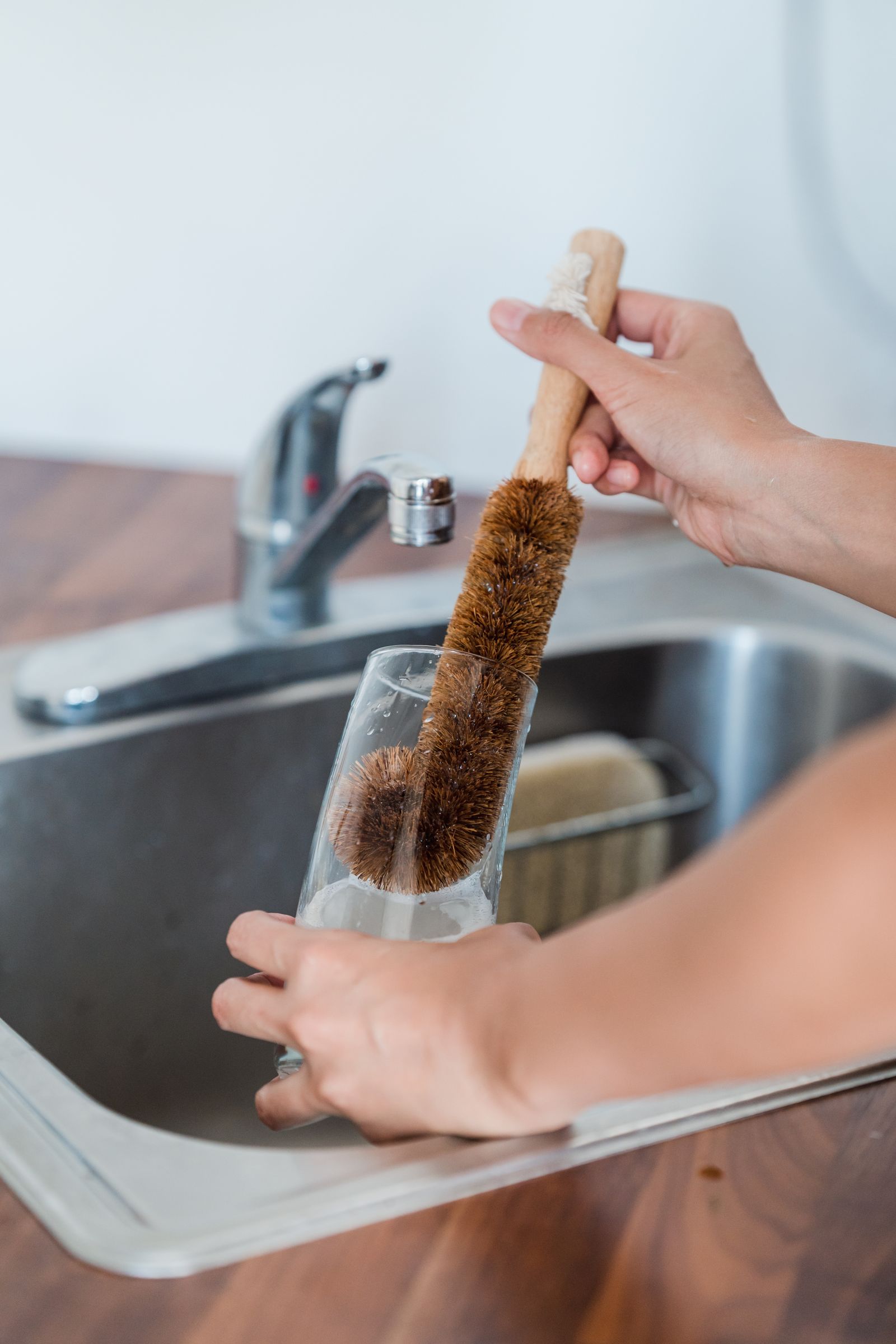
The flared head may suit corners differently from a narrower brush, but photograph-based assessment cannot verify reach inside your actual containers. Compare the opening of the items you wash. If the main problem is a narrow water bottle, neither general dish brush should be assumed to replace a suitable bottle-cleaning tool.
What the Scotch-Brite reservoir adds
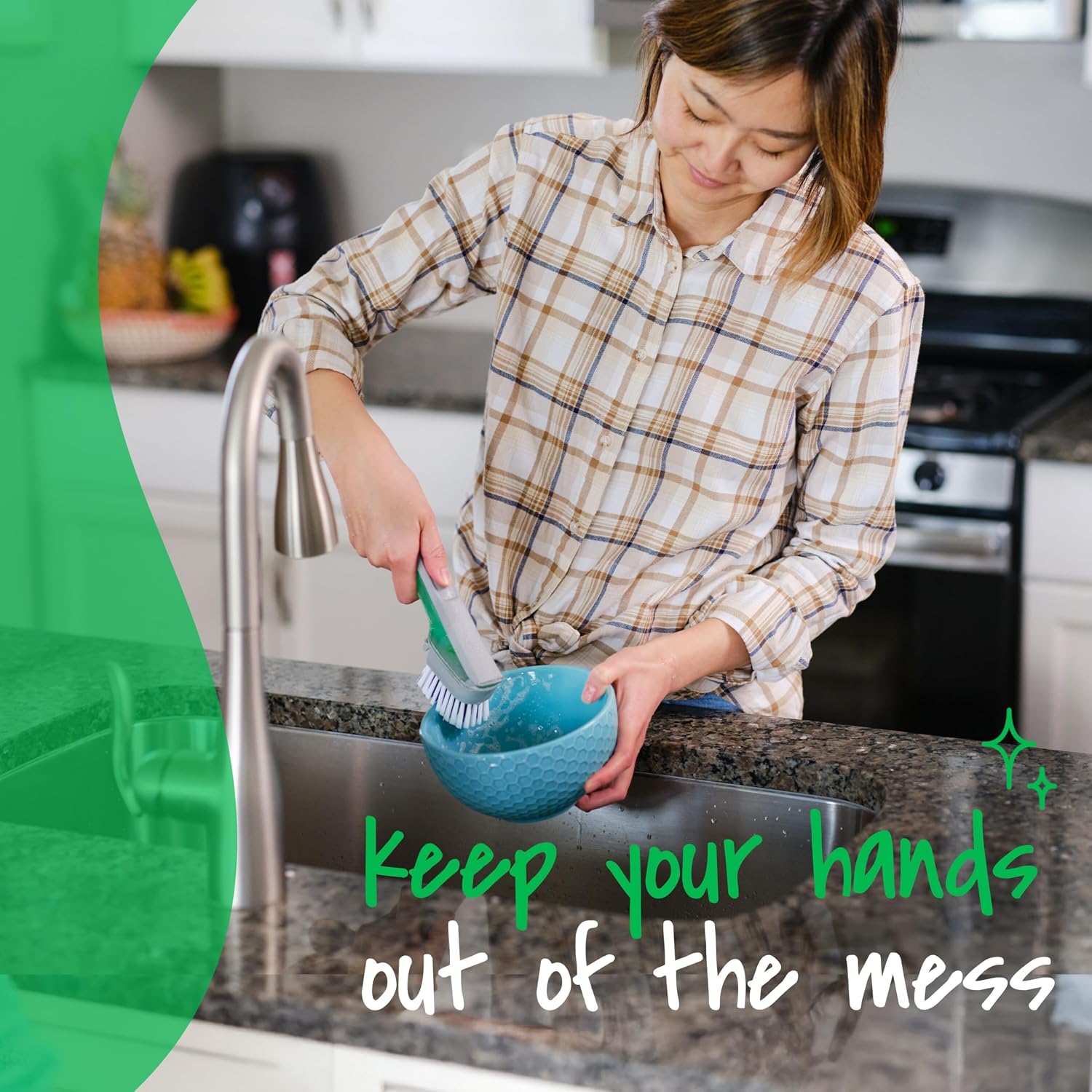
The linked Scotch-Brite listing describes push-button soap dispensing, a scraper, and a standing base. These features combine the cleaning tool and soap supply, while adding a refill and care routine. Confirm the current model because older packaging or photographs may show a different base or configuration.
The manufacturer’s leak-related wording is a product claim, not our independently verified result. We have not performed a leak test, and we would not promise that your sink ledge remains dry. Read the supplied use and storage instructions and inspect the condition of the tool during normal use.
Replacement parts matter as much as the initial purchase. Before buying, identify the compatible refill for the exact dishwand head and compare the delivered cost of keeping that model in service. Similar-looking Scotch-Brite sponge and brush refills should not be treated as interchangeable without confirmation from the maker.
Compare the parking space, not only the handle
Measure the usable sink ledge or caddy space where the tool will live. Include neighboring bottles, the tap’s movement, drying dishes, and any window edge. A brush that fits in your hand still needs a place to rest where it will not fall into the sink or obstruct ordinary cleanup.
For the Scotch-Brite, check the standing-base arrangement in the current listing and follow its storage instructions. For the OXO, consider a suitable existing holder or other storage method consistent with its care guidance. Do not buy a caddy first and then discover that the chosen brush does not sit properly in it.
If your sink area already has too many accessories, start by removing redundant items. Our guide to clearing kitchen counters can help distinguish a necessary tool from an attractive organizer that merely collects more tools.
Cleaning the brush is part of owning it
Follow each manufacturer’s care directions for the complete item and any removable parts. A dishwasher-safe statement for one brush does not transfer to a different handle or reservoir. Do not create a sanitizing schedule or chemical mixture based on the assumption that all kitchen brushes use the same materials.
Remove accessible food residue as directed and give the tool an appropriate storage arrangement after use. Inspect the head and handle for deterioration rather than judging only whether the tool still looks presentable. Neither a marketing odor claim nor a dispenser design removes the need to care for the cleaning tool itself.
Consider who will finish that care step. In a household where several people wash dishes, the simplest product can be the one whose refill, inspection, and storage tasks everyone understands. A more elaborate design may work very well if those jobs are clearly owned; it is less useful when everybody assumes another person will do them.
Non-scratch language still needs context
Both listings describe suitability for non-stick cookware, but your cookware’s instructions take priority. The condition of the brush, trapped grit, and how a scraper is used can change the situation. We have not tested either tool on particular coatings, polished finishes, or delicate items.
Read the guidance for the surfaces you wash and do not use the scraper indiscriminately. If a manufacturer recommends a different cleaning tool, select that tool rather than relying on a broad brush description. The goal is compatible care, not proving that one brush can handle every item in the kitchen.
Separate difficult baked-on residue from ordinary washing decisions. Appropriate soaking or another maker-approved method may be more useful than pressing harder. A convenient grip is not an instruction to apply greater force to an unsuitable surface.

Which one should you buy?
| Your routine | Better starting point | What to check |
|---|---|---|
| Soap bottle already sits conveniently beside the sink | Plain OXO brush | Head fit and an appropriate parking place |
| Reaching for soap repeatedly interrupts washing | Scotch-Brite dishwand | Reservoir care, compatible refills, and storage instructions |
| Main issue is a narrow bottle opening | Neither automatically | Choose a tool made for that opening |
| Existing brush works and has a usable home | Keep it | Replace only for condition or a specific unmet task |
The OXO is the stronger starting point for buyers seeking minimal maintenance complexity. The Scotch-Brite is a conditional choice for buyers who can name the soap-handling problem it solves. This is a recommendation about workflow fit, not a ranking based on unperformed cleaning tests.
Compare ongoing effort before comparing a deal
Check the current delivered price, pack quantity, seller, returns, and any replacement-part requirements. Do not compare a multi-pack offer with a single brush as though the quantities match. A low entry price can be less meaningful if you must add a holder or regularly buy a hard-to-find refill.
Also consider the equipment you already have. If the plain brush works, adding a dishwand may duplicate its job while leaving both beside the sink. If a dispensing tool already serves you reliably, replacing it with a different brand solely for a new feature may not improve the routine.
For the wider purchase decision, see the cleaning tools a small home needs and browse Buying Guides. The best purchase is the one that removes a recurring problem without creating a larger support system around it.
Sources and evidence limits
The OXO manufacturer page, Scotch-Brite manufacturer page, and the linked Amazon listings establish the product identities and listed design features. Listing photographs illustrate the products and are not photographs of our own testing. We did not measure soap consumption, cleaning speed, leakage, scratch resistance, or long-term wear.
Explore Kitchen ideas for the surrounding sink and counter routine. A simple brush and a refillable dishwand can both be sensible; your maintenance preferences and actual soap handoff should decide which earns the space.