A small home may not have room for an adult desk, a child homework desk, and a separate craft table.
One shared surface can work—if each person does not expect their setup to remain there all day.
The key is to design the station around handoffs between users.
Choose the surface by the hardest task
If an adult needs a laptop and monitor, or a child needs space for books and writing, make sure the surface supports the largest regular task. For the broader setup, How to Create a Home Office in a Small Space Without a Dedicated Room is a useful next read.
A table that is too shallow may look compact but create constant overflow.
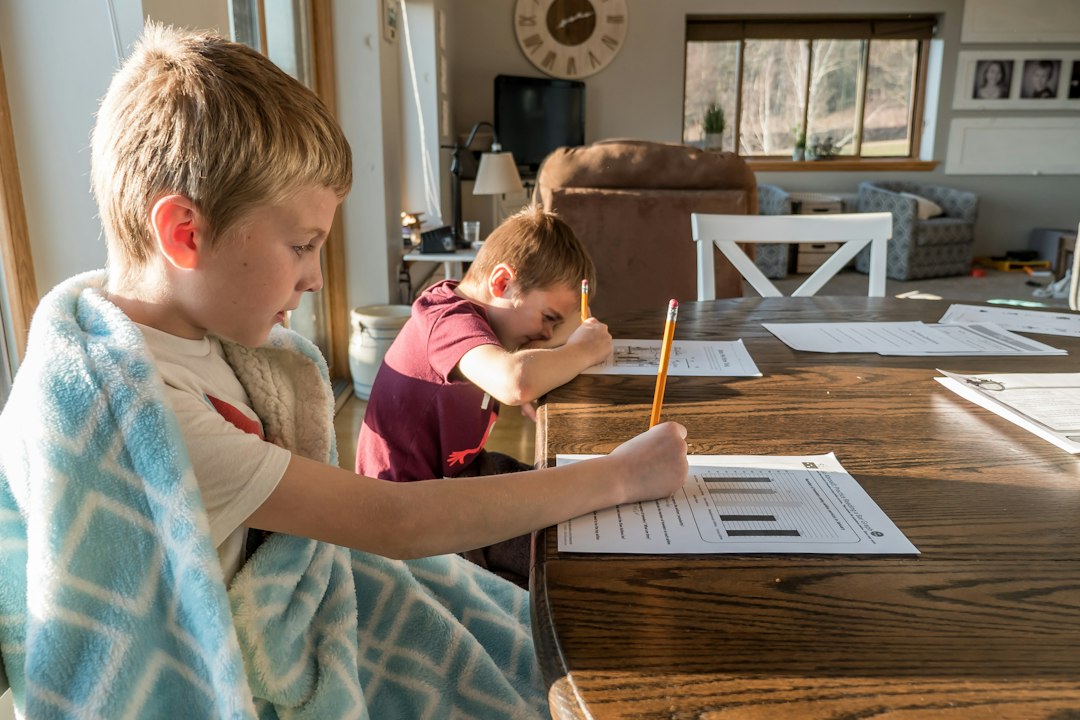
Give each user a portable kit
Instead of giving every person a drawer, use a caddy, folder, or small bin for their current-use supplies.
A child kit might include pencils, eraser, ruler, calculator, and current folders. An adult kit might include notebook, charger, headphones, and active paperwork. You may also find How to Store Cleaning Products in a Small Home With Kids useful for a closely related small-home problem.
Keep shared tools truly shared
Scissors, tape, stapler, printer paper, and charging adapters can live in one central zone if everyone uses them.
Do not duplicate every tool unless separate copies solve a real scheduling problem.
Use time blocks when the surface is in demand
If several people need the station at the same time, decide the predictable order before conflict starts. For example, homework may have priority after school, with adult laptop work moving later in the evening. For a related step-by-step approach, see How to Create a Quiet Homework Zone in a Small Family Home.

Create a paper-in and paper-out rule
Incoming school papers and adult documents should not live loose on the shared surface. Give each user one active folder or tray.
When the work session ends, paper leaves with the user.
Keep chargers contained
Use only the charging cables needed at the station. Specialty cables can live with their devices elsewhere.
For a broader cable system, see How to Organize Chargers and Cables in a Small Home Without Creating a Tech Drawer.
Protect one clear writing zone
Even if a laptop stays on the desk, keep enough open surface for a notebook, worksheet, or form. A shared station fails when every inch is occupied by permanent equipment. If you are working on the same space, How to Keep a Small Home Office Tidy When You Work There Every Day covers the next decision in more detail.
Use headphones as a boundary, not a room divider
In a small home, noise may be harder to control than storage. Headphones can help with focus where appropriate, but do not assume they solve every supervision or family-communication need.
The three-minute user handoff
- save/close current work,
- papers into the personal folder,
- tools back to the user kit,
- cups and trash leave,
- shared tools return,
- surface cleared for the next person.
Keep long-term archives elsewhere
The station should support current work, not family records, old school papers, tax files, and completed projects.
For paper storage, see A Home Filing System for Families With No Home Office.
For younger children
Keep the child’s kit simple and reachable. Reduce the number of tools they have to sort before starting homework.
For two children
Give each child a separate personal kit even if they share the same desk. Shared stationery can stay central, while current schoolwork stays clearly owned.
For adults working from home
If the station is used for several hours of daily work, protect ergonomic comfort and the equipment required for that job. A shared station should not make the primary worker repeatedly dismantle critical equipment without a realistic alternative.
Frequently asked questions
Can homework and work really share one desk?
Yes, when personal supplies are portable, paper leaves after each session, and users have a predictable handoff routine.
Should each child have separate drawers?
Not necessarily. Individual caddies or folders can provide ownership with less permanent furniture.
What stays on the desk all day?
Only truly shared or hard-to-move essentials. Keep enough surface open for the next user.
Design the station for switching, not claiming
A shared workspace succeeds when nobody has to clear someone else’s unfinished life before they can begin. Personal kits, paper rules, and a three-minute handoff let one small surface work much harder.