Cleaning supplies create an awkward organizing problem because convenience and safety pull in opposite directions. The easiest place to store bathroom cleaner may be under the bathroom sink. The safest location in a home with young children may be somewhere secured and less convenient.
That means cleaning organization should begin with household risk, not with matching spray bottles.
Separate the idea of “cleaning tools” from “cleaning chemicals”
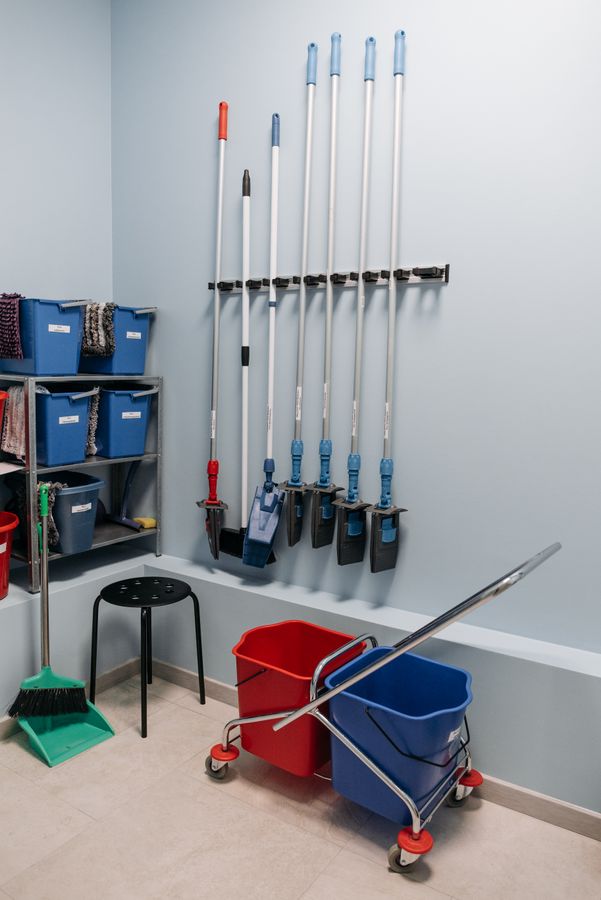
Brooms, microfiber cloths, dusters, scrub brushes, and vacuum attachments do not necessarily need the same storage rules as detergents, disinfectants, or concentrated products.
This distinction creates flexibility. The everyday cloth can live near the kitchen. Products requiring restricted access can live in a secured location.
Keep products in original labeled containers
Decanting cleaners into decorative bottles can remove instructions, warnings, ingredient information, and child-resistant packaging. For many household products, keeping the original container is the clearer and safer choice. For a related step-by-step approach, see A Simple Seasonal Declutter Before Bringing Holiday Decor Into a Small Home.
Organization should not make identification harder.

Choose one secure backstock location
Extra products spread across the house are easy to forget and difficult to control. Keep reserve cleaning products in one appropriate, secure location based on manufacturer guidance and household needs.
This also makes overbuying visible. You are less likely to buy a fourth bathroom cleaner when you can see the existing three. You may also find A Realistic Nightly Reset for Small Homes When You’re Too Tired to Clean useful for a closely related small-home problem.
Use point-of-use kits carefully
A small bathroom cleaning kit can reduce friction, but it should contain only products appropriate for that location and storage arrangement. In a home with children or pets, the kit may need to be secured or stored higher. If you are working on the same space, The Sunday Night Small-Home Reset That Makes Monday Easier covers the next decision in more detail.
The idea is to move a few routine tools closer—not to duplicate the entire cleaning aisle in every room.
Reduce the number of products before optimizing storage
Many households accumulate specialized cleaners: one for glass, one for counters, one for stainless steel, one for shower doors, one for tile, one for every appliance. Some are useful; others overlap.
Review what you actually use and what surfaces require. Fewer products reduce storage pressure and make routines easier to remember.
Never mix products casually
Different cleaners can react dangerously. Follow label directions and do not combine products unless the manufacturer explicitly directs it.
An organization system should keep labels visible and reduce the chance of confusing one product for another.
Use a portable caddy for active cleaning, not permanent chemical exposure
A caddy is excellent for moving supplies during a cleaning session. It does not automatically need to sit accessible on the floor afterward.
Think of the caddy as transport. When cleaning ends, return products to their designated safe storage.

Store cloths where they can dry
Damp microfiber cloths should not be thrown into a closed bin immediately. Give used cloths a drying or laundry path.
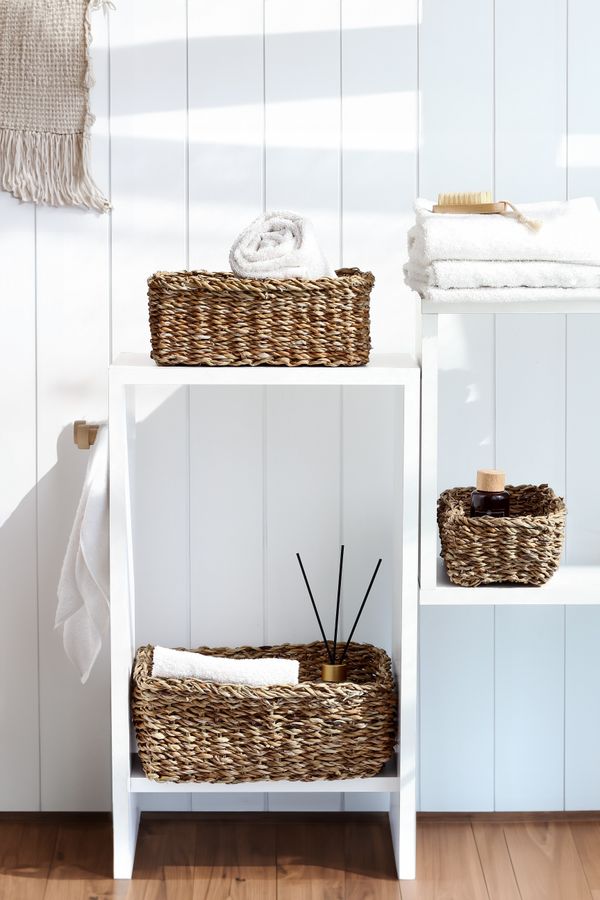
Clean dry cloths can be folded or rolled in a basket near the cleaning zone, while used ones go directly toward washing.
Label by function when family members share cleaning
If several people clean, broad labels such as “bathroom,” “glass,” or “floor” may reduce misuse. But the original product label should remain visible.
Do not create shorthand that hides important use restrictions.
Keep heavy bottles low only when the location is secure
From an ergonomic perspective, heavy detergent bottles are easier to handle from a lower shelf. From a child-safety perspective, low storage may be inappropriate unless properly secured.
Safety determines the zone first; ergonomics optimizes within that zone.

Separate laundry products from general cleaners when helpful
Laundry detergent, stain treatments, dryer products, and washing tools form their own routine. Storing them near the washer reduces unnecessary movement and keeps the general cleaning area smaller.
Again, storage should follow product guidance and access needs.
Create a simple inventory rule
For common products, one open plus one backup is often enough. Add more only when usage, price, or shopping frequency genuinely justifies it.
A small home should not need an entire shelf of unopened spray bottles.

Dispose of old products correctly
Do not pour unwanted chemicals together or improvise disposal. Follow local guidance and product instructions for disposal. Empty packaging may also have specific requirements.
This is another reason not to keep mystery bottles with missing labels.
A practical zone system
- Daily tools: vacuum, broom, cloths—easy to access.
- Room kit: limited routine products where safe.
- Secure chemical storage: products requiring restricted access.
- Backstock: one controlled reserve area.
- Laundry: separate near washer when possible.
For households with young children, How to Store Cleaning Products in a Small Home With Kids goes deeper into access, placement, and family-safe storage decisions.
Frequently asked questions
Should cleaning products go under the sink?
Only when that location is appropriate for the specific product and household. Homes with children or pets may require secured storage or another location.
Is it okay to put cleaners into matching bottles?
Keeping products in their original labeled containers is generally clearer and preserves instructions and warnings.
How many cleaning products do I really need?
That depends on your surfaces and routines, but many homes can reduce duplicates. Keep products that solve a specific recurring cleaning need.
A safe system can still be convenient
You should not have to choose between a home that is easy to clean and one that stores products responsibly. Separate low-risk tools from chemical products, keep active supplies modest, and let safety determine where restricted items live. Once those boundaries are clear, the organization becomes much simpler. If you are working on the same space, The Daily Landing Zone: Where Keys, Mail, Chargers, and Small Clutter Should Go covers the next decision in more detail.