The small objects are often harder to organize than the large ones. A sofa has an obvious location. Keys, receipts, earbuds, sunglasses, mail, coins, school notes, chargers, dog bags, and reusable shopping bags do not. They move constantly, which is why they often end up on the kitchen counter. You may also find How to Stop Entryway Shoes From Spreading Through a Small Home useful for a closely related small-home problem.
A landing zone solves this only if it remains a transition point. If every incoming object stays there indefinitely, the “organized entryway” becomes another clutter shelf. You may also find How to Handle Mail, Packages, and Returns in a Small Entryway useful for a closely related small-home problem.
Define what earns landing-zone space
The zone should serve objects that cross the home boundary frequently. Good candidates include:
- keys,
- wallet or small daily bag,
- sunglasses,
- current mail,
- reusable bags,
- dog-walking essentials,
- one charging need if it fits the routine.
It should not become general storage for batteries, tools, medication, coupons, crafts, and every item nobody wants to categorize.
Separate “goes out again” from “needs processing”
This distinction is the heart of the system.
Keys and sunglasses usually leave again tomorrow, so they deserve a stable return spot. Mail and school papers need a decision, so they need a processing path rather than permanent landing storage.
Keep the physical footprint small
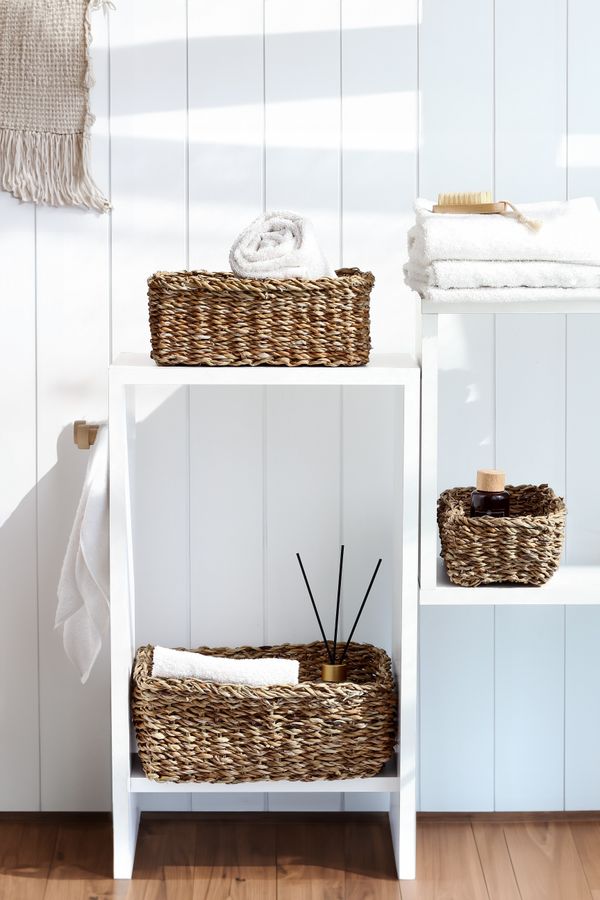
Large command centers invite accumulation. In a small home, a narrow shelf, a few hooks, and one paper slot may be enough.
Storage expands to fill capacity. Limiting capacity forces the system to stay transitional.
Use hooks for repeatable outgoing items
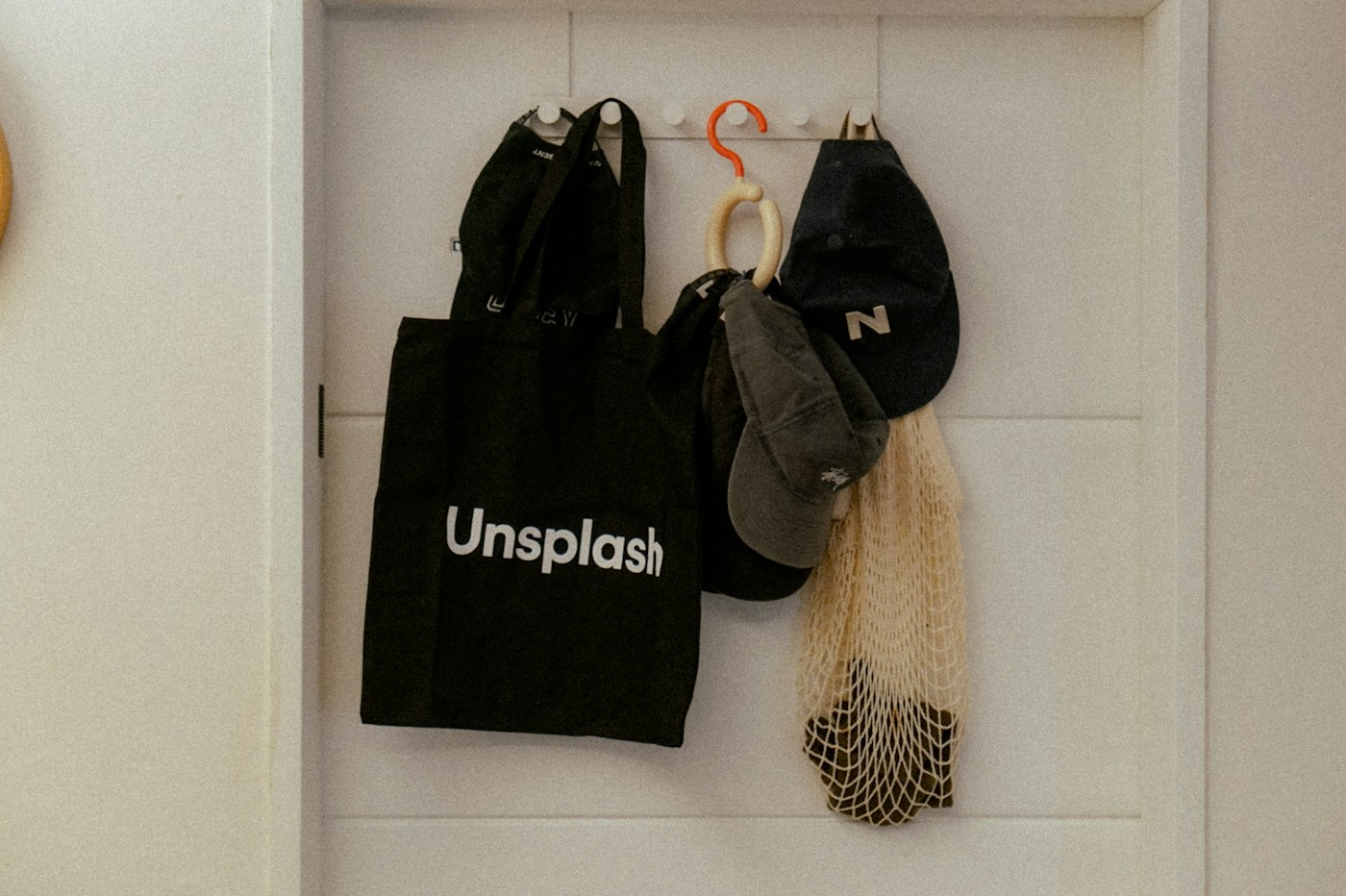
Hooks work well for keys, small bags, dog leashes, or lightweight items because the return motion is obvious. Assign locations rather than letting every hook become interchangeable.
For children, lower hooks can support independence if placement is safe and appropriate.
Mail needs decisions, not decorative baskets
Sort mail quickly into recycle, action, and keep/file. Most envelopes do not need to live in the entryway.
If you cannot process mail immediately, use one narrow “action” slot and review it at a fixed weekly time. When the slot is full, that is a signal—not a reason to buy a larger basket.
Pocket clutter needs one temporary tray
Coins, receipts, earbuds, lip balm, and random screws often arrive in pockets. A small tray can catch them at the door, but give the tray a reset rule.
Once a week, empty it completely. Receipts are filed or discarded, coins move to their destination, and mystery hardware gets identified or leaves.
Do chargers belong at the entry?
Only if devices naturally need to charge there. Charging stations often get added because they look useful in organization photos, then create a tangle of cords in a walkway. If you are working on the same space, How to Create a Homework Station in a Small Home Without a Dedicated Desk covers the next decision in more detail.
Charge near the entry when it supports the routine—for example, family tablets that leave the house daily. Otherwise keep charging where devices are actually used.
Reusable bags need a departure location
Reusable shopping bags often end up in kitchen drawers, then get forgotten when leaving. A small bundle near the exit can work better.
Keep the quantity limited. Twenty bags hanging from one hook are not a system.

Create a return-to-room basket only if it gets emptied
A basket for items that belong upstairs or elsewhere can reduce repeated walking during the day. But it must have a trigger: carry it during the evening reset, after dinner, or when going upstairs.
Without a trigger, it becomes a permanent mixed-category bin.
School paperwork deserves its own route
Children’s forms should not compete with adult mail. Use a folder, wall pocket, or backpack routine that distinguishes “needs signature” from general artwork or notices. For the broader setup, How to Set Up a Backpack Station for Two or More Kids in a Small Home is a useful next read.
The entryway can be the handoff point, but not the long-term archive.
Think about departures, not just arrivals
A good landing zone helps the morning leave the house. Ask what people need in the last sixty seconds before departure: keys, bags, shoes, pass, umbrella, water bottle.
Keep those items accessible without stacking them all on one console.
The zone needs a nightly closing move
Spend two minutes returning outgoing items to their spots and moving processing items onward. The surface should not go to sleep covered in unresolved objects.
This is one of the few tiny habits that can protect both the entryway and the kitchen counter, because it stops clutter from migrating inward.
What if there is no entryway?
Create a micro-zone on the first practical wall inside the door, the side of a cabinet, or a narrow section near the living area. The zone does not need architectural definition.
In a studio or open-plan apartment, visual restraint matters even more. Use fewer objects and closed storage for categories that are not needed during departure.

Do not let the landing zone become a family control tower
Calendars, chore charts, school schedules, meal plans, mail, keys, charging cables, photos, and baskets can quickly turn one wall into visual noise.
Keep only information that must be seen at the exit. Other planning systems can live elsewhere.
A simple layout
- Top: one small shelf or tray for wallet/sunglasses.
- Wall: labeled hooks for keys and repeat bags.
- Paper: one action slot.
- Below: shoes or reusable bags if the space allows.
If your front door opens directly into the living area, How to Create a Landing Zone in a Small Apartment With No Entryway shows how to shrink the same system into a much smaller footprint.
Frequently asked questions
How big should an entryway landing zone be?
Only large enough for the daily essentials. Smaller is often better because it prevents long-term accumulation.
Where should mail go?
Recycle obvious junk immediately; move action mail into one short-term slot and file long-term papers somewhere else.
How do I keep the landing zone from getting messy?
Give every category a next step and reset the zone daily or several times a week. Transitional storage fails when nothing exits.
The best landing zone keeps things moving
The purpose of the entry is not to display everything the household owns on the way out. It is to make arrivals and departures less chaotic. Keep the zone small, separate returning items from decision items, and make sure every temporary object eventually leaves. A landing zone should behave more like a train platform than a parking garage.