Many small homes do not have room for a permanent homework desk, and I do not think that is automatically a problem. A dedicated desk is useful when it fits the room and the child actually uses it. But squeezing another piece of furniture into a bedroom or living area can create more congestion than benefit. For the broader setup, How to Divide a Shared Kids’ Bedroom Into Sleep, Dress, and Play Zones is a useful next read.
A homework station can be a repeatable setup rather than a permanent location. The dining table becomes a study surface for forty-five minutes, then returns to being a dining table. The key is making the transition fast enough that homework does not leave a trail through the house.
Start with the surface you already own
Look at the dining table, kitchen peninsula, console, or another stable surface with reasonable lighting. Ask whether the child can sit comfortably, write without crowding, and access power when needed. For a related step-by-step approach, see How to Store Bulk Household Supplies When You Don’t Have a Pantry.
Before buying a desk, test the existing surface for two weeks. If the routine works, you may have saved both money and floor space.
Turn supplies into one portable kit
Instead of storing pencils in one drawer, scissors in another room, glue in a craft bin, and chargers somewhere else, create a homework kit for the items used most often.
Keep it intentionally boring: pencils, eraser, sharpener, scissors, glue stick, ruler, highlighter, a few pens. Specialty art supplies can stay in their normal storage. You may also find How to Organize Kids’ Art Supplies in a Small Home Without Creating a Craft Explosion useful for a closely related small-home problem.
The kit should be easy for the child to carry
An adult-sized rolling cart can hold a lot, but a simple handled caddy or shallow box may work better if homework moves between rooms. The child should be able to retrieve and return the kit without help.
Independence depends partly on physical design.
Create a paper path before papers arrive
School papers usually need one of four outcomes: action, return to school, short-term reference, or recycle/archive.
If every sheet lands in a general pile, the family must re-decide what it is later. A simple folder system can prevent that:
- Return: signed forms and finished work going back.
- Do: current assignments.
- Keep this week: schedules, spelling lists, instructions.
- Decide: artwork or papers that may be saved.

Do not make the dining table a permanent file cabinet
Homework can happen on the table without school materials living there all day. That distinction matters. The table remains flexible only if the setup can be removed in one or two minutes.
Use a nearby shelf, basket, cabinet, or backpack zone as the station’s “offstage” location.
Handle device charging as part of the routine
Laptops and tablets create clutter when the charging cable migrates around the room. Give school devices one charging location with labeled or clearly assigned cords.
If devices are used at the dining table, the charger does not necessarily need to remain on the table. Charge after homework in a safer, lower-traffic zone.
Lighting matters more than decorative organization
A beautiful supply cart does not compensate for poor lighting. If the shared table is dim, add a portable task lamp that can be stored nearby.
When choosing a lamp, make sure its cord does not cross walking paths and that its base does not consume half the work surface.
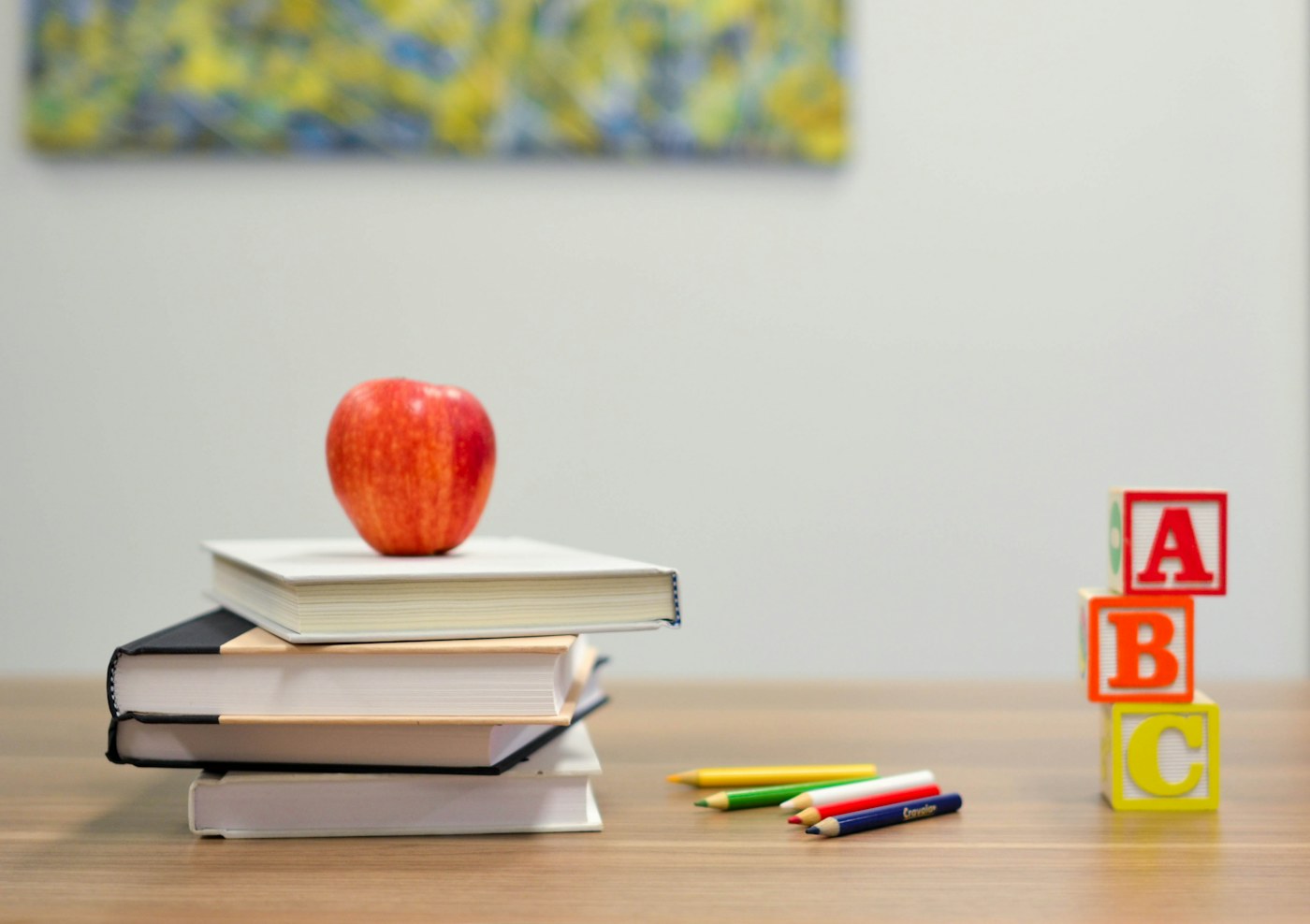
Create a visual boundary for siblings
Two children at one table may need more than separate pencil cups. Use placemats, shallow trays, or assigned sides of the table to create temporary work zones.
This does not make the table larger, but it reduces the sense that everyone’s materials are merging into one pile.
Store only the current school season nearby
Old notebooks, completed workbooks, last semester’s project supplies, and outgrown learning materials should not compete with current homework tools.
At the end of each term, clear the station. Small-space systems work best when the active layer stays thin.
Give completed projects an exit date
Poster boards and models can occupy a huge percentage of a small room. Decide in advance how long they will stay after grading. Photograph meaningful projects, keep a limited number if desired, and recycle or dismantle the rest when appropriate. For a related step-by-step approach, see How to Store School Projects, Poster Boards, and Oversized Kids’ Work in a Small Home.
There is no storage container that makes six years of poster board physically small.

The reset should be part of homework, not a separate parental chore
A homework session is not finished when the last answer is written. It ends when:
- assignment goes into the correct folder or bag,
- supplies return to the kit,
- device moves to charging,
- trash and scrap paper leave,
- table returns to household use.
This is the difference between a flexible station and a permanent mess.
When a dedicated desk is actually worth it
A desk may be justified if the child studies for long periods, needs ergonomic consistency, attends online classes, or repeatedly cannot focus in shared family areas. In that case, look for a narrow desk, wall-mounted surface, or bedroom workspace sized to the actual tasks.
Do not buy a desk merely because “students should have desks.” Buy one when the routine proves the need.
What about younger children?
Younger children may work better near an adult rather than alone in a bedroom. A dining-table station can make supervision easier while dinner is prepared or another child studies nearby.
Keep supplies simple and easy to return; overly detailed categories create cleanup resistance.
A sample after-school flow
- Bag lands in assigned zone.
- Lunch items move to kitchen.
- Homework folder comes to table.
- Portable supply kit comes out.
- Homework happens.
- Completed work returns to bag.
- Device charges.
- Kit disappears and table resets.
If noise and focus are a bigger problem than furniture, How to Create a Quiet Homework Zone in a Small Family Home adds another layer to the same routine.
Frequently asked questions
Does my child need a desk for homework?
No. A stable, comfortable shared surface can work well if supplies, lighting, and cleanup are organized.
Where should school supplies live in a small apartment?
Keep everyday supplies in one portable container near the homework surface and less-used supplies in deeper storage.
How do I stop homework from taking over the dining table?
Make removal part of the routine. The station should have an offstage home so the table can fully return to dining use.
The most space-efficient station is one that disappears
Small homes benefit from rooms that can change jobs without a major reset. A good homework station appears quickly, gives the child what they need, and leaves just as quickly. That rhythm is often more valuable than finding space for another permanent piece of furniture.