Learning Resources Sorting Surprise Picnic Baskets gives a shared table a contained pretend-play theme: small numbered baskets and food pieces that can be matched, counted and packed away. It is a more structured purchase than a box of open-ended building pieces. The deciding question is whether your child enjoys repeating that kind of matching play, not whether the package lists enough educational benefits. For a related step-by-step approach, see PicassoTiles 100-Piece Set Review: Enough to Build, More to Put Away.
Review scope: This is a research-based assessment of the linked product, not a hands-on test. Listed specifications are distinguished from our practical buying analysis. Offers and selected variants can change.
Buy for the play your child already returns to
Some children enjoy opening containers, finding a matching object and closing the lid again. Others prefer constructing something that changes shape each time. The picnic baskets are more compelling for the first pattern. A product description can explain the intended activities, but it cannot tell you which pattern will hold your child’s attention.
Watch a few ordinary play sessions before buying. If pretend meals, color grouping or small containers already feature in them, this theme may build on an existing interest. If every matching game is abandoned quickly, purchasing another themed set is unlikely to resolve that mismatch by itself.
What the set actually asks you to store
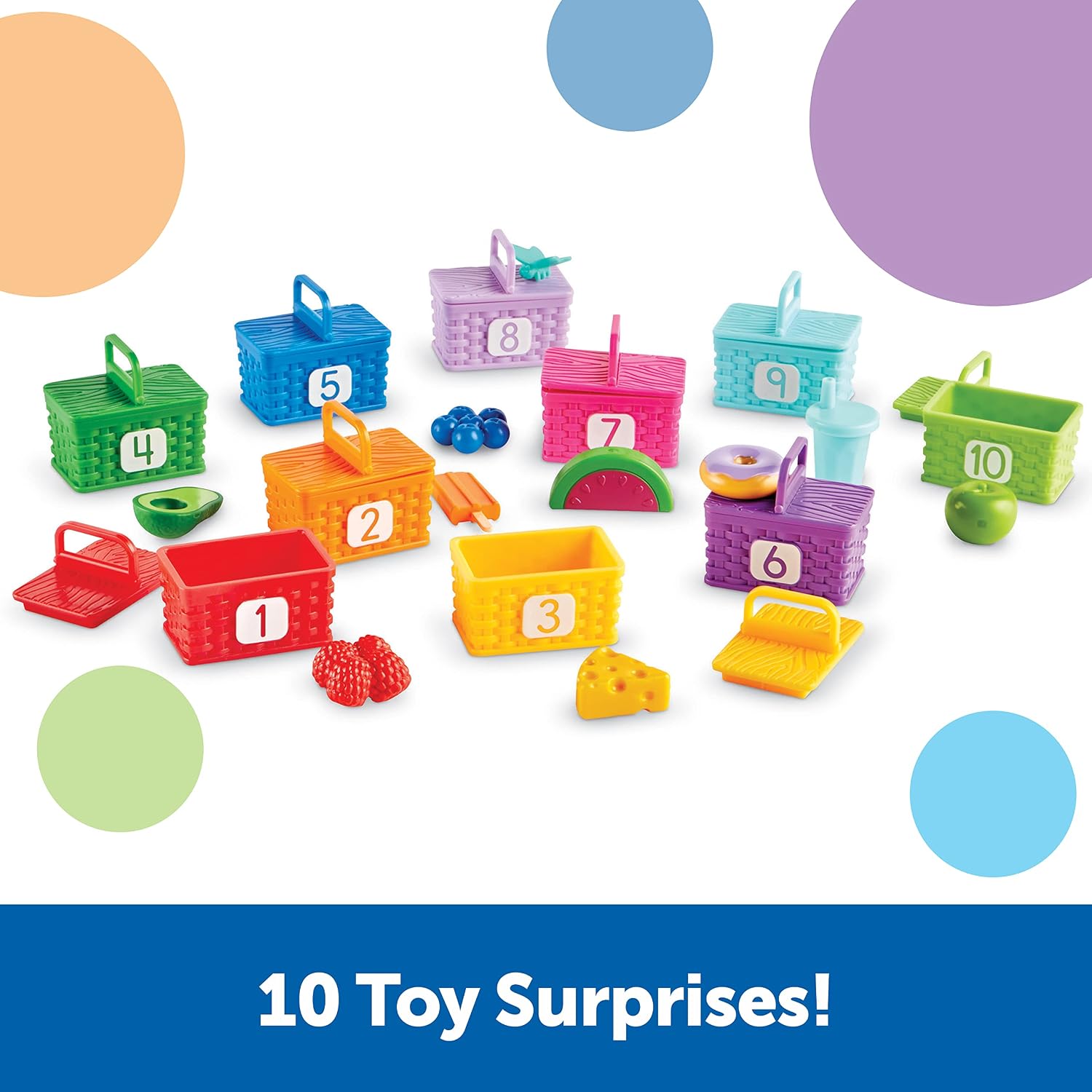
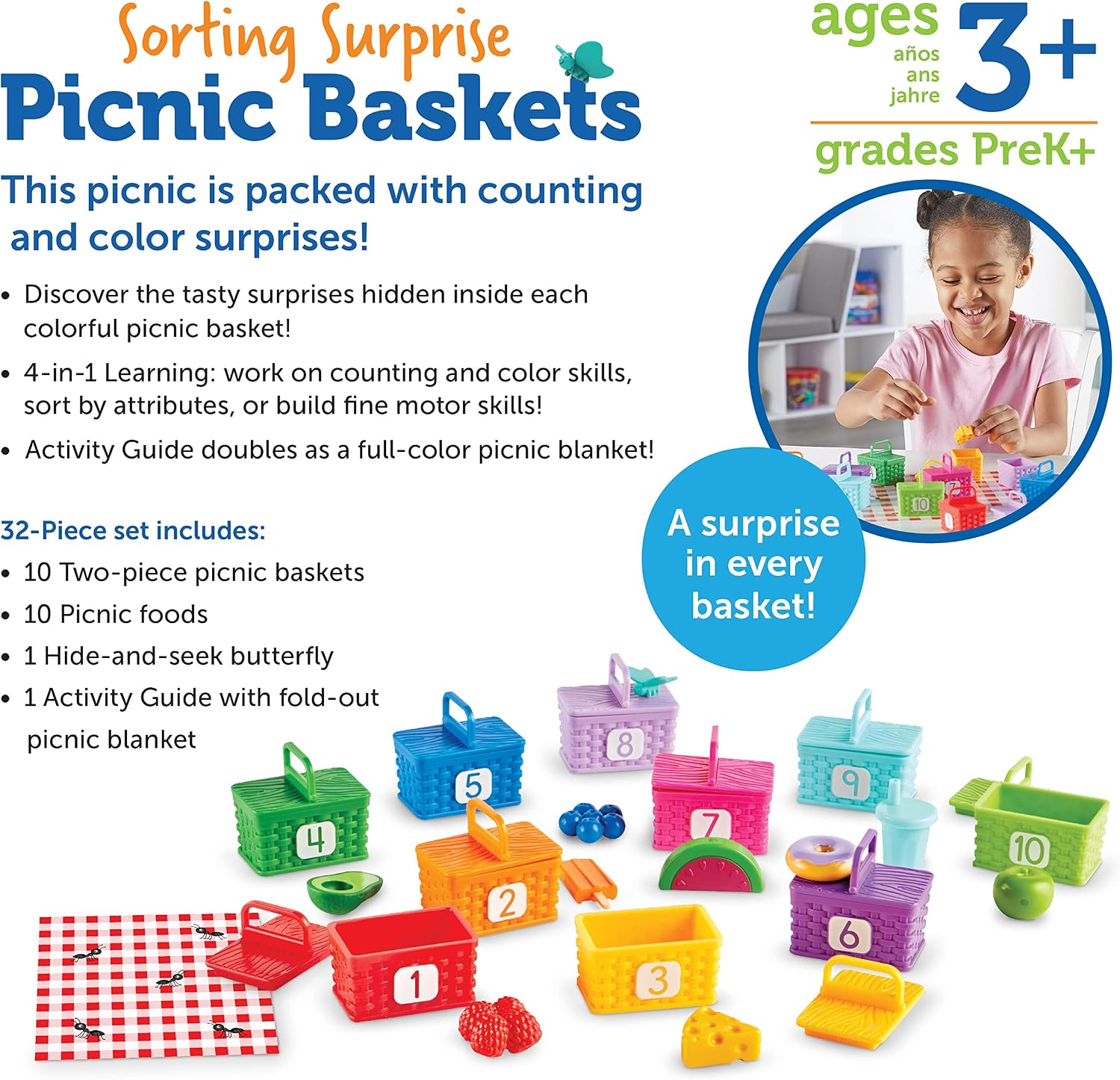
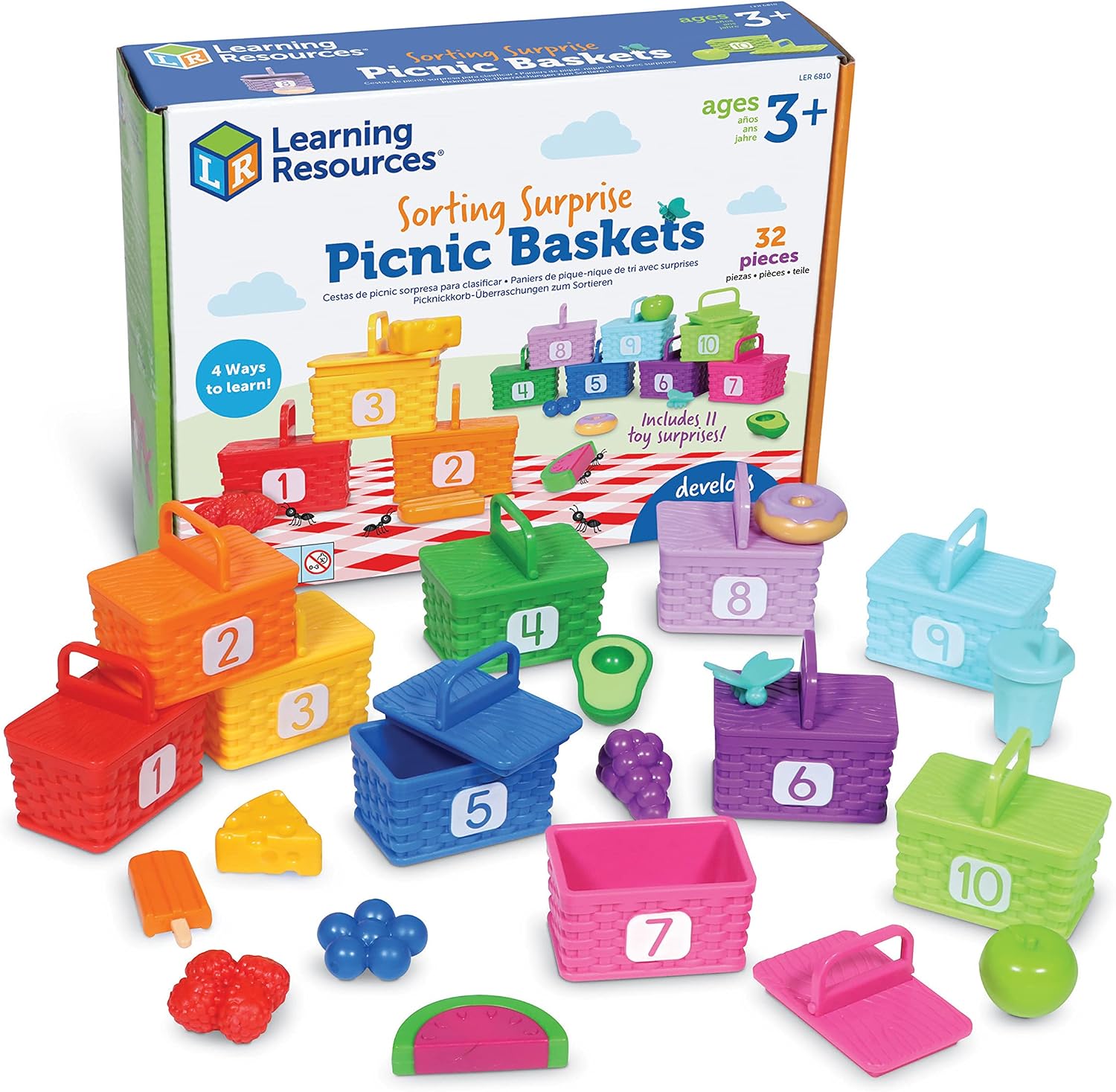
The product includes ten numbered, colored baskets and matching food pieces, along with a picnic blanket and butterfly. The advertised total piece count should not be read as that many separate food toys. Lids and other components contribute to the physical set, and each needs to return to storage after play.
For a small room, count the storage task as well as the entertainment. Can the entire set fit in one accessible container? Can an adult see whether pieces remain under the table? A toy that arrives in an attractive presentation box may still need a practical everyday home once the packaging is opened.
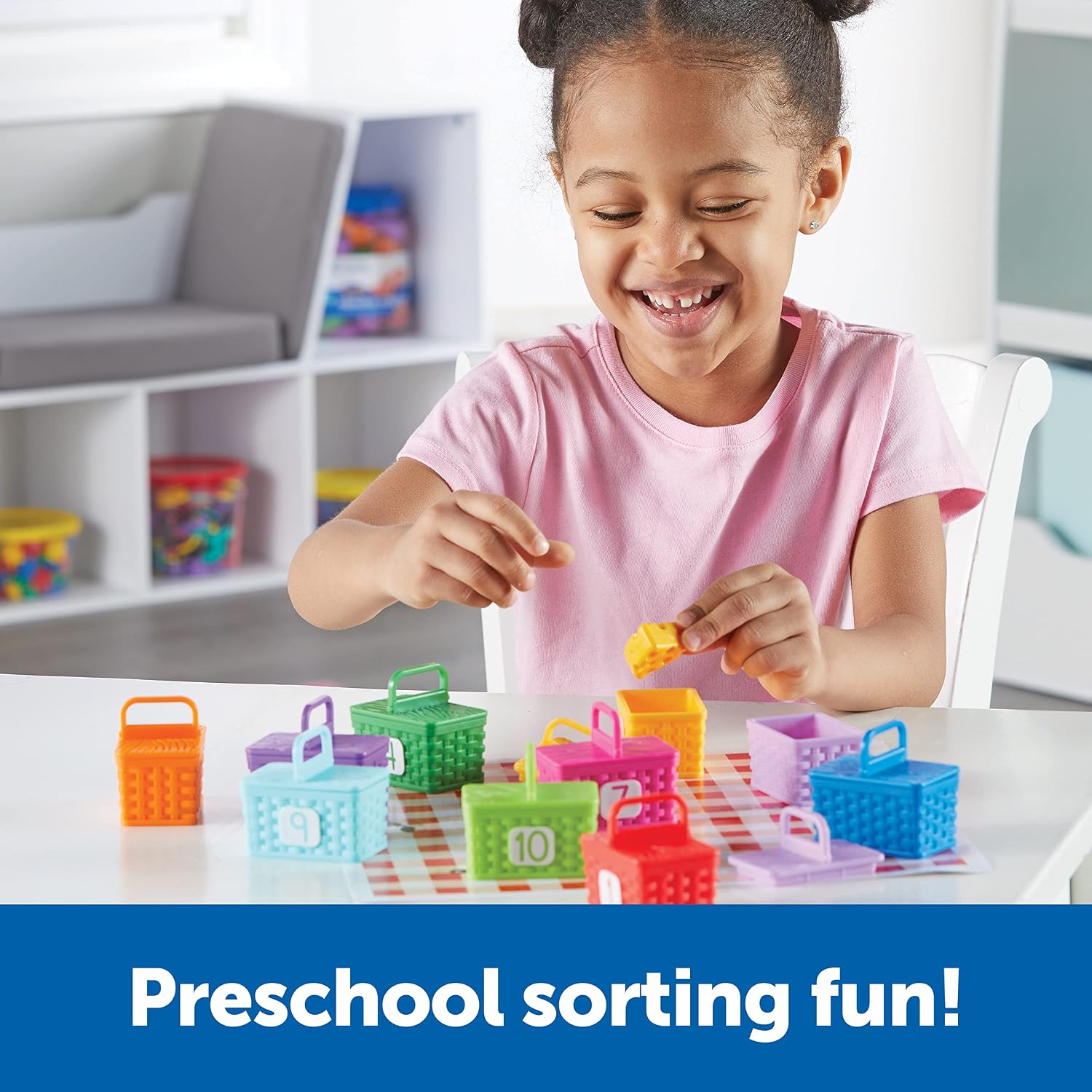
Begin with a few baskets rather than the whole set
An adult can make the first activity simple by placing only a few baskets and corresponding pieces on a clear surface. Invite the child to explore the lids, name a color or choose where a piece goes. There is no need to introduce every number and matching rule at once.
This is an editorial activity suggestion, not a tested teaching program. Adapt it to the child’s interest and stop when the task becomes frustrating. The benefit of using fewer pieces is practical: the activity is easier to see, the table stays usable and cleanup remains manageable while everyone learns the format.
Three ways to vary a short play session
For a matching session, pair food and basket colors without making speed the goal. For a pretend picnic, let the child choose what to serve and which basket to open. For a counting conversation, use the numbered baskets as prompts while following the supplied activity guide and the child’s current understanding.
Those are different ways to use the same objects, not promises of separate educational outcomes. Avoid turning every pretend-play moment into a quiz. If the child invents a story with the baskets, that can be a worthwhile use even when it does not follow the matching arrangement shown on the box.
Use the table without surrendering it for the day
A shared dining table needs a clear end to the activity. Set out only the amount of the toy that fits comfortably within a defined play area, leaving drinks, work materials and meal preparation elsewhere. The supplied picnic theme does not make the toy food suitable for actual eating or food preparation.
Before starting, decide where the set will go when the table is needed again. A nearby container that an adult can lift in one trip is often more useful than a carefully styled shelf arrangement. The goal is to make returning to the next household task straightforward, not to keep a permanent pretend picnic on the dining table.
Age guidance matters more than a learning label
The stated age is three years and up. Follow the product’s packaging, warnings and supervision guidance, and consider access by younger siblings as well as the intended child. A set that is appropriate for one child may still need storage beyond another child’s reach.
We do not describe this toy as a therapy tool, a certified teaching method or a way to guarantee developmental progress. Those claims would require evidence beyond a product listing. Its concrete value is a themed group of objects that can support play and adult conversation when the format fits the household.
Make cleanup part of the format, without demanding perfection
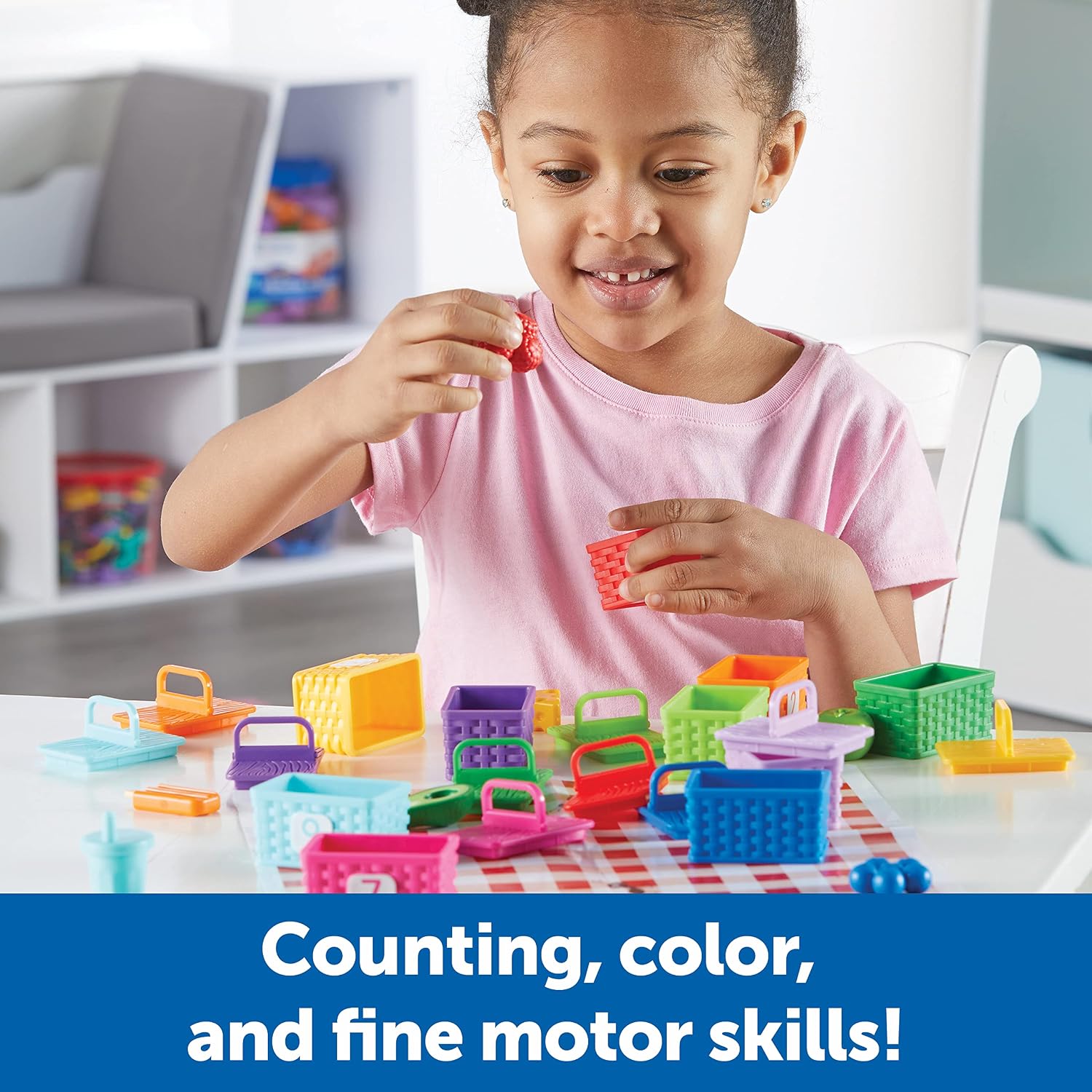
The baskets offer an obvious invitation to put things back, but that does not mean a child will independently restore every piece after each session. An adult may need to gather the loose parts, check the floor and help close the containers. Budget for that involvement when judging convenience.
A workable reset might be to collect the food first, then baskets and lids, then fold the blanket. Keep the sequence simple and flexible. If exact color matching turns cleanup into a prolonged struggle, store the complete set together and leave the detailed matching for another play session.
When to choose something else
Choose a different format if the child mainly wants to build tall structures, draw pictures or engage in physical play. The picnic baskets should not be expected to replace all those experiences. A small home benefits from selecting a few distinct play formats rather than buying multiple sets with nearly identical matching tasks.
Before ordering, compare this set with what is already in your toy rotation. If you own suitable pretend-food pieces and containers that serve the same purpose, trying a new activity with them may be enough. The strongest reason to buy is a clear fit with the child’s interest and the household’s ability to use and store the pieces.
Which option fits your routine?
| Situation | Starting point | Tradeoff |
|---|---|---|
| Child enjoys opening, matching and pretend meals | Consider the picnic baskets | Adult support and component cleanup remain |
| Child mainly wants construction play | Choose a building format | Different play goal |
| Similar sorting toys already get used | Try a new activity with those | Avoid another set doing the same job |
Amazon product and current listing
Check Learning Resources Sorting Surprise Picnic Baskets on Amazon. Confirm the selected model, seller, delivered price and return terms. This link identifies ASIN B094P19GMX; it does not guarantee current stock.
Our buying decision
Consider this set for a child aged three or older who enjoys matching and pretend play, provided the pieces have a clear storage home. The baskets create an approachable activity; they do not guarantee progress in counting, language or any developmental skill.
Explore Kids Room ideas and Buying Guides. Related reading: A Simple Weekly Toy Rotation for a Small Living Room.
Sources and evidence limits
The linked Amazon listing supplies the product identity, photographs and listed features. Household scenarios and comparisons are editorial analysis. We have not measured durability, performance or user outcomes. We do not use star ratings as proof of quality. Additional source: Learning Resources LER6810 activity guide.
Sources
- Amazon product listing — https://www.amazon.com/dp/B094P19GMX
- Learning Resources LER6810 activity guide — https://www.learningresources.com/amfile/file/download/file/9845/product/3378/