Dry dust on a suede boot invites a quick brush; a dark mark invites a much less useful impulse to try every shoe-care product in the cupboard. Before either step, confirm what the upper is made from and find the care directions for that footwear. A product intended to shine smooth leather is not automatically a suitable treatment for a napped surface.
For ordinary loose, dry dirt, a maker-approved suede brush and a restrained approach may be all that is needed. This guide concentrates on that limited task. It does not promise to remove oil, salt, water marks, or changes in color, and it does not turn a photograph of brown boots into proof of their material.
A current styling interest, with a separate care decision
Pinterest’s creator trend page checked in October 2026 includes suede styling. That makes footwear care a timely household topic, but popularity does not change a shoe’s construction. Two boots that look similar online may have different uppers, finishes, linings, and care requirements.
Look for the actual product name, material description, and manufacturer instructions. Suede, nubuck, coated leather, synthetic suede-like fabric, and smooth leather should not be treated as interchangeable simply because they are all described as soft or matte. If the identification is unclear, resolve it before introducing a treatment.
For one primary example, Clarks' suede-care guidance describes using a suede and nubuck cleaning brush gently on loose, dry dirt. It also advises following the natural direction of the nap rather than brushing back and forth. Those are Clarks’ directions; check whether the maker of your pair gives the same instructions.
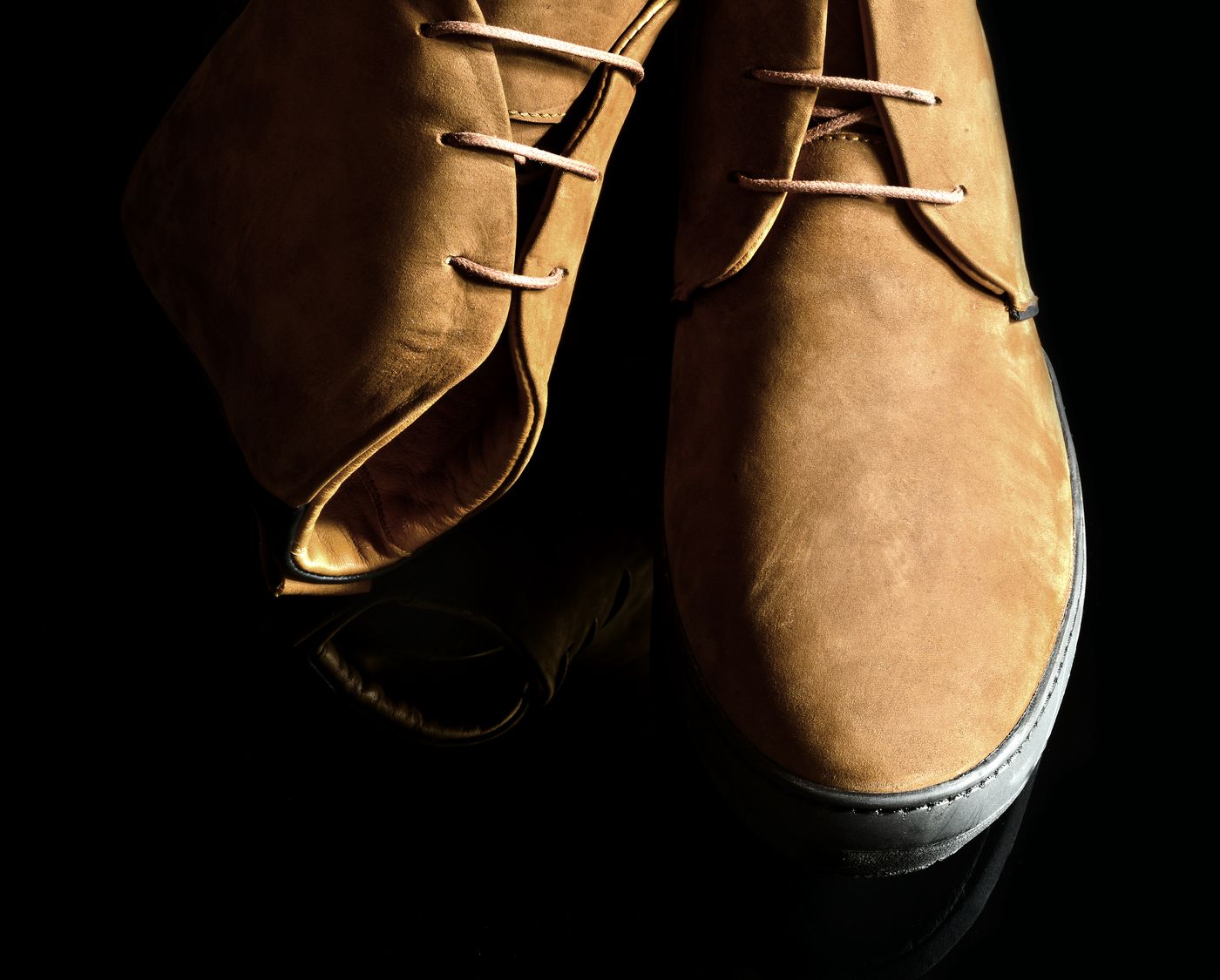
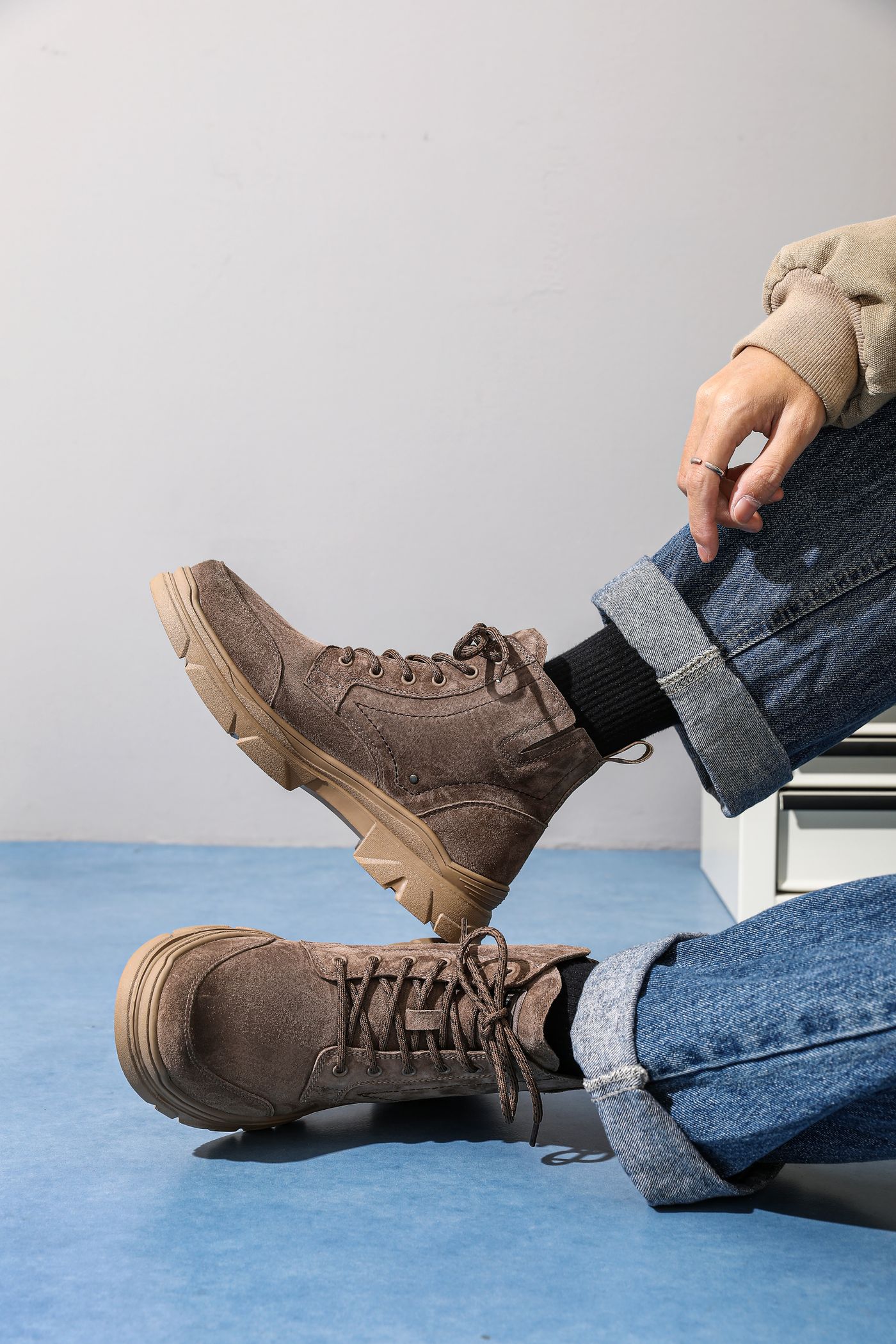
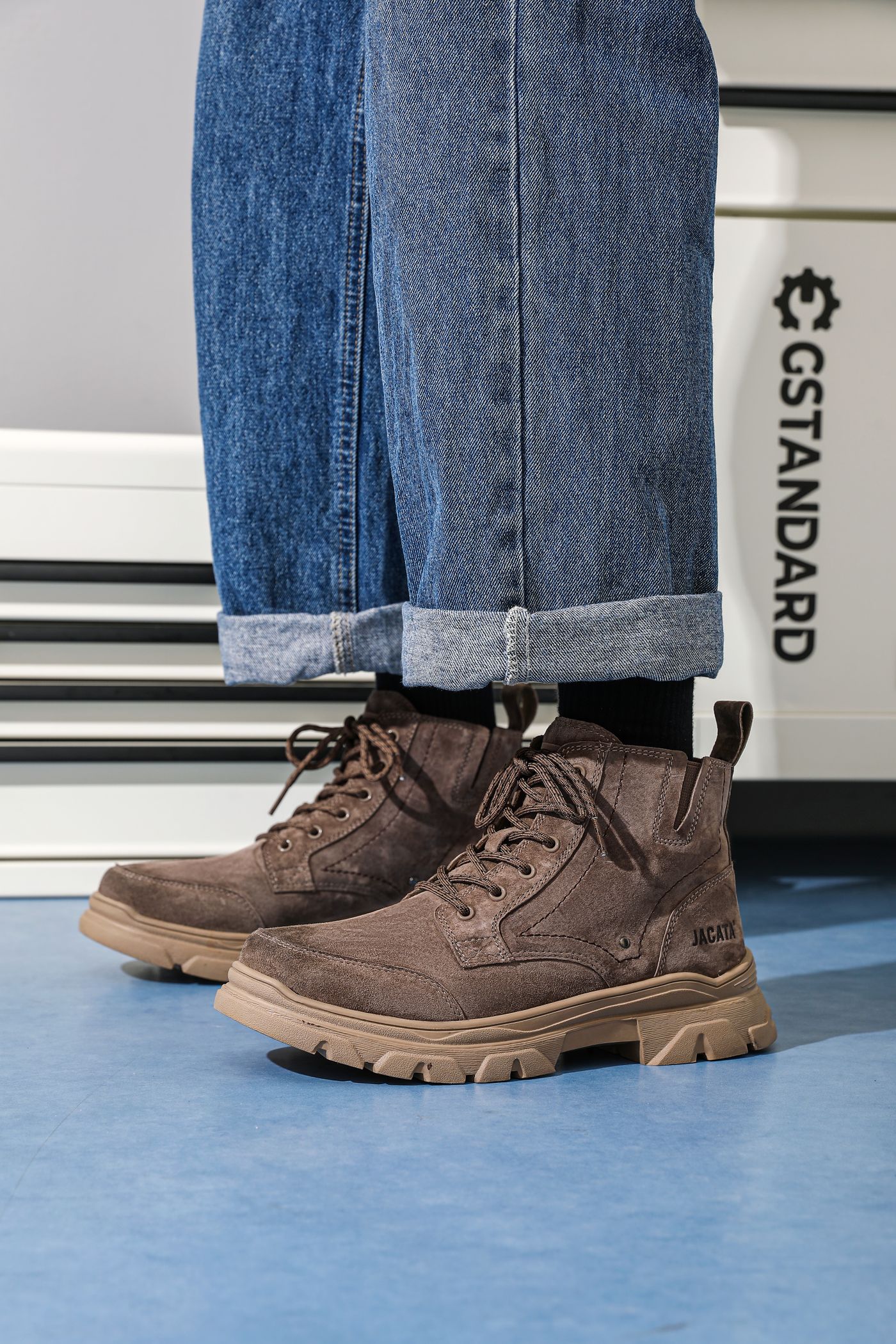
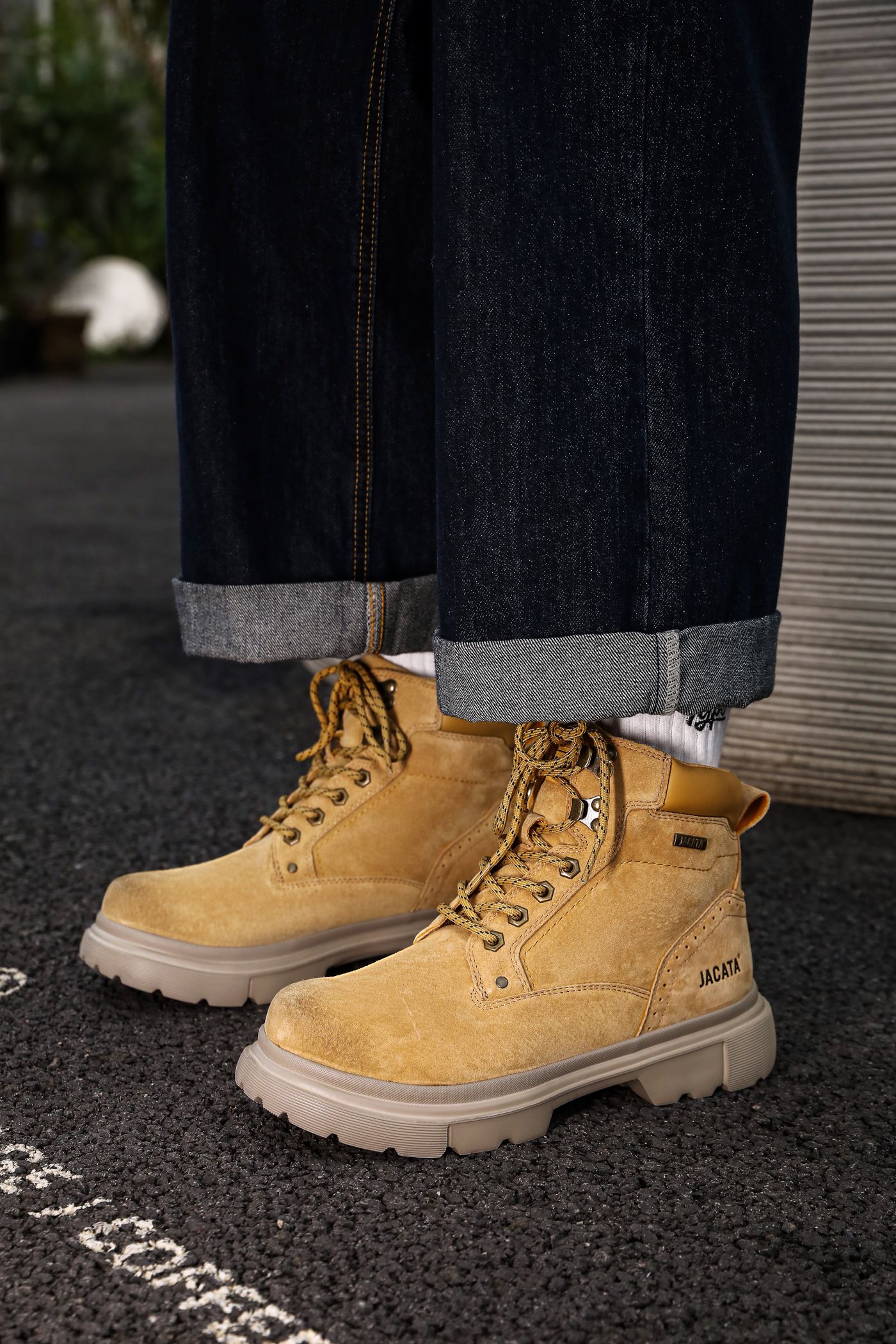
The photographs illustrate footwear forms and surface appearance. They do not establish a leather grade or show the result of our own cleaning trial. Use the information supplied with your shoes, rather than a visual resemblance to an image, to choose the next step.
Decide whether the problem is actually dry dirt
Work in good light with the footwear off your feet. Identify the area you intend to clean and distinguish loose surface dust from a stain, a scuff, or a damaged patch. A change in the way fibers lie can affect appearance, but that observation alone does not diagnose the cause of a dark area.
If the shoes are wet, pause and follow their drying instructions before treating them as a dry-brushing job. Do not use an unapproved heat source to hurry the process. A boot that feels dry on one exposed panel may still have moisture in its seams, lining, or sole.
Remove the temptation to work on every mark during the same session. Today’s task can simply be clearing ordinary loose dirt from an appropriate dry upper. Record a stubborn mark for a later, better-informed care decision instead of escalating from brush to household solvent.
The entryway also needs a suitable work position. Use a stable surface that can catch the loosened dirt without putting it on seating or a clean shelf. If the coir doormat needs its own cleaning, complete that separately rather than spreading mat debris back onto the footwear.
Choose the tool by the shoe's instructions
Check that the brush is intended for the material and that its working surface is clean. A brush previously used with polish, grease, or an unknown cleaning product is not a neutral tool. Keep shoe-polishing supplies distinct from the tools you use on uncoated napped uppers.
A multi-sided shoe brush can have different surfaces intended for different jobs. Do not assume every side should be applied to every part of the boot. Read the brush directions alongside the footwear guidance, particularly before using any abrasive or firm working surface.
Start as gently as the maker directs, supporting the shoe without crushing its shape. Follow the specified direction and avoid repeated aggressive passes over one mark. More pressure is not evidence of a more thorough job, and a change in appearance is a reason to reassess rather than keep scrubbing.
Stop if fibers pull, surface damage appears, or the shoe reacts in a way you did not expect. This is especially important when the pair has decorative stitching, mixed panels, or an aged finish. A routine for an uncomplicated upper does not automatically cover the entire shoe.
Treat the sole and upper as different surfaces
The dirt on the outsole may be heavier than the dust on the upper. Keep those tasks distinct so a tool loaded with ground-in grit does not become the next thing rubbed across the suede. Follow the sole and upper instructions separately where the maker distinguishes them.
Avoid letting a cleaning liquid intended for a sole run onto the upper. Clarks explicitly distinguishes material-specific care on its page; its advice for rubber soles is not an invitation to wet the suede above them. There is no benefit in cleaning a sole quickly if the runoff creates a different problem.
Also inspect where laces and hardware meet the upper. Remove or move parts only as the manufacturer allows, and do not pull against a fragile fastening to expose a small area. The goal is access that permits gentle care, not a partially dismantled shoe.
For footwear with removable components, keep their identity clear until reassembly. A decorative lace or insole should not be replaced casually with another pair’s component. This limited organization step supports cleaning without expanding the job into a full entryway overhaul.
Leave sprays and stain treatments out until they are justified
A protective spray is a separate product decision. Check its stated compatible materials, the shoe maker’s advice, test instructions, application conditions, and drying requirements. Do not borrow a spraying distance or drying time from another brand’s product.
Clarks notes that its recommended protector may darken suede and calls for an inconspicuous test. That illustrates why even a product sold for shoe care needs checking. It does not establish that all protectors have the same effect or that a successful tiny test proves every part of a mixed-material shoe will respond identically.
Do not combine products in an attempt to rescue a mark during this dry-dirt session. If the problem is a stain, ask the manufacturer for the appropriate procedure or consider a suitable shoe-care professional. Avoid turning a general internet suggestion into a universal recipe for a pair whose finish you have not identified.
The same material-first judgment applies elsewhere in the home. Our fabric-cap cleaning guide starts from the actual construction and label; it is not a shoe-care method. The useful connection is the decision process: identify the item before choosing the treatment.
Return only a ready pair to its normal position
Once the permitted care is complete, check that the pair is in the condition its instructions require before storage. If you used only an approved dry brush, clear the loosened dirt from the work surface and put the tool away separately from dirty sole-cleaning equipment.
If any approved treatment was introduced, respect its complete drying and use directions. Do not put the boots into a closed container simply because you have finished applying the product. A storage deadline should not become an invented drying time.
Give a pair still needing attention an identifiable temporary position. A note that says which mark remains is more useful than repeatedly brushing the same area because nobody remembers what has been tried. Keep that note off the shoe surface.
Our slipper-washing guide covers another footwear category with its own care labels. A washable soft slipper and a suede boot may share an entryway, but they should not share an assumed washing routine. That distinction helps keep everyday household care straightforward.

Keep the next care session small
Check the brushes and supplies you already have before buying a complete kit. Keep the footwear instructions or a reliable product-page reference with the model information. Remove unidentified bottles from the ready-to-use supply rather than guessing what they contain.
The broader approach to identifying decorative surface finishes is useful here as a reminder that appearance and treatment compatibility are different questions. For suede, the answer belongs to the actual footwear and care product, not to the room’s color scheme.
A good stopping point is ordinary dry dirt removed through a permitted method, with no damage caused by chasing every remaining mark. Your boots do not need to look newly manufactured to be ready for their next appropriate use. Keep the care routine proportionate to the condition you can actually identify.
Explore related decisions in our Cleaning hub.
Sources and editorial scope
Editorial research checked October 24, 2026. Published trend reports are context for these editorial applications, not verified live keyword rankings. Practical household guidance; photographs do not document a tested household or authenticate pictured materials.