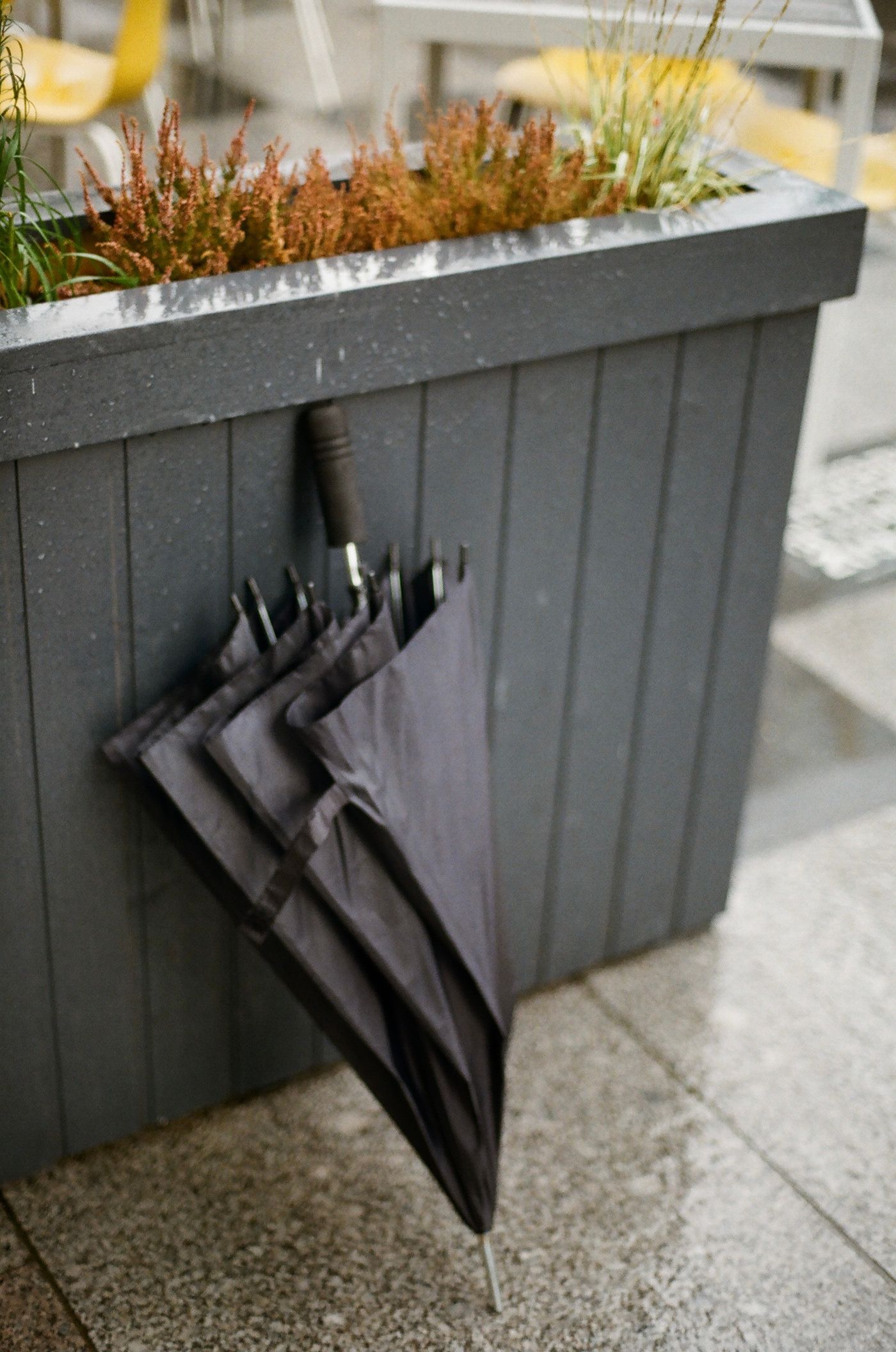
A wet umbrella needs somewhere to finish drying before it returns to closed storage. Cleaning is a separate decision: identify the actual canopy and care directions first, then deal with ordinary surface soil without treating the umbrella like a washable jacket. In a small entryway, planning those two steps can prevent a damp, forgotten umbrella from becoming part of the permanent floor clutter.
The attention to lived-in household routines in Houzz’s fall 2026 report is the background for this practical task. The report does not identify umbrella cleaning as a measured trend. This guide covers an ordinary handheld umbrella, not a patio parasol, and keeps the maker’s directions ahead of general cleaning habits.
Begin with the umbrella you actually own
Look for the maker, model, instructions, and information about the canopy material. A clear plastic-looking canopy and a woven fabric canopy may need different care. The frame and handle can also contain materials that should not receive the same treatment. Do not choose a cleaning product just because it worked on another umbrella years ago.
Before opening, check the visible condition and operate it as instructed in a position with appropriate space. Avoid using force to overcome a damaged or stuck mechanism. A bent rib, loose point, torn canopy, or unreliable closure belongs in a repair or replacement decision rather than being hidden by a quick surface clean.
Keep wind damage separate from dirt. This article does not establish that a damaged umbrella can be restored by bending the frame or opening it repeatedly. Consult the maker or an appropriate repair service when necessary. Cleaning can be a modest household task without becoming an improvised repair project in the entrance.
Choose the drying position before adding water
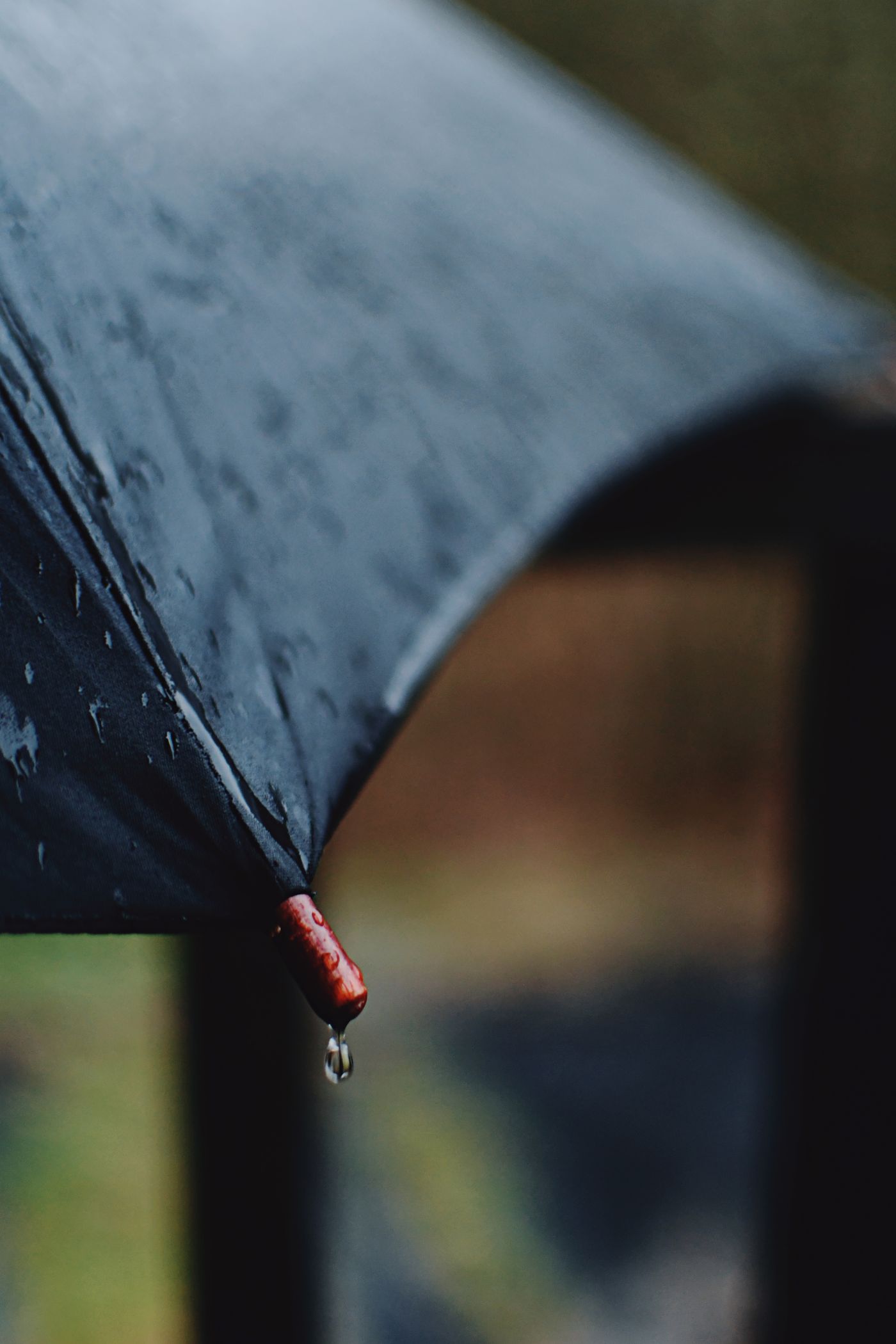
An open umbrella occupies much more space than its folded length suggests. Identify a suitable place where it can dry according to its instructions without blocking the room entrance, a passage, or a door. Consider the canopy edges and the actual household, including children and pets, when deciding where the temporary position belongs.
Protect nearby surfaces as appropriate for their materials, and handle any drips rather than leaving them under the umbrella. A catchment tray may help with water management, but it does not make a crowded doorway a suitable drying position. Likewise, a decorative umbrella stand is not automatically an open-canopy drying arrangement.
Our rainy-day entryway system helps separate arriving wet items from their ready storage homes. If the entryway cannot support an appropriate drying position, plan a suitable alternative elsewhere before beginning the task. The umbrella should not have to remain indefinitely open in the only route through the home.
Use the maker’s cleaning method for the canopy
Fulton’s umbrella-care FAQ advises its customers to clean the fabric with a soft cloth moistened with plain water and explains that detergents may remove the waterproof coating. It also recommends leaving its umbrellas open to dry promptly. That is manufacturer guidance for its products, not a universal treatment for every canopy material or finish.
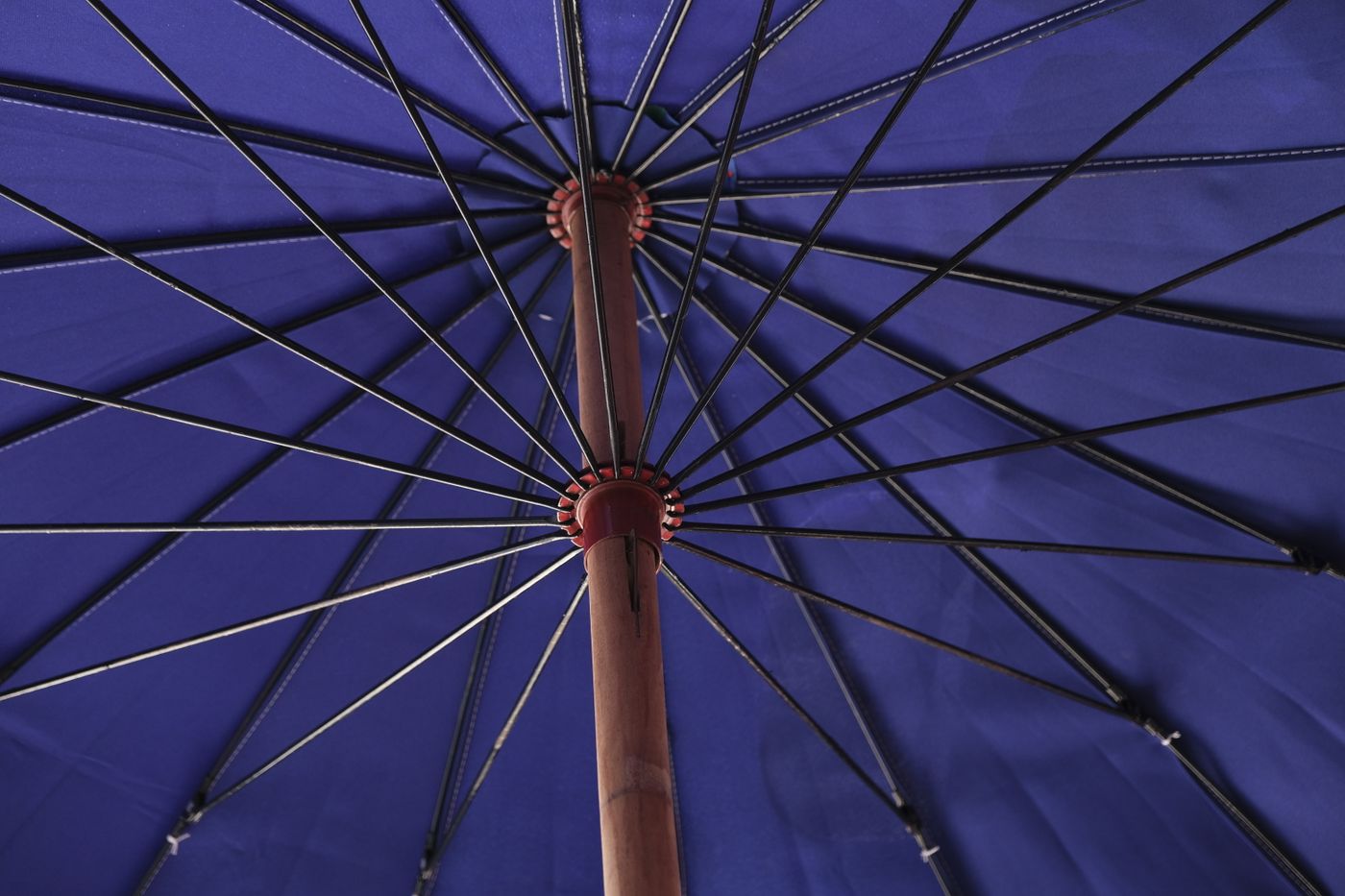
If that method is appropriate for your actual umbrella, work gently on the relevant surface and avoid loading the cloth with unnecessary water. Support the work comfortably without pulling against the ribs. For another make or material, follow its own instructions rather than assuming that every transparent or patterned canopy tolerates the same wiping method.
Do not add bleach, stain remover, upholstery cleaner, or a waterproofing treatment unless the actual directions support that use. A persistent mark does not justify escalating through every product in a cleaning cupboard. Decide whether the mark affects use or whether it can remain as ordinary wear on an otherwise serviceable umbrella.
Keep the frame inspection distinct
Look at the frame and moving parts while the umbrella is in the appropriate operating position. Check what you can observe without dismantling the mechanism. Follow any specific maker guidance for caring for the shaft, handle, and other components. A canopy-cleaning instruction does not automatically authorize soaking or lubricating the complete object.
Keep fingertips clear of the mechanism as directed when opening or closing. If you cannot operate it comfortably, stop and reassess rather than using the cleaning task as a reason to force it. A small umbrella still contains moving components, and its compact closed shape does not establish that it is easy for every person to handle.
Our comparison of portable cleaning kits can help keep this occasional task modest. You may need only the suitable materials specified for the umbrella. Do not build a large specialized kit around a routine that mainly requires identification, gentle care, and an appropriate drying position.
Track the canopy, sleeve and storage position separately
A finished canopy-cleaning step does not complete the whole return. Keep the drying arrangement clear to the household, and check the sleeve under its own instructions before enclosing the umbrella.
| Part of the return | What to confirm | If unfinished |
|---|---|---|
| Umbrella canopy | Care and drying follow the actual product’s directions | Leave it in the suitable permitted care position |
| Frame and closure | No unresolved operating or condition issue | Keep it out of the ready group while obtaining appropriate advice |
| Matching sleeve | Its own permitted care is complete | Keep it identifiable and separate until ready |
| Storage home | The set fits without bending, forcing or blocking access | Revise the location instead of compressing the umbrella |
Make ready and unavailable umbrellas easy to distinguish
Reunite the appropriate sleeve and umbrella after care. Keep the owner or intended location identifiable if several similar sets share the entrance. If the sleeve is missing, use the maker’s guidance rather than forcing the umbrella into an unsuitable substitute.
Fulton’s care FAQ describes plain-water cloth cleaning and prompt open drying for its umbrellas. That guidance remains specific to the maker; another canopy or model may require a different method.
Use the rainy-day arrival system for the temporary wet stage and the floor-cleaning workflow for drips or dirt left behind. Those tasks have their own finish points.

Make the next rainy arrival easier
Notice what made the task awkward. Perhaps the sleeve could not be found, the drying position was unclear, or the umbrella’s identity had been lost. Resolve that small issue while the details are fresh. Buying a second umbrella does not correct a missing return routine for the first.
If you keep several, distinguish the ready ones from a damaged item awaiting a decision. Remove or resolve the latter through an appropriate route rather than putting it back among objects somebody may take in a hurry. The entryway works better when an umbrella’s state is clear: ready to use, finishing suitable care, or awaiting a deliberate repair decision.
Explore related decisions in our Cleaning hub.
Sources and editorial scope
Editorial research checked October 21, 2026. Published trend reports are context for these editorial applications, not verified live keyword rankings. Practical household guidance; photographs do not document a tested household or authenticate pictured materials.