A home-office pen needs to work with the paper, hand, and task you actually use. Brand familiarity alone cannot tell you whether a gel pen will suit quick household notes, a longer letter, or a notebook you close immediately after writing. Pilot G2 and uni-ball 207 are both familiar retractable gel choices, but a useful comparison starts with the exact versions rather than every pen carrying those family names. If you are working on the same space, Fiskars Original vs. Scotch Precision 1448: Choose Scissors for the Task and the Hand covers the next decision in more detail.
Affiliate disclosure: As an Amazon Associate, we earn from qualifying purchases. This is a research-based comparison using maker information and the selected Amazon listings. We have not physically tested these pens, measured drying time or ink life, or established a universal comfort winner. The stock writing photographs are context images; only the labeled product images identify the selected models.
The exact pens and packs compared
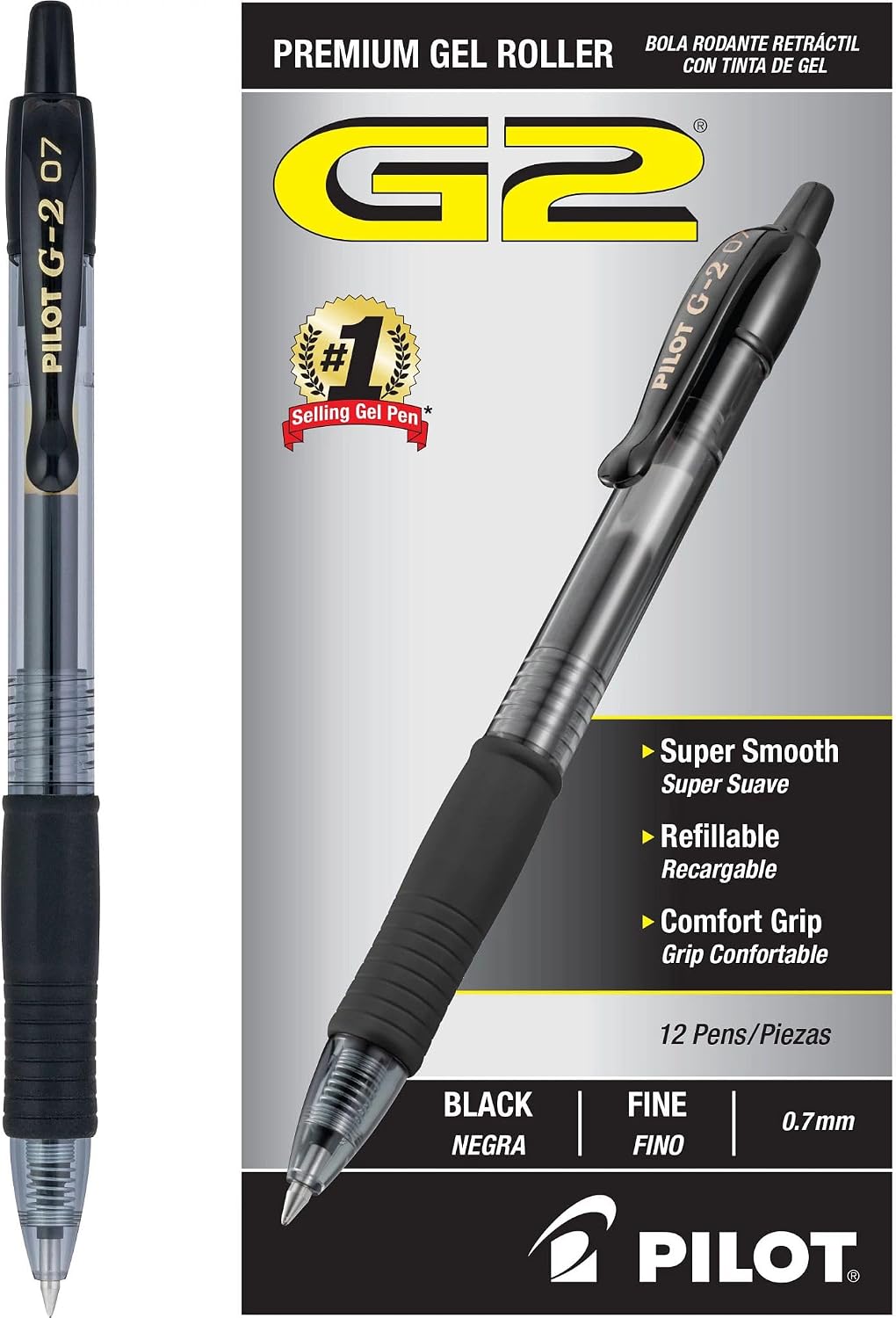
Here we compare Pilot G2 black 0.7 mm, the selected 12-count pack identified with model 31020 and ASIN B001GAOTSW, against uni-ball 207 black 0.7 mm retractable gel pens, the selected 12-count pack identified with model 33950 and ASIN B000FDR47E. Check the point size, ink color, quantity, and identity again when ordering. An assorted-color pack or a different point size changes the purchase.
The 207 Needle, 207 Plus+, and 207 Premier are different selections; claims about their particular designs should not be transferred automatically to this standard 207. The same caution applies to G2 variations and other pens described as “G2 style.” This article compares the named black 0.7 mm selections, not every compatible-looking refill or every gel pen from either company.
| Selection | Pilot G2 | uni-ball 207 |
|---|---|---|
| Selected identity | 31020 / B001GAOTSW | 33950 / B000FDR47E |
| Point and ink | 0.7 mm, black gel ink | 0.7 mm, black gel ink |
| Selected quantity | 12 pens | 12 pens |
| Published handling design | Retractable, contoured grip | Retractable, textured rubber grip |
| Review scope | Published identity and features; individual paper and hand fit remain untested here | |
Pilot G2: a starting point for an established preference
The selected Pilot G2 black 0.7 mm 12-count pack on Amazon is described as refillable and retractable, with a contoured grip. Those are practical identification features, not proof that every user will find it comfortable. If you already use this exact pen successfully with your household notebook, buying a modest replacement supply can be simpler than changing the system.
Consider G2 first when its known feel, click mechanism, and ordinary writing line already suit you. If you have never used it, do not infer that the contoured grip will solve discomfort during long writing. The pen’s published point size also does not guarantee that its line looks identical to another 0.7 mm pen on your paper. Your actual task and sample remain more useful than a family-name preference.
uni-ball 207: consider the standard grip and ink identity
The selected uni-ball 207 black 0.7 mm 12-count pack on Amazon uses the standard 207 design, with a retractable mechanism and textured rubber grip. The maker’s 207 page identifies its ink as pigment-based Super Ink. Keep those published features distinct from claims about your own paper, storage conditions, or writing method.
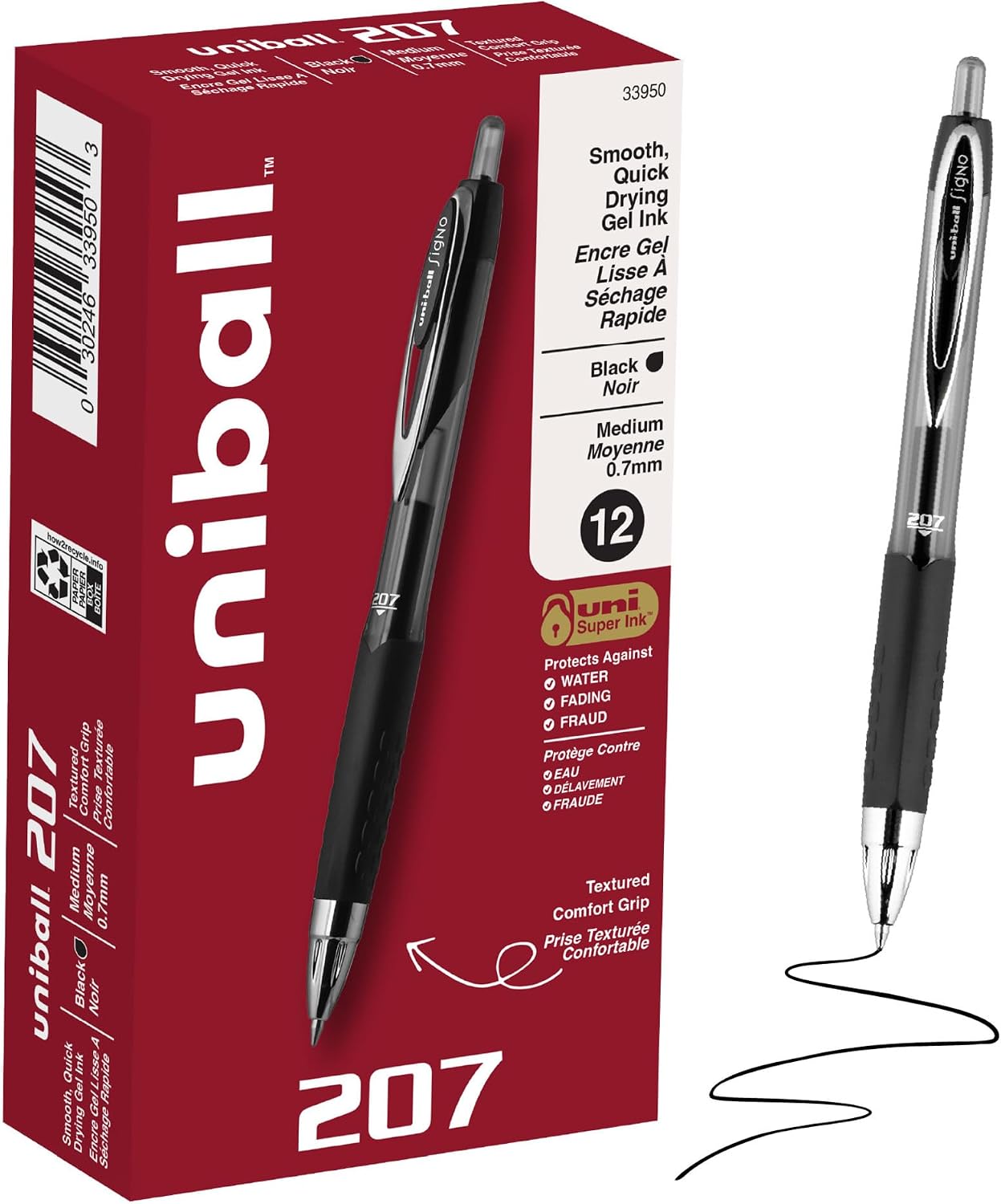
Examine this selection if you prefer its particular grip texture and standard barrel form, or if you already use the same 207 and want continuity. We do not turn the maker’s ink marketing into a guarantee against alteration, water damage, or fading in every situation. Important documents should follow the issuing organization’s requirements, and neither this comparison nor a pen label replaces those directions.
Match the line to the paper and the message
List the main writing jobs before choosing. A short shopping note, a densely printed form, a journal page, and a personal letter can favor different line appearances. If a task specifies an ink type, color, or other requirement, follow that instruction. For unrestricted everyday writing, begin with the ordinary paper you already own instead of buying special notebooks to make a new pen feel like a better choice.
If you can obtain a suitable sample without buying a large pack, write on that real paper. Look at legibility in the space you use, whether the line overwhelms small boxes, and whether the reverse side remains acceptable for your purpose. This is a proposed personal check, not a reported test result. We cannot tell you that either pen avoids every paper issue or produces the same result on all notebooks.

Check drying in your actual sequence
Think about what happens immediately after writing. Do you close the notebook, move your hand across the line, stack another sheet on top, or highlight the note? A general quick-drying description does not settle that particular sequence. Let a personal sample reveal what you need to change, whether that is the pen, paper, or a short pause before handling the page.
Check the sequence using the hand and writing position you normally use. If you are left-handed or your writing movement often crosses fresh ink, that observation belongs in the decision. This comparison does not supply measured drying times or claim that one model prevents smearing for every writer. Avoid choosing an expensive multipack on the basis of a drying ranking we have not established.
Evaluate grip during a representative task
A few words at a shop can confirm basic handling but may not represent a long letter. If you already own a sample, try the amount of writing that matters to you in a normal supported position. Notice the grip shape, texture, barrel control, and effort to operate the mechanism. The relevant question is whether that person can use the specific pen comfortably for their task, not whether one grip feature sounds more impressive.
Several people sharing a home office need not share one preferred pen. Keep a person’s established tool identifiable if that helps avoid repeated borrowing. At the same time, do not create a separate twelve-pen stockpile for every occasional writer. Use the daily home-office organization guide to give active tools a manageable place.

Compare the quantity you will actually use
Both selected listings are twelve-count packs, but check the current seller and selected variant before comparing delivered prices. Consider shipping, applicable costs, and return terms for the actual offer rather than quoting an old price. If the quantity changes, compare like quantities or calculate the cost per usable pen. A lower total price for a smaller pack does not automatically mean a lower unit cost.
The larger issue may be whether twelve pens are necessary at all. An occasional note writer with several suitable working pens can skip both purchases. A household with regular writing may have a clear replenishment need. Count working tools and realistic use before buying, and keep spare stock separate from the few pens that earn daily desk space. A bargain pack that becomes forgotten drawer overflow is not a useful saving.

Make a specific refill plan, if you intend to refill
Refillability is valuable only when you can obtain and use the correct refill for the exact barrel and point you want. Check maker compatibility, refill color and point, local availability, quantity, and current delivered cost before treating refilling as your plan. Do not assume that two retractable pens accept the same cartridge because both are labeled 0.7 mm.
Keep a needed refill identifiable with its compatibility information, rather than mixing loose cartridges from several pens. If you have no intention of refilling, compare the purchase on that basis honestly. The home-office storage comparison covers bigger storage choices; the desk-without-drawers guide helps when pens need another accessible home. A pen decision should usually fit the space you already have.

Two household uses can lead to different choices
For someone writing quick notes on a kitchen pad, the main questions may be whether the pen is easy to find, the message is readable, and the page can be handled in the usual sequence. If an existing G2 or standard 207 already meets that need, keeping the same working selection can avoid another trial purchase. Store one active pen with the pad and replenish from a contained spare supply; several pens spread across the counter do not improve the comparison.
For a person writing longer correspondence, the grip and actual paper combination may matter more than buying the lowest-cost large pack. A personal sample on the chosen stationery can reveal the preferred line and handling. If neither candidate suits that task, choose a more appropriate instrument after testing the relevant requirement. The practical outcome can be different for two users without either person making the “wrong” brand choice.
Where a pen is frequently borrowed and misplaced, address its return before increasing stock. Name a simple home for the active tool and make spare quantity visible to the person buying supplies. A shortage caused by scattered pens can look like high consumption even when many are still working elsewhere in the home. Replenish the real need after that check.
Who should choose, and who should skip
Choose the Pilot selection when the exact G2 has already proved suitable in your own writing routine or a personal sample confirms that preference. Choose the standard uni-ball 207 when its actual grip and writing result suit you, with the correct version verified. If both work, the current delivered cost for a realistic quantity and a clear replenishment plan can settle the decision without declaring a universal performance winner.
Skip both when your existing tools complete the task, when the required paper or ink conditions are unresolved, or when a different point size or instrument better meets the real need. Explore the home-office hub and Buying Guides hub for surrounding decisions. The useful choice is the pen you can identify, write with, maintain appropriately, and buy in a quantity that earns its space.