Small home offices often fail in a predictable way: the desk is asked to be a work surface, filing cabinet, charging station, printer stand, inbox, stationery drawer, and archive at the same time. When the desk loses, people usually buy more storage. The difficult part is deciding which kind. For a related step-by-step approach, see Clear Bins vs. Opaque Baskets: Which Storage Works Better in a Small Home?.
Open shelves, drawers, rolling carts, and wall files can all be useful. They solve different problems. If you buy the wrong one, you may gain capacity and still lose usable desk space. You may also find Fold vs. Hang Clothes in a Small Closet: Which Actually Saves More Space? useful for a closely related small-home problem.
From a small-space planning perspective, I review office storage by four questions: What needs to stay visible? What needs one-step access? What can live away from the desk? And what should leave the office entirely?
First separate active work from reference storage
Before comparing furniture, split office inventory into two groups. Active work includes today’s notebook, current project papers, the charger you use, pens, headphones, and anything touched several times a week. Reference storage includes old project files, tax documents, spare paper, manuals, archived notebooks, and backup supplies.
The biggest small-office mistake is giving reference material the best storage while active work piles on the desk.
For the desk itself, the no-drawer home-office guide shows how to keep daily tools within reach without giving every item permanent desktop space.

Option 1: drawers
Drawers are my default choice for small daily tools because they hide visual noise without making the category difficult to reach. Pens, notebooks, charging accessories, stamps, scissors, sticky notes, and personal work items are easier to manage in shallow drawers than on open shelves.
Where drawers perform well
- small objects used daily,
- paper that needs privacy,
- tools that look visually noisy,
- categories that benefit from front-to-back visibility.
Where drawers fail
Deep drawers become horizontal closets. If one drawer contains office supplies, batteries, old cables, medicine receipts, and camera accessories, the drawer is not the problem—the category boundary is.
I also dislike drawer units that steal knee space. A pedestal under a tiny desk can technically add storage while making the chair position uncomfortable. For a related step-by-step approach, see The Small-Home Storage Audit: 12 Places That Look Organized but Waste Space.
Option 2: open shelves
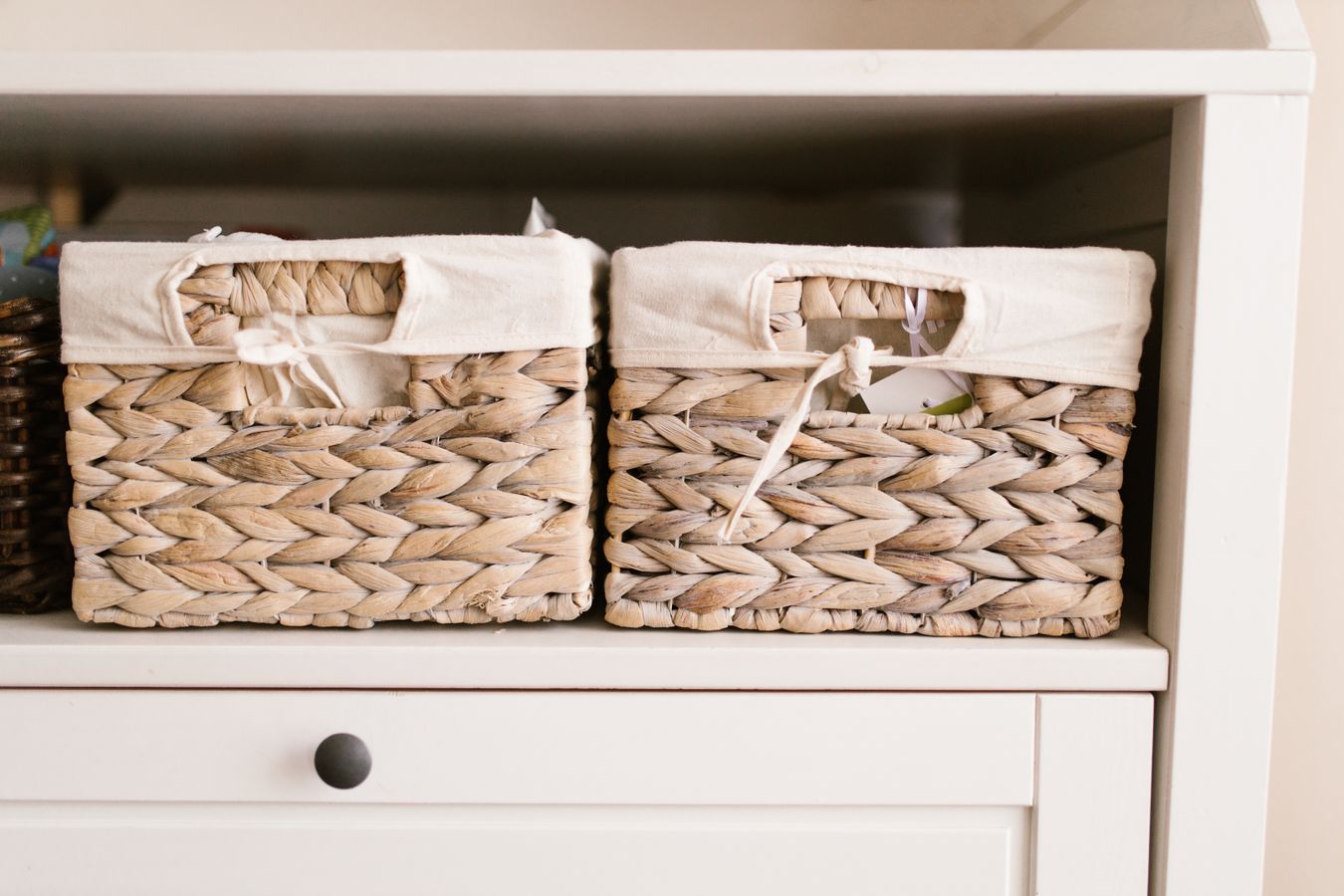
Open shelves are strong for books, binders, stable reference categories, and a small number of containers that you can identify at a glance. They use wall height and keep floor space relatively open.
They are weaker for active paper. A shelf of paper stacks looks organized for about one afternoon. Each new document creates another horizontal layer, and older material disappears underneath.
My rule for office shelves
If an item needs to be chosen, shelves work. If an item needs to be processed, a file, inbox, or drawer is usually better.
If your desk has no drawers at all, organizing a small home office with a drawerless desk gives a more specific workaround before you buy large furniture.
Option 3: wall files
Wall files are excellent for paper that is active but should not occupy the desk. Incoming mail, school forms, current project papers, receipts awaiting processing, or a “this week” folder can live vertically.
The important word is active. Wall files should not become permanent archives. Once every slot is full, the system stops communicating priority.
I prefer three to five broad statuses over fifteen tiny labels: Incoming, Action, Waiting, File, and perhaps School or Household if that category dominates your week.

Option 4: rolling carts
A rolling cart is useful when the work itself changes location. A parent may work at a desk during the day and move supplies to the dining table for homework help in the evening. A crafter may need tools beside the desk only during certain projects.
Where carts work
- mobile work,
- temporary project tools,
- printer or paper supplies that need to move,
- rental spaces where built-ins are not practical.
Where carts fail
A cart without a parking spot becomes office clutter on wheels. If it lives permanently in the walkway, you did not create flexible storage; you created movable obstruction.
The paper question matters more than the furniture question
If your office receives a lot of paper, storage type matters less than processing rhythm. Paper needs an intake point, an action decision, and an archive rule.
For a deeper paper system, the published guide to small-apartment paper organization is more useful than adding another shelf.
If you work almost entirely digitally, you may need much less office storage than you think. In that case, a few drawers plus one reference shelf may be enough.
What about a printer?
Printers are awkward because they are large, visually heavy, and sometimes used only weekly. If yours is used constantly, it deserves a stable easy-access surface. If it is occasional, a lower shelf or dedicated cart can work—provided ventilation, cable routing, and manufacturer clearance are respected.
I would not sacrifice half the desktop to a printer simply because that is where the outlet happens to be.
What about cables and chargers?
Office storage can hide cables, but it should not trap them. Charging cables used daily need easy access; retired adapters and mystery cords should not occupy prime desk drawers.
The existing guide to organizing chargers and cables without creating a tech drawer is a useful companion when electronics are the real clutter source.

Scenario 1: one-person office with lots of paper
I would prioritize shallow drawers + wall files + one reference shelf. Keep current paper vertical and visible by status. Archive completed material away from the desk.
Scenario 2: mostly digital work
I would use fewer containers. One drawer for daily tools, one shelf for books or equipment, and a clean desk surface often outperform a full wall of office storage.
Scenario 3: shared family workspace
Ownership matters. Give each person one defined drawer, caddy, or file slot instead of mixing all supplies by product type. Shared basics can stay central.
Scenario 4: office inside a bedroom or living room
Closed storage becomes more valuable because the room needs a visual transition after work. A drawer unit or small cabinet often performs better than a fully open shelving wall.
If the room serves several functions, the guide to resetting a multipurpose room between work, play, and guests is the stronger overall framework.
How I would combine the four systems
For most small home offices, I prefer a hybrid:
- drawers for daily small tools,
- wall files for active paper,
- one shelf for stable reference items,
- a cart only when the work genuinely moves.
That mix keeps each storage type doing the job it is best at.
Explore this topic
Browse more practical guidance in the Home Organization hub. Room focus: Home Office.
Expert conclusion
I would not choose office storage by capacity alone. Choose drawers for small active tools, shelves for stable reference items, wall files for paper that still needs action, and rolling carts for genuinely mobile work.
The strongest small office is not the one with the most vertical storage. It is the one where the desk can return to work mode quickly because active items have short paths and inactive items have been pushed out of prime space. You may also find Lazy Susans and Turntables in Small Kitchens: Where They Work—and Where They Waste Space useful for a closely related small-home problem.