A linen closet is convenient because towels, sheets, blankets, and guest bedding all have an obvious address. Without one, those same items tend to fragment: towels in the bathroom, sheets in a bedroom drawer, guest pillows above a wardrobe, and a heavy blanket occupying half a hall cabinet. For the broader setup, How to Organize Pet Supplies in a Small Home Without Creating a Pet Closet is a useful next read.
That distribution is not necessarily a problem. In a small home, room-based linen storage can be more efficient than forcing every textile into one central location. The real challenge is controlling quantity.
Start with the number of complete sets you actually need
Bulky textiles create storage pressure quickly. For each bed, decide how many complete sheet sets your laundry rhythm requires. Many households function with one set in use and one spare, while others need more because of children, pets, health needs, or slower laundry turnaround.
The important part is that the number is intentional. Five mismatched backup sets for one bed often create more clutter than resilience. For the broader setup, How to Organize Cables, Chargers, and Tech Clutter in a Small Home is a useful next read.

Store sheets in the room where the bed lives
If there is a dresser drawer, under-bed bin, shelf, or closed cabinet in the bedroom, keeping that room’s sheets there reduces sorting. You do not need a central linen closet merely to preserve the idea that all sheets belong together. If you are working on the same space, How to Organize a Family Medicine Cabinet in a Small Home Without Mixing Everything Together covers the next decision in more detail.
Label by bed size if the household has multiple sizes. “Queen—main bedroom” is much faster than unfolding fitted sheets to investigate.
Keep each sheet set together
A simple method is to fold the set together or place matching pieces inside one pillowcase. The purpose is not aesthetic perfection. It prevents the fitted sheet from migrating away from the pillowcases.
Do not spend ten minutes creating store-display folds if your household will not repeat them.
Everyday towels should live near the bathroom
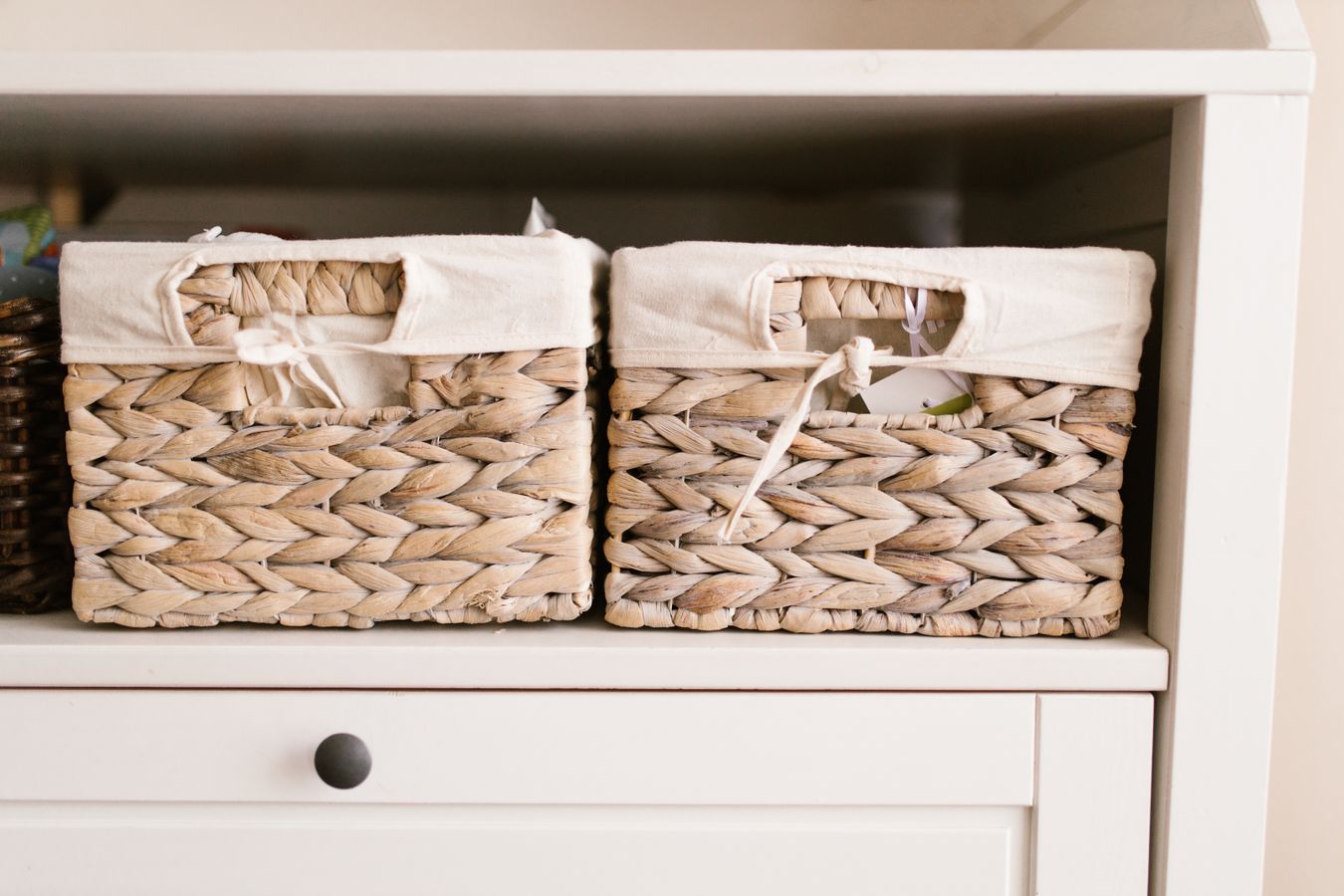
Towels are high-frequency items, so point-of-use storage matters. A shallow bathroom cabinet, basket on a suitable shelf, or nearby bedroom cabinet may work better than a remote storage zone.
Keep enough active towels for the household and laundry cycle, then move true extras elsewhere.

Separate active towels from guest towels
Guest towels do not need to compete with daily family towels. Keep a small guest set with guest bedding or in a labeled secondary bin. For the broader setup, How to Organize Family Photos and Printed Keepsakes in a Small Home is a useful next read.
This makes it easier to see whether the everyday towel supply is actually excessive.
Use under-bed space for low-frequency linens
Extra blankets, seasonal duvets, and guest bedding are good candidates for clean, dry under-bed storage because they do not need daily access. Use containers that protect textiles appropriately for your environment.
This works especially well when paired with How to Use Under-Bed Storage Without Turning It Into a Forgotten Junk Zone.
Do not compress everything just because you can
Vacuum bags can reduce volume for some textiles, but compression is not automatically ideal for every material or long-term use. Follow care guidance for the item and avoid turning storage into a permanent archive.
Capacity savings are useful only when the stored item remains easy to identify and retrieve.

Keep guest bedding as one complete kit
Sheets, pillowcases, blanket, and guest towels can be stored together in one labeled container. When someone stays over, you retrieve one kit instead of searching multiple rooms.
This also puts a natural limit on how much guest-only inventory the home keeps.
Bulky blankets need a seasonal plan
Heavy winter blankets may dominate storage during warm months. Choose one seasonal zone: under bed, high wardrobe shelf, storage bench, or another dry protected location.
When the season changes, swap rather than add. The lighter blanket leaves as the heavy one comes into active use.
Use furniture capacity before buying linen furniture
A storage bench, ottoman, or bed with drawers can be helpful, but do not buy new furniture solely to create a home for excess linens. First evaluate existing drawers, upper shelves, and under-bed space.
Sometimes the cheapest storage solution is reducing three unused blankets to one.
Protect linens from moisture and poor airflow
Store clean, fully dry textiles in conditions appropriate to the material and your climate. Do not put slightly damp towels into closed furniture simply because they look tidier there.
The drying routine and storage routine are separate stages.

Create a household towel limit
Towels enter homes through purchases, gifts, beach trips, old sets, and “just in case” accumulation. Decide the role of each group: bath, hand, kitchen, beach, guest, cleaning/rags.
Once an old bath towel becomes a cleaning towel, remove an older rag rather than allowing both categories to grow indefinitely.
Keep spare pillows to a realistic number
Pillows are some of the least space-efficient guest items. If you host rarely, ask whether multiple spare pillows need permanent storage or whether your existing flexible setup is enough.
For frequent hosting, store guest pillows in clean protective storage near the guest bedding kit.
Do not split one category across too many hidden spots
Distributed storage works when the logic is obvious: main-bedroom sheets in main bedroom, kids’ sheets in kids’ room, everyday towels near bathroom, guest kit under bed. It fails when identical items are scattered across six unrelated cabinets.
A family should be able to explain the linen map in one sentence.
Use laundry day as the inventory check
When all towels or sheets are in circulation, you can see whether the household has too many. If clean linens sit unused for months while storage feels crowded, reduce the reserve.
Storage problems are often inventory problems wearing a furniture disguise.
A simple no-linen-closet plan
- Main bedroom: that bed’s spare sheet set.
- Kids’ room: their spare sheets.
- Bathroom: active family towels.
- Under bed/high shelf: seasonal blankets.
- Guest kit: complete set stored together.
Explore this topic
Browse more practical guidance in the Home Organization hub. Room focus: Bedroom.
Related published guides
- How to Use Under-Bed Storage Without Creating a Hidden Clutter Zone
- How to Organize a Small Bedroom Dresser So Clothes Don’t End Up on Top
Frequently asked questions
How many sheet sets should each bed have?
Enough for your laundry turnaround and household needs, but not so many that rarely used sets consume valuable storage. One in use plus one spare works for many homes.
Where should I store extra towels?
Keep everyday towels near the bathroom and true extras or guest towels in a secondary labeled zone.
Can I store bedding under the bed?
Yes, if the space and container keep it clean and dry and the material is suitable for that storage method.

You do not need one closet; you need one clear map
A small home can distribute linens successfully when every category has a logical room and a limited quantity. Keep active items near where they are used, move seasonal bulk into secondary storage, and bundle guest supplies into one kit. The system becomes easier when you stop trying to imitate a closet the home never had.