Clear bins are sold as the solution to forgotten inventory: if you can see it, you will use it. Opaque baskets make the opposite promise: hide the visual noise and let the room feel calm. Both claims are reasonable. Neither is enough to choose a storage system. For the broader setup, How to Store Gift Wrap, Gift Bags, and Party Supplies in a Small Home is a useful next read.
In a small home, containers do two jobs at once. They control objects, and they become part of the visual environment. That means the best container depends not only on what is inside, but also on where the container lives and how often the category is used.
The real trade-off: memory versus visual calm
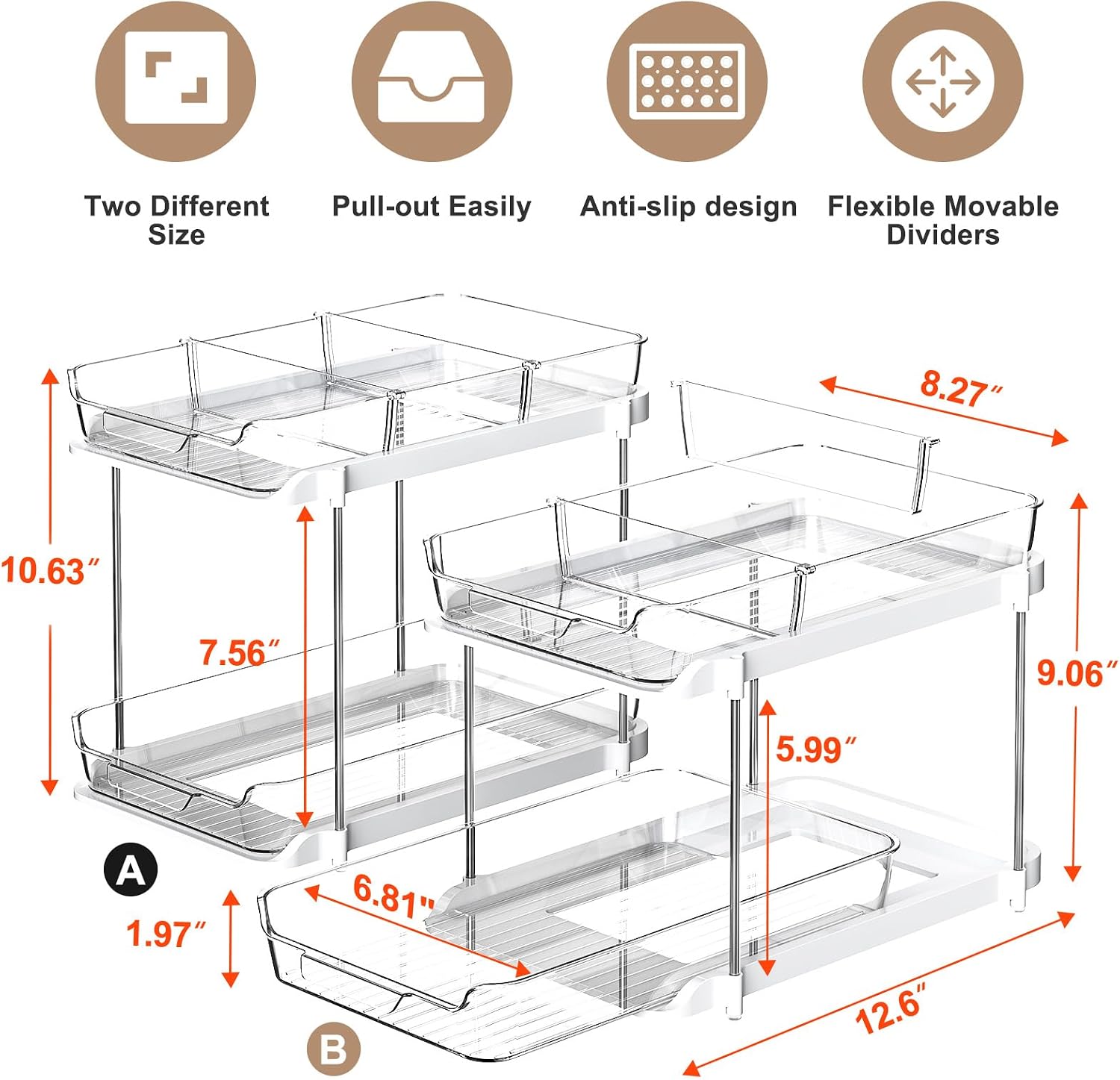
Clear bins reduce memory load. You can scan batteries, toiletries, snacks, craft supplies, or seasonal accessories without opening every box.
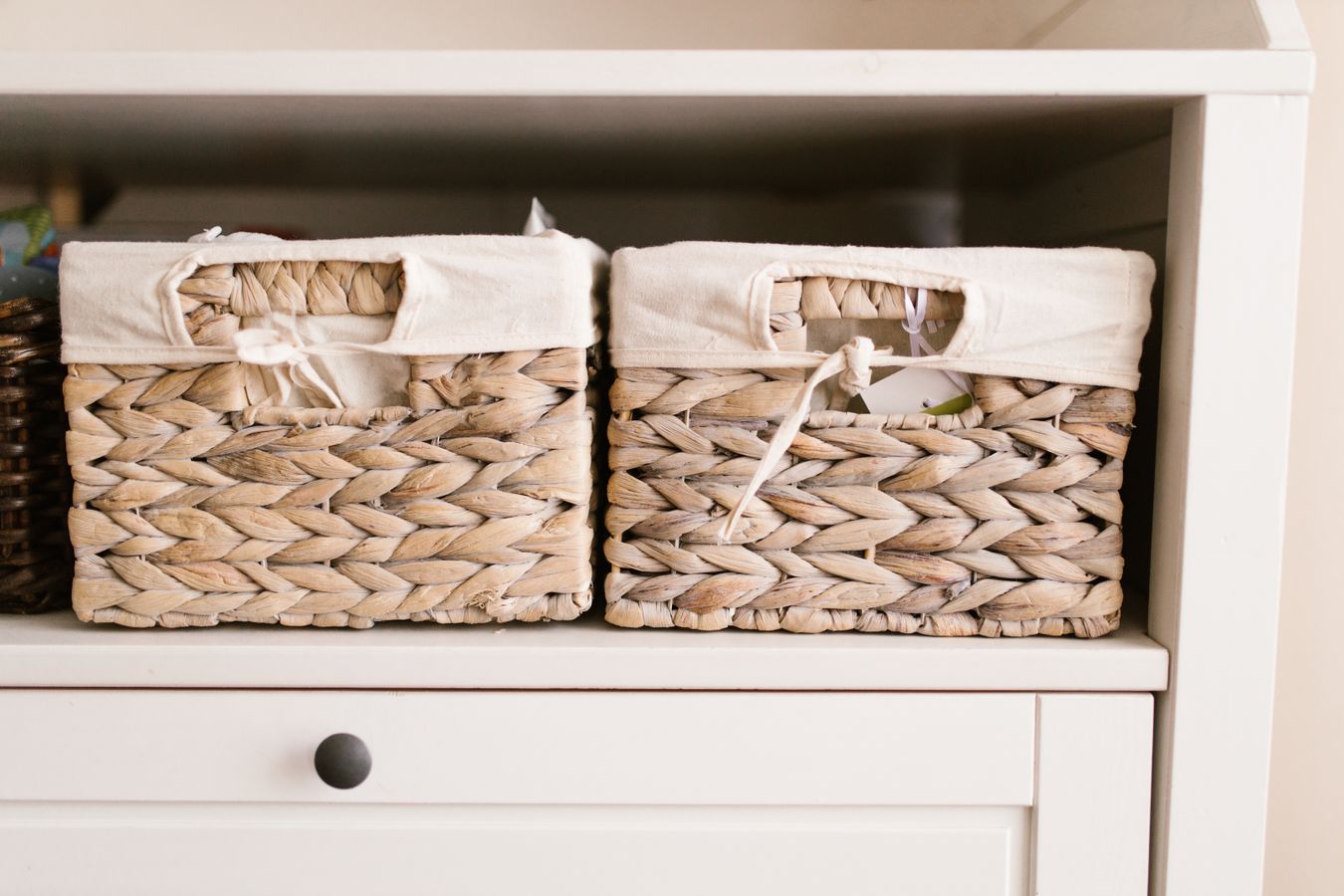
Opaque baskets reduce visual load. A shared living room or open shelf can appear calmer because bright packaging and irregular shapes disappear behind one neutral surface.
The question is which type of load matters more in that specific zone.
Where clear bins perform best
I like clear bins in locations where inventory awareness matters more than appearance: closets, deep cabinets, pantry backstock, utility storage, and some seasonal categories.
They are particularly useful when the household repeatedly buys duplicates because nobody remembers what is already stored.
Strong clear-bin categories
- bathroom refills,
- small pantry backstock,
- craft materials stored behind a door,
- seasonal accessories,
- cables or hardware separated into broad categories,
- travel-size toiletries.

Where clear bins fail
Transparency does not create order. A clear bin full of unrelated objects simply makes the clutter visible through plastic. The category still needs a definition.
Clear bins also become visually expensive on open shelving. Twelve transparent boxes can make a room look more like a stockroom even if every item is technically contained.
And when the bins are deep, the same old problem returns: visible items at the front, forgotten items at the bottom.
Where opaque baskets perform best
I prefer opaque baskets in shared rooms and highly visible zones where visual calm is part of the function: living rooms, entryways, open shelving, bedside storage, and some kids’ areas.
They are especially good for soft or irregular categories—blankets, toys, hats, reusable bags—where seeing every individual piece adds little value.

Where opaque baskets fail
The danger is memory. Once a category disappears, the household may stop using it or keep adding to it.
Opaque storage therefore needs stronger labels or more predictable categories. A basket labeled “Winter Hats” works. A basket labeled “Miscellaneous” is an archive of postponed decisions. For a related step-by-step approach, see Rental Bathroom Storage Without Drilling: What Actually Works—and What Usually Fails.
If a hidden category keeps growing, use the small-home decluttering guide before buying larger baskets.
Closets: clear usually wins for secondary storage
Behind closet doors, visual calm matters less. I often choose clear containers for backup toiletries, seasonal accessories, craft supplies, or lesser-used household categories.
Daily clothing itself usually does not need to be boxed. Containers should solve a real boundary or access problem, not wrap every category in plastic.

Living rooms: opaque usually wins
A living room already contains furniture, books, electronics, textiles, toys, and people. Transparent bins add another layer of visible information.
For toy categories that remain in the living room, an opaque or semi-opaque basket can create a stronger visual reset after cleanup. The guide to organizing toys without making the living room look like a playroom follows the same principle.
Kids’ rooms: the answer depends on age
Young children benefit from recognition. Clear fronts, picture labels, or open baskets can make cleanup easier. Older children can manage opaque bins if labels and categories are clear.
Do not choose transparency only because you want the child to “see everything.” Too much visible inventory can make choosing and resetting harder.
Pantry and food backstock: visibility usually matters
Clear containers can help prevent duplicate purchases because the household sees what remains. However, I would not decant everything merely for appearance. Original packaging may contain useful preparation, allergen, expiry, or storage information.
For larger inventory problems, grocery backstock storage should be solved by limits before containers.
The “lid tax” matters as much as transparency
A clear bin with a tight lid may be less convenient than an open opaque basket. When comparing containers, include the number of motions required to use them.
Daily categories rarely deserve complicated lids. Archive and seasonal categories may benefit from more protection.
The stacking trap
Both clear and opaque bins become frustrating when stacked too high. The lower bin may be visible and still inaccessible.
If a category is used more than monthly, I prefer independent shelf access, pull-out storage, or a short stack.
What about matching containers?
Matching containers can reduce visual chaos, but buying a full matching set before category volume is known often creates wasted space. Container dimensions should follow the category, not the shelf photo. For the broader setup, The Small-Home Storage Audit: 12 Places That Look Organized but Waste Space is a useful next read.
A room-by-room rule
Closets: more clear bins are acceptable.
Living room: favor opaque storage for visible categories.
Kitchen pantry: use clear where inventory awareness helps.
Bathroom: mix clear backstock with calmer visible storage.
Kids’ room: use the amount of visibility that supports independent cleanup.
Explore this topic
Browse more practical guidance in the Home Organization hub. Room focus: Closets & Storage.
Expert conclusion
I would not choose one container type for an entire small home. Clear bins are a memory tool. Opaque baskets are a visual tool.
Use transparency where forgetting causes waste or duplicate purchases. Use opacity where the room needs to transition from active family life to visual calm. You may also find How to Organize Family Photos and Printed Keepsakes in a Small Home useful for a closely related small-home problem.
The best container is not the one that hides or reveals the most. It is the one that makes the category easier to use without making the room harder to live in.