Rental bathrooms create a particular kind of storage frustration. The room may have one shallow vanity, no medicine cabinet, no linen closet, and a landlord who does not want new holes in tile or walls. That pushes renters toward “no-drill” products—adhesive shelves, tension poles, over-door racks, carts, and freestanding towers. For a related step-by-step approach, see Small Home Office Storage Review: Shelves, Drawers, Carts, or Wall Files?.
Some are useful. Some simply move clutter from the counter to a different visible surface.
I review renter bathroom storage by four standards: does it protect circulation, does it tolerate the room’s conditions, can the user reach it easily, and is the installation appropriate for the actual surface and lease?
Start with the storage you already pay rent for
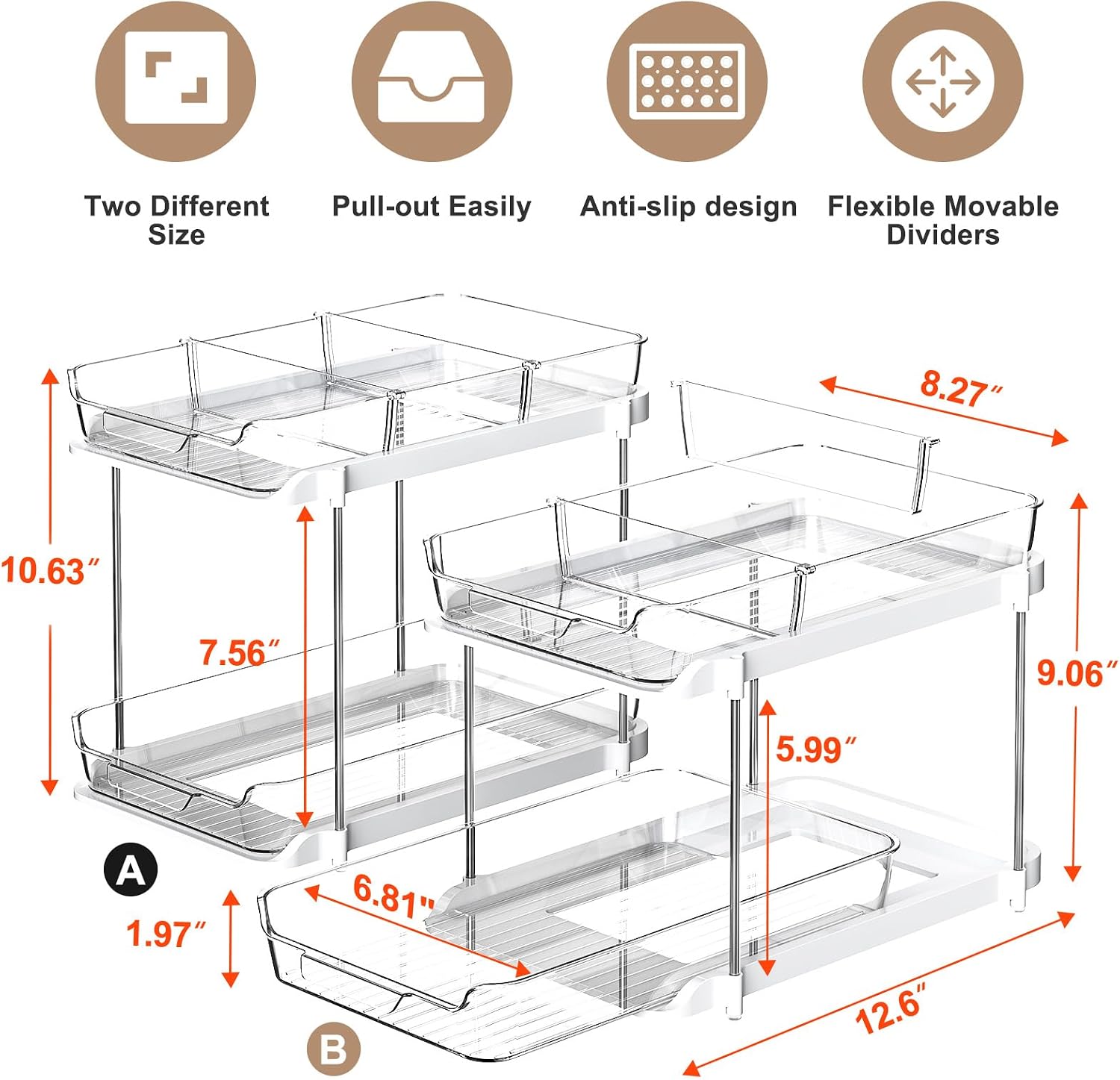
Before adding anything, empty the vanity or existing cabinet and look at how much space is lost to plumbing, deep corners, and mixed categories. A shallow pull-forward bin or drawer insert can often recover more useful capacity than a new freestanding shelf.
If the under-sink area is the main bottleneck, organizing under a small bathroom sink is the better first project.
Option 1: over-door storage
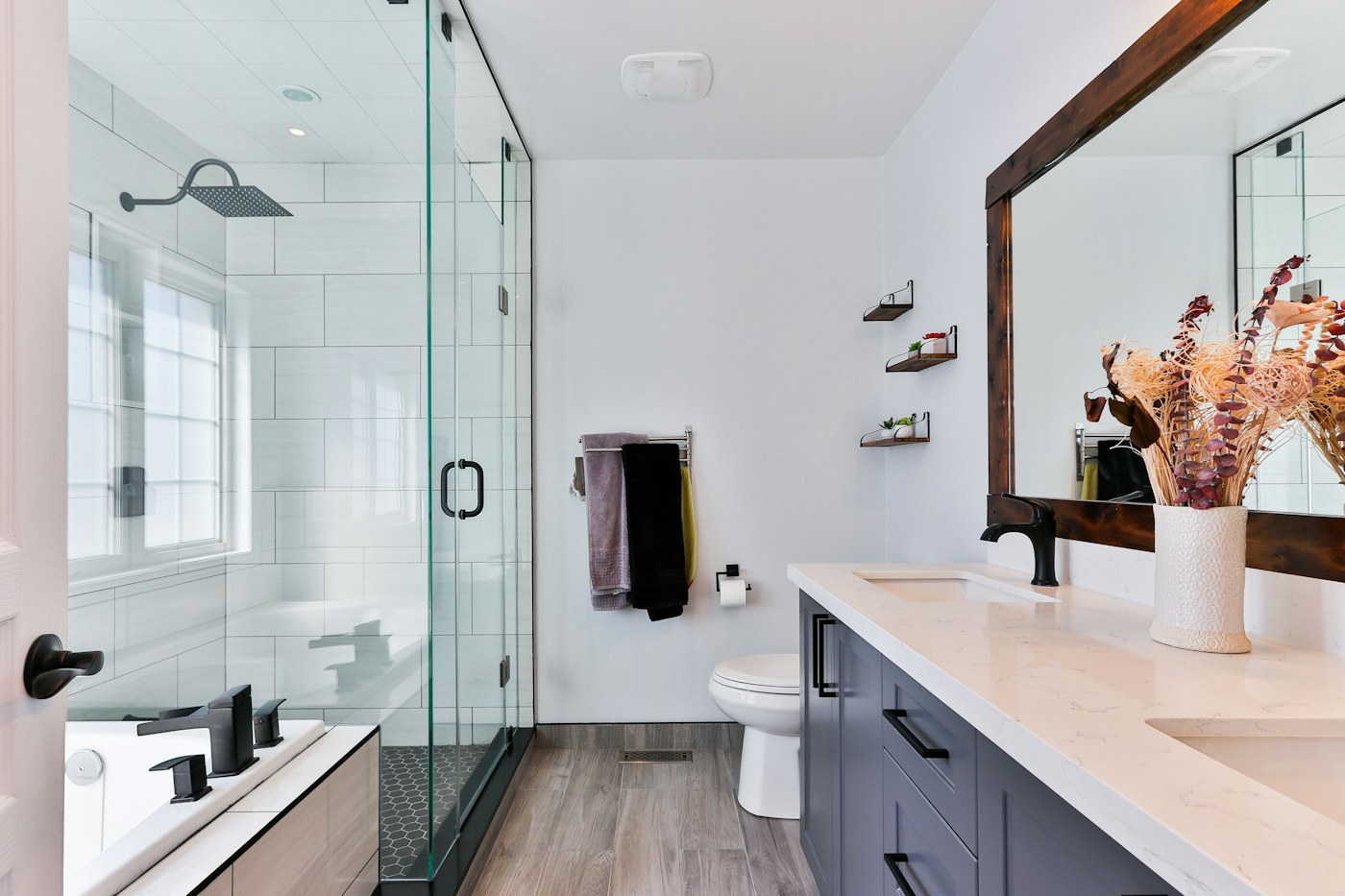
Over-door organizers are one of the strongest no-drill options because they use a surface that is already vertical and usually underused. For the broader setup, Over-the-Door Organizers in Small Apartments: Where They Work—and Where They Don’t is a useful next read.
Good uses
- hair tools when cool and stored appropriately,
- light towels,
- toiletry caddies,
- small grooming categories,
- backup paper goods if the pockets are sized sensibly.
What can go wrong
The rack may prevent the door from closing properly, rub the frame, create noise, or interfere with hooks already on the door. Thick over-door brackets can be surprisingly disruptive in tight frames.
I would test door clearance before buying and avoid loading the system beyond its rated use.
Option 2: tension systems
Tension poles and tension shelves can add vertical storage without screws, especially around a shower or narrow alcove. Their advantage is reversibility. Their weakness is that stability depends on the product, installation, surfaces, and load.
I would use tension storage for relatively light, frequently used categories rather than heavy backup inventory. If the product begins to lean, slide, or require constant retightening, the storage is costing more attention than it saves.
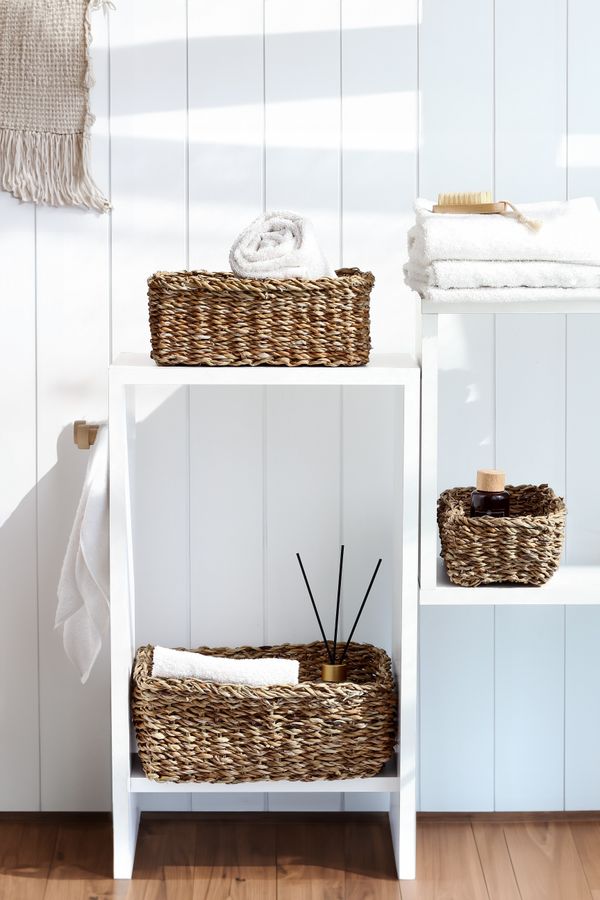
Option 3: freestanding carts and narrow towers
A cart is renter-friendly because it requires no wall installation and moves for cleaning. In a bathroom with unused floor depth beside a vanity, it can be excellent.
But floor space is expensive in a small bathroom. A cart that narrows the path, blocks a cabinet door, or sits in the splash zone may make the room worse.
I would choose a cart only after marking its footprint with tape and testing the morning routine around it.
Option 4: adhesive organizers
Adhesive storage deserves more caution than social-media videos usually show. Adhesive performance depends on the specific product, surface material, surface preparation, humidity, load, and removal method.
I would never assume “no drill” means “no damage.” Follow the manufacturer’s surface and weight guidance, consider the lease, and avoid treating adhesive shelves as a universal solution for heavy bottles.
For light categories on compatible surfaces, adhesive hooks or small organizers can be useful. For expensive tile, painted walls, or uncertain finishes, I would be conservative.
Option 5: portable caddies
Portable caddies are underrated in rentals because they do not need to live permanently in the bathroom. A person can keep skincare, hair tools, or a grooming routine in a bedroom or closet and bring the kit in only when needed.
This is especially useful when several people share one bathroom. Instead of creating four permanent shelf zones, each person has one movable routine.
What should stay in the bathroom?
Not every bathroom-related product needs to live there. Keep the active layer: daily toiletries, current towels, toilet paper, and whatever the household truly uses in the room.
Move deep backstock, travel toiletries, rarely used styling tools, and surplus linens to secondary storage if that improves the room.
The existing guide on what to keep in a small bathroom—and what to store somewhere else is a useful filter before adding capacity.
Shared bathrooms need portable ownership
When several people use the bathroom, no-drill storage can become a forest of individual hooks and baskets. I prefer one shared core plus portable personal kits.
Shared core: toilet paper, towels, soap, common cleaning items where appropriately stored. Personal kit: skincare, hair accessories, specialty grooming items. For a related step-by-step approach, see Where to Store Important Documents in a Small Apartment.
This approach is compatible with the small bathroom storage system for a family sharing one bathroom.

Moisture changes the decision
Bathrooms contain steam, splashes, damp towels, and limited drying capacity. Materials and installation methods need to be appropriate for their environment. Open baskets that trap damp textiles, unstable cardboard organizers, or storage that blocks airflow can create more maintenance.
Keep wet items in places where they can dry, not simply where they fit.
What I would avoid in the smallest rental bathrooms
- large over-toilet furniture that visually and physically dominates the room,
- deep carts that narrow the only walkway,
- multiple adhesive shelves holding heavy bottles,
- floor baskets for categories that could live outside the bathroom,
- storage products bought before measuring door and drawer clearance.
My preferred renter hierarchy
- Improve existing drawers and cabinets.
- Remove nonessential bathroom backstock.
- Use one portable personal caddy where routines can move.
- Add over-door or tension storage only for a clearly defined category.
- Add floor furniture last.
This order protects circulation before chasing maximum capacity.
Explore this topic
Browse more practical guidance in the Small-Space Living hub. Room focus: Bathroom.

Expert conclusion
The best no-drill bathroom storage is usually not the product that adds the most shelves. It is the system that lets a renter keep the active routine close while protecting floor space and avoiding unnecessary installation risk. If you are working on the same space, A Rainy-Day Entryway System for Wet Shoes, Umbrellas, Coats, and Kids’ Gear covers the next decision in more detail.
I would optimize the vanity first, reduce backstock second, use portable storage third, and add vertical or freestanding products only when a specific category still has no home.
Rental-friendly should mean easy to live with as well as easy to remove.