Disclosure: As an Amazon Associate, Small Home Rhythm may earn from qualifying purchases. Price, stock and product variants can change.
A narrow kitchen drawer can hold a surprising number of forks while still feeling impossible to use. The DrawerStore Compact uses overlapping compartments to reduce the width of a conventional side-by-side tray. Its promise is real only when the drawer is tall enough, the handles fit, and every person in the house can read the angled sections.
This is a research-based review of the named DrawerStore Compact Cutlery Organizer, gray. We have not used, timed or durability-tested it. The practical checks below are designed to help you compare the current listing with your own room rather than treating a marketing photograph as proof of fit.
The layout trade: width in exchange for height
The organizer places different kinds of flatware in tiered channels. That frees horizontal space for another utensil cup or a slim kitchen tool, yet the upper layer can hide the lower one from a quick glance. Try a cardboard mock-up at the bottom of the drawer before buying: mark the organizer footprint, then stack a handful of actual forks and spoons to approximate the raised loading height. A drawer that is wide enough for an ordinary tray may be easier to scan, especially for children unloading the dishwasher.
Measure the opening, not only the inside box
Take three numbers: clear drawer width, usable front-to-back depth and height underneath the countertop or drawer above. The drawer box can be deeper than the clearance available at its opening. Include any lip, handle screw, drawer runner or liner. The Amazon listing shows a small gray model; compare its current dimensions with your measurements and leave room for fingers to lift a full-length serving spoon. A tight fit on paper often becomes a frustrating fit during a rushed dinner cleanup.
Sort by how your household empties the dishwasher
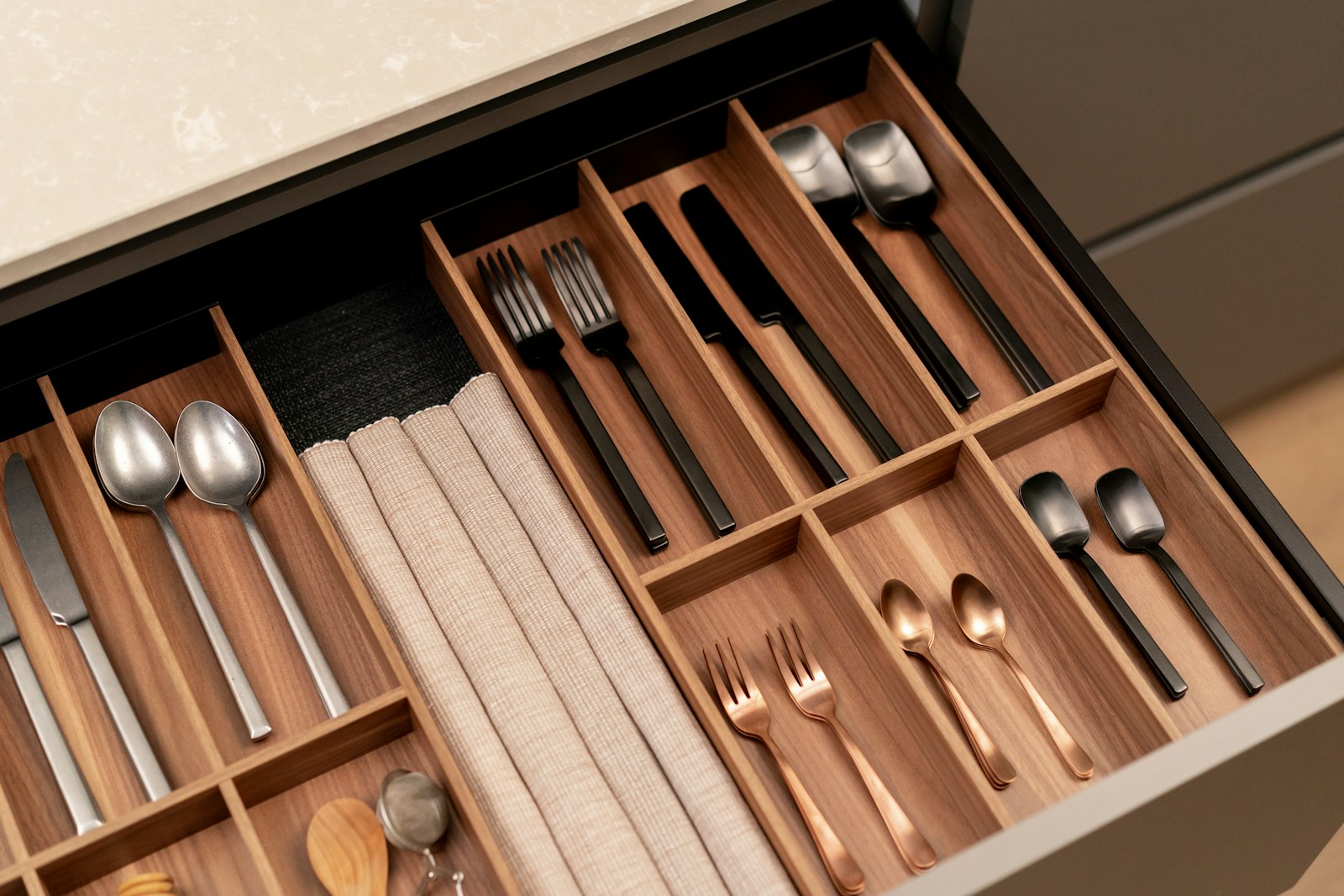
A tiered rack is quickest if one person learns where each category goes. Assign the top channel to the item everyone reaches for most often and label the front edge temporarily with removable tape. If teaspoon and soup-spoon handles look alike, do one dishwasher unloading trial with the rack sitting on the counter. Count the seconds spent hunting for a slot rather than admiring the freed area. The layout is only a gain if putting pieces away is as easy as finding them.
What still needs another home
This is a cutlery sorter, not a universal drawer kit. Long spatulas, chopsticks, oddly shaped serving pieces and sharp knives may need their own compartment or safe storage. Avoid balancing a heavy utensil across the top where it could catch when the drawer closes. Plan the remaining drawer area before ordering; an organizer that leaves an unusable one-inch strip has not helped much. A small open bin may be better for the irregular pieces.
Cleaning and practical limits
Crumbs and water reach a cutlery drawer even in a neat kitchen. Remove the flatware, follow the manufacturer cleaning instructions for the organizer, and dry both the tray and drawer before reloading. Do not assume dishwasher safety from the material alone. Recheck that the channels do not trap damp items underneath. If the drawer has a sticky runner, fix it first: extra organization cannot overcome a drawer that jerks and spills its contents. If you are working on the same space, How to Store Lunchboxes, Water Bottles, and Reusable Bags Without Kitchen Clutter covers the next decision in more detail.
Two-drawer reality check
If your kitchen has only one narrow drawer, do not plan around a second drawer that does not exist. Lay every piece of everyday flatware and your most frequently used prep tools on the table. Separate the odd pieces first, then try returning only the daily cutlery to the prospective organizer footprint. If the freed strip cannot hold a particular tool securely, there is no practical space gain. A tiered insert can increase the number of forks it holds while decreasing the speed of finding a teaspoon. Let the household member who unloads the dishwasher make that judgment. In a shared family kitchen, repeatable storage beats a visually perfect first arrangement. For the broader setup, How to Organize Foil, Food Wrap, and Reusable Bags in a Small Kitchen is a useful next read.
One-week experiment
Keep the current tray for seven days and record the two situations that cause most friction: a utensil sliding under another, or not enough drawer width for a can opener, for example. Try a temporary divider made from an empty box in the same footprint that the DrawerStore would use. If the friction is a messy category rather than insufficient space, simply removing duplicates may solve it. If your drawer is shallow enough that forks catch the cabinet frame, an insert that stacks them higher is likely the wrong direction. The review question is whether the geometry helps your actual drawer, not whether the product is attractive.
Questions to settle before ordering
Will this fit the room as it is today?
Start with the limiting check: measure the drawer opening in three directions. Then account for the space needed to open, remove, wash and put away the item. In a small home, usable clearance is more revealing than the outside dimension alone. If the object or surrounding furniture moves, measure at both ends of that movement. Write down the number and compare it with the selected product variation, not a photograph of a similar model.
Will the routine still work when the room is busy?
Imagine the moment when stacked cutlery in a narrow kitchen drawer is needed and another person is using the room. Try the sequence with a paper placeholder: reach, use, clean and return. Look for a point where an extra movement blocks a doorway or requires another item to move first. If the item must be relocated after every use, plan a permanent home for it. A convenient purchase should reduce repeated friction rather than create a new reset job.
How should I compare variants and claims?
Match the Amazon ASIN to the named model, then compare dimensions, material, included pieces and current instructions. Manufacturer claims are starting points for a fit decision, not results of our own testing. Reviews may help identify questions to ask, but a customer’s room and usage can differ from yours. Check return terms and the seller at checkout. If a key specification is unclear, contact the manufacturer before ordering rather than assuming another color or size is identical.
Who should buy it—and who should pass?
Consider it if: A household with one truly narrow, sufficiently deep cutlery drawer and a consistent unloading routine. The value lies in solving the daily placement problem for stacked cutlery in a narrow kitchen drawer. Try to identify the exact point in your routine when you would reach for it, and the precise space it will occupy once put away. A product that works only after clearing a surface every time is unlikely to remain useful. If you are working on the same space, Lazy Susans and Turntables in Small Kitchens: Where They Work—and Where They Waste Space covers the next decision in more detail.
Skip it if: A shallow drawer, large serving-utensil collection or family that benefits from one visible layer. Do the small measurement and routine test before checkout. Amazon variations can have different materials, colors and dimensions, so verify the selected version on the page immediately before purchasing. We do not assume the current price, warranty or availability.
Before-you-buy fit check
- Measure the drawer opening in three directions. Write down the result rather than estimating from a photograph.
- Compare the current gray variant and included pieces. Write down the result rather than estimating from a photograph.
- Test a tiered layout with your own longest fork. Write down the result rather than estimating from a photograph.
- Reserve a separate safe place for sharp knives. Write down the result rather than estimating from a photograph.
Once those checks are done, look at the product photographs and the installation or care instructions for the exact variation. Include the object around the product in your measurement: a swinging door, a drawer opening, a child’s reach or a plug and cable can change the fit. If one necessary dimension is missing, ask the manufacturer or choose a product with published specifications. A reversible paper or cardboard mock-up is cheaper than a return.
What could you use instead?
Use a low single-layer tray or two adjustable drawer dividers when quick visibility matters more than maximum capacity. The right comparison is the full routine: how many steps it takes to get the item out, use it, clean it and return it. Count surfaces you gain as well as any shelf, wall or floor area the new item consumes. If a tool you already own covers the occasional job, keep the new purchase on a wish list until the problem repeats several times.
Amazon product and current listing
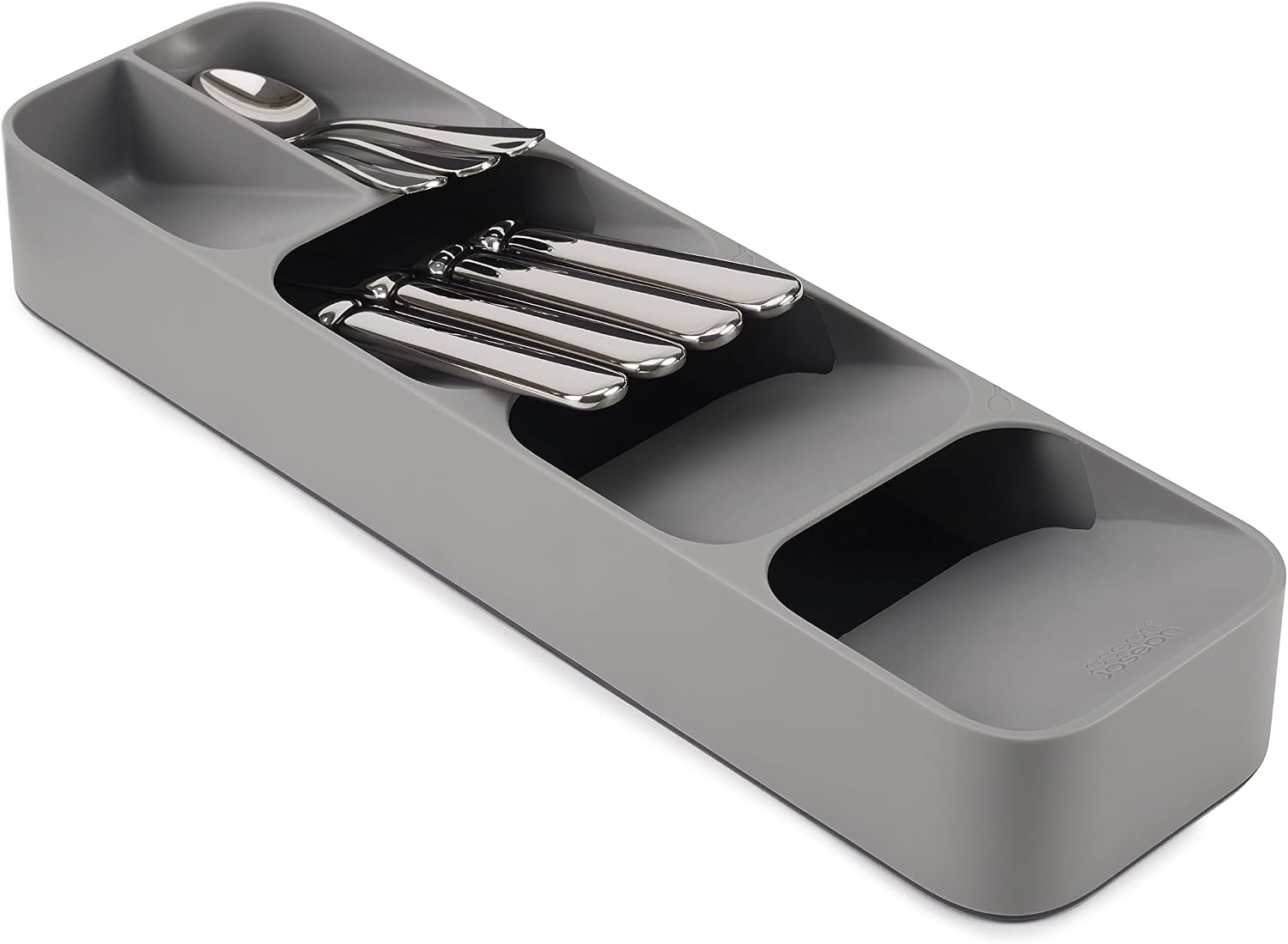
Joseph Joseph DrawerStore Compact Cutlery Organizer, gray — View this exact model on Amazon. Check the selected color, variant, seller and latest manufacturer instructions; the image illustrates the listed item and does not document a hands-on test.
Before placing an order, open the affiliate link and compare the product title and ASIN B072R6CLRC with the specifications that mattered in your room. If the listing switches to a different variation, stop and recheck the measurements and materials. Reviews can surface recurring complaints, but treat them as individual experiences and weigh them against the published product details.
Final verdict for a small home
A household with one truly narrow, sufficiently deep cutlery drawer and a consistent unloading routine. Use a low single-layer tray or two adjustable drawer dividers when quick visibility matters more than maximum capacity. Keep the decision tied to the one friction point this item could remove; a larger capacity or an extra shelf is not useful if it makes the room harder to move through, clean or share. Revisit the fit checklist with the current listing before buying. You may also find Yamazaki Magnetic Key Rack with Tray Review: A Useful Entryway Drop Zone? useful for a closely related small-home problem.
Explore more Buying Guides and the Kitchen room guide for related small-home ideas.
Sources
- Amazon product listing for DrawerStore Compact Cutlery Organizer, gray — https://www.amazon.com/dp/B072R6CLRC