Trying to organize an entire small home at once creates one predictable result: every room gets partly better and nothing gets fully finished. For a related step-by-step approach, see Where to Store Important Documents in a Small Apartment.
A better approach is to organize in an order that restores daily function first. Kitchens, entryways, bathrooms, bedrooms, living rooms, and storage zones each have different jobs. They should not all use the same organizing method. If you are working on the same space, How to Organize a Small Closet When Two People Share It covers the next decision in more detail.
This plan uses five questions in every room:
- What does this room need to do?
- What repeatedly gets in the way?
- What belongs here?
- What is the storage limit?
- What is the reset routine?
Before room one: create three whole-home tools
1. Return basket
Use one basket for items that belong in another room. Empty it at the end of each session.
2. Donation bag
Keep outgoing items moving toward the door, not into a new pile.
3. Decision list
Write down larger projects instead of starting them in the middle of a room reset.
Room 1: entryway — fix the arrival path first
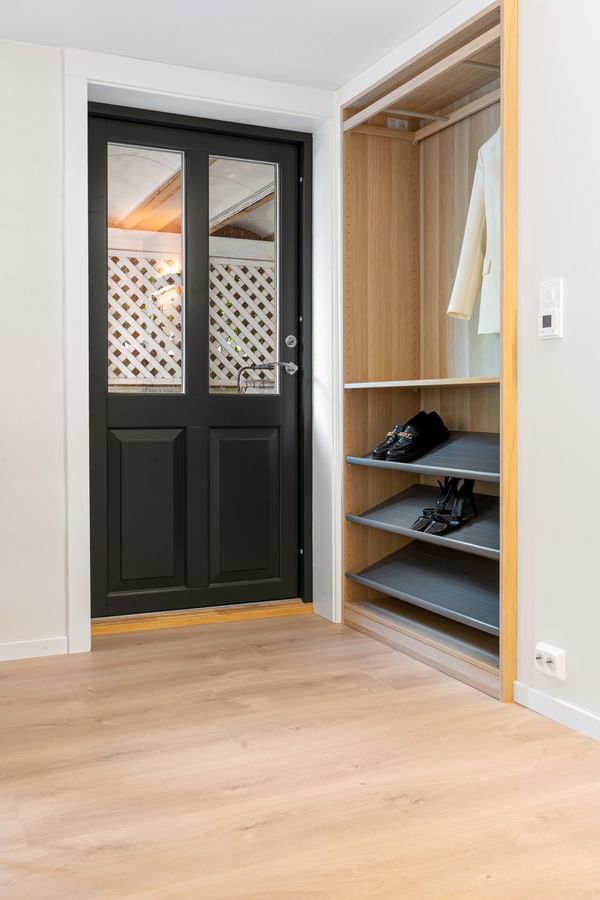
The entryway affects every day because it handles shoes, keys, coats, bags, school gear, and incoming items.
Organize it around the sequence of arriving home:
- keys land in one place,
- shoes have a current-season limit,
- bags get hooks or a shelf,
- wet gear has a drying location,
- paper moves out of the entryway quickly.
Room 2: kitchen — protect working space
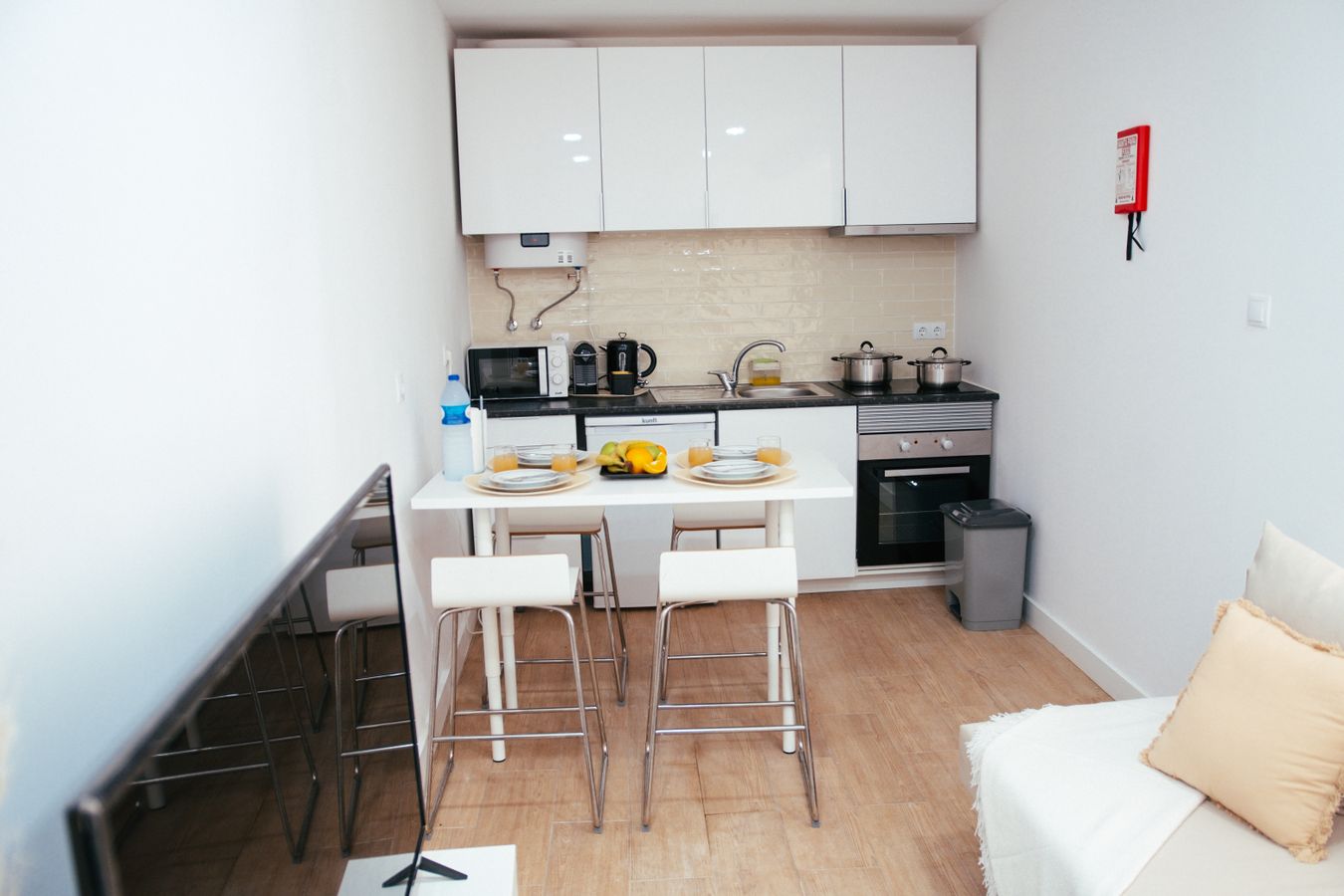
The kitchen should prioritize prep, cooking, cleaning, and food storage before decorative storage.
Start with:
- one clear prep zone,
- daily cookware in easy reach,
- food grouped by use,
- deep cabinets organized by access,
- appliances assigned permanent or stored status.
For deep storage specifically, pair this plan with How to Organize Deep Kitchen Cabinets So Nothing Gets Lost once that article is published.
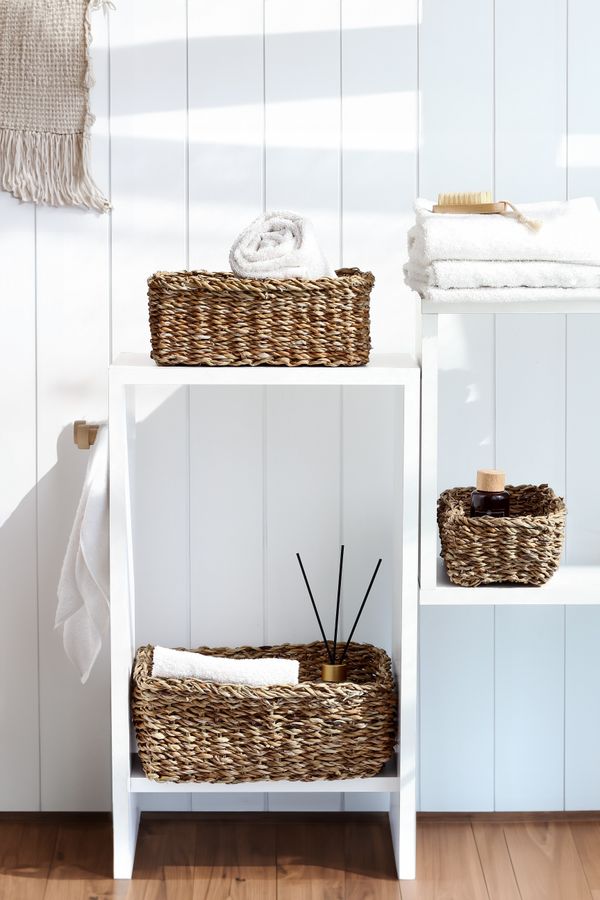
Room 3: bathroom — reduce category spread
Bathrooms get crowded when backup products, daily products, cleaning supplies, medicine, towels, and grooming tools all compete for the same small cabinet. If you are working on the same space, What to Get Rid of First When Your Small Home Feels Too Full covers the next decision in more detail.
Use three zones:
- daily: easiest reach,
- backup: one defined shelf or bin,
- occasional: higher or lower storage.
Do not let backups exceed the space assigned to them.
Room 4: bedroom — protect sleep and dressing
Bedrooms often become overflow storage for the rest of the home.
Prioritize:
- clear walking paths,
- bed free of daytime storage,
- laundry contained,
- nightstand limited to current-use items,
- clothes able to return to drawers and closet.
Room 5: closet — organize by capacity
A closet works when clothes can go back without compression.
Use rods, shelves, drawers, and floor space as limits. If every section is full, add less before buying more organizers.
If two people share the closet, define personal and shared zones before adding storage products.
Room 6: living room — organize by activity
Ask what the room actually supports: sitting, TV, play, reading, homework, guests.
Then assign one storage home to each recurring activity.
- remote controls,
- blankets,
- current toys,
- books,
- games,
- chargers.
The living room feels calmer when each activity can disappear into one contained home at reset time.
Room 7: kids’ spaces — make the reset child-sized
Do not create a toy system that only an adult can maintain.
Use broad categories, reachable bins, simple labels, and fewer active toys. If a child cannot tell where something goes, the category may be too specific. For the broader setup, How to Declutter a Small Home When You Don’t Know Where to Start is a useful next read.
Room 8: laundry area — organize the flow, not the products
Laundry storage should support collect → wash → dry → fold → put away.
Keep regular-use detergent accessible, occasional products separate, and empty baskets available for transport.
See A Simple Laundry Routine for Families in Small Homes for the full workflow.
Room 9: paper and home office zones
Paper requires decisions, not just containers.
Separate incoming paper into:
- action,
- file,
- recycle/shred.
Use Small Apartment Paper Organization: A Simple System That Stays Tidy for the detailed system.
Room 10: storage zones — make them support the active rooms
Storage closets, under-bed areas, and high shelves should hold categories that do not need daily reach.
Do not let prime living space hold occasional items while hidden storage is full of things you rarely use.
A 30-day organization plan
| Week | Focus |
|---|---|
| Week 1 | Entryway, kitchen, bathroom |
| Week 2 | Bedroom, closet, laundry |
| Week 3 | Living room, kids’ spaces |
| Week 4 | Paper, storage zones, whole-home reset |
Work 20–40 minutes per session. Finish one bounded area before starting another.
The organization test: can the room reset in 10 minutes?
A good system is not one that looks perfect immediately after organizing. It is one that can recover after normal use.
If a room takes 30 minutes to put back together every night, either too much is stored there or the categories are too complicated.
What to do when one room keeps failing
Diagnose the cause:
- too much volume: declutter,
- no home: assign storage,
- home too far away: move storage closer to use,
- category too specific: simplify,
- routine missing: add a reset cue.
Do not organize every room to look the same
The kitchen needs access. The entryway needs speed. The bedroom needs calm. Kids’ storage needs simplicity. Paper needs decisions. Laundry needs flow.
A small home works best when each room is organized around its actual job.
Frequently asked questions
Which room should I organize first?
Start with the room that creates the most repeated daily friction. For many families, that is the entryway or kitchen.
How long should a room take?
Organize in bounded sections. A single drawer may take 15 minutes; a room may take several sessions. Avoid emptying everything unless you can finish the same day.
Should I buy storage before I start?
No. Declutter and test the room flow first, then measure exactly what still needs containment.
Organize the home in the order you live in it
Start with arrival, food, hygiene, dressing, living, play, laundry, and paperwork. Give each room a clear purpose, a realistic capacity, and a short reset routine.
When every room can recover after normal use, the whole small home begins to feel larger—even if you have not added a single square foot.