A small bedroom can look messy very quickly even when the real problem is only one category: clothes.
A sweatshirt lands on the chair because it is not dirty enough for the hamper. Clean laundry stays on the bed because the drawer is already full. Pajamas sit on the floor. Tomorrow’s outfit hangs from the doorknob. Within a few days, the room feels untidy even though almost everything in the pile belongs to you and still has a purpose. For the broader setup, How Often Should You Clean Everything in a Small Home? is a useful next read.
The solution is not folding faster. It is building a clothing traffic system so every item has a clear next step:
wear again → wash → put away → leave the room.
This guide focuses on that traffic first, then adds a short cleaning routine around it.
Why clothes take over small bedrooms so easily
In a compact room, clothing competes with the bed, closet, dresser, walking path, and every horizontal surface. A pile that would disappear into a large walk-in closet becomes a major visual feature. For the broader setup, How to Store Extra Bedding in a Small Home With No Linen Closet is a useful next read.
Most recurring clothing mess comes from one of four bottlenecks:
- there is no home for clothes that can be worn again,
- the hamper is too far away or too full,
- clean clothes do not fit comfortably back into storage,
- the bedroom is being used as the final stop for clothes that actually belong somewhere else.
Fix the bottleneck before adding another basket.
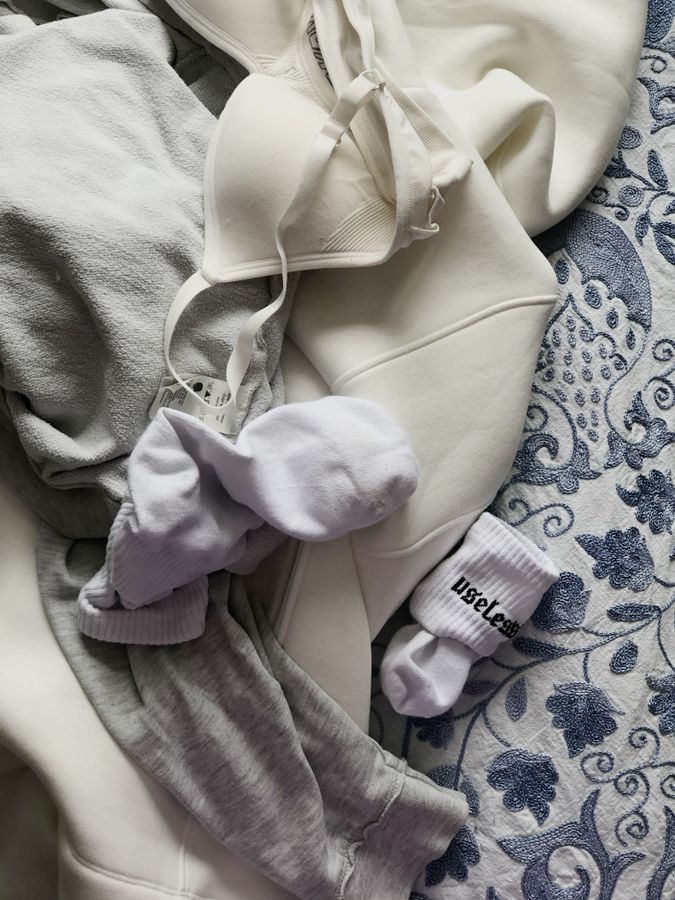
Step 1: separate the pile into four destinations
When the bedroom is already messy, do not begin by perfectly folding everything. Make four quick decisions.
1. Wear again
These are clothes you have already worn but plan to use again before washing: jeans, a hoodie, pajamas, a cardigan, or lounge clothes.
2. Wash
Anything ready for laundry goes directly into the hamper.
3. Put away clean
These items are clean and belong in the closet or dresser.
4. Leave the bedroom
Coats, shoes, bags, towels, children’s items, returns, and other household objects should move to the room where they are actually used.
This turns one vague clothing mountain into four specific jobs.
Step 2: create a real wear-again zone
The chair becomes a clothing pile because it is often doing an unofficial job: holding clothes that are neither clean-clean nor laundry-ready.
Instead of pretending those clothes will go back into the closet immediately, give them a small legitimate home.
Good options include:
- two or three wall or over-door hooks,
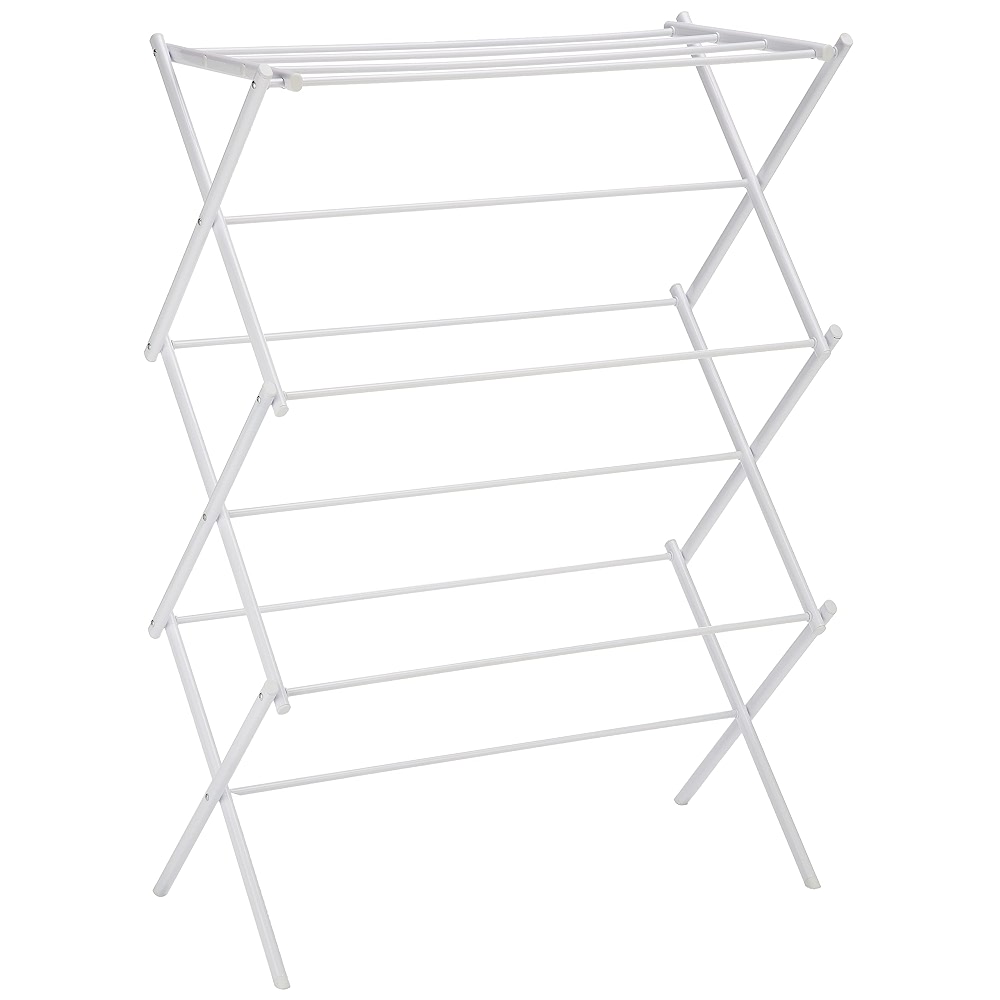
- one short section of a clothing rack,
- one basket for soft lounge clothes,
- a single valet hook,
- one designated shelf.
The important part is capacity. Your wear-again clothes zone should be intentionally small.
If five hooks are full, the next step is to wear, wash, or put something away—not add a second unofficial pile.
Step 3: remove the bedroom chair from the laundry system
If a chair is useful for sitting, reading, dressing, or putting on shoes, protect that function.
At the end of the day, nothing should remain on the seat except perhaps one planned outfit for the next morning.
If you never sit in the chair and it exists mainly to hold clothes, ask whether the room would function better without it. Removing one unused chair can reclaim more visual space than buying several organizers. You may also find How to Keep a Small Home Smelling Fresh Without Constantly Cleaning useful for a closely related small-home problem.
Step 4: make the hamper easier than the floor
A hamper fails when using it takes more effort than dropping clothing where you already stand.
Place it where clothes naturally come off: beside the closet, near the bathroom route, or close to the bed if that is where you change.
For a small bedroom, prioritize:
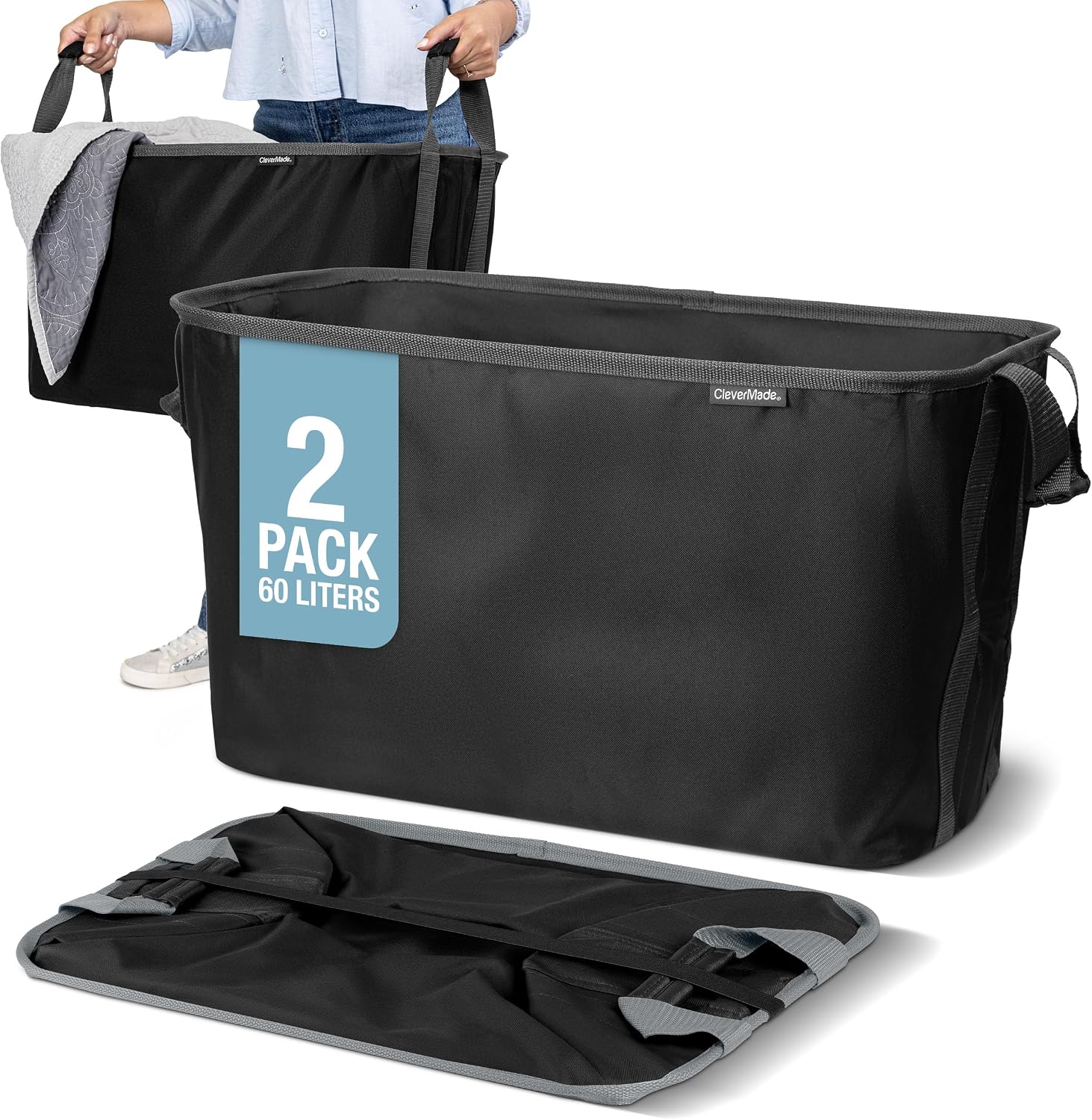
- a footprint that fits without narrowing the walking path,
- an opening that is easy to use,
- handles if laundry travels to another room,
- capacity that matches your real wash frequency.
If the hamper is always overflowing, the problem may be laundry cadence rather than hamper size.
Use A Simple Laundry Routine for Families in Small Homes if laundry regularly stalls between collecting, washing, folding, and putting away.
Step 5: check whether clean clothes actually fit
Sometimes “messy bedroom” is really “over-capacity wardrobe.”
Test the system on laundry day. Can every clean shirt, pair of pants, and set of pajamas return to storage without:
- forcing a drawer shut,
- stacking clothing on top of furniture,
- hanging multiple garments from one overloaded hanger,
- leaving a clean-laundry basket on the floor?
If not, you do not have a folding problem. You have a clothing capacity problem.
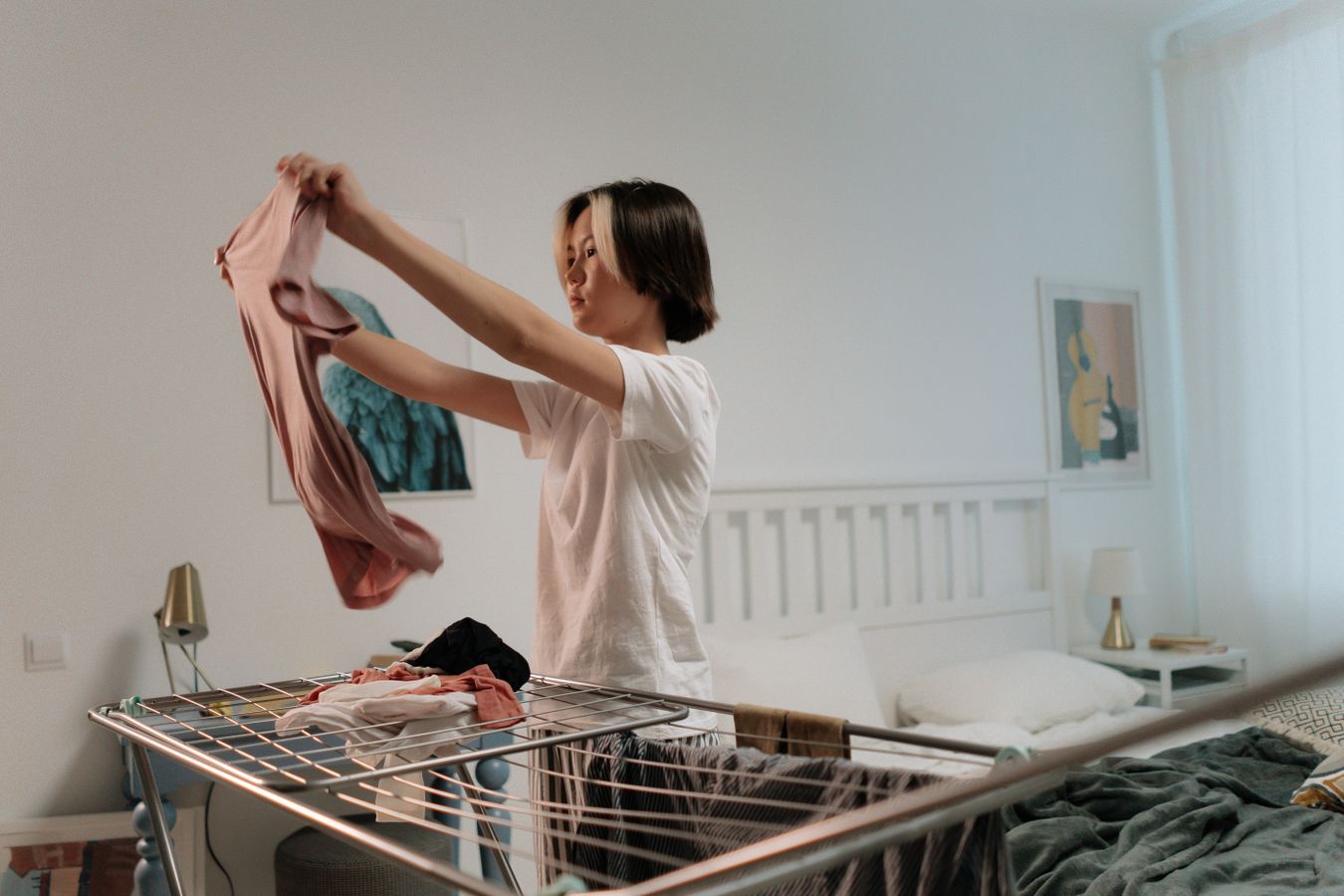
Use the drawer-close test
A drawer should close without compression and reopen without pulling the whole stack forward.
When it stops doing that, review the category before adding another dresser.
Start with low-emotion exits:
- wrong-size clothes,
- uncomfortable clothes you repeatedly skip,
- damaged basics you already replaced,
- duplicates where you always choose the same favorite,
- items that belong to another season and can be stored elsewhere.
For the broader decluttering process, see How to Declutter a Small Home When You Don’t Know Where to Start.
Step 6: separate “clean but not put away” from dirty laundry
Do not mix folded clean clothes with dirty clothing on the same chair or floor pile. Once the categories mix, everything usually gets treated as laundry again.
If clean clothes cannot be put away immediately, give them one temporary staging place:
- one clean laundry basket,
- one end of the bed for a maximum of one hour,
- one defined dresser-top section.
The staging area is temporary. It is not a second closet.
The 7-minute nightly bedroom reset
A small bedroom usually does not need a long nightly cleaning routine. It needs a fast recovery routine before clothes become tomorrow’s problem. If you are working on the same space, A Realistic Deep-Cleaning Checklist for a Small Home covers the next decision in more detail.
Minute 0–2: clothes
Move every visible garment into one of the four destinations: wear again, wash, put away, or leave the room.
Minute 2–3: bed
Clear clothes, bags, and paper from the bed. Straighten bedding enough that the sleep surface is ready.
Minute 3–4: bedside area
Remove cups, dishes, receipts, packaging, and unrelated objects. Return only current-use items.
Minute 4–5: floor path
Pick up shoes, clothing, cords, and bags from the walking route.
Minute 5–6: dresser top
Return cosmetics, accessories, chargers, and folded items to their homes.
Minute 6–7: tomorrow setup
Choose the next day’s outfit if that reduces morning friction. Keep it to one defined hook or spot.
The 3-minute emergency version
When you are exhausted, do only this:
- dirty clothes into the hamper,
- wear-again clothes onto their hooks,
- clear the bed,
- clear the walking path.
Those four actions preserve the room’s essential functions: sleep, dress, and move.
Do not clean around clothing piles
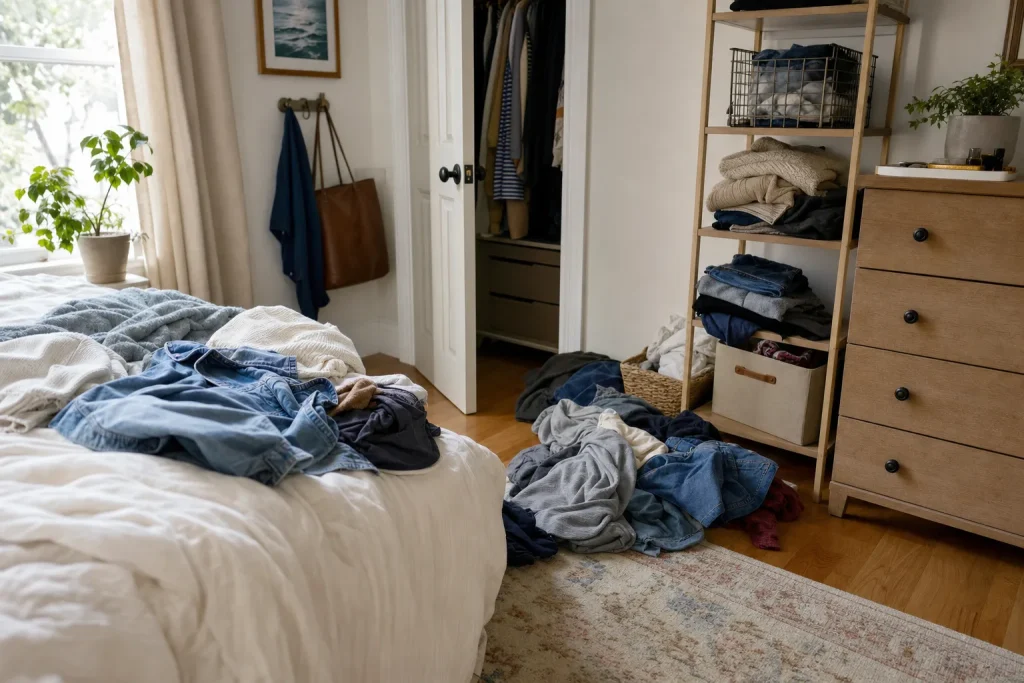
Vacuuming around floor clothes or dusting around dresser piles creates extra work and leaves the room looking unfinished.
Use this order:
clothes first → surfaces second → floor last.
Once clothing traffic is handled, bedroom cleaning becomes much faster.
A simple weekly bedroom cleaning routine
After the daily clothing system is working, one weekly reset can handle the actual cleaning.
1. Strip or refresh bedding as needed
Follow your household’s bedding routine and fabric-care instructions.
2. Dust the main surfaces
Nightstands, dresser tops, shelves, lamps, and accessible horizontal surfaces.
3. Vacuum or clean the floor
Prioritize the exposed walking path, around the bed, and any areas where lint or dust gathers.
4. Empty the bedroom trash
Small bins collect tissues, packaging, tags, receipts, and other visual clutter quickly.
5. Reset one clothing storage zone
Choose one drawer, one shelf, or one section of the closet. Do not reorganize the entire wardrobe every week.
What to do with tomorrow’s outfit
Planning clothes can simplify mornings, but multiple future outfits quickly become another pile.
Use one hook, one hanger, or one small section for the next day only.
If you need to prepare several days of uniforms or work outfits, give that system a defined closet section rather than spreading it across the room.
Where pajamas should live during the day
Pajamas are a classic wear-again category.
Choose one:
- a hook behind the door,
- a bedside basket,
- one dresser drawer if you prefer putting them fully away.
Do not let the bed or floor become the pajama storage location by default.
What to do with exercise clothes
Damp or sweaty clothes should move out of the bedroom pile quickly. Let them dry appropriately before placing them into closed storage or a hamper when needed.
Give workout gear a direct route to the laundry area rather than adding it to the wear-again zone.
What to do with bags and backpacks
Bags often land in bedrooms because they contain personal items, but they occupy valuable floor and chair space.
If you use the bag every day, give it one hook or shelf. If the family already has an entryway launch zone, move daily bags there instead.
See A Small Entryway System for Backpacks, Shoes, Coats, and School Papers.
Keep the top of the dresser from becoming a second closet
Dresser tops attract folded laundry because they are flat and close to clothing storage.
Protect a simple rule: folded clothes may land there temporarily, but nothing stays overnight.
Keep only a small number of permanent items on the surface so temporary clothing is obvious rather than blending into decor.
If two people share the bedroom
Each person should have their own:
- wear-again zone,
- side of the closet or assigned clothing storage,
- bedside area,
- responsibility for returning clean clothes.
Shared hampers are fine if they support the laundry routine, but wear-again clothing usually works better with personal boundaries.
For a small shared wardrobe, use How to Organize a Small Closet When Two People Share It.
Signs the bedroom system is working
You do not need a photo-perfect room. Look for functional signs:
- the bed is available for sleeping,
- the chair can be used as a chair,
- the walking path stays clear,
- dirty laundry reaches the hamper,
- wear-again clothes have a small boundary,
- clean laundry can return to storage,
- a quick reset restores the room in under ten minutes.
Signs you need to reduce clothing volume
Organization alone is probably not enough if:
- every drawer is packed tightly,
- hangers cannot slide on the rod,
- clean laundry regularly lives in baskets,
- wear-again hooks are permanently overloaded,
- seasonal clothes occupy all prime storage,
- you regularly forget what you own.
At that point, reclaim capacity before adding more bedroom furniture.
Frequently asked questions
How do I stop clothes piling up on a bedroom chair?
Create a small wear-again zone with hooks, one basket, or a short rack section. Then protect the chair from becoming storage. If the chair is never used for sitting, consider removing it.
Where should I put clothes that are not dirty enough to wash?
Use a defined wear-again zone with limited capacity. Do not mix them with clean closet clothes or dirty laundry.
Why does my room still look messy after I clean it?
Visible clothing, bags, and floor items create strong visual clutter. Handle clothing traffic before dusting and floors so the room’s main surfaces can actually reset.
Should I buy another hamper?
Only if the current hamper is in the wrong location or your household genuinely needs another collection point. If it is always overflowing, first check laundry frequency and clothing volume.
How often should I reset a small bedroom?
A short nightly clothing reset plus a weekly cleaning pass is a practical starting rhythm. Adjust it to how quickly your room actually accumulates mess.
Keep clothes moving instead of letting them park
The small-bedroom problem is rarely that every garment needs a better fold. It is that clothing stops moving between wearing, washing, and storage.
Give wear-again clothes a real but limited home. Put the hamper where clothes come off. Make sure clean laundry can actually fit back into the closet or dresser. Protect the bed, chair, and walking path from becoming permanent storage.
Once the clothing traffic works, keeping a small bedroom clean becomes much less about cleaning—and much more about a seven-minute reset that keeps every item moving to its next destination.