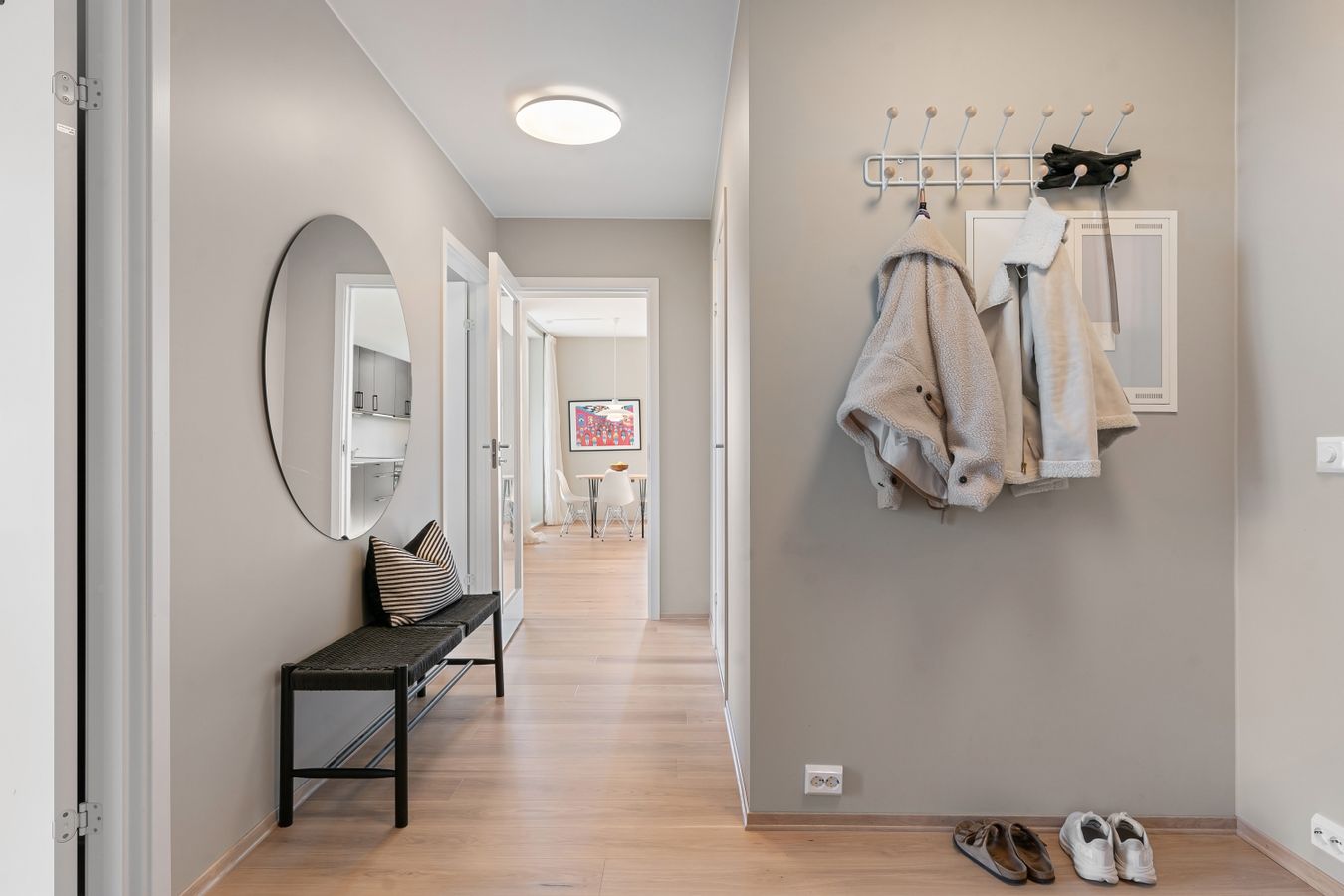
A small entryway can become the most overloaded few square feet in the house. Everyone arrives at once carrying shoes, coats, backpacks, mail, water bottles, permission slips, groceries, and random objects from the car. For a related step-by-step approach, see How to Organize a Shared Kids’ Bedroom in a Small Home.
The goal is not to store all of family life at the door. It is to create a fast transfer system: what stays here, what leaves the zone immediately, and what needs a next step.
Build the entryway around arrival order
Think through what happens in the first 60 seconds after someone comes home:
- keys and phone land,
- shoes come off,
- coat or jacket is hung,
- backpack gets parked,
- school papers are removed,
- wet gear gets a drying spot.
Storage should follow that sequence.
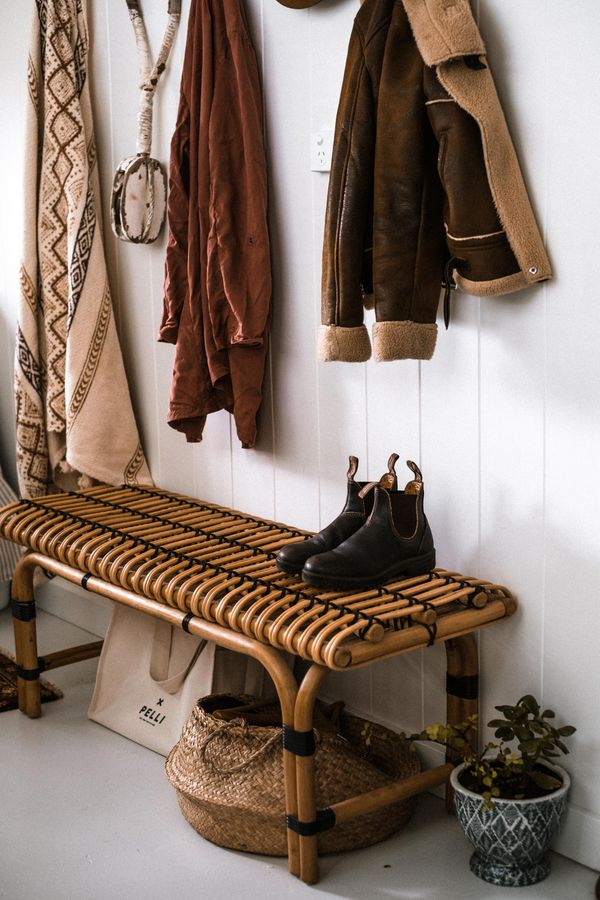
Give shoes a current-season footprint
Use a rack, tray, bench shelf, or simple floor boundary. Keep only the shoes that are realistically used this week or season. For the broader setup, A Simple Weekly Home Reset for Busy Families is a useful next read.
When the footprint is full, the solution is not a second shoe pile. Move low-frequency pairs elsewhere.
One hook per active bag
Backpacks and daily bags need an obvious parking spot. Hooks work well because they avoid stacking. If a child cannot reach the hook, the bag will usually land on the floor.
Install or use freestanding hooks according to product instructions and the needs of the household.
Coats need a seasonal limit too
Keep daily jackets at the entry. Formal coats, off-season outerwear, and extras can live in a closet elsewhere.
School papers should not live in the entryway
The entryway should be a transfer point, not a paper archive.
Create one small inbox for papers that need attention today. At a set time, move them into action, calendar, file, or recycle.
For the full paper workflow, see How to Organize School Papers Without Keeping Everything.
Create a “leaving tomorrow” zone
Use one basket, shelf, or hook for items that must leave the house next morning: library books, returns, sports gear, permission slips, or packages.
This is different from general storage. It is a temporary outbound zone.
Keys and small essentials need one adult landing point
Use a bowl, tray, drawer, or hook for keys, wallet, badges, and earbuds. Keep it small so unrelated clutter cannot accumulate easily.
Wet gear needs airflow
Umbrellas, wet coats, muddy shoes, and rain gear should dry before moving into closed storage. Use a washable mat or designated temporary drying spot where practical.
Do not build the system around furniture you do not have space for
A large hall tree can solve storage and still make the entry impossible to walk through. Start with the wall, door, and floor footprint you actually have.
A narrow bench, hooks, shoe tray, and one paper inbox may be enough.
Use one basket for “belongs elsewhere”
Objects that arrive but do not belong in the entryway can go into a small return basket. Empty it once per day instead of letting random household items settle permanently by the door.
The two-minute evening entryway reset
- return extra shoes,
- empty paper inbox,
- hang bags,
- move outbound items to tomorrow zone,
- remove trash,
- clear the walking path.
Make the system work for children
Put child-owned hooks, shoe spots, and backpack storage at a reachable height. Labels can help younger children, but the physical boundary should be obvious even without reading. If you are working on the same space, How to Organize a Home So Kids Can Put Their Own Things Away covers the next decision in more detail.
When the entryway has no closet
Use a small freestanding rack, over-door solution where appropriate, a bench with shoe space, or a few hooks. Do not try to recreate a full coat closet in the hallway.
For renter-friendly options, see Small Apartment Storage Ideas That Don’t Require Drilling.
A family entryway checklist
- ☐ shoes have a footprint,
- ☐ each active bag has a home,
- ☐ current coats only,
- ☐ school papers have an inbox,
- ☐ outbound items have a temporary zone,
- ☐ keys have one landing point,
- ☐ walking path stays clear.
Frequently asked questions
How many shoes should stay by the door?
Use the capacity of the rack or tray as the limit and prioritize what the family actually wears now.
Where should backpacks go?
Give each active backpack an individual hook, cubby, or shelf near the entry point at a reachable height.
How do I stop mail and papers taking over?
Keep one small incoming paper slot and process it daily. Do not use the entryway as long-term filing.
The best entryway system moves things onward
A small entryway should help the family arrive and leave—not become a storage room. Give daily shoes, coats, bags, keys, and papers a clear next step, and keep the zone light enough to reset in minutes. For a related step-by-step approach, see A Room-by-Room Organization Plan for a Small Home.
