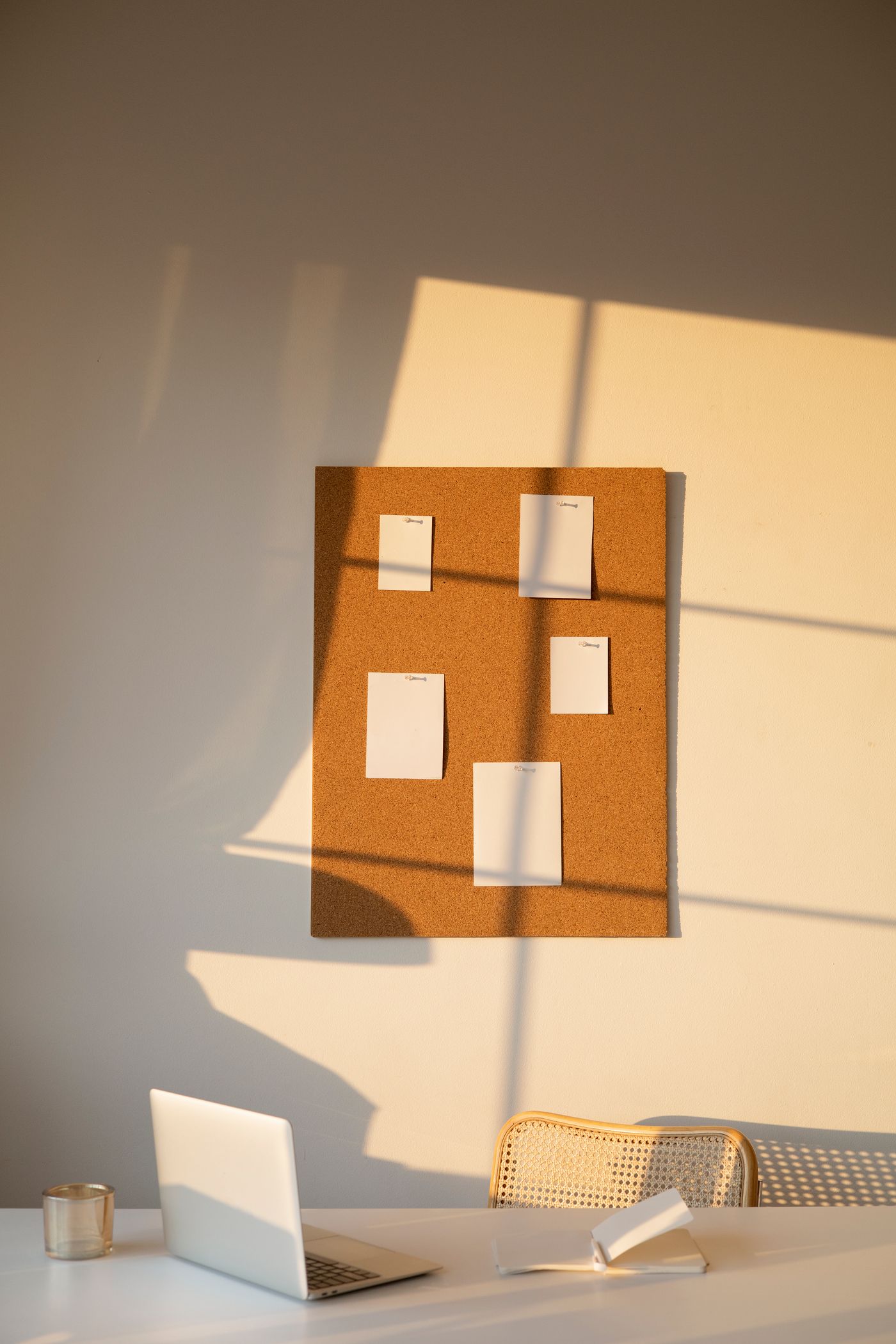
A corkboard and a magnetic memo board can both display changing paper, but they interact with it differently. One commonly uses pins that pass through the sheet; the other relies on compatible magnets and a suitable board surface. Decide which interaction fits the papers and household before comparing frame colors.
This is a practical comparison for a rotating home-office display, such as current reference sheets, postcards, or personal work. It is not a tested ranking of specific boards. Product construction, mounting, included fasteners, and usable area vary, so check the exact options rather than treating either category as uniform.
Give the display a clear purpose
Choose the kind of paper you want to see and how often it changes. A few current reference sheets need a different arrangement from a permanent gallery of meaningful originals. The board should make the chosen items accessible without becoming the default destination for every loose page.
The Houzz fall 2026 report describes personal, collected interiors. A small changing paper display is our editorial application of that direction, not evidence that one board type is a current bestseller. The important relationship is between the display and the work or memories it serves.
If the real need is a schedule, our wall-calendar, whiteboard, and digital-calendar comparison addresses that separate decision. A display board can hold a calendar, but the choice of a household planning system should not be settled by which frame looks nicest.
Start with the papers already in use. You may discover that a document stand or an existing appropriate display surface is enough. There is no requirement to add a wall board simply because the office is small.
Compare what holds the paper
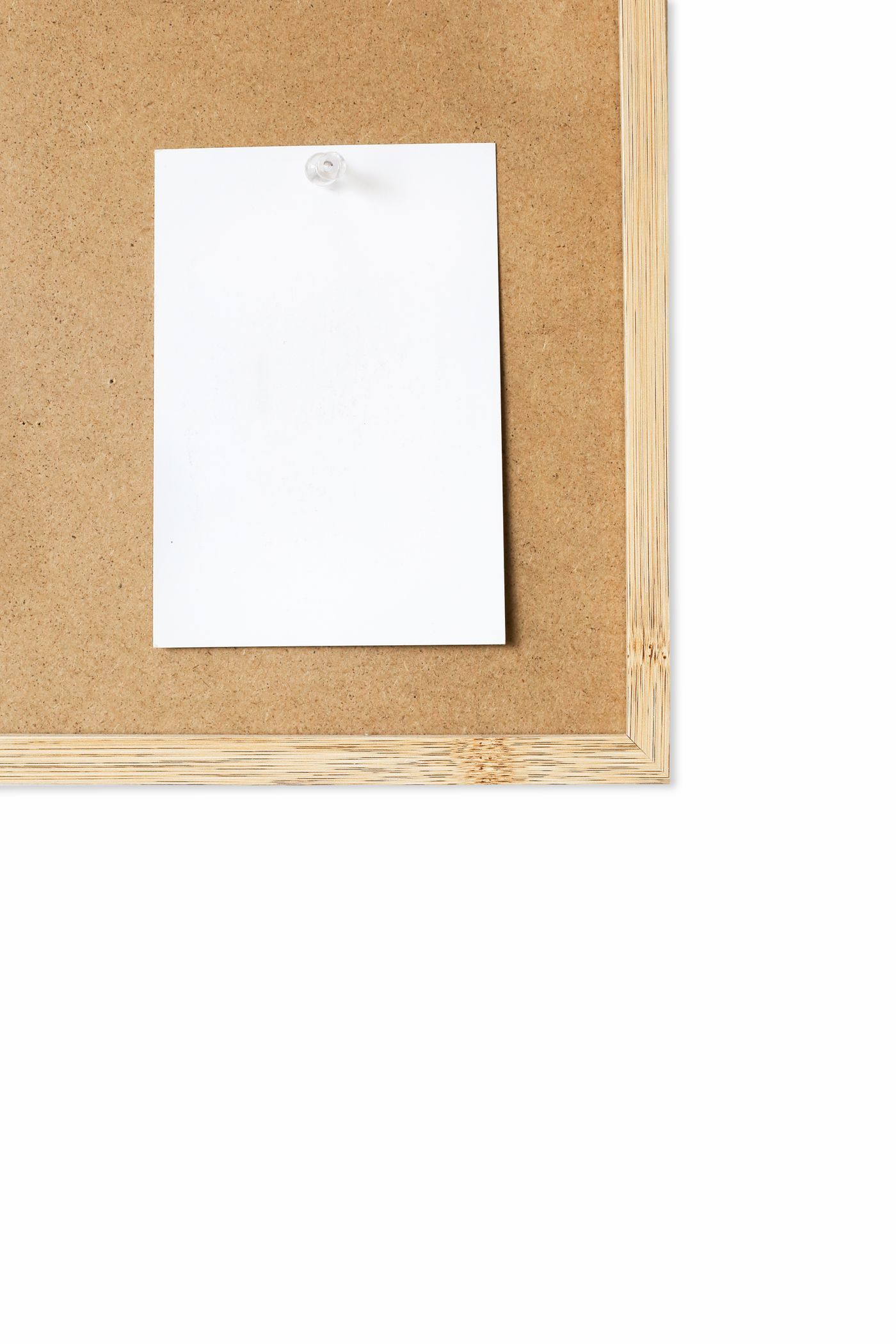
A conventional cork pinboard is designed to receive appropriate pins or similar supplied fasteners. The method normally makes a hole in the paper at the attachment point. That can be acceptable for an ordinary working copy and undesirable for a meaningful original.
A magnetic board needs a surface and magnets that are actually compatible. Do not assume every metal sheet, painted panel, or whiteboard is magnetic. Likewise, do not infer a magnet’s holding ability from its decorative size or shape.
Check what the particular product includes and permits. A board sold without pins or magnets requires a separate compatible supply. A useful comparison considers that complete arrangement rather than comparing only the empty boards.
Neither method makes a stack of pages equivalent to one sheet. Thickness, weight, curl, and the fastening layout can change the result. Use the actual intended paper type when assessing a suitable product; this article does not give a universal page limit.
Decide whether pinholes are acceptable
Sort the display material into ordinary replaceable copies and items you want to preserve without punctures. That is a simpler first decision than trying to choose a board for every possible future document.
For a corkboard, consider whether an appropriate permitted clip arrangement or protective enclosure is needed for a particular item. Check the product and item requirements rather than assuming a pin through an outer corner is harmless to everything. Some material may be better displayed through another method.
For meaningful photographs or artwork, a freestanding photo-frame review offers a different kind of display decision. It is not a substitute for every changing paper, but it may suit an item you do not want handled as a working memo.
A magnetic arrangement avoids the ordinary pin-through-paper action, yet it still needs appropriate handling. A magnet or accessory can press against a surface, and a sheet can slip if the arrangement is unsuitable. Avoid treating the absence of a pinhole as proof of complete protection.

Measure the usable display area
Read the actual board dimensions and distinguish the outside frame from the space available for paper. A wide frame can make a board look larger without providing more usable room. Decorative corners or a tray can also change the practical outline.
Arrange representative paper sizes on a clear suitable surface before buying. Decide how much overlap you accept and whether the relevant parts remain readable. This is a layout exercise, not a holding or mounting test.
If several pages must be moved to reach one behind them, check whether a display is still the right place for all of them. The board may need fewer current items rather than a larger frame. Keep longer-term reference files in an appropriate separate location.
A display also needs a clear position from the actual working seat or standing location. The words or images should be useful at that viewing distance. A board that looks balanced in a room photograph can still be too far away for its intended role.
Check how the board reaches the wall
Follow the exact board’s mounting instructions and verify suitability for the wall or other support. Its empty weight is only part of the arrangement; the permitted contents and accessories also matter. This guide does not supply a universal anchor or adhesive recommendation.
For a rental, clarify the applicable installation arrangements before drilling or fixing. A small board is not automatically suitable for removable adhesive, and an attractive lightweight frame does not establish an adhesive’s compatibility with the wall finish.
If a board is intended to lean or stand, use it only through the arrangement its maker permits. Do not convert a wall product into a desktop stand by propping it behind a laptop. A display needs appropriate support in the position where it will be handled.
Consider the act of changing a sheet. You need access to its fasteners without straining across a desk or knocking equipment. Leave that handling space available instead of filling every area beneath the board with accessories.
Keep fastening parts manageable
Pins and magnets need an appropriate storage and handling arrangement for the household. Follow their product and age guidance, and keep loose parts away from anyone for whom they are unsuitable. Do not let unused fasteners accumulate along a desk edge.
For a corkboard, decide where removed pins go while a page changes. For a magnetic board, decide what happens to the magnets when the current sheet is taken down. A clearly managed small supply can be more useful than buying a large decorative assortment.
Do not assume a stronger or larger magnet is the right answer for a slipping sheet. Confirm the board, magnet, paper, and permitted use together. The same restraint applies to replacing the supplied pins with unrelated sharp hardware.
If more than one person uses the office, make the handling method understandable. A visitor should not have to guess whether a displayed paper can be removed or whether a loose fastener belongs to something currently being used.
Keep the display separate from a page being read
A board can show current priorities, but it may not put a working page at the right position for reading or typing. If the same sheet repeatedly comes off the board during work, that is useful information about its actual role.
Our document-holder comparison considers support for a page in active use. Choose that kind of tool only when it addresses a real reading or copying need. The board and a document holder should not duplicate each other without a purpose.
Likewise, a label maker is optional for a small display. The label-maker buying guide examines a different purchase; a readable handwritten title may be sufficient here. Do not add equipment simply to make a few home-office sections look uniform.

Compare everyday changes and care
Follow the maker’s care directions for the board surface, frame, and accessories. A magnetic memo board is not necessarily a dry-erase board, and a writable coating should be used only with the specified materials. The presence of metal does not establish marker compatibility.
For cork, inspect the actual fastening surface and follow its permitted maintenance. Do not soak, coat, or glue a damaged area without appropriate instructions. Surface wear is a condition question, not an invitation to invent a repair.
Try a normal display change with a suitable product before expanding the system. Can you remove one sheet, keep the fasteners accounted for, and attach the replacement through the intended method? Repeated difficulty at that step may outweigh a visual preference.
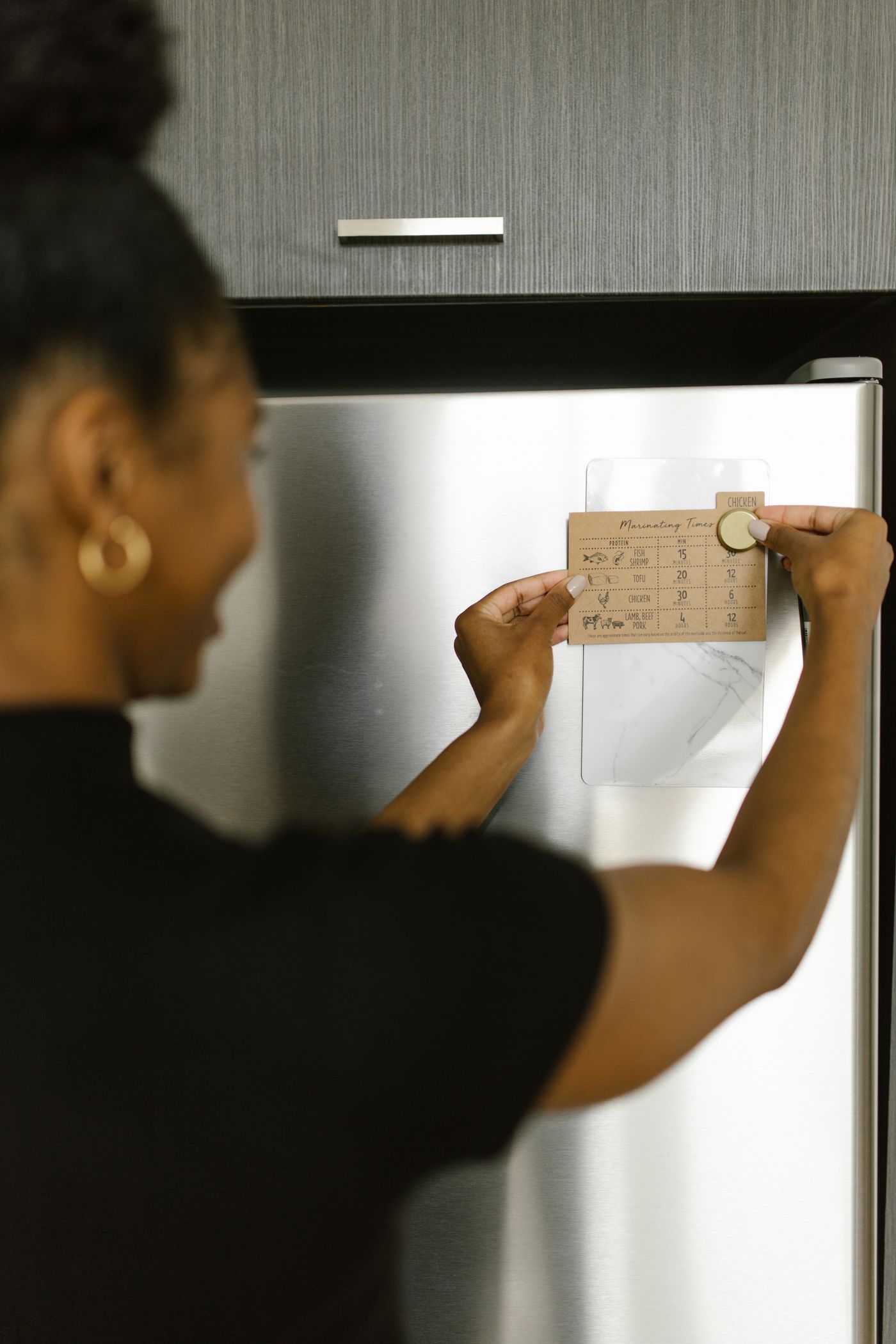
The refrigerator photographs illustrate another common magnetic-display context. They do not establish that every refrigerator or metal board accepts magnets, or that an appliance door is the right display location for your office. Use the actual compatibility information for the surface you intend to use.
Choose the arrangement with a clear return rule
A corkboard is a stronger candidate when the intended papers can accept its fastening method, appropriate pins are manageable in the household, and the exact surface and mounting suit the location. Its material and frame can be additional preferences once those requirements are met.
A magnetic memo board is a stronger candidate when you want its particular paper interaction, compatible magnets hold the intended material appropriately, and the actual board has suitable support. The word magnetic is a feature to verify, not a promise that any collection of magnets will work.
Keeping an existing appropriate arrangement is also reasonable. When a paper leaves the display, decide whether it returns to a file, remains in active use, or can be removed from the household through the appropriate process. Without that rule, either board can become a new storage layer for unresolved paper.
The useful choice is the one that lets you see the right current material, change it easily, and keep the supporting parts under control. Let those actions settle the purchase before deciding which frame best matches the room.
Explore related decisions in our Buying Guides hub.
Sources and editorial scope
Editorial research checked October 28, 2026. Published trend reports are context for these editorial applications, not verified live keyword rankings. Practical household guidance; photographs do not document a tested household or authenticate pictured materials.