A folded quilt and a knitted throw can both add a layer at the foot of a bed, yet they can serve quite different purposes. One may be large enough to unfold across the sleeper; another may be mainly a small accent you pull over your legs. Choose between the actual pieces by coverage and use before comparing their appearance.
There is no universal winner by product name. Quilts vary in filling, fabric, size, and weight; knitted throws vary in fiber, stitch, density, and dimensions. This is a comparison framework for a useful bed-foot layer, not a tested ranking of specific Amazon products.
Decide what the extra layer must do
Start with one ordinary use. Perhaps you want a layer for a short read before sleep, an extra covering when desired, or a folded color accent that can also be used elsewhere. A piece trying to satisfy all three may need a different size and care routine from a purely decorative one.
If the current bedding already does the job, you may not need an additional layer. Try folding an appropriate textile you own at the foot of the bed and assess the actual benefit. Do not begin by assuming a styled bed requires another purchase.
The Houzz fall 2026 report describes layered, personal interiors and a range of textures. Choosing one useful textile is our application of that context. The report does not establish that a quilt is warmer than a knitted throw or that either category is the right choice for every bedroom.
Keep the comparison separate from the primary bedding system. Our duvet-versus-standalone-comforter guide considers that larger decision. A bed-foot layer should support the bedding you have rather than obscure an unresolved need for a different main covering.
Understand the construction without relying on the label alone
A traditional quilt commonly has outer fabric layers stitched around an inner filling. The Company Store's quilt and coverlet guidance describes that three-part construction. Look at the actual product description, because retail names such as coverlet, quilt, blanket, and throw do not always communicate the same details across sellers.
A knitted throw is made through a knitted construction, but the visible loops do not identify its exact fiber or performance. It can be dense or open, heavy or light, compact or bulky. The word chunky tells you something about appearance only when supported by actual measurements and material information.
Read the shell, filling, and backing information for a quilt where available. For a knitted throw, check fiber content, construction details, and care. Do not infer natural fiber from a neutral color or assume that a hand-made appearance establishes how the piece was produced.
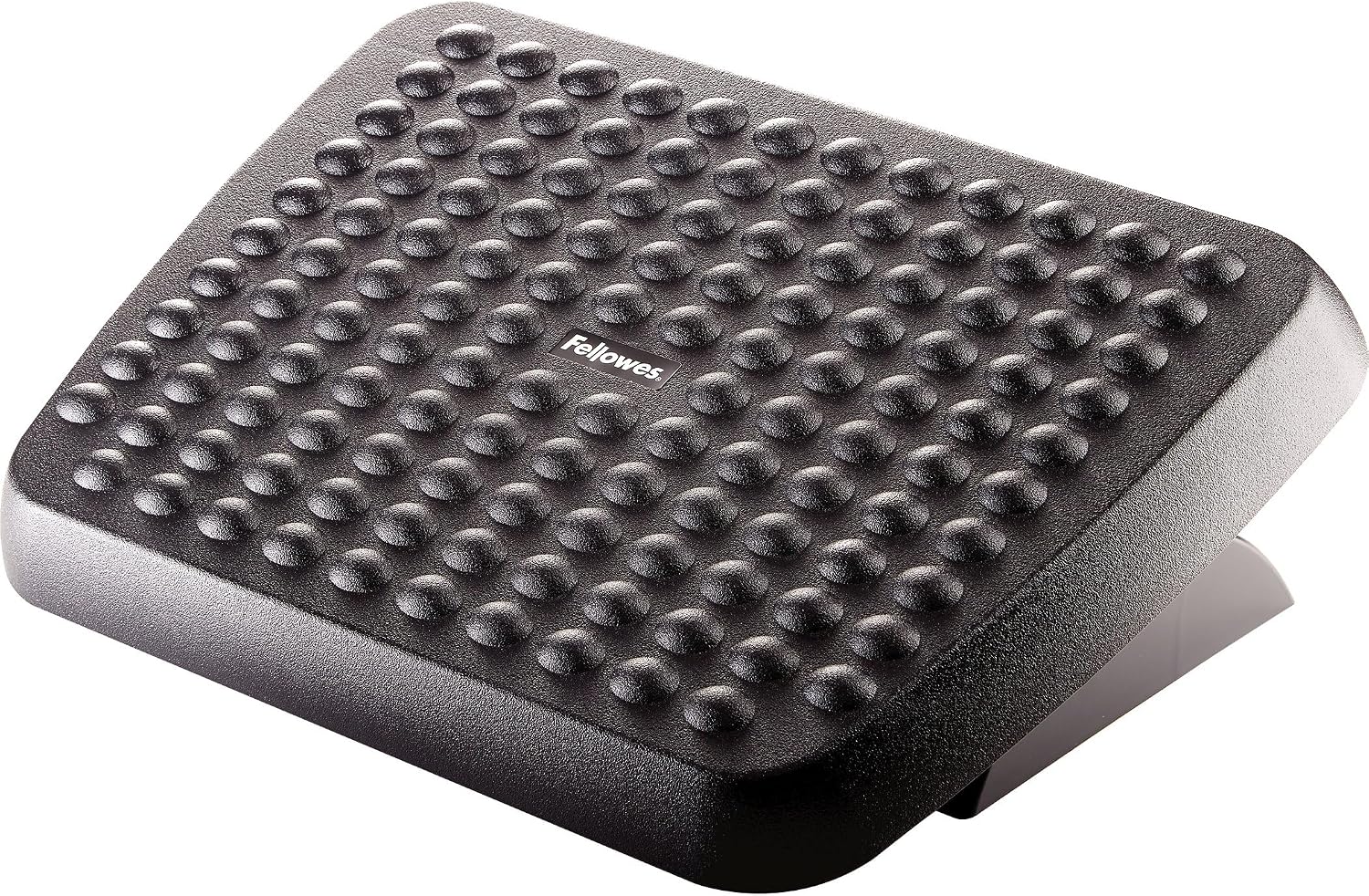
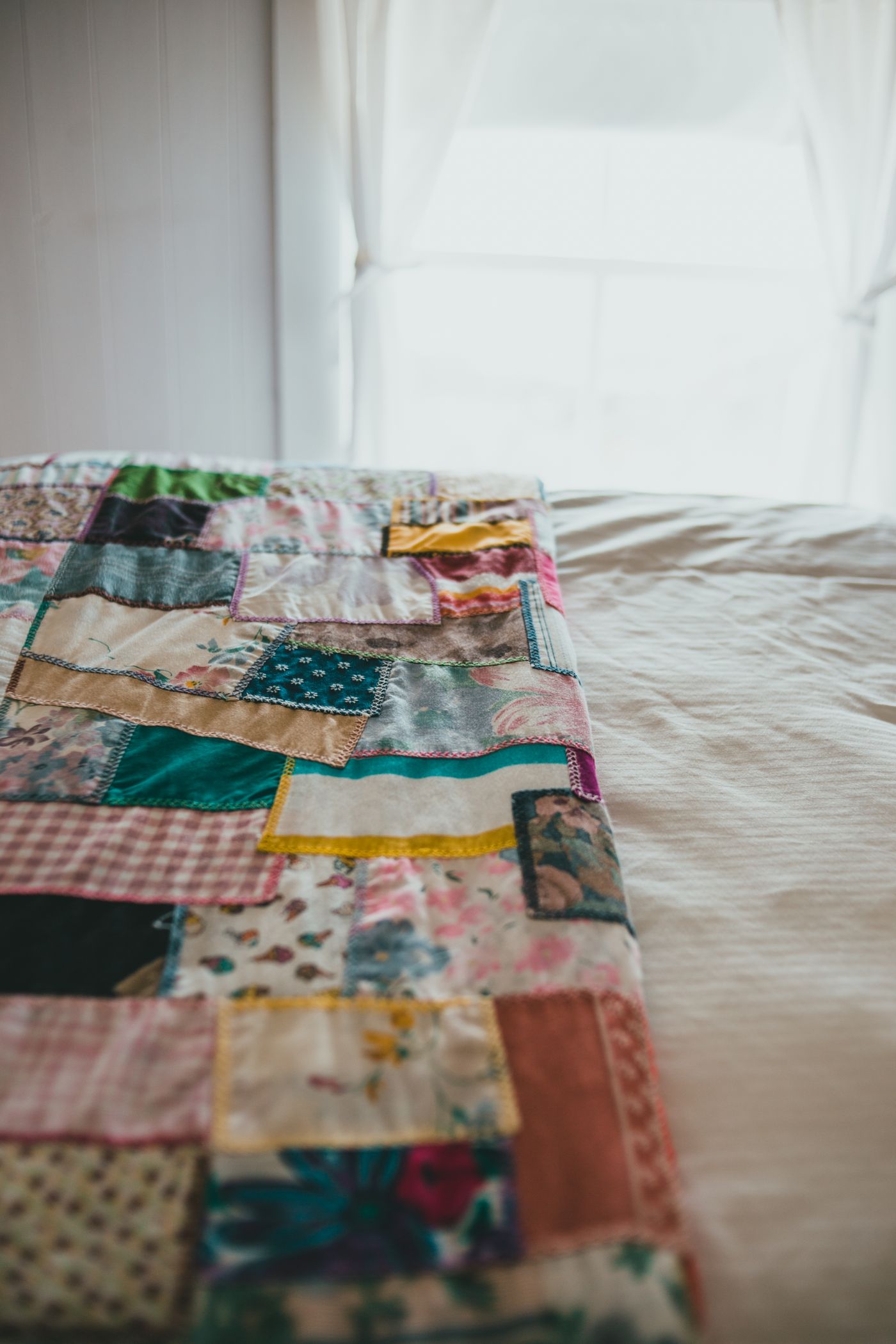
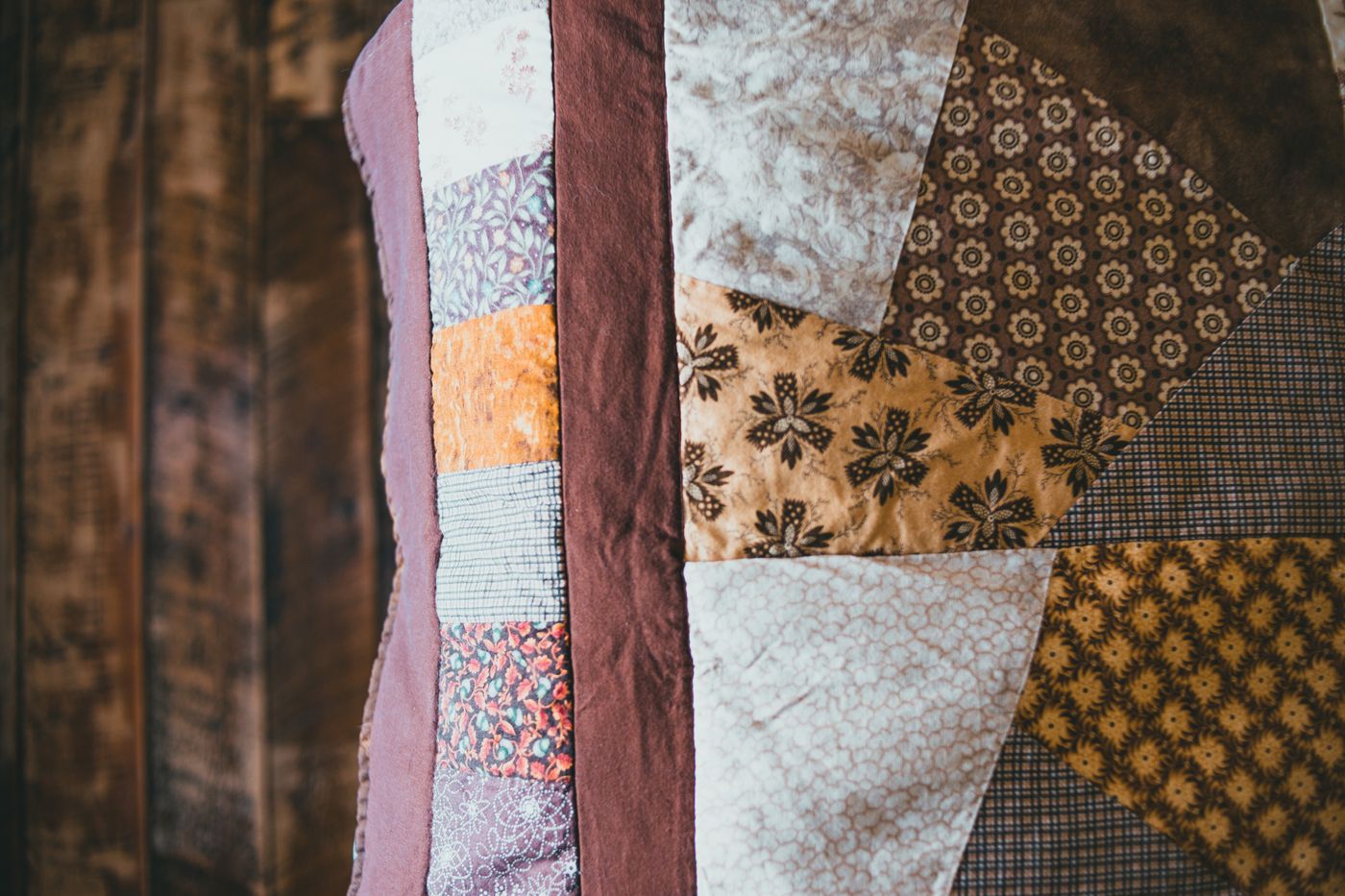
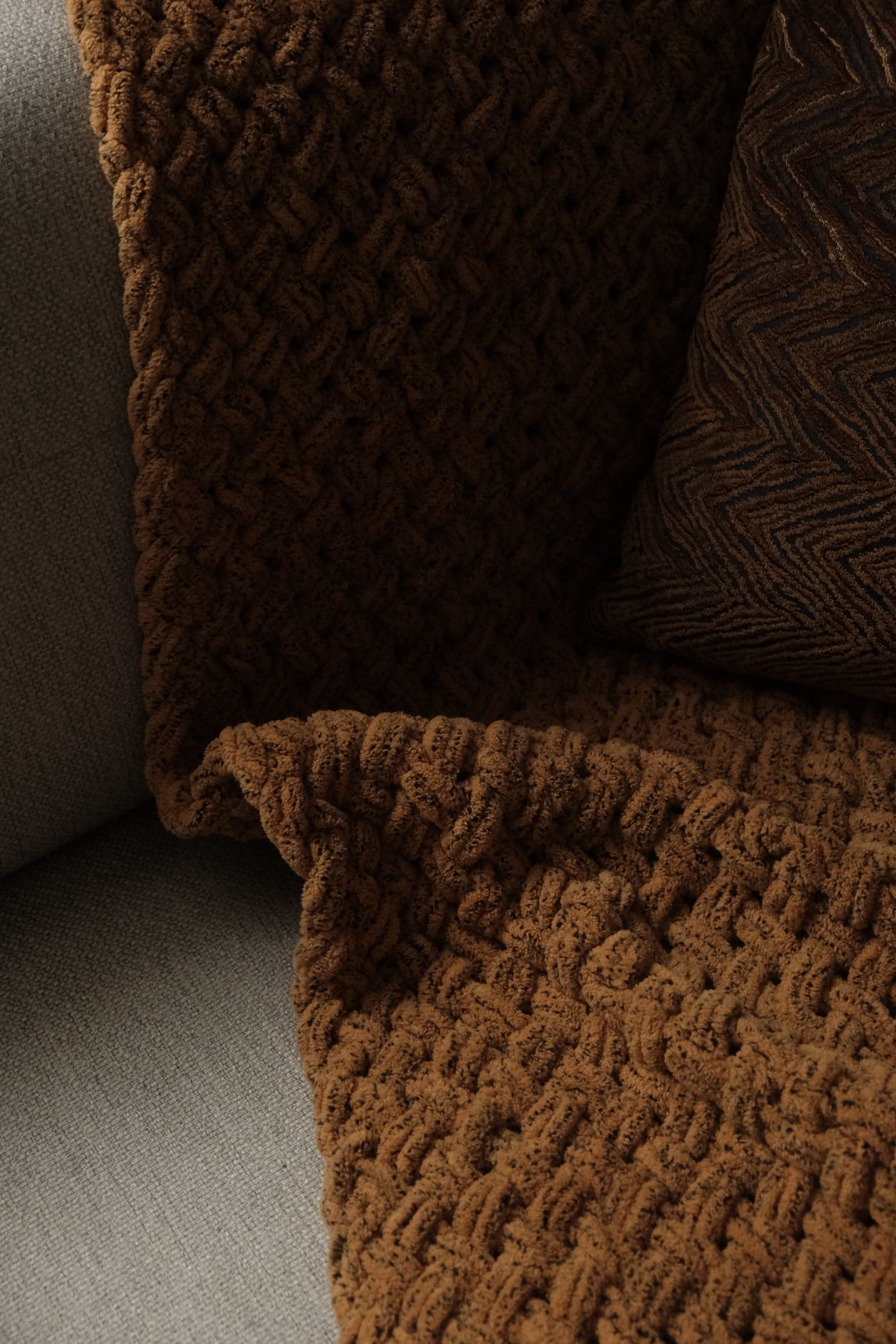
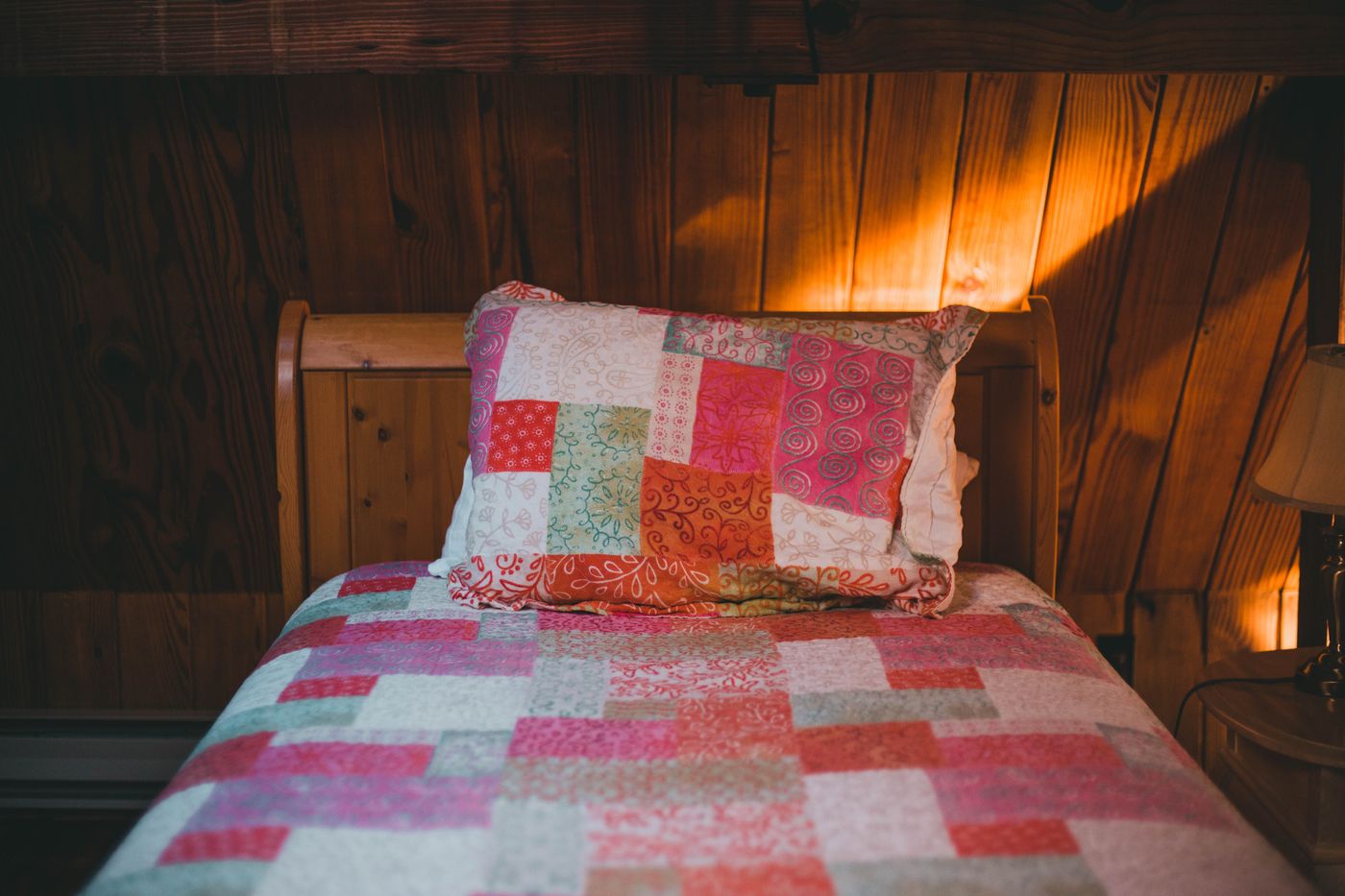
The photographs show examples of patchwork and knitted surfaces. They do not authenticate fiber content, filling, washing suitability, or the exact size needed for your bed. Use them to understand visual differences while checking product facts separately.
Quilt vs. knitted throw: compare the same intended job
| Your intended use | What to check on either candidate | Reason to reconsider |
|---|---|---|
| Extra covering across a bed | Actual unfolded length, width and coverage for the intended users | A decorative throw is too small for the real task |
| A lap layer for reading | Coverage while seated and manageable folded bulk | A large quilt needs repeated folding and moving |
| A folded bed-foot accent | Folded height, usable sitting space and a nightly resting place | The layer goes to the floor whenever the bed is used |
| Shared bedroom and living-room use | Care requirements and one clear normal home | The piece is never available where the household expects it |
Use the exact product measurements in the same units. A queen label or the word throw does not establish coverage across brands. Try an appropriate layer you already own for the intended task before buying; that trial helps define size, but it does not reproduce an unknown product’s weight, texture or warmth.
Assess the folded shape on your real bed
Fold an existing appropriate textile to approximate the candidate’s dimensions and likely arrangement. This can show the space involved, although it cannot reproduce an unknown product’s weight or drape. Keep that limitation clear when judging the trial.
Look at how much mattress surface remains usable. A heavily folded bed-sized quilt may create a raised bundle where you normally sit to dress. An open knitted throw may spread loosely and need more frequent adjustment if you prefer a precise edge.
Check both sides of the bed and the walking route at its foot. Fabric should not trail into the route or become caught under furniture. A small room may benefit from a contained fold rather than long draped ends, regardless of the style shown in a photograph.
Also look at the design after it is folded. A patchwork pattern may reveal only a small group of colors; a textured knit may show its surface consistently. That is a preference to assess with the actual piece, not a reason to assume one construction always looks more relaxed or more polished.
Do not predict warmth from one material word
Compare available product information without claiming a universal thermal ranking. Quilt filling amount, fabric density, knitted stitch, fiber, size, and how the layer is used can all matter. Two products carrying the same broad category name may feel quite different.
If a seller provides a relevant measured specification, read what it actually describes and under what conditions. Do not turn a fabric weight into a guaranteed bedroom temperature range. Avoid assuming that all cotton is cool, all wool is too warm, or an open knit is always unsuitable as a covering.
Use your experience with textiles you already own to frame a preference, while recognizing that it is not a test of the candidate. If possible, inspect the exact product through an appropriate retailer or rely on clear returns information rather than an invented certainty about feel.
This article does not make medical, sleep-quality, or temperature-regulation promises. A bed-foot layer is an ordinary household choice. If you want it for a particular practical need, make that need explicit rather than accepting a vague claim that it improves rest.
Compare the complete care route before choosing texture
Read the actual quilt’s shell, filling, backing and trim instructions, or the knitted throw’s fiber and construction care. Neither stitched layers nor visible loops establish machine-washability. Check the washing method, equipment guidance, drying method and any required professional care.
Then identify where the layer waits while it is unavailable and where it dries if that is part of the permitted process. A single decorative piece can become a long-lived laundry pile when the home has no suitable finishing space. The duvet and comforter care comparison applies the same whole-route check to main bedding.
Do not budget for a fabric shaver as routine care unless the textile maker permits that treatment. The Conair shaver review describes a tool’s limits, not permission to shave textured quilts or loose knits. We have not tested washing, pilling, warmth or durability on the candidates.
Account for pets, personal habits, and shared use
Think about how the layer will be used in your household. If a pet regularly settles at the foot of the bed, check the actual textile’s care and suitability rather than assuming either construction is pet-proof. Visible loops or decorative stitching are features to assess, not evidence of guaranteed resistance to claws.
If you often eat or drink while seated on the bed, decide whether an additional textile is a good match for that habit. A removable layer can be convenient, but only if its care requirements fit the likely use. Do not select a hard-to-care-for accent while assuming stains will never happen.
For a shared bedroom, choose the normal resting arrangement together. One person may want to unfold the layer each evening while another wants the bed foot clear. A small throw used by one person can be preferable to a full-width piece that is repeatedly moved without agreement.
These household conditions can outweigh a visual preference. There is little value in a perfect decorative fold if everyone removes it before using the bed and nobody wants to put it back.
Plan where the layer goes when removed
Decide what happens when the extra covering is not wanted. It needs a suitable clean location with enough support and room, whether that is an existing shelf, a suitable basket, or another appropriate surface. The floor should not become its default home.
A larger quilt can require more storage volume, depending on its construction and how it is folded. A dense knitted throw can also be bulky. Compare the actual pieces rather than treating the smaller word throw as a promise of compact storage.
Avoid buying an extra bench simply because there is nowhere to put a decorative layer at night. That creates a furniture problem to support a textile whose purpose may still be unclear. Try an existing storage position before expanding the arrangement.
If you intend to move the layer between bedroom and living room, account for that route and for the different uses. A shared throw should still have a clear normal home, so the bedroom does not repeatedly lose the piece it relies on.
Make the final decision with four answers
- Coverage: will the actual unfolded dimensions perform the intended job?
- Handling: can you fold and move it comfortably without blocking the bed or walkway?
- Care: can the household complete the specified washing or professional-care route and drying process?
- Storage: where will it rest when removed and where will it live out of season?
Consider a specific quilt when its construction, size and care suit the broader covering you need. Consider a specific knitted throw when its dimensions suit the smaller or different role you want and its care is practical. Neither category guarantees warmth or easy cleaning. If the current layer meets all four checks, keep it.
The guest and seasonal bedding plan covers occasional storage. Explore Buying Guides for the wider comparison process.
Sources and editorial scope
Editorial research checked October 24, 2026. Published trend reports are context for these editorial applications, not verified live keyword rankings. Practical household guidance; photographs do not document a tested household or authenticate pictured materials.