The Matte-Brass Umbra Prisma 313015-221 is a candidate for displaying one suitable 5-by-7 photograph when you want a transparent border and a dimensional wire frame. It is less compelling when desk depth is scarce, the picture needs a conventional opaque backing, or preservation requirements go beyond the information the maker provides.
This research-based review concerns the 5-by-7 photo-size variation, model 313015-221, linked to Amazon ASIN B00HY8FUX8. We checked the maker’s product range, its photographs and size information, and Amazon’s matching model record on October 17, 2026. We have not handled the frame, changed a photograph in it, tested stability or glare, or assessed long-term effects on photographic materials.
Affiliate disclosure: As an Amazon Associate, Small Home Rhythm earns from qualifying purchases.
Confirm the photo size and the exact variation
Prisma is a range with several sizes and finishes. The reviewed record identifies Matte-Brass and a single 5-by-7-inch photo. That photo measurement is not the outside frame measurement. Amazon identifies model 313015-221 and UPC 028295422574, which helps distinguish it from other entries using the same Prisma name.
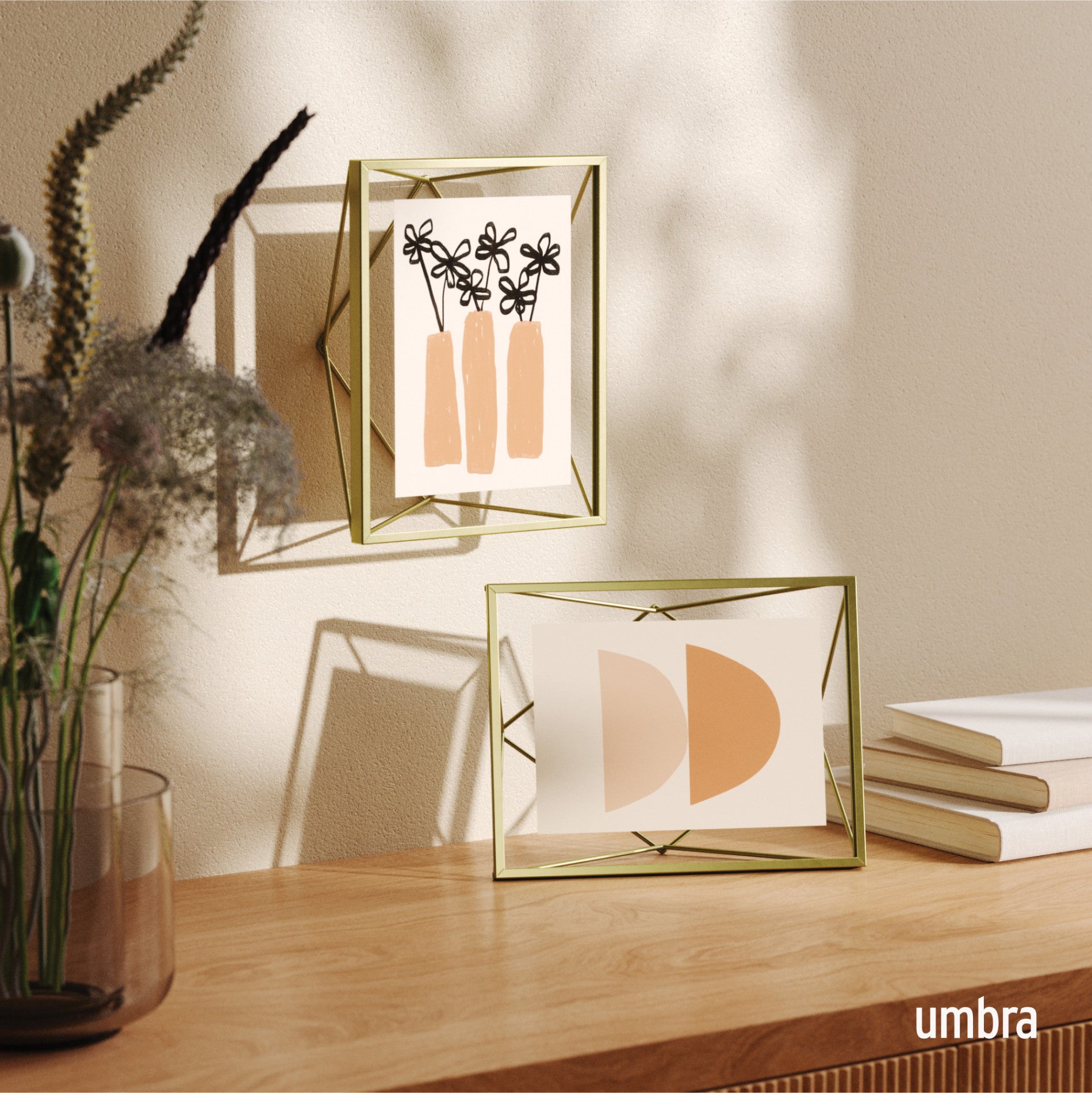
Umbra describes a wire frame with the image held between two glass panes, usable in portrait or landscape arrangements and with appropriate tabletop or wall display. Its 5-by-7 gallery diagram indicates approximately 7 by 9 by 2.75 inches overall. Confirm the selected product’s current outer dimensions before relying on a close fit; orientation changes which side occupies the shelf width.
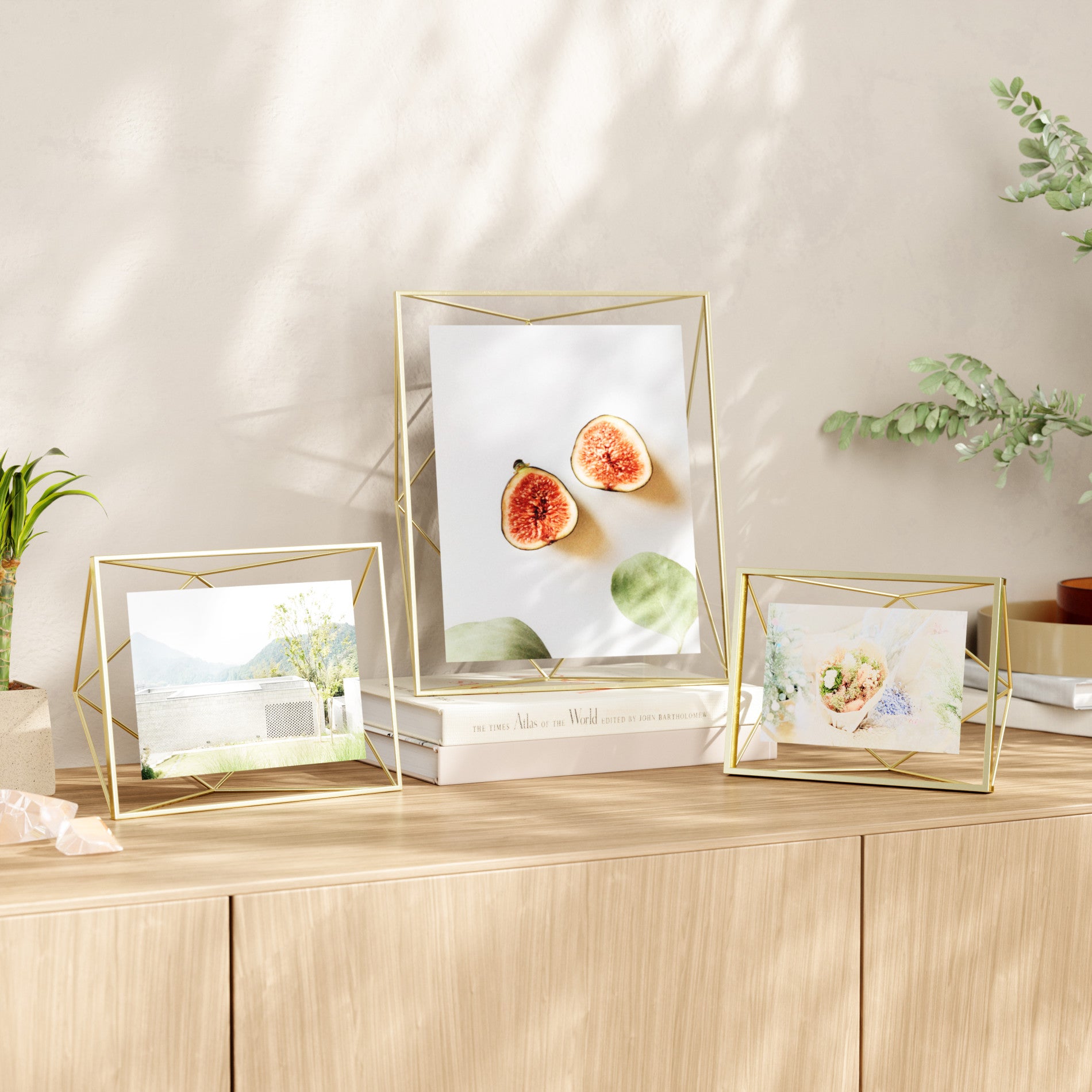
Check the Matte-Brass 313015-221 variation and current Amazon offer. Compare the photo size, model, finish, seller, and applicable return terms. The supplier’s lifestyle gallery includes several sizes and arrangements; those pictures do not mean that the reviewed purchase includes a multi-frame set or the art shown inside it.
| Selected record detail | Specification or limit |
|---|---|
| Model | Umbra Prisma 313015-221, Matte-Brass, 5 x 7 photo size |
| ASIN | B00HY8FUX8 |
| Display | One 5 x 7 inch photograph between glass panes |
| Maker gallery dimensions | Approximately 7 x 9 x 2.75 inches overall; orientation changes footprint |
| Format | Geometric wire frame; portrait or landscape; tabletop or appropriate wall installation |
| Limits | No archival-protection, glass impact, glare, or stability testing |
Decide whether your photograph suits the floating effect
The visible area around an image can make the photograph feel distinct from a heavy conventional border. It also allows the background behind the frame to influence the display. A busy desk, a patterned wall, or objects visible through the border may compete with the picture in a way an opaque-backed frame would not.
Look at the actual photo you want to use. Consider its orientation, its margins, and the content near the edges before choosing a frame for its metal finish. Do not crop an irreplaceable original merely to satisfy a new display format. A suitable authorized copy or a different frame may be a better match for the image.
For a group of printed keepsakes, organizing family photographs can help separate selection from display. Choose the particular image first, then ask whether Prisma’s format supports it. Buying a frame in the hope that some suitable photograph will eventually appear can leave another empty decorative object on the desk.
Treat the three-dimensional body as real desk space
The geometric wire structure projects behind the glass. Measure the full proposed footprint rather than placing a 5-by-7 paper rectangle on the desk and assuming it represents the frame. Include room for appropriate handling and the normal movement of nearby objects.
Consider what happens while you work. A notebook may open into the display area, a monitor can move, and a charging cable may be pulled across the surface. A position that looks clear before the desk is occupied may interrupt the ordinary working arrangement once those actions begin.
Organizing a home office without desk drawers addresses the surrounding work surface. A frame can be worth its space, but it should have an intentional location. Do not move essential working materials into a less usable pile simply to reproduce the uncluttered appearance of a supplier photograph.
Judge portrait and landscape placement separately
If the image is landscape, evaluate that actual orientation on the proposed surface. If it is portrait, check the additional vertical presence and how it relates to a screen, shelf, or other display. One orientation fitting a space does not prove that both will work equally well there.
Use the manufacturer’s setup instructions for the frame. This review does not establish a measured stability margin, resistance to a bump, or compatibility with every support surface. Keep a glass decorative object in an appropriate stable place protected from routine knocks and falls.
If your desk arrangement includes a monitor riser, the monitor-stand review considers that separate working structure. A display shelf created by another product still needs to be appropriate for the frame and its placement; an empty area on top of equipment is not automatically a suitable decorative support.
Examine light and background before expecting the photograph to read clearly
Glass and a transparent border make the room’s light and surroundings part of the result. Observe the intended spot from the positions where you will normally see the image. A strong window reflection or nearby lamp may affect the view, but this research does not include a glare comparison or optical test.
Avoid judging only from a phone photograph of the desk. That image may not represent what is visible from a seated position during ordinary work. If the display matters at a specific time of day, consider the actual lighting then before deciding that the format is right for the room.
Houzz’s Fall 2026 report describes personal, collected interiors. Showing a chosen photograph is one small application of that direction; the report does not establish Prisma as a trending product. The useful question is whether this format makes your particular image more enjoyable in the space you have.
Keep everyday display separate from preservation requirements
The product records checked do not establish an archival enclosure, a measured ultraviolet-filtering specification, or long-term suitability for every photographic process. A decorative frame should not be credited with those protections because its glass looks substantial or because the image appears suspended neatly.
If the photograph is valuable, fragile, historically significant, or irreplaceable, obtain suitable preservation advice before choosing a display method. Consider using an appropriate copy when permitted. The decision about the original should follow its actual material needs, not simply the dimensions of a new frame.
Keep the identity and story of the image outside the display where necessary. A household paper and digital reference system can connect a display copy to the relevant record without requiring personal information to remain visible on the desk. The frame itself does not need to carry every piece of family context.
Consider the changing-photo and cleaning routine
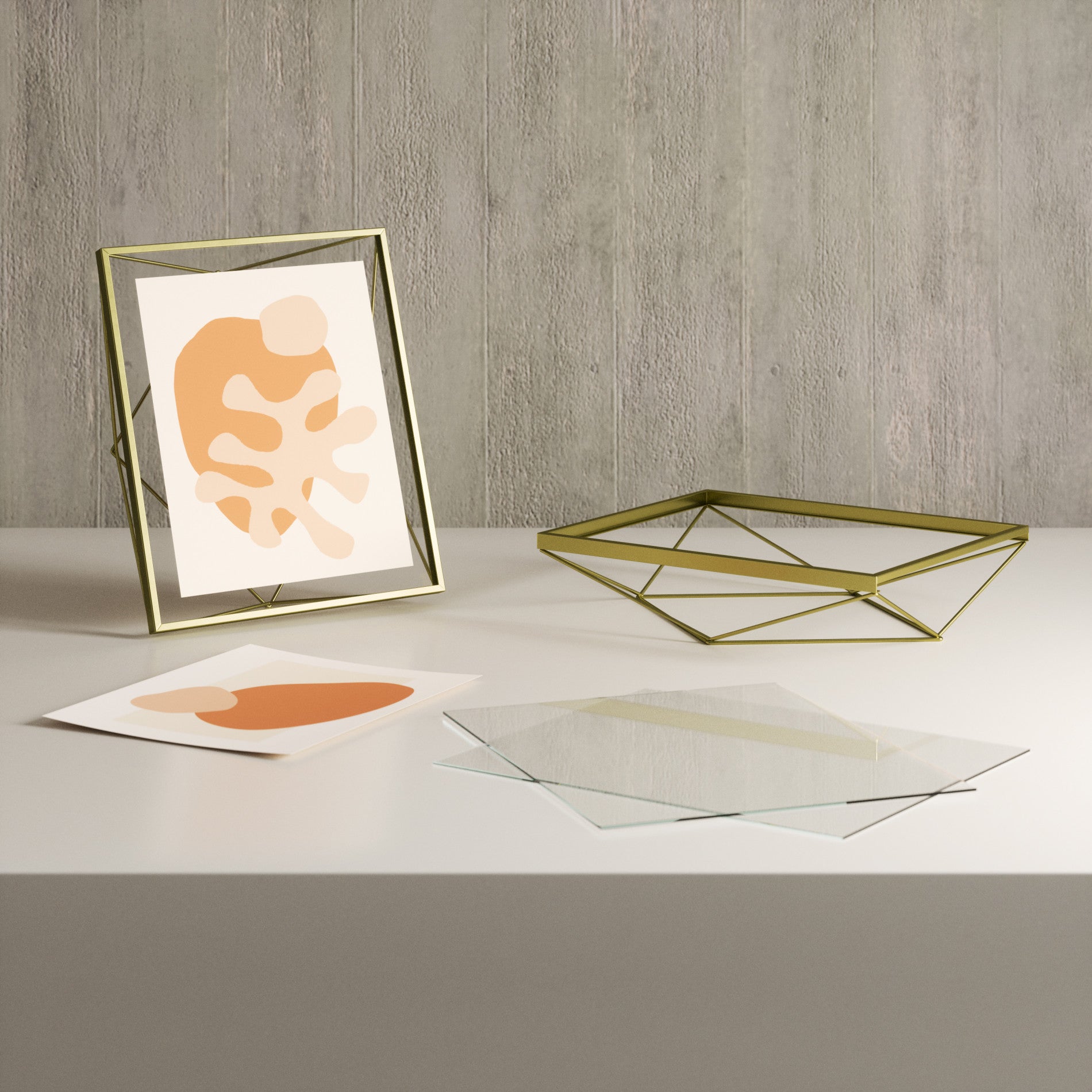
Follow Umbra’s instructions for opening, handling, assembling, and caring for the exact frame. The supplier photograph showing separate components illustrates the format; it is not a step-by-step instruction sequence or evidence that we have performed the change ourselves.
Choose a suitable clear work area before handling glass components and the photograph. Do not begin a change over a crowded keyboard or while another task needs the same surface. Keep the picture and any components in a safe appropriate position throughout the process.
Obtain the applicable care method before using cleaners, metal polish, or adhesive products. Directions for an unrelated glass object do not establish compatibility with this assembled frame or the material inside it. We have not tested finish durability, repeated assembly, or cleaning tolerance.

Compare alternatives by the image and location
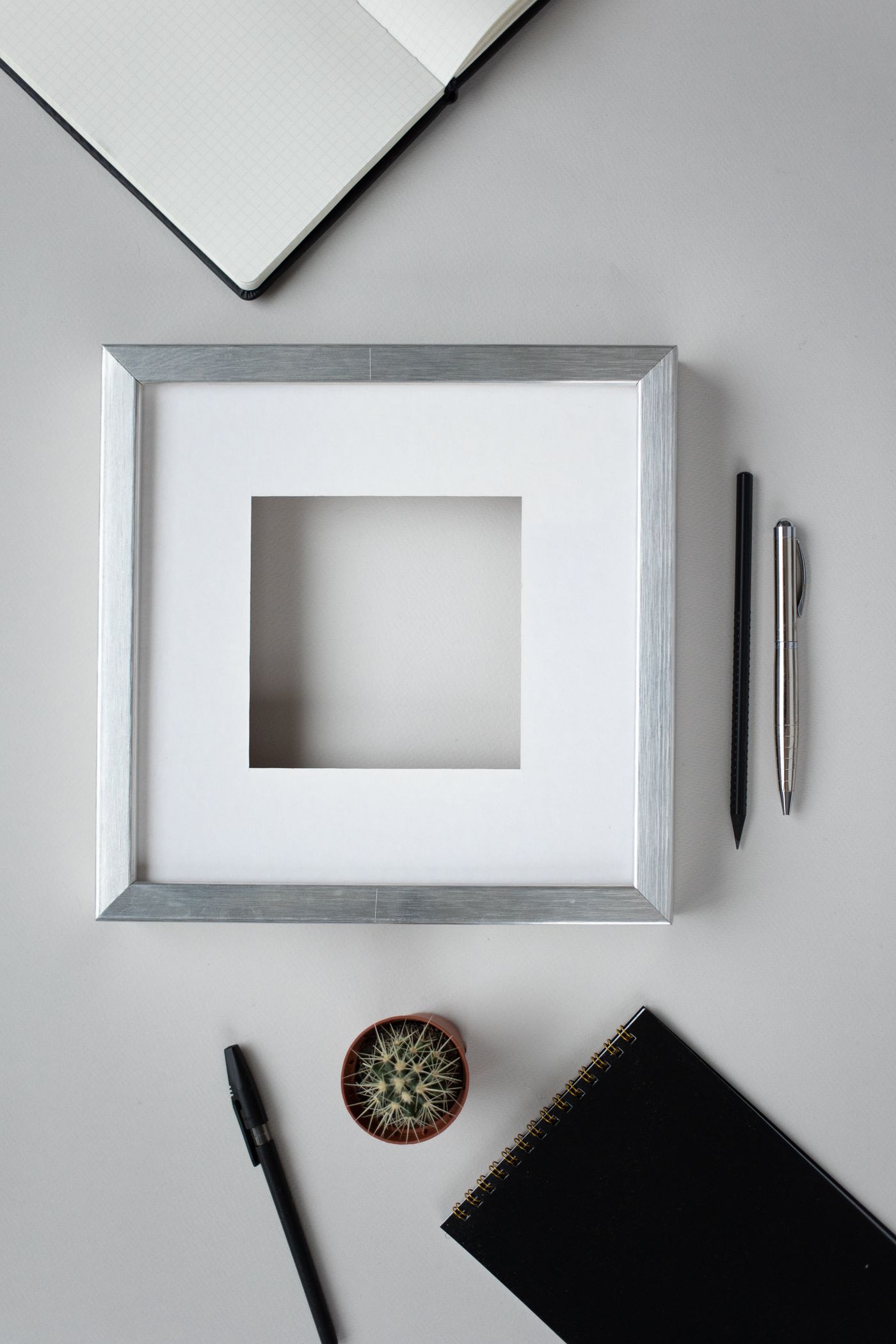
A conventional frame with a suitable backing can be preferable when you want the background behind the photo concealed or need another mounting format. Its glazing, material compatibility, depth, and care still require their own assessment. The contextual conventional-frame photographs in this review are alternatives, not additional Prisma variations.
An existing frame may already suit the selected photo and location. Check that option before buying another object for the same image. If what you need is a working document support rather than a personal display, the document-holder review considers a different task; a decorative photo frame should not be expected to replace adjustable reading support.
A wall display can free desk space, but appropriate installation, wall suitability, permissions, and the maker’s mounting instructions remain separate requirements. Included hardware does not automatically suit every wall. A rental restriction or uncertain substrate may make the existing tabletop arrangement the better choice.
The conditional buying decision
Consider this Prisma variation when one suitable 5-by-7 image benefits from the visible border, you like the Matte-Brass wire form, and the complete frame fits a stable appropriate display spot. Be comfortable with the absence of hands-on stability, glare, and preservation testing in this review.
Pass when you need verified archival properties, a concealed background, or a genuinely flat footprint. Also pass if the only available desk area is regularly crossed by working materials and cables. A smaller or existing conventional frame can be a more practical display even when the geometric styling appeals to you.
Review the exact 5-by-7 Matte-Brass Prisma offer and purchase terms on Amazon after those fit and image questions are resolved. The strongest reason to choose it is a specific photograph in a suitable setting, rather than the assumption that every empty desk corner needs another frame.
Explore related household decisions in our Buying Guides hub.
Sources and editorial scope
Editorial research checked October 17, 2026. Trend-report dates and limitations are stated in the article; these are editorial applications of published signals, not verified October keyword rankings. Research-based product assessment; no hands-on testing, current price, stock, or customer-consensus claim.