Disclosure: As an Amazon Associate, Small Home Rhythm may earn from qualifying purchases. Availability and variants can change.
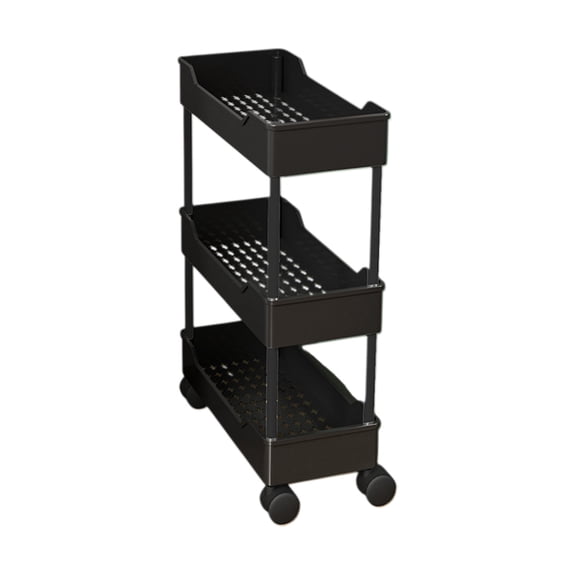
A 5.5-inch slim cart can recover a gap, but the full cart, contents and rolling path must fit.
A gap is only useful if you can roll into it
The Simple Houseware three-tier slim cart listing gives a 5.5-inch nominal width for the highlighted variant. Measure the entire route, including baseboards, appliance hoses, door swings and the space required to grip the handle. A gap that is six inches wide at eye level may narrow at the floor. Mark the usable depth and height too. If a cabinet door blocks withdrawal, the shelves cannot deliver everyday access. This is a design and fit review based on the listing, not a loaded rolling test.

Give every tier a defined job
A narrow cart works best with supplies small enough to see and retrieve without unloading a pile. In a laundry area, try detergent accessories and lint tools, keeping chemicals away from children. In a pantry, reserve one tier for a named category rather than treating it as overflow for all food. In a closet, it may hold small accessories but can become a catchall behind coats. Write down what will live on each shelf before ordering and measure the tallest item. If your belongings already fit in an existing cupboard, the cart creates one more surface to maintain.

Protect the rolling path
The casters need an even floor. Rugs, raised thresholds or a damp uneven gap can make retrieval awkward. Check that the cart will not rub a refrigerator, washer or painted wall as it moves, and leave any appliance clearance and ventilation the manufacturer requires. Do not wedge storage against hot equipment or conceal a leak behind it. Heavy containers on high tiers can make a narrow cart less forgiving; follow the listed weight guidance and keep heavier items low. Children should not use a mobile cart as a climbing aid.
Cleaning and refill routine
A cart beside laundry or a bathroom can collect moisture, lint and spills. Plan to roll it out for floor cleaning and inspect the adjacent wall or appliance. The handle is useful only when there is enough access to pull the cart without catching fingers. Make a weekly refill rule: bring supplies back to their designated tier after use, and discard empties rather than tucking them behind the front row. The tiny footprint is valuable precisely because it stays easy to empty and reset.
The loaded-width experiment
Tape a 5.5-inch strip to the floor, but leave extra clearance for your fingers and the wall’s imperfections. Put a box the size of the largest intended bottle on the strip and pull it along the whole route. The wheels, handle, hooks and objects in the shelves may extend beyond the narrow nominal width, so compare the assembled outer dimensions on the current listing. A utility cart cannot be filled flush to the wall if you need to grip it for retrieval. Measure the depth of the gap at the back as well: a pipe or plug can prevent the cart from rolling all the way in. Where a washer or refrigerator is involved, the appliance manual’s required ventilation and service clearance takes priority over storage.
Compare a cart with fixed shelves
A fixed narrow shelf can hold items without moving casters and may suit an uneven floor, but getting to the back can be awkward. Baskets in an existing cupboard avoid a new item on the floor and are easier to wipe if the gap is damp. A rolling cart lets you pull supplies into daylight and clean beneath it; this advantage disappears if a door or rug traps its wheels. Consider the weight of a full laundry bottle or canned goods and the model’s rated load before assigning items to tiers. Put the heavier permitted supplies lower. This review cannot tell you whether the casters will glide on your particular floor, so the return policy is relevant when clearances are tight.
Keep a hidden gap inspectable
Behind an appliance is often where lint, condensation or a slow leak first appears. A cart should come out easily enough for a weekly glance and periodic cleaning. Do not cover an outlet, shutoff valve, vent or service panel. If the gap is beside a stove, hot pipe or radiator, find another location unless the equipment manuals explicitly permit the clearance. The cart may be black in this ASIN’s listed variation; check the selected color because photos from a parent listing can show several colors. Keep cleaning chemicals in their original containers and follow child-safety guidance. A neat row of bottles behind a door should remain both identifiable and reachable in an emergency.
Measure the exit, not only the gap
A five-and-a-half-inch nominal cart can fit a narrow opening yet fail at the first turn. Mark the clear width at floor level, above the baseboard and beside any protruding appliance handle. Include the cart’s casters, handle and anything hanging from its hooks in the full assembled width. Then measure a straight withdrawal route long enough to access each tier. If you have to twist the cart around a cabinet door, everyday retrieval may become a nuisance. Keep required clearances around appliances, outlets, valves and vents. A narrow rolling organizer is appealing because it reveals stored items when pulled into the room, but that benefit exists only if it can roll out without scraping paint, snagging hoses or blocking the doorway.
Assign items by weight and frequency
Put frequently used small items where a hand can reach them without pulling everything off a higher shelf. Keep heavier permitted containers low and follow the current listing’s load limits. A bottle that fits horizontally may still be too tall to remove from the shelf once the cart is tucked between appliances. Measure the lift-out clearance as well as the shelf height. In a bathroom, moisture and cleaning chemicals add another reason to keep labels visible and containers upright. In a pantry, packaged snacks and tea may be easier to manage than tall glass jars. A written three-tier plan may seem excessive, but it prevents a mobile cart from becoming an invisible overflow pile.
Maintenance access is a feature
Once a week, roll the cart out and inspect the wall and floor behind it. A washer gap can collect lint and reveal a slow leak; a kitchen gap can trap crumbs or hide a plug. Wipe the shelves as the maker recommends and check that the wheels still rotate freely without collecting hair. Do not store anything that blocks an appliance service route. If the floor has a rug edge or threshold, test whether the cart can cross it without tipping or losing its contents. A fixed slim shelf may be better on an uneven floor, while a basket in an existing cabinet may be better if the gap is wet. The best organizer is the one that stays accessible to both users and maintenance. If you are working on the same space, Ziploc Jumbo Flexible Tote Review: Better Bedding Storage Without Vacuum Compression? covers the next decision in more detail.
Keep the cart from becoming an inaccessible closet
Slim carts are tempting because unused gaps look like free square footage. But if the cart is wedged between a washer and a wall, every stored item inherits that access problem. Label tiers by use: items reached daily high enough to see, occasional supplies below, heavy permitted items on the bottom. Do not conceal a water valve or appliance plug behind stored bottles. Check whether an opened cabinet door intersects the pull-out path and whether the casters can cross any floor transition. Once loaded, the cart’s practical width includes bulging contents and hanging hooks, not merely the frame’s stated 5.5 inches. If the gap is damp, a washable basket elsewhere may be easier to manage. If the floor slopes, fixed shelving may be more stable. After buying, schedule a quick roll-out when cleaning that room; it lets you check for spills, lint and leaks. The cart should improve visibility and maintenance, not make a problem disappear behind a narrow façade.
The six-inch-gap decision
A nominally six-inch opening gives very little tolerance around a 5.5-inch cart. A protruding baseboard, a pipe or a slight wall angle can consume the difference. Put a rigid spacer of the cart’s listed full width into the gap and move it along the entire intended path. Then allow room for a hand to grip the handle. Measure the tallest bottle with the shelf above it, not merely the bottle against an empty wall. If everything fits on paper but the cart can be withdrawn only by lifting it, consider a basket or accessible fixed shelf instead. This is a fit question that product photography cannot answer.
Who should pick this cart
Choose it when you have a measured, dry, unobstructed gap and a short list of frequently used small items. Skip it if the floor is uneven, the gap is beside a heat source, or the cart would conceal maintenance access. Confirm the 5.5-inch variant; other widths and colors may share a listing. We have not verified loaded wheel performance or long-term durability.
A two-minute pre-purchase check
Measure the working and storage positions, read the current installation and care instructions, and check whether the item you already own solves the task. Confirm the exact model, variation, pack quantity, seller and return terms. Product pages and prices change; this editorial recommendation reflects the documented design and the room-specific constraints above, not a hands-on performance trial.
Keep the room system working
Read The Small-Home Storage Audit: 12 Places That Look Organized but Waste Space. Read Clear Bins vs. Opaque Baskets: Which Storage Works Better in a Small Home?. Read Laundry Storage Review: Shelves, Carts, Wall Racks, or Cabinets for a Small Home?. Browse Buying Guides for more small-home product decisions.
Check the exact Amazon listing

View Simple Houseware 3-Tier Slim Rolling Cart with Handle on Amazon. Verify compatibility and the current offer before checkout.
Frequently asked questions
Is a six-inch gap wide enough?
Possibly, but measure baseboards and the whole rolling route, not only the open space at countertop height.
Can it sit beside a refrigerator?
Follow the appliance clearance and ventilation requirements, and leave access for cleaning.
What should go on the bottom tier?
Heavier permitted items, within the current cart load guidance.
Sources
- Amazon product listing — https://www.amazon.com/dp/B0B1VKL926
- Product documentation — https://www.amazon.com/clp/B0B1VKL926