A kitchen rarely becomes overwhelming because of one dramatic mess. It usually happens in layers: dinner prep, a half-empty water bottle, a cutting board, lunch containers, a pan soaking “for later,” school papers on the counter, and dishes that keep moving from table to sink without ever reaching their final destination. For the broader setup, How to Clean a Small Kitchen Without Moving Everything Off the Counters is a useful next read.
For busy households, the answer is not a long nightly clean. It is a short, repeatable 15-minute nightly kitchen reset that restores the room to a usable baseline before the next morning begins.
This routine is designed for real family kitchens, especially small ones. It does not try to deep-clean everything. Instead, it focuses on the few actions that make the biggest difference to how the room functions: put food away, move dishes forward, clear work surfaces, reset the sink, deal with obvious floor mess, and prepare one thing for tomorrow. For a related step-by-step approach, see How Often Should You Clean Everything in a Small Home?.
If your kitchen regularly feels out of control before dinner is even finished, start with our broader guide to keeping a small kitchen clean when you cook every day. This article zooms in on the final 15 minutes of the day.
What a nightly kitchen reset is—and what it is not
A nightly kitchen reset is a maintenance routine. It is not the same thing as deep cleaning, disinfecting the entire room, reorganizing cabinets, scrubbing grout, or cleaning inside appliances. You may also find A Realistic Deep-Cleaning Checklist for a Small Home useful for a closely related small-home problem.
That distinction matters because routines only survive when they have clear boundaries. If “reset the kitchen” quietly expands to mean “make the kitchen spotless,” it will eventually become too tiring to repeat.
The reset should accomplish five things:
- Perishable food is stored safely.
- Dishes are moved toward clean, dry, and put away.
- At least one counter is ready for tomorrow.
- The sink is usable.
- The most visible crumbs, spills, and clutter are gone.
That is enough to create a morning-ready kitchen.
Before the timer starts: make the routine easier to finish
The best time to begin is immediately after dinner, before everyone mentally leaves the kitchen. You do not need to start the second the last bite is finished, but the longer the kitchen sits untouched, the harder it feels to return.
Before starting the timer, gather only what you need:
- dish soap or dishwasher detergent,
- one cleaning cloth or sponge,
- a surface-safe cleaner if needed,
- a small broom, dustpan, or vacuum for obvious crumbs,
- food storage containers for leftovers.
Avoid collecting a basket of specialty products. A nightly routine should have low setup friction.
Minute 0–2: put food away and remove the mess that can become a problem
Start with food, not wiping.
During the first two minutes:
- Move leftovers into containers.
- Return milk, sauces, produce, and other refrigerated foods.
- Throw away obvious food scraps and packaging.
- Move compostable scraps to the compost container if your household uses one.
- Seal anything that should not remain exposed overnight.
This phase prevents the common mistake of cleaning around food and then needing to clear the same surfaces again later.
It also separates food-safety tasks from cosmetic tidying. The USDA emphasizes cleaning hands and food-contact surfaces and keeping raw meat, poultry, seafood, eggs, and their juices from contaminating ready-to-eat foods. If a prep surface was exposed to raw animal products, treat that as a food-safety task rather than a casual wipe-down.
Do not use your 15-minute reset as a reason to rush food-safety steps. A quick routine is useful only when it keeps the right priorities.
Minute 2–6: move every dish one step forward
The next four minutes belong to dishes because dishes are usually the largest physical obstacle in a small kitchen.
The goal is not necessarily to finish every dish. The goal is to move every item forward in the process.
If you have a dishwasher
Use this order:
- Scrape food waste.
- Load plates, bowls, cups, and utensils.
- Add cookware that fits and is dishwasher-safe.
- Hand-wash only the items that should not go in.
- Run the dishwasher if it is appropriately full and your household normally runs it overnight.
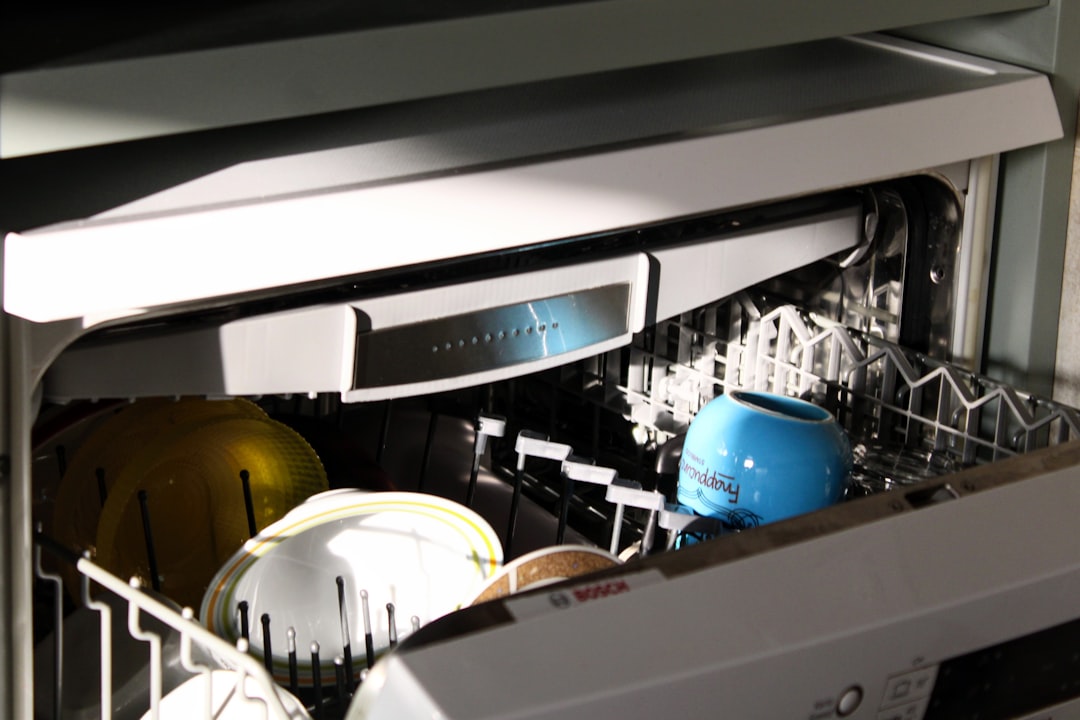
If the dishwasher is still full of clean dishes, do not spend the entire routine putting every item away unless that is the main bottleneck. Unload enough of it to create capacity, then load the dinner dishes. Tomorrow, consider changing when the dishwasher gets emptied. A nightly routine works best when the dishwasher is not permanently being used as clean-dish storage.
If you wash dishes by hand
Use a batch system instead of washing randomly:
- glasses and lightly soiled items first,
- plates and bowls next,
- utensils after that,
- pots and pans last.
If four minutes is not enough to finish, stop with the process organized. A neatly stacked remaining pan beside a clear sink is very different from a sink buried under a mixed pile of dishes.
This is the core of an effective dishwashing routine: move the kitchen toward function, not toward perfection.
Minute 6–9: clear and wipe the surfaces that matter tomorrow
Now shift attention to the counters and stovetop.
Do not wipe around clutter. First, return items to their homes:
- spices back to the cabinet,
- oil back to its usual location,
- lunch containers to their drawer or drying area,
- mail and school papers out of the prep zone,
- small appliances back if they are not daily-use items.
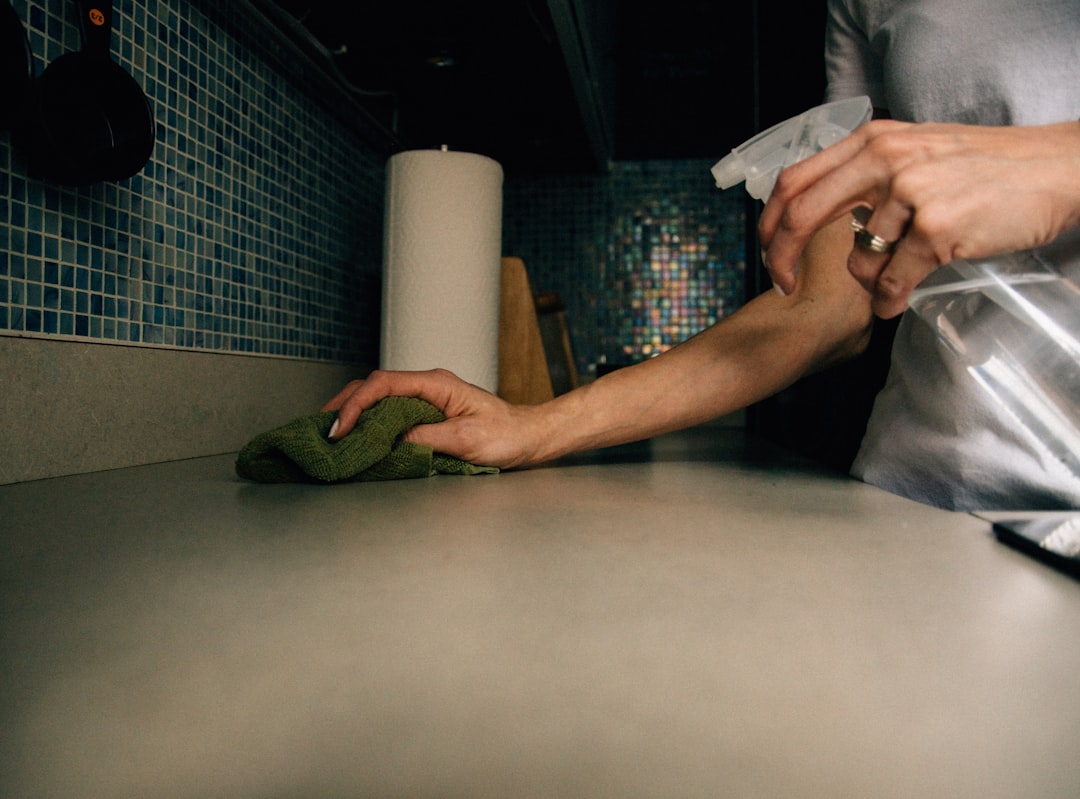
Then wipe the surfaces that were actually used.
Prioritize:
- the main prep counter,
- the dining or serving spillover area,
- the stovetop if it has fresh splatters,
- high-touch handles only if they are visibly dirty or greasy.
CDC guidance distinguishes routine cleaning from disinfecting: in most home situations, regular cleaning with soap or an appropriate household cleaner is enough, while disinfecting is more relevant when someone is sick or there is another specific reason. Clean surfaces before sanitizing or disinfecting them, and always use products according to their labels.
That means your evening kitchen routine does not need to turn into a nightly chemical treatment of the whole room.
Minute 9–11: reset the sink
The sink is the visual and functional center of the reset.
For two minutes:
- remove food scraps from the drain area,
- rinse obvious residue from the basin,
- wipe the faucet if it is greasy or visibly dirty,
- rinse and wring out the cleaning cloth,
- leave the sink open enough to wash hands, rinse produce, or fill a pot tomorrow.
You do not need to polish the sink every night. You do need to keep it from becoming a storage bin.
If the sink is the one place that always collapses first in your kitchen, make clear sink before bed your minimum standard for one week. A usable sink makes every other morning task easier.
Minute 11–13: clear the family landing zone
In many homes, the kitchen is not only a kitchen. It is also the place where life gets dropped.
During these two minutes, remove non-kitchen clutter from the most important work areas:
- backpacks,
- mail,
- permission slips,
- keys,
- chargers,
- water bottles,
- medicine,
- small toys,
- shopping bags.
You do not need to fully organize these items. Move them to their proper landing zones or to one defined “deal with tomorrow” basket outside the prep area.
This step is especially important in a busy family kitchen because many kitchen messes are actually household-flow problems.
If papers are one of the main things taking over your counters, the system matters more than repeated shuffling. Our guide to organizing school papers without keeping everything is a useful place to build that next layer.
Minute 13–15: floor check and tomorrow setup
The final two minutes are split between the floor and tomorrow.
First: remove obvious floor mess
Do not mop the entire kitchen unless there is a spill that needs attention. Instead:
- sweep visible crumbs around the prep area,
- pick up dropped food,
- spot-clean sticky spills,
- clear anything that could be stepped on in the morning.
Then: make one tomorrow task easier
Use the last 30 to 60 seconds to create a small advantage for your future self.
Examples:
- place coffee supplies together,
- set clean lunch boxes on the counter,
- put breakfast bowls where children can reach them,
- move frozen food to the refrigerator to thaw safely if your meal plan calls for it,
- refill a water pitcher,
- put the cutting board back in the prep zone.
This is where a cleaning routine becomes a household system. You are not only removing yesterday’s mess. You are lowering friction for tomorrow.
The complete 15-minute nightly kitchen reset
Here is the full routine in one place:
- Minutes 0–2: store leftovers, return ingredients, remove food waste.
- Minutes 2–6: load or wash dishes and move every item one step forward.
- Minutes 6–9: clear and wipe the main prep surfaces and stovetop.
- Minutes 9–11: rinse and reset the sink.
- Minutes 11–13: remove non-kitchen clutter from the landing zone.
- Minutes 13–15: handle obvious floor mess and prepare one thing for tomorrow.
If a task takes longer than its time block, do not automatically steal time from every later step. Stop at a sensible point and continue tomorrow. The timer is there to protect the routine from becoming an endless chore.
What if your kitchen cannot be reset in 15 minutes?
If 15 minutes is consistently not enough, the problem may be happening before the nightly routine begins.
The dishwasher is not available when dinner ends
If clean dishes remain in the dishwasher all day, dinner cleanup has nowhere to go. Experiment with unloading it after breakfast, while coffee brews, or when someone gets home from work or school.
Too many objects live on the counters
A counter covered with appliances and household items takes longer to clean because every reset begins with relocation. Protect one always-usable prep zone.
Dinner creates too many dishes for the household rhythm
This does not mean you need one-pot meals every night. But if weekdays routinely generate a sink full of pans, consider building two or three lower-cleanup meals into the busiest nights.
No one else has a defined job
“Help clean up” is vague. A repeatable family system is clearer:
- one person stores leftovers,
- one person loads the dishwasher,
- one person wipes the table,
- one child handles safe items or checks the floor for crumbs.
Ownership reduces the mental load of having one person direct everyone else.
Your nightly reset is secretly a deep clean
If you are scrubbing cabinet doors, washing trash cans, reorganizing pantry shelves, cleaning the oven, and mopping every night, the routine is too large. Move those jobs to weekly or monthly maintenance.
A five-minute emergency version for exhausting nights
A sustainable routine needs a version for sick days, late nights, travel days, and evenings when everyone is simply done.
Use this five-minute kitchen reset:
- Minute 1: refrigerate perishables and leftovers.
- Minutes 2–3: move dishes into the dishwasher or stack them in one controlled place.
- Minute 4: clear one prep counter.
- Minute 5: empty enough of the sink to make it usable.
Skip the floor unless there is a safety issue. Skip polishing. Skip nonessential organizing.
The purpose of the emergency version is to prevent one difficult night from breaking the whole routine.
A 25-minute version for nights when the kitchen needs more
Some evenings really do need extra attention. Add ten minutes without changing the core order.
After the regular 15-minute reset, use the extra time for one or two of these:
- wipe cabinet fronts around the main cooking zone,
- clean the microwave interior,
- mop the kitchen floor,
- clean the sink more thoroughly,
- sort the refrigerator leftovers shelf,
- wash dish towels and cleaning cloths,
- wipe the backsplash.
Do not turn the longer version into an open-ended project. A defined stop time keeps the kitchen closing shift sustainable.
Should you sanitize or disinfect the kitchen every night?
Usually, routine cleaning and appropriate food-safety practices are the foundation. CDC guidance notes that regular cleaning removes dirt and many germs, while sanitizing or disinfecting is used when needed for specific circumstances. Food-contact surfaces contaminated by raw meat, poultry, or their juices deserve special attention.
For a nightly routine:
- clean visibly dirty surfaces,
- follow food-safety guidance for contaminated prep areas,
- use cleaning or disinfecting products exactly as labeled,
- never mix household cleaning chemicals.
The goal is not “more chemicals.” The goal is the right cleaning process for the situation.
How to make the routine easier for children to participate in
A family routine works better when children can own simple, repeatable tasks appropriate for their age and ability.
Examples include:
- carrying unbreakable cups to the dishwasher,
- putting napkins away,
- wiping a low table with supervision,
- returning lunch boxes to one shelf,
- checking under the table for dropped items,
- placing recycling in the correct bin.
Avoid framing children as “helpers” who wait for instructions every night. Give them a small job that always belongs to them. Predictability is easier than repeated negotiation.
How to keep the routine from getting boring or ignored
Routines fail when they depend on motivation. Make this one easier to start.
Use the same trigger
Begin after the same event most nights: after dinner plates are cleared, after children leave the table, or after leftovers are packed.
Use one playlist or timer
A 15-minute timer creates a visible finish line. A short playlist can do the same thing without turning the routine into a race.
Keep supplies close
If you have to walk to another room for every cloth or cleaner, the routine gains friction.
Protect the stop time
When the timer ends, stop unless there is a food-safety or immediate safety issue. This teaches your brain that the nightly reset really is limited.
How this routine changes in a very small apartment kitchen
In a compact apartment, the basic routine stays the same, but the order becomes even more important because there is less temporary holding space.
Three adjustments help:
- Do food first. Leftover containers and ingredients occupy valuable counter space.
- Do dishes before surfaces. You need somewhere to move items before you can wipe.
- Protect one counter. Even a small clear rectangle can keep breakfast and lunch prep from starting in chaos.
In tiny kitchens, vertical storage and off-counter landing zones matter more than adding more organizers to already crowded surfaces.
What belongs in the weekly reset instead
Your nightly routine stays short because other jobs have another home.
Once a week—or at another interval that fits your household—handle jobs such as:
- mopping the full kitchen floor,
- cleaning the microwave,
- wiping appliance fronts,
- checking for expired leftovers,
- cleaning the backsplash,
- washing reusable cloths and towels,
- cleaning trash and recycling areas,
- wiping cabinet handles and high-touch areas more thoroughly.
The same principle works in other small rooms. Our 10-minute small bathroom cleaning routine also separates quick maintenance from deeper periodic cleaning.
Frequently asked questions
Is 15 minutes really enough to clean a kitchen?
It is enough for a maintenance reset in many households, but not for a deep clean. If the kitchen begins the evening with several meals’ worth of dishes, heavy grease, or major clutter, the first few resets may take longer. The goal is to reach a point where 15 minutes can reliably restore function. For a related step-by-step approach, see Small space appliances worth buying.
Should I run the dishwasher every night?
That depends on your machine, household size, and how full it is. The important part is that dirty dishes have a consistent process. If waiting another day leaves the sink unusable, adjust the timing of your dishwasher routine.
What should I do first if I only have five minutes?
Store perishable food, move dishes forward, clear one prep counter, and make the sink usable. Those steps have the biggest effect on tomorrow morning.
Should I mop the kitchen every night?
Usually not unless your household needs it. Spot-clean spills and remove visible crumbs during the nightly reset, then schedule full mopping at a frequency that fits your traffic, pets, children, and cooking habits.
What is the best nightly kitchen habit for busy families?
The most useful habit is leaving the kitchen with a clear sink and one clear prep zone. That combination gives the next day somewhere to begin.
The goal is not a perfect kitchen. It is an easy tomorrow.
A good 15-minute nightly kitchen reset should feel almost ordinary. Food gets stored. Dishes move forward. Counters reopen. The sink becomes usable. Crumbs disappear. One small thing gets prepared for morning.
The routine works because it focuses on function rather than perfection.
When you repeat the same short sequence often enough, the kitchen stops needing dramatic rescues. It becomes a room that gets messy, gets reset, and is ready to work again the next day.
Sources
- CDC — When and How to Clean and Disinfect Your Home — https://www.cdc.gov/hygiene/about/when-and-how-to-clean-and-disinfect-your-home.html
- USDA FSIS — How do I keep my foods safe to eat? — https://ask.fsis.usda.gov/article/How-do-I-keep-my-foods-safe-to-eat