A cocoa corner sounds cozy until the shared room has to become a work space again. Open packets, decorative jars, cups, and a seasonal sign can spread across the only useful table. Namalu’s white Christmas crate offers a smaller idea: give light holiday supplies one visible home, then remove that home when the room changes jobs.
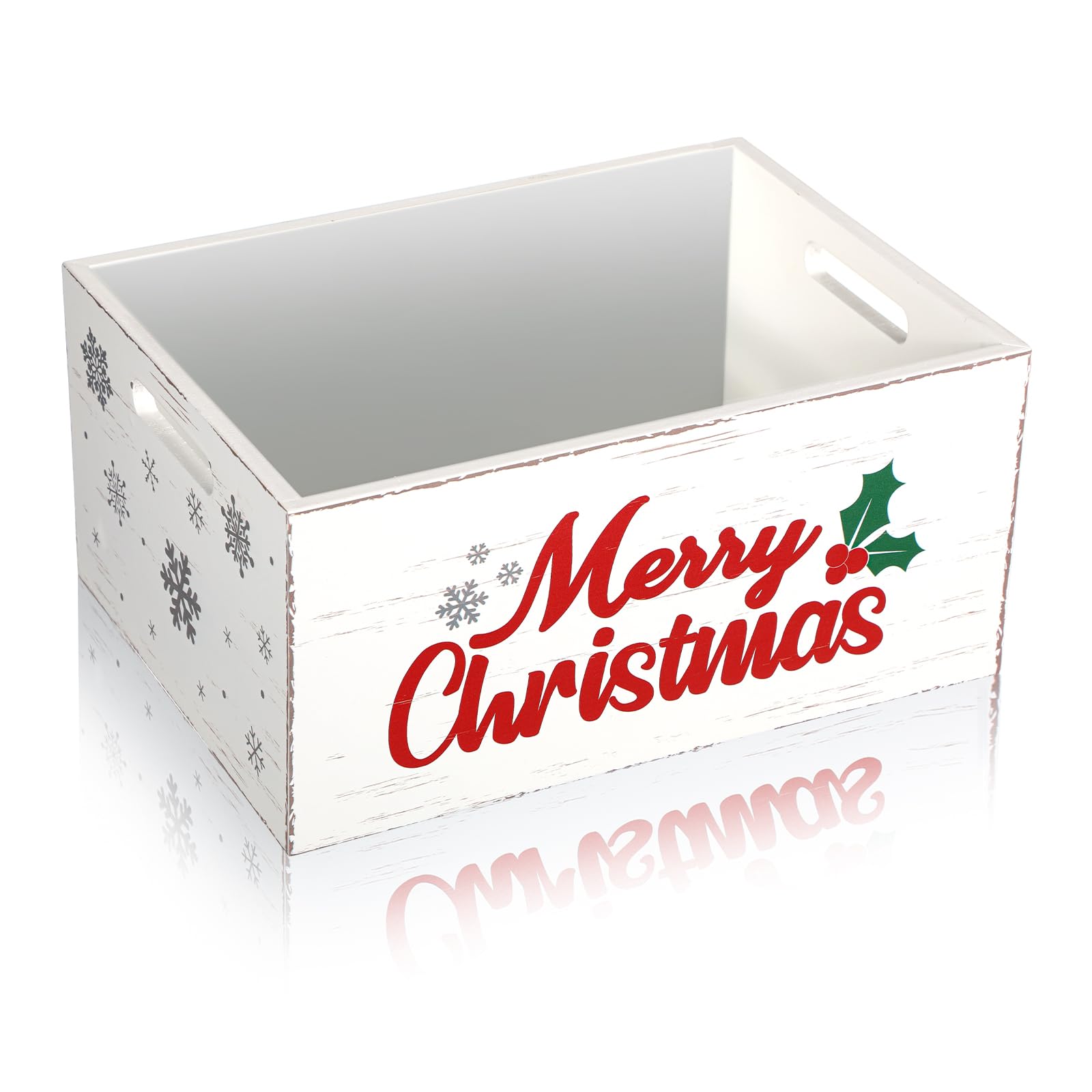
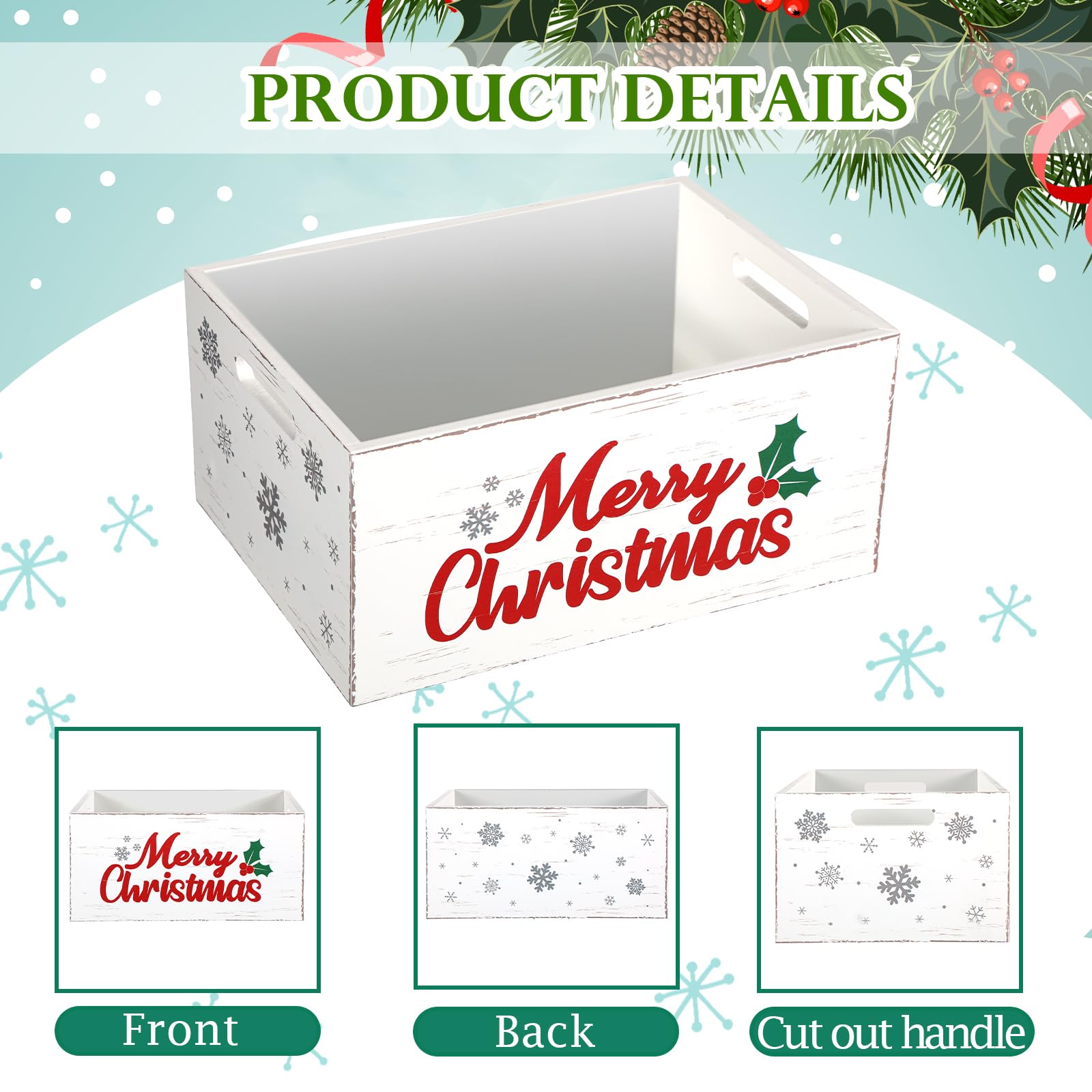
For Christmas 2026, we would consider this as a decorative supplies box, rather than a complete cocoa bar or a carrier for prepared drinks. The listing’s hot-cocoa language does not change the product visible in its gallery: an empty white wooden crate with “Merry Christmas” across the front and snowflake motifs on the sides. This review uses that actual identity to assess display, access, storage, and alternatives for a multipurpose room.
Affiliate disclosure: As an Amazon Associate, Small Home Rhythm earns from qualifying purchases.
What you are buying, and what the styling adds
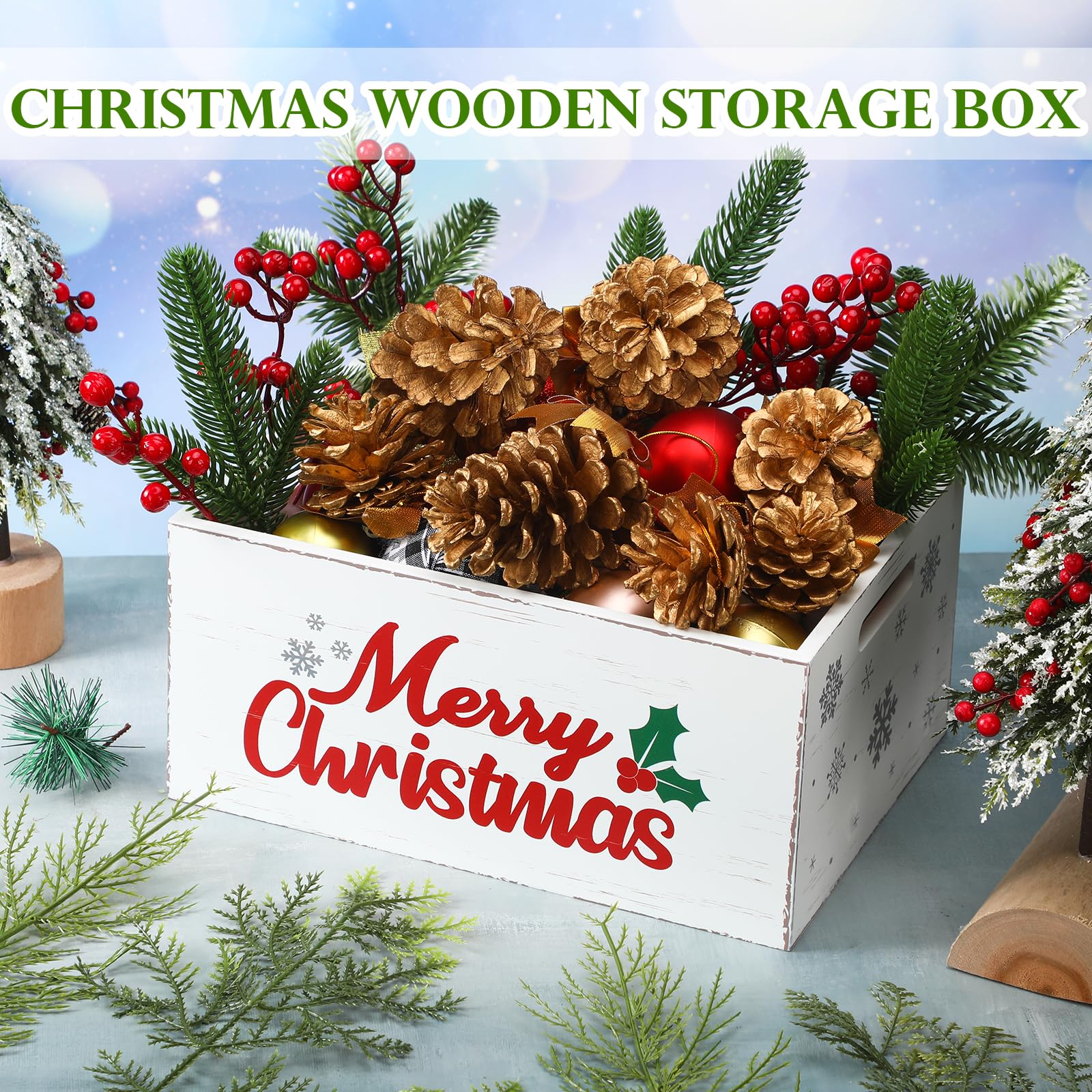
The selected Namalu product is ASIN B0CDWNQ5QK, model MP-Namalu-2684. The retailer gives an approximate exterior size of 11.4 by 8.3 by 5.4 inches; the dimension image uses about 29 by 21 by 13.7 centimeters. It has an open top and cutout handles. One crate is the stated item. The supplies, ornaments, cookies, greenery, and other props in the gallery should not be treated as a bundled holiday kit.
That distinction is useful rather than disappointing. An empty box lets you decide whether its role is sealed cocoa packets, small wrapped gifts, or a light seasonal display. But the photographed uses are not evidence that the finish is certified for direct food contact or that the crate has a tested carrying capacity. We found no verified coating certification, load rating, or dimensions for the clear interior opening.
Check the Namalu white Christmas crate on Amazon and compare the print, approximate dimensions, and one-box contents with the current selected offer. The lettering matters if you want this exact visual style: it is a general Christmas greeting, not a specific hot-cocoa label.

Use the outside dimensions as a starting footprint
Mark an 11.4-by-8.3-inch area on the shelf or table you intend to use. That represents an approximate exterior footprint, not a guaranteed internal storage area. The walls, corner construction, and handle cutouts all affect how items fit inside. If a particular packet carton or container is central to your plan, obtain the usable interior dimensions before assuming it will sit neatly within the box.
The height has a visual effect as well. A 5.4-inch wall may partly hide short items and make the display appear fuller than it really is. Tall packets or a small label can rise above the front edge, but this should not become a reason to overfill the crate. Keep the intended contents light and accessible, and avoid building a tall pile that must be disturbed whenever someone wants the item at the bottom.
For a shared surface, include the area around the box in your mock-up. People need room to reach in, lift a packet, and put down anything they are already holding. If placing the crate makes the keyboard, puzzle, or homework materials impossible to use, the surface was not available for a cocoa corner in the first place. The box gives supplies a boundary; it does not create new table space.
A workable cocoa setup keeps preparation elsewhere
Our preferred use is a display of light, sealed packets in the crate, with suitable cups and actual drink preparation at a separate kitchen or serving area. The wooden box is not a spill-catching tray. Do not put a hot carafe or full mugs inside simply because the cutout handles suggest portability. There is no verified load or hot-liquid handling specification supporting that task.
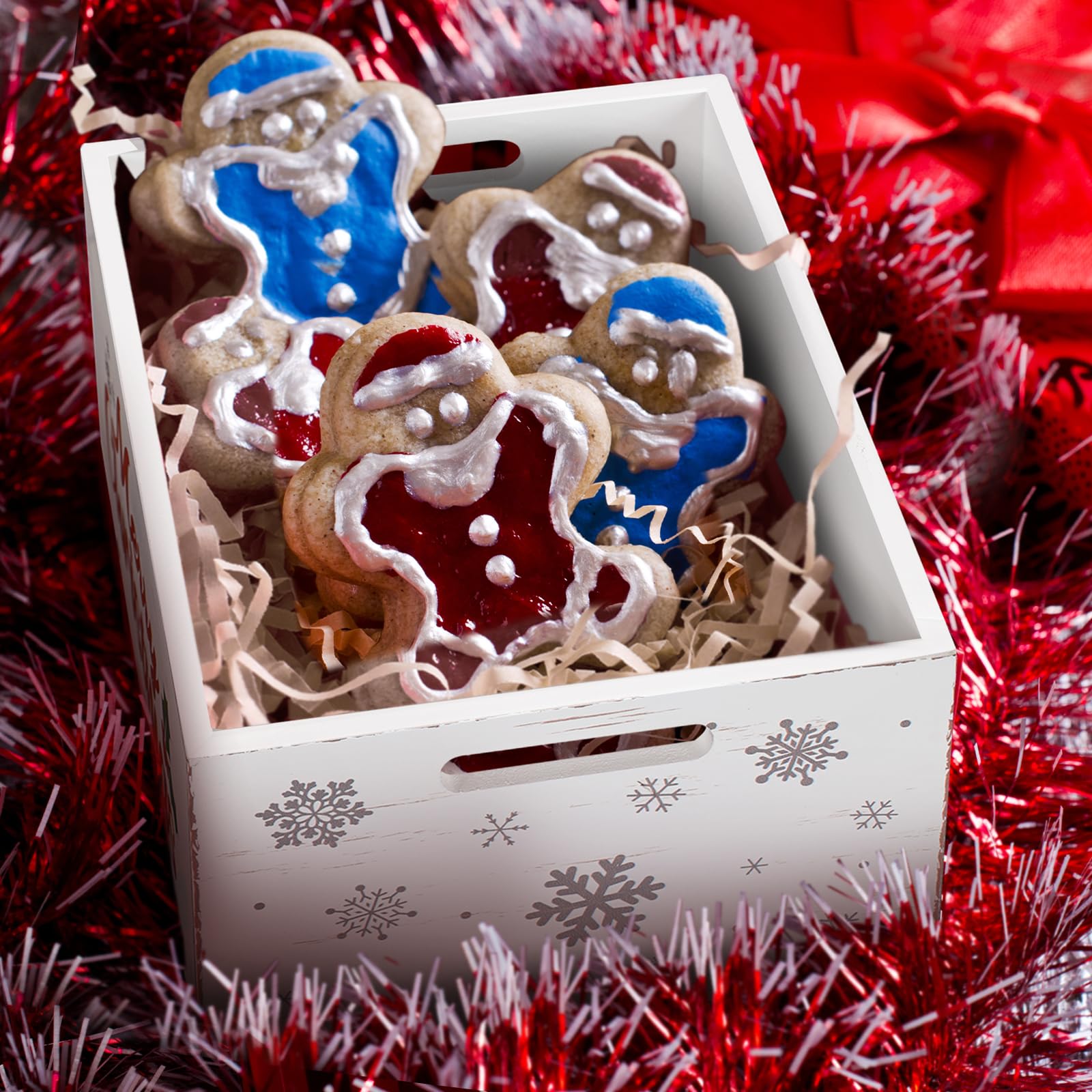
Sealed wrappers also keep the review’s recommendation separate from the cookie photograph. Loose food may look appealing in a scene, but we cannot establish the finish’s suitability for direct contact. Use packaging or a food container intended for the contents. If children help choose a packet, have an adult manage preparation according to the drink equipment and household routine rather than turning the decorative crate into the heating station.
A separate vessel such as the one discussed in our Thermos 34-ounce carafe review performs a different job from the box. A carafe’s capacity, lid, and handling requirements need their own evaluation. Buying a decorated crate does not reduce those considerations, and placing everything in one container is not automatically the best way to host in a tight room.
Why the Merry Christmas print can help a shared room
The printed front supplies the seasonal message without another freestanding sign. White sides and small snowflakes let the crate sit beside existing furniture without requiring a full red-and-green makeover. If you put a few wrapped supplies inside, one bounded display can communicate the theme more clearly than several little ornaments spread between work materials.
Decide which way the front will face before placing it on a bookshelf. A box that sits sideways in the only available gap may show mostly snowflakes rather than the greeting. That may be perfectly acceptable, but it changes the reason for choosing this design. Avoid buying a printed front for a location where its size makes the front permanently invisible.
The handles contribute to the rustic crate appearance. We would treat them as a feature to inspect on arrival, not as proof that the whole display can be lifted while loaded. Check the finish and joints, follow any supplied instructions, and move fragile or heavy contents separately when necessary. A light-looking styled photograph cannot establish the strength of an individual delivered item.
Plan the room reset as part of the decoration
Before filling the crate, choose its destination when the gathering ends. A stable dry shelf is preferable to a temporary floor position in the route between the sofa and desk. If there is no place to put the complete light display away, consider leaving the supplies in an existing cupboard and bringing out only what the next drink requires.
The multipurpose-room reset guide focuses on changing uses without leaving every activity permanently spread out. For this product, the useful test is straightforward: can you restore the room’s normal working surface after the visit? That answer matters more than how many objects can be squeezed into the crate.
Keep refills outside the display. A few visible packets can be enough for the current gathering, while bulk supplies remain in their normal storage place. Mixing unopened stock with half-used supplies makes checking and clearing the box more awkward. It can also tempt you to use the decorative crate as permanent pantry storage even though its open top provides no enclosure against dust or room spills.
Compare the crate with a serving tray and a closed bin
A serving tray is the more relevant alternative when the job is moving cups or containing an everyday mess. Choose one whose instructions and construction suit the contents. A closed bin is the more relevant alternative when the supplies need enclosure between occasional uses. The Namalu crate earns consideration when a visible Christmas greeting and open access are part of the intended display.
| Option | Useful role | Main limitation |
|---|---|---|
| Namalu Christmas crate | Visible seasonal home for light packaged supplies | No verified food-contact or carrying rating; open top |
| Appropriate washable tray | Organizing or moving suitable serving items | Usually gives less contained height and may need separate decor |
| Existing closed storage bin | Keeping supplies enclosed between visits | Less decorative while closed and less immediate access |
If the real plan is a dessert display rather than packets, the Efavormart round gold cupcake-stand review covers a different structure and its placement demands. Choose the container around the contents. A wooden crate, a raised stand, and a food-safe serving plate are not interchangeable simply because all can appear in festive photographs.
For identifying flavors or stations, the LEPOHOME card-holder review looks at changeable printed labels. That is useful only if a label solves a real guest question. The crate already says Merry Christmas, so another message is optional; avoid filling a small table with signs that leave no room to use the supplies.
Storage after Christmas changes the value calculation
This is a shaped wooden object, not a thin folded textile. Measure the off-season shelf before treating it as an easy seasonal purchase. You may be able to keep suitable small decorations inside, but do not assume it will protect fragile pieces or exclude dust. Pack those items according to their own needs rather than relying on the crate’s walls alone.
The print is explicitly Christmas-themed, so an all-year display requires liking that greeting beyond December. Someone who prefers neutral household storage may get more use from an existing plain box with a removable seasonal card. The Namalu design is more attractive for a household that expects to bring out the same compact Christmas station each year and already has an appropriate dry place to keep it.
Our verdict: buy the display role, not an imagined cocoa kit
We would shortlist this crate for light packaged supplies in a multipurpose room that can accommodate both its footprint and its off-season storage. The festive front and cutout-handle shape give it a clear decorative identity. We would skip it for moving hot drinks, direct loose-food contact, moisture protection, or a large stock of supplies that needs a properly sized closed container.
If that limited role fits your Christmas 2026 plan, confirm the white Namalu crate and current seller details on Amazon. Explore the Small Home Rhythm buying guides for other ways to match a product to the room’s actual daily jobs.
Research basis: The associated Namalu retailer record and supplier gallery supplied the selected model and approximate dimensions. Direct Amazon details were unavailable during research. We have not tested the crate’s construction, finish, or carrying strength.