A napkin holder is useful only if getting a napkin becomes easier than reaching for a loose pile. The OXO Good Grips Neat Napkin Holder is designed around controlled dispensing and a stainless-steel appearance. Its value at a small family table depends on the napkins you buy, who reaches for them and how often the holder needs refilling. For a related step-by-step approach, see OXO Contoured Pepper Grinder Review: One Useful Mill for a Small Dining Table.
Review scope: This is a research-based assessment of the linked product, not a hands-on test. Listed specifications are distinguished from our practical buying analysis. Offers and selected variants can change.
Does a holder solve your table problem?
Start with the current routine. If a loose napkin stack scatters, ends up under other objects or is difficult to reach, a defined holder may help. If napkins are already stored conveniently beside the table, adding a permanent object may offer little practical improvement.
A small dining table often handles homework or work between meals. Anything left on it needs a clear reason to stay. A holder can make sense when several people use paper napkins every day, but it should not become another object that must be moved repeatedly for little benefit.
Count the whole routine: bringing napkins out, using them, clearing the table and refilling. The best arrangement is the one that reduces recurring effort, not necessarily the one that looks most coordinated in a dining-room photograph.
What the Neat design promises
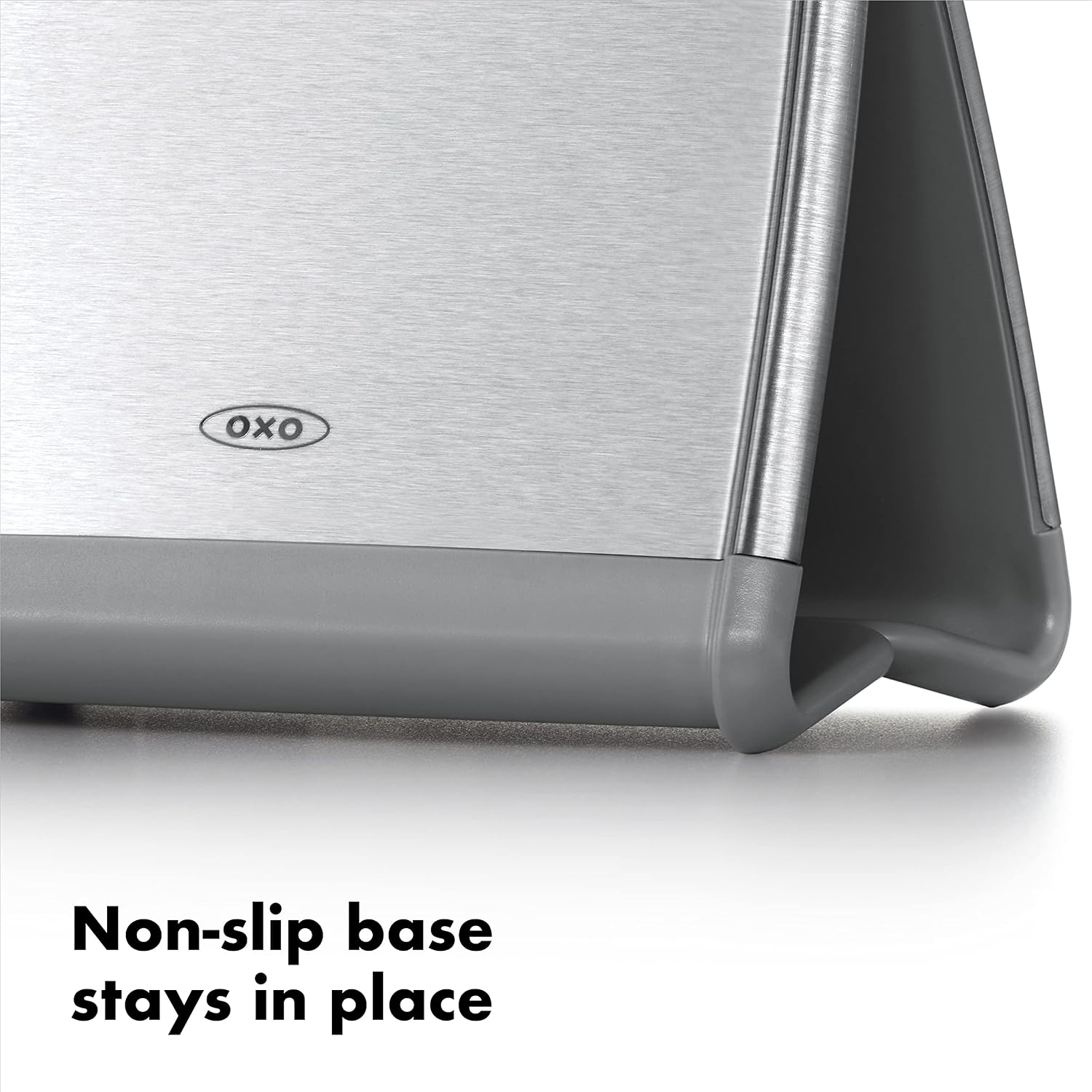
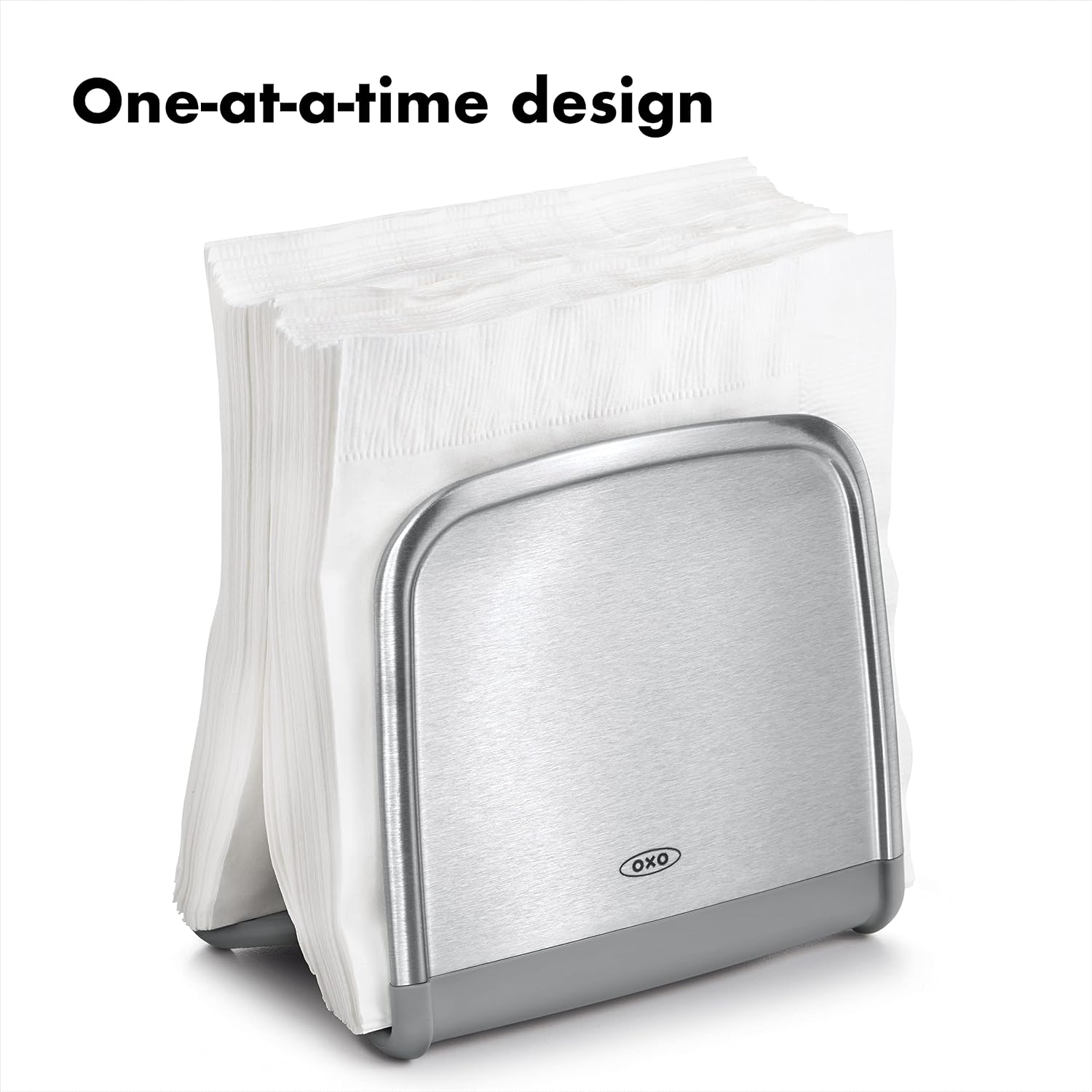
The linked OXO model is a stainless-steel napkin holder with a fingerprint-resistant coating. Its listing describes a design intended to let users remove one napkin at a time, including when relatively few remain, and to make refilling straightforward.
Those are useful design goals, but we have not tested dispensing with different paper weights, folds or brands. We also do not have a verified universal capacity or a complete size-compatibility chart for this exact model. This review will not invent a napkin count or assume all dinner napkins fit.
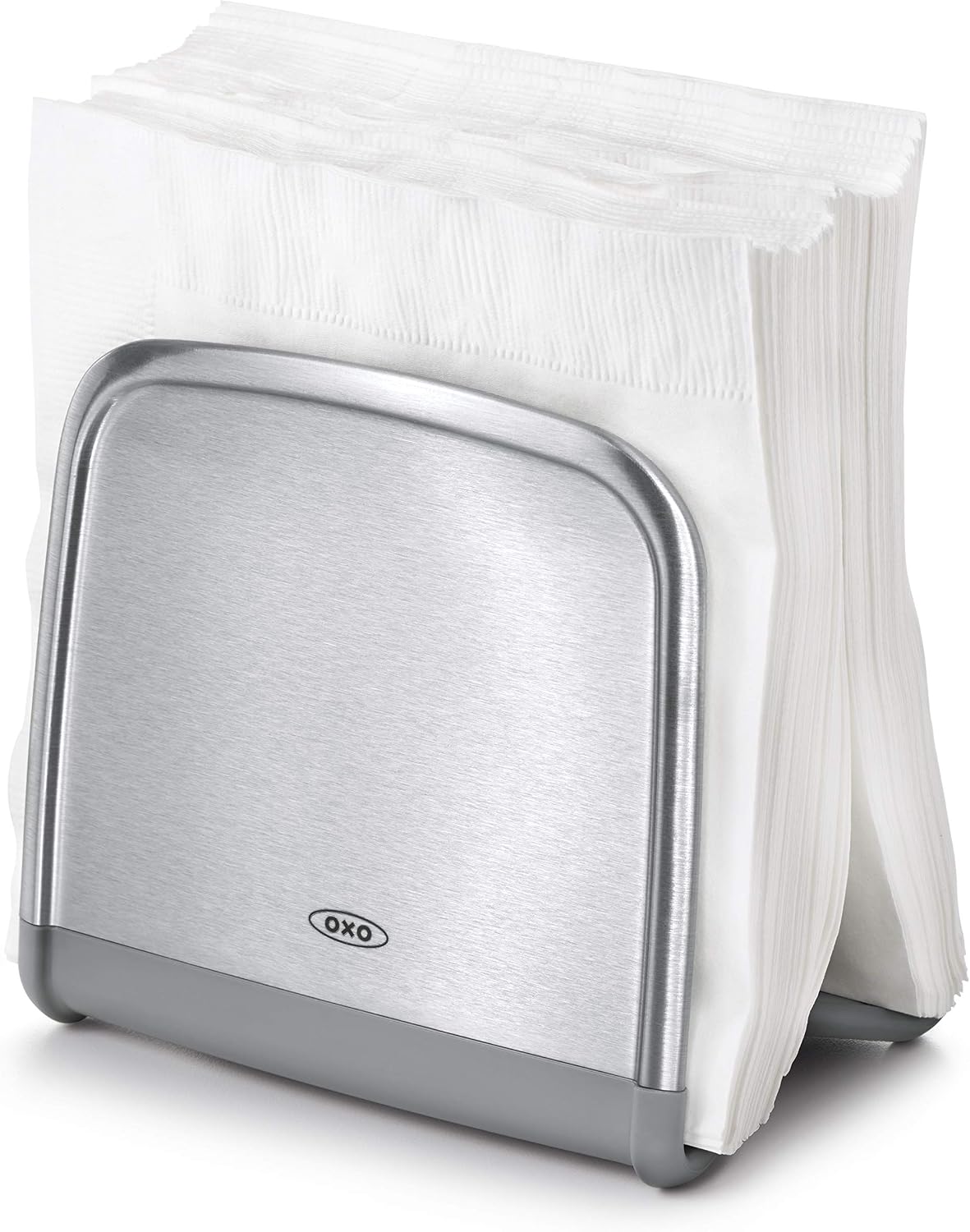
The product photographs show the overall format and the way a stack is presented. They cannot establish how your preferred paper behaves when a child pulls quickly or when the holder is nearly empty.
The paper is part of the product decision
Measure the napkins in the folded form you intend to load. Cocktail napkins, luncheon napkins and large dinner napkins can differ materially in size and thickness. Category names alone are not precise enough to confirm compatibility.
Consider surface texture as well. A stack of thin paper can behave differently from thick decorative napkins, and tightly packed sheets may be harder to separate. We have not measured those differences in this holder; they are reasons to test your actual supply rather than rely on the staged image.
If you change napkin types frequently, flexibility may matter more than controlled dispensing. An open container with verified dimensions may accommodate that changing routine more simply, though it will not provide the same intended dispensing behavior.
Try it nearly empty as well as full
A holder often looks convincing with a carefully arranged full stack. The useful question is what happens near the end of the refill cycle. Can a person remove a napkin without dragging the remaining supply or repositioning the holder each time?
Because low-stack dispensing is part of the OXO’s stated design, it deserves attention during an ordinary home trial. Check with your normal napkins and normal hand movement. Do not treat a successful first pull from a full load as proof that every remaining sheet will behave the same way.
Avoid overfilling simply to reduce refill frequency. A packed holder can change how the paper moves. Follow the received instructions and leave the stack in the intended arrangement rather than forcing additional sheets into an already tight space.
One-handed use is a household test
A napkin may be needed while someone is holding a sandwich, helping a child or carrying a plate. Easy access matters in those moments. However, a design intended to release individual sheets is not a verified guarantee of one-handed operation for every person and paper type.
Place the holder on the actual table surface and assess whether it stays appropriately positioned during normal use. We have not tested grip on polished wood, glass, tablecloths or placemats. The support surface can affect the experience as much as the napkins themselves.
If users repeatedly need to hold the base with one hand, decide whether that is acceptable for your routine. It may still be tidier than a loose pile, but the convenience should be judged honestly rather than inferred from the product name.
Placement affects everyone at the table
Choose a location reachable without leaning across drinks or serving dishes. At a narrow table, the center may be convenient for several people but already needed for food. At a wall-side table, a holder against the wall may suit one seat and be awkward for another. If you are working on the same space, THERMOS 34-Ounce Carafe Review: Several Cups Without the Hot Plate covers the next decision in more detail.
Try the intended position with the usual place settings before buying. A small object can still interrupt a cramped meal arrangement if it occupies the only clear landing space for a bowl or pitcher. The holder should improve access without creating a new obstacle.
Where the table changes roles during the day, give it a nearby storage spot. Moving one holder can be simpler than moving loose paper, but only if there is somewhere appropriate to put it.
Fingerprint resistant still means cleaning
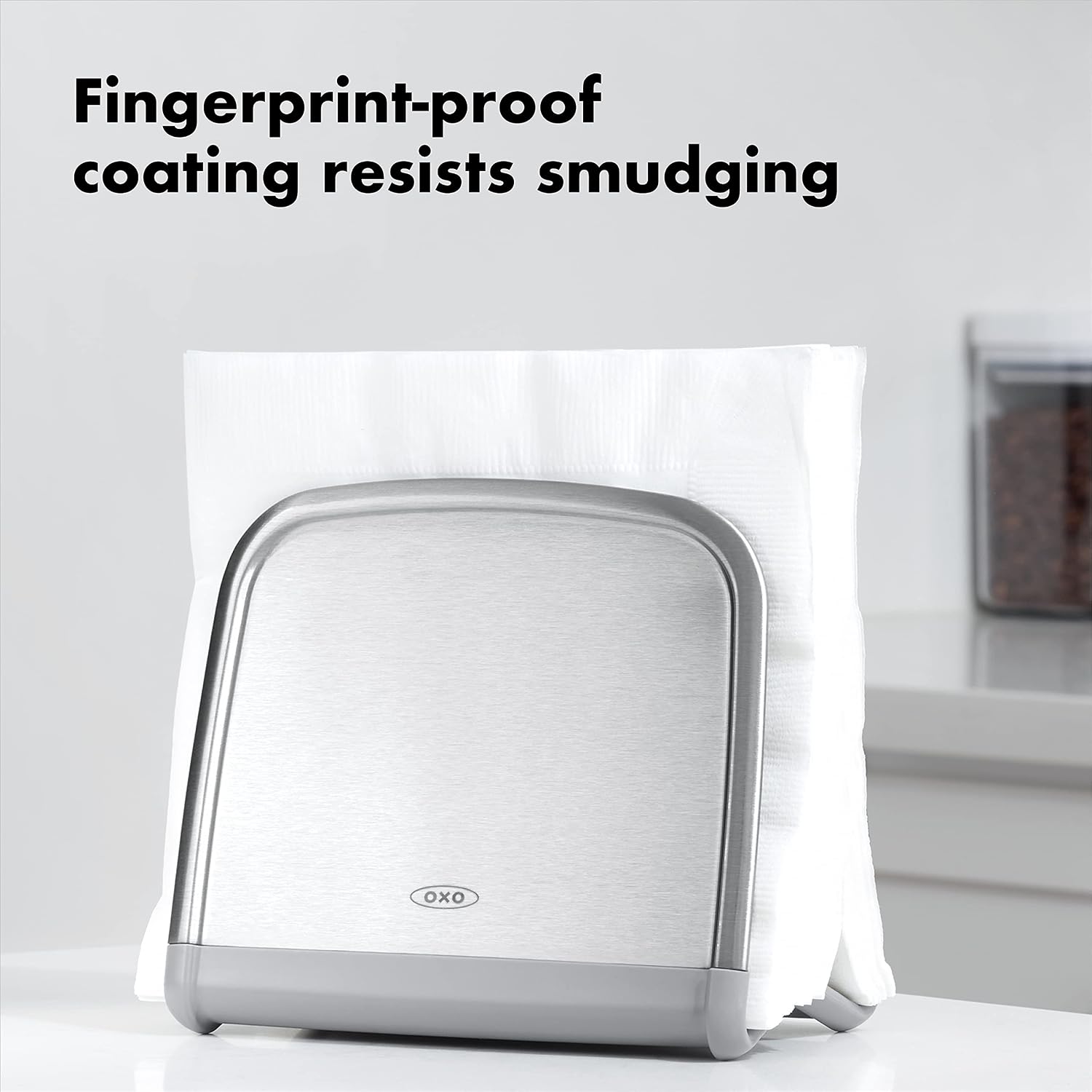
The listed coating is described as fingerprint resistant, not fingerprint proof or maintenance free. We have not tested how the finish responds to oily hands, spills or repeated wiping. Follow OXO’s care directions for the received item rather than using an abrasive cleaner based on the stainless-steel description alone. For a related step-by-step approach, see OXO Butter Dish Review: A Cleaner Way to Serve a Stick at a Small Table?.
Remove paper before cleaning where needed and let the holder dry before refilling. Damp napkins can stick together or become unsuitable for the table. A visible dining accessory needs a cleaning routine as much as a storage plan.
Inspect any areas where crumbs collect during regular use. A holder that is easy to refill but awkward to clean may not be an improvement for a busy family. Evaluate both tasks during the first normal meals.
Compare access style, not just appearance
An open container can be a straightforward choice when paper sizes vary and carefully controlled dispensing is less important. It needs appropriate dimensions and may still allow more than one sheet to be lifted at once. Its advantage is simplicity, not a guaranteed superior result.
A flat holder with a weight changes the interaction: users may need to lift or move the weight to reach the stack. That may be perfectly acceptable for occasional use but less convenient when several people reach repeatedly during a meal. It also occupies a different shape of tabletop space.
Cloth napkins require a separate washing and storage routine. If that is already the household’s preference, buying a specialized paper holder is unlikely to solve a recurring problem. Match the accessory to the material you actually use.
A practical first-week verdict
Use the holder through a normal refill cycle with your usual paper. Notice whether it reduces scattered napkins, whether different family members can reach it and whether the nearly empty stack remains usable. These observations are more valuable than judging a full holder immediately after unpacking.
If dispensing is inconsistent, first confirm that the paper and loading method match the product guidance. Do not buy a large reserve of unfamiliar napkins merely to make a new accessory work. A holder should support the household supply routine at a reasonable level of effort.
Keep the OXO when its access and appearance justify its permanent or temporary place on the table. Choose a simpler container or existing storage when the main result would be another object to clear before every activity. For a related step-by-step approach, see OXO Toothbrush Organizer Review: Covered Storage for a Shared Small Vanity.
Which option fits your routine?
| Situation | Starting point | Tradeoff |
|---|---|---|
| Daily use with a consistent compatible paper napkin | OXO Neat holder | Defined dispensing arrangement that needs a real-paper trial |
| Frequent changes in napkin size or thickness | Suitable open container | Flexible loading, less control over individual-sheet removal |
| Occasional paper use or established cloth routine | Existing nearby storage | Keeps the table clear without another permanent accessory |
Amazon product and current listing
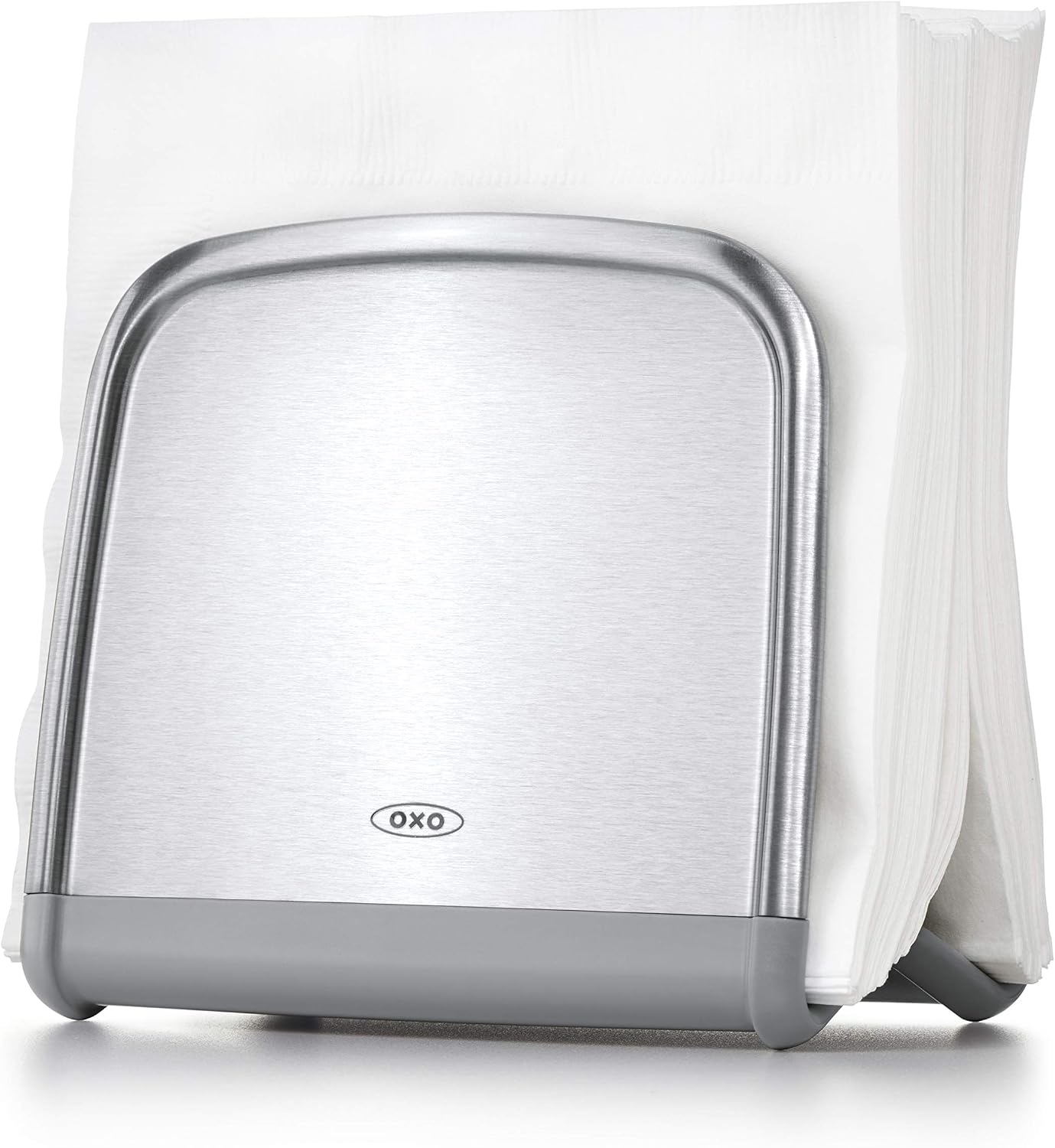
Check OXO Good Grips Neat Napkin Holder on Amazon. Confirm the selected model, seller, delivered price and return terms. This link identifies ASIN B07GTC65QT; it does not guarantee current stock.
Our buying decision
The OXO is worth considering when paper napkins are a daily table item and the selected paper works with its dispensing design. Verify actual napkin fit and low-stack behavior before treating the one-at-a-time claim as a household guarantee.
Explore Dining Room ideas and Buying Guides. Related reading: Dining Room Storage Review: Sideboard vs. Storage Bench vs. Wall Shelves.
Sources and evidence limits
The linked Amazon listing supplies the product identity, photographs and listed features. Household scenarios and comparisons are editorial analysis. We have not measured durability, performance or user outcomes. We do not use star ratings as proof of quality.
Sources
- Amazon product listing — https://www.amazon.com/dp/B07GTC65QT