A handmade Christmas ornament can feel more personal than another packet of identical decorations. READY 2 LEARN’s Design Your Own Porcelain Bells kit gives a household three drawing surfaces and a clear end to the project. For Christmas 2026, the useful question is whether a small supervised craft session followed by protected ornament display fits your kids’ room routine.
We reviewed the associated CE10022 product description and supplier instructions shown in the images. We have not used the markers, assembled the cord or assessed the kit’s safety independently. The linked offer, supplied age guidance and actual packaging warnings need checking. Porcelain and loose components make this a project that requires appropriate adult involvement.
Affiliate disclosure: As an Amazon Associate, Small Home Rhythm earns from qualifying purchases.
Three keepsakes, rather than an open-ended craft collection
The limited quantity is a useful part of the idea. You can plan three designs, complete them and put away the remaining materials. A small household might create one bell for each participant or reserve one for an adult’s family message. It is easier to decide this before opening the box than after several people discover that there are only two supplied marker colors.
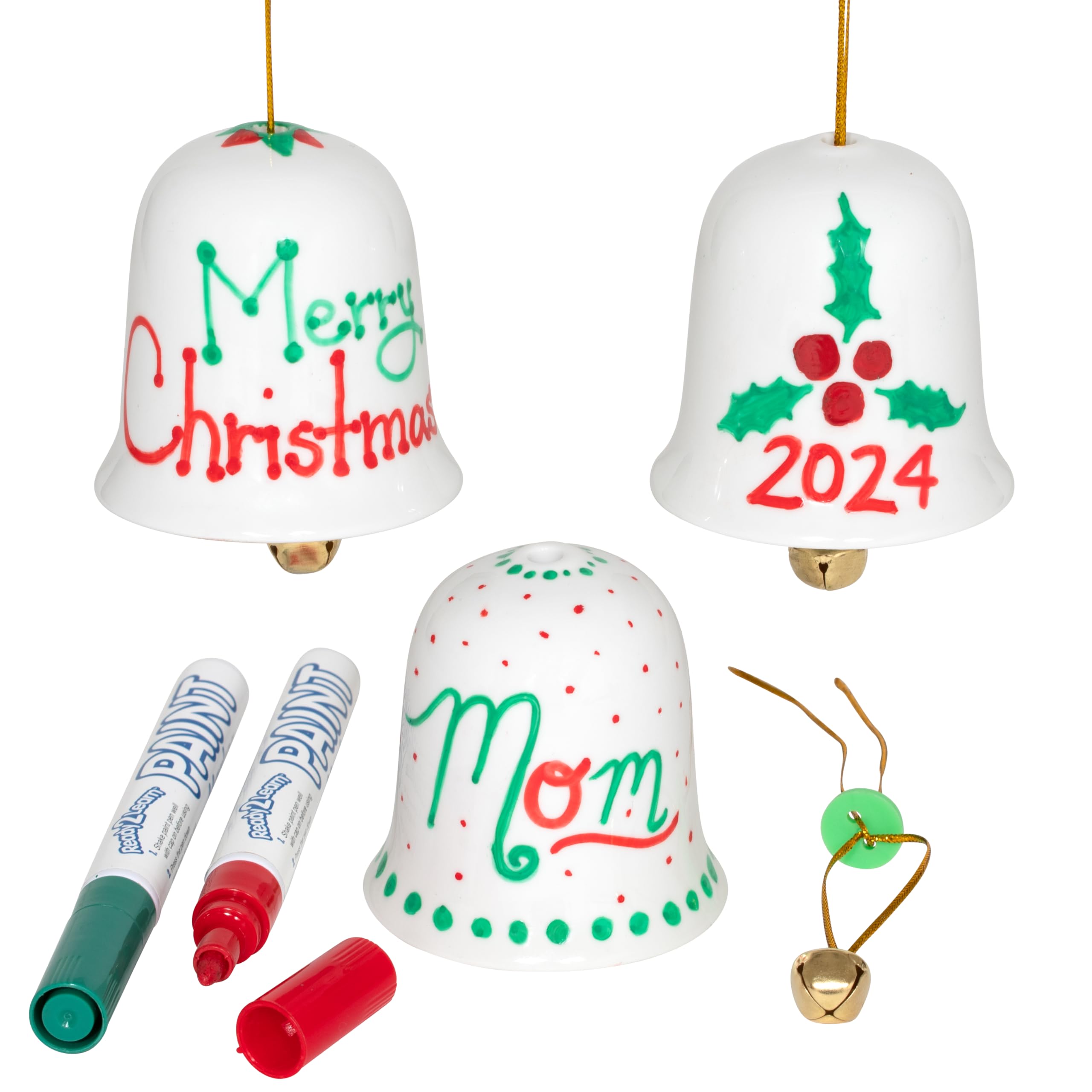
The included red and green suit simple Christmas marks. A name, short greeting, few dots or a small branch motif can be enough. Trying to reproduce a detailed supplier example can turn a relaxed activity into a frustrating drawing task. Let each bell be recognizably different without requiring every surface to be filled.
Check the READY 2 LEARN porcelain bell kit on Amazon for its exact contents and supplied guidance. This is a craft kit, not a set of three finished ornaments carrying ready-printed 2026 messages.
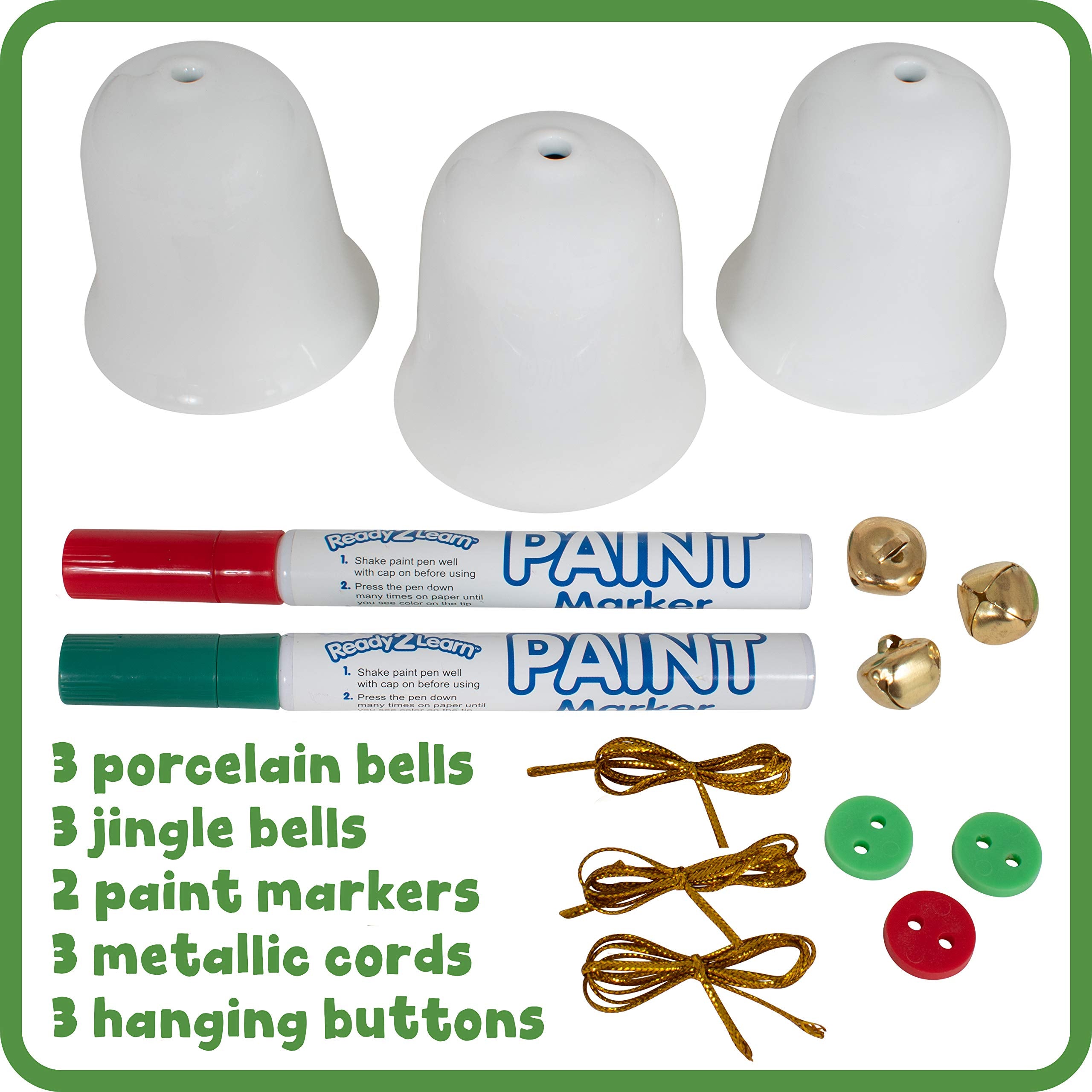
What is described in the kit
| Component | Described quantity or role | Household implication |
|---|---|---|
| Porcelain bells | Three blank decorative surfaces | Plan designs around a fixed number of pieces |
| Markers | Red and green | Expect color sharing rather than a marker per person |
| Small jingle bells | Three described | Adult should account for loose attachment pieces |
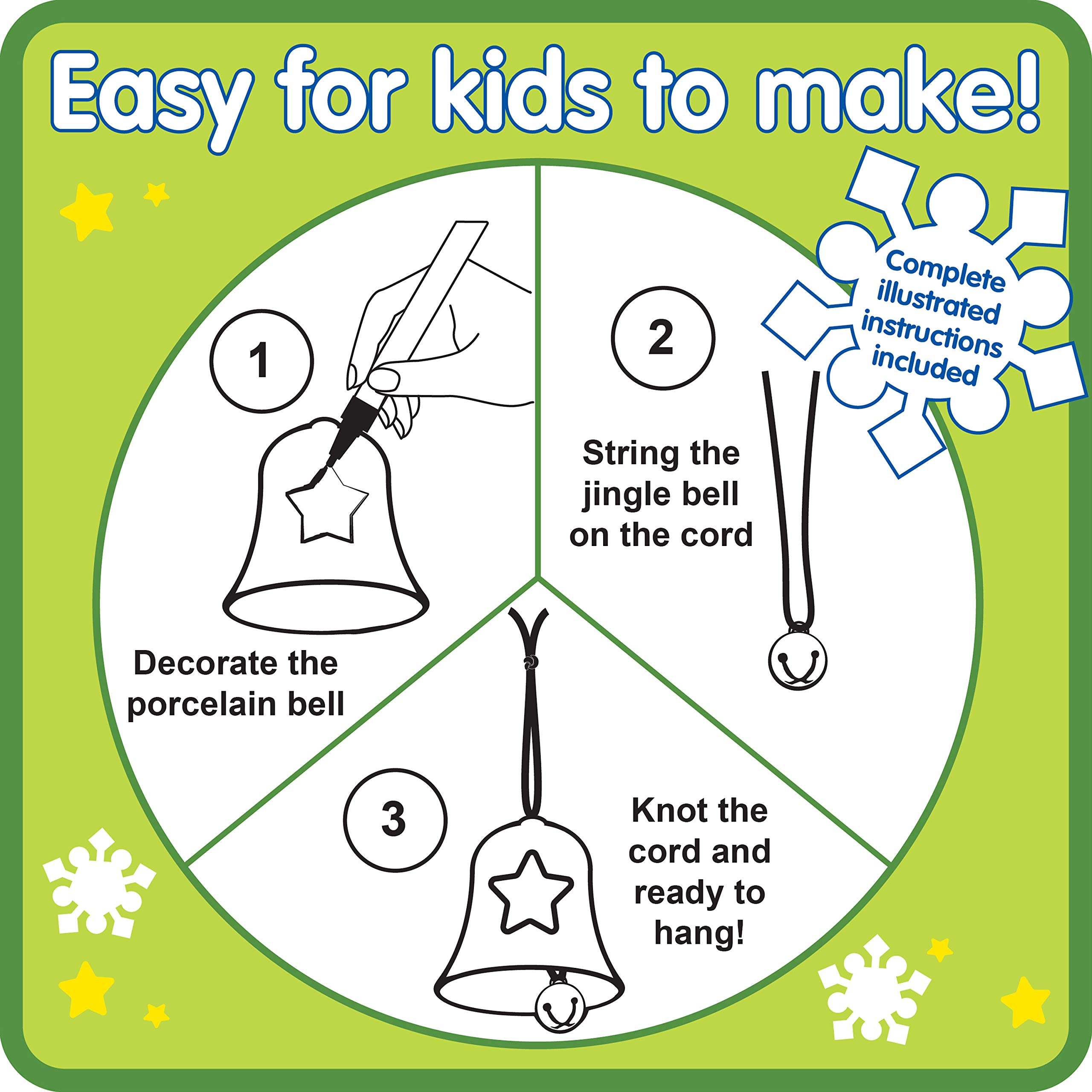
| Cord and hanging buttons | Assembly components | Follow the illustrated instructions |
| Instructions | Illustrated sequence | Read before beginning the drawing activity |
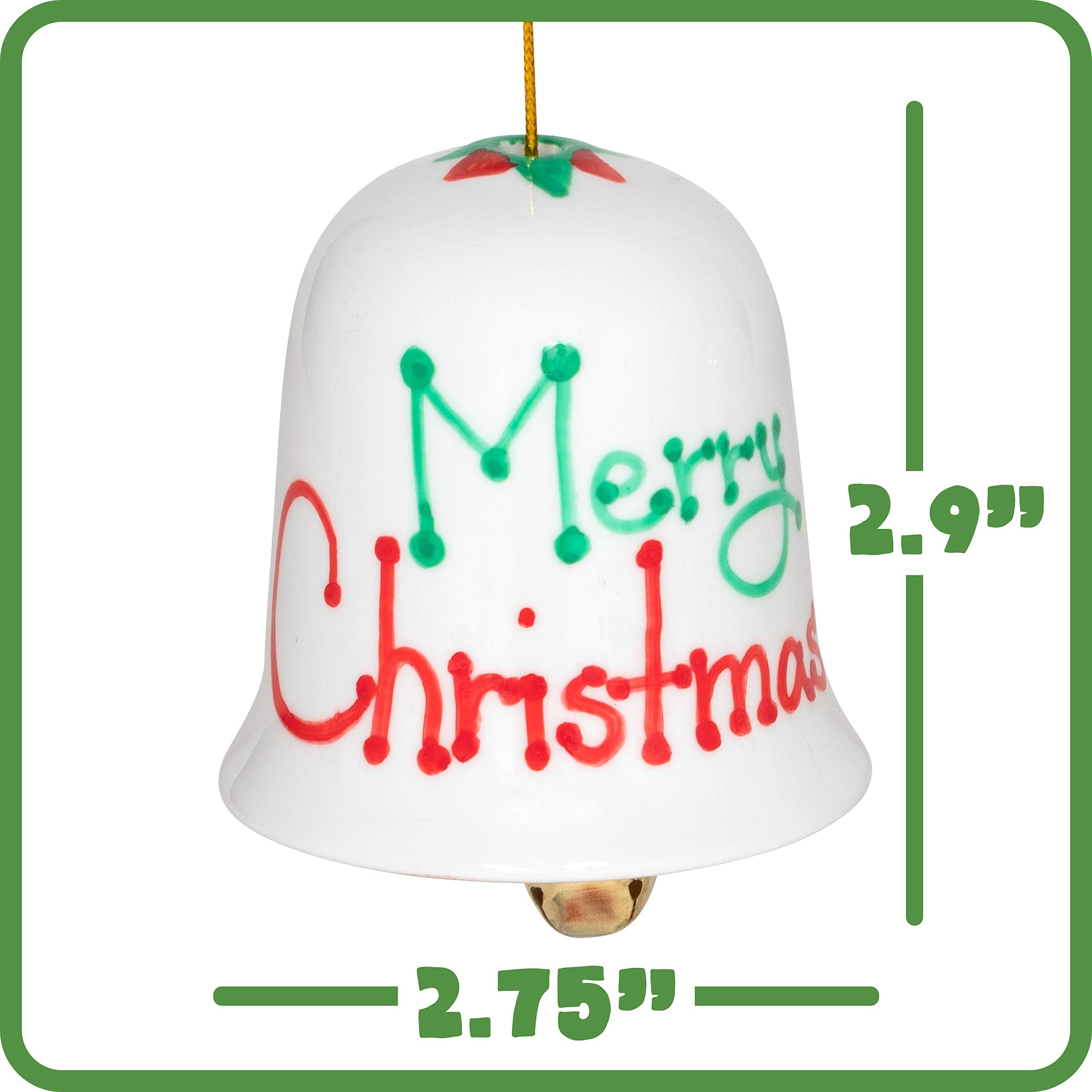
The supplier’s diagram shows a bell at approximately 2.9 inches high and 2.75 inches wide. Treat that as an indication of the drawing scale, and confirm the delivered piece before planning a long name or greeting. The photographs also contain example handwriting, including an earlier year. Those are design examples; the household chooses its own wording for Christmas 2026.
Product text promotes child-friendly and non-toxic materials. We have not independently verified those claims or determined suitability for a particular child. Follow the kit’s actual age guidance and warnings, and consider the child’s handling of a breakable ceramic object. A label is part of the decision, rather than a reason to leave the materials unattended.
Make a temporary craft position in the kids’ room
Choose a stable protected drawing surface that can be cleared completely when the session ends. Keep the bed available for its normal purpose. A sleeping surface is an awkward place to manage a round porcelain object and open marker caps. If there is no suitable surface in the room, complete the craft in another supervised area and return only the finished display later.
Prepare a few small spaces: one for blank bells, one for the item being decorated and one for finished pieces while they are handled according to the instructions. An adult can keep the small bells and cord separate until the drawing is ready for the attachment stage. This makes missing pieces easier to notice.
Our guide to art supplies without a permanent craft room explains how to create a short-lived activity area that returns to ordinary use. This kit fits that approach better than keeping an entire seasonal craft station open for weeks.
Marker sharing is part of the session
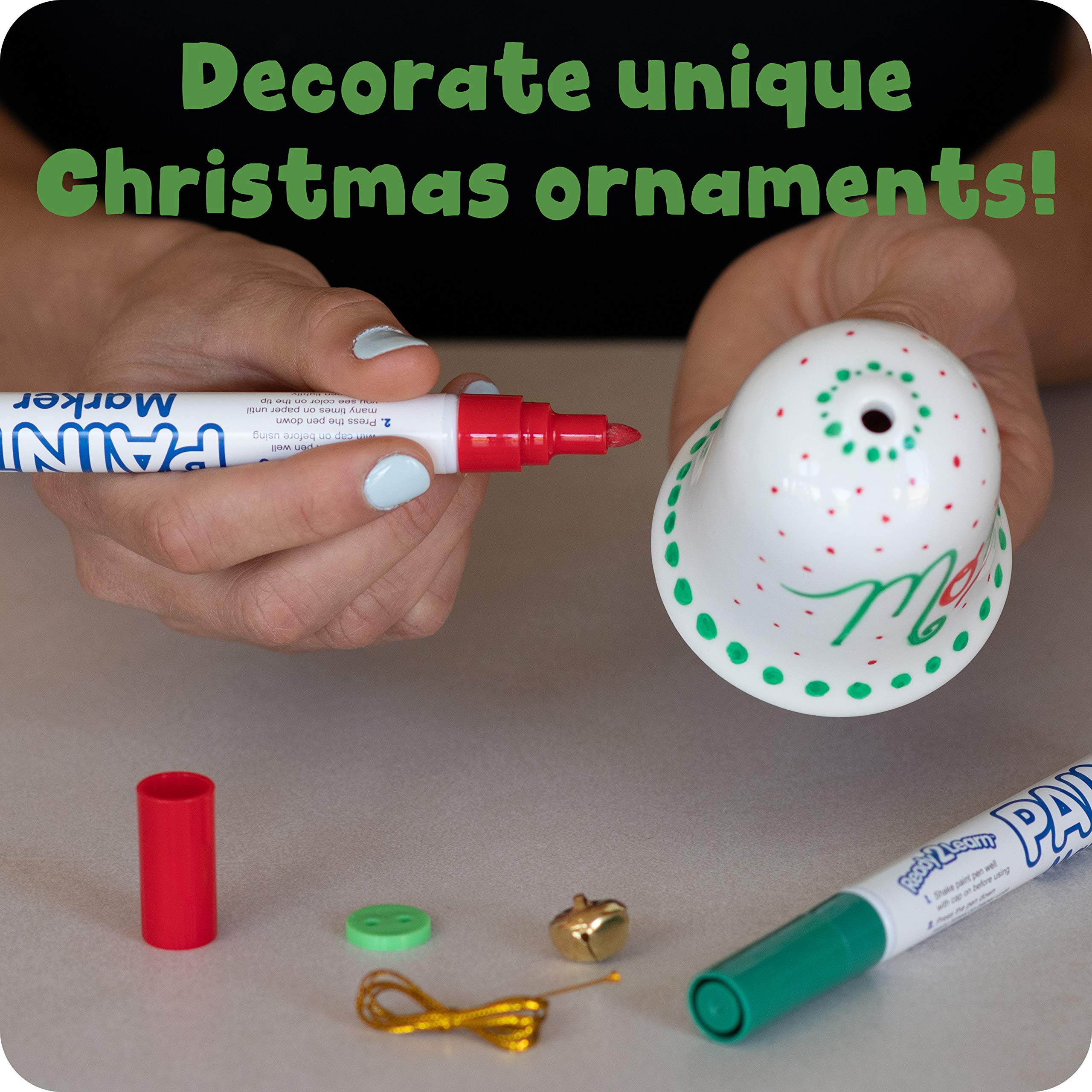
With three bells and two colors, participants need a simple sharing arrangement. One person can sketch a red outline while another adds green marks, then they exchange colors. Another option is to choose the message first and take turns drawing it. Decide the rhythm according to the participants rather than promising that a kit automatically keeps everybody occupied independently.
Use a separate paper practice sheet to test the size of a name or short message before moving to the porcelain. That does not establish marker performance on the bell; it simply lets the writer see how much space the lettering needs. Keep to the supplied marker and drying instructions, and avoid introducing additional paints or a baking step without the manufacturer’s direction.
A predictable finish can be more helpful than a rigid time limit. The comparison of visual timers for family routines discusses one way of making a session’s remaining time visible. A timer is optional and separate; the bell kit does not include one.
Display the finished ornaments as keepsakes
An adult should manage the final cord assembly and choose suitable support in line with the instructions. A finished porcelain bell is still breakable. It should not hang where it can be repeatedly struck by a door, pulled from a climbing position or mixed into a pile of ordinary toys.
If a bedroom has its own seasonal display, keep the ornament within the chosen decorating area and away from the sleep and dressing routes. Our guide to sleep, dress and play zones helps decide which area can accommodate an adult-managed keepsake.
The value of the finished piece can be its handwritten message rather than a dense collection of extra embellishments. Leave room to see it. A bell marked with a family member’s name may be more meaningful than a generic holiday pattern, but the recipient’s preferences should still guide whether it becomes a gift.

How this compares with other ornament activities
| Activity | Good fit | Main tradeoff |
|---|---|---|
| Porcelain bell kit | You want a small completed keepsake | Breakable material and loose assembly pieces |
| Paper drawing ornaments | You want an inexpensive drawing activity | Different appearance and usually less rigid display |
| Premade ornaments | You want decoration with no craft session | No personal drawing experience |
This is an activity comparison, not a tested ranking of other kits. Choose porcelain when the household wants that particular finished material and can manage it. Paper is a reasonable alternative when handling and cleanup need to stay simpler. Premade ornaments are useful when the actual aim is decorating rather than making.
After the activity, close the markers as directed, account for remaining small components and return the work surface to normal. A dedicated craft zone that packs away offers a useful model if siblings or adults share the room at different times.
Is it worth considering for Christmas 2026?
The CE10022 kit is a reasonable candidate for a supervised small ornament project when three pieces are enough and the household wants porcelain keepsakes. Skip it when you need unbreakable decorations, a large group activity without sharing materials or an activity that can be left unattended. Its appeal comes from a contained personal project, not from unverified claims about developmental benefits.
Our family-home product buying guides provide context for choosing by household task. Before ordering, confirm the exact kit and packaging guidance. Keep the project small, preserve the children’s own designs and choose an adult-managed display location for the result.