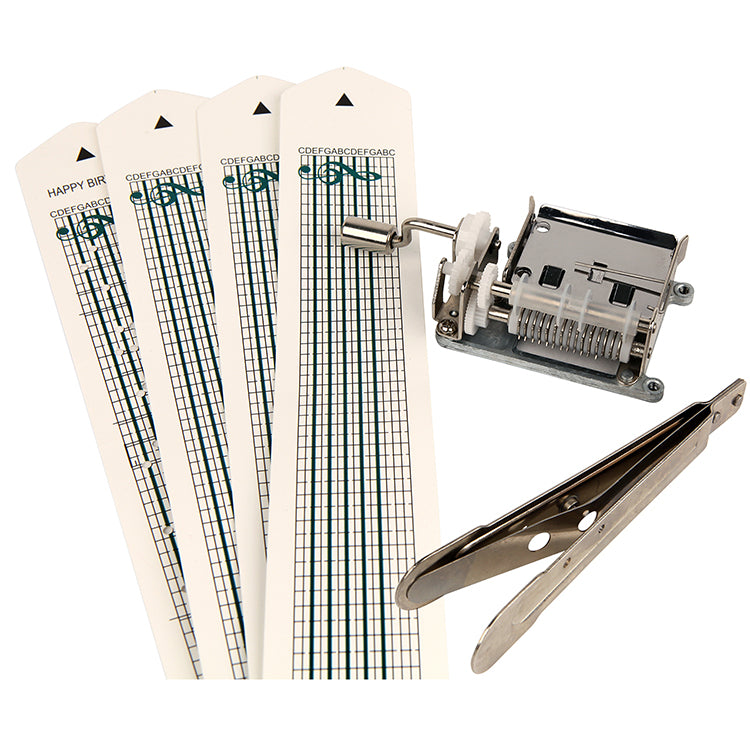
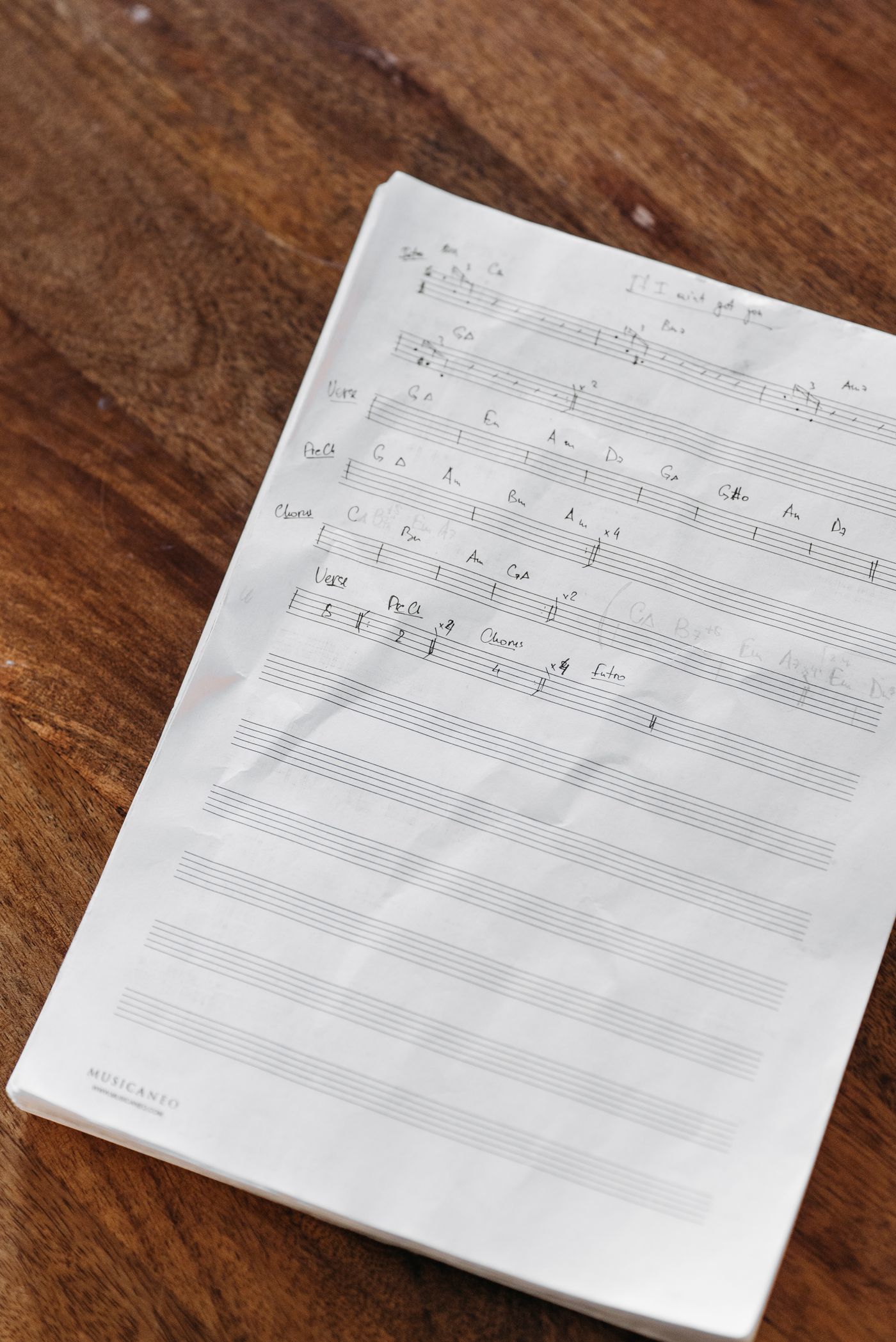
The Kikkerland 1200 Music Box Kit makes sense as a small hands-on composition project, rather than a finished ornament that plays by itself. You plan a melody, punch a suitable paper strip, and turn the mechanism to hear it. The useful buying question is whether you will enjoy that repeated making-and-revising process in the shared room where the kit will live.
This research-based review covers ASIN B000HAUEFY, identified on Amazon as the Silver Make Your Own Music Box Kit and by Kikkerland as SKU 1200. The records and gallery were checked October 16, 2026. We have not assembled or operated the kit, measured its output, verified its available pitches, or tested a punched melody.
Affiliate disclosure: As an Amazon Associate, Small Home Rhythm earns from qualifying purchases.
Pinterest’s fall 2026 report highlights hands-on hobbies. This kit is one editorial example of an activity that fits that interest; the report does not establish that the particular ASIN is trending. A musical activity you already enjoy may be the better choice if the paper-punching process itself has little appeal.
Identify the composition kit rather than a finished tune
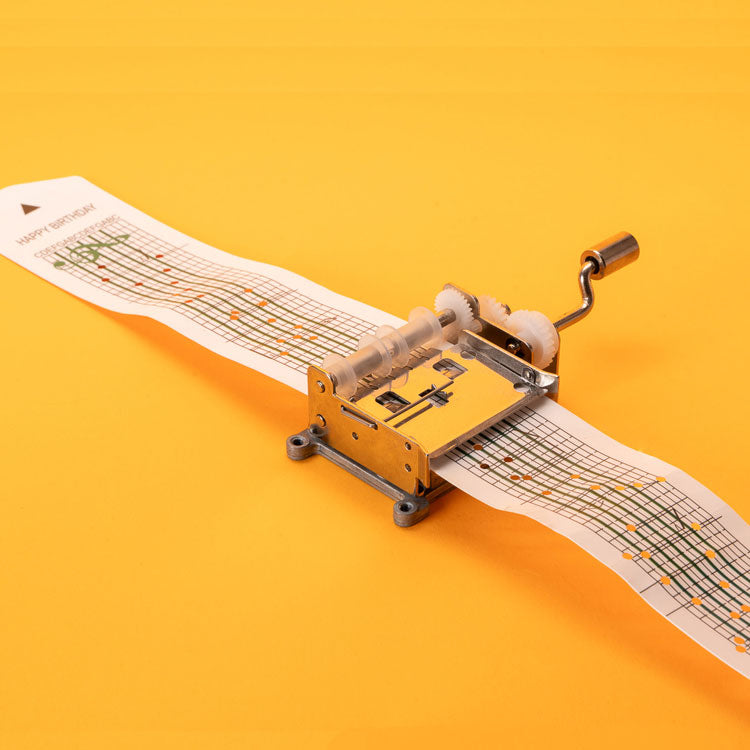
Kikkerland sells several music-box formats. The reviewed kit uses a mechanism with paper strips and a separate punch, rather than a fixed-tune crank box selected by song title. Its own product page identifies the 1200 model and describes creating melodies by punching the supplied music paper.
Match the current Amazon selection to that identity. Check the model, included parts, and seller’s current description. A photograph of a small metal mechanism alone is not enough to distinguish every version in a wider music-box collection.
The maker’s page says an instruction booklet and a Happy Birthday melody are included to help users begin. Keep those as supplied-record details, not proof that we have checked the package contents or successfully played the sample. Verify the contents of the current offer before ordering.
| Selected record detail | Specification or limit |
|---|---|
| Model | Kikkerland 1200, Silver |
| ASIN | B000HAUEFY |
| Format | Hand-cranked mechanism using punched music strips |
| Maker identifies | Punch, music paper, starting melody, instruction booklet |
| Refill | Separate Kikkerland 1200-R paper, five pieces |
| Unverified | Note system, tuning, output, strip dimensions, and hands-on performance |
Decide whether you want an activity or an object
A finished music box can be appreciated by turning a crank or opening its intended mechanism. This kit adds the decisions involved in making a strip. That additional work is the appeal for some people and the reason to skip it for others.
Imagine the ordinary session: clearing a suitable area, choosing a small musical idea, working on paper, listening, and putting everything away. If only the final tune interests you, the process may feel like an obstacle. If small revisions and discoveries are enjoyable, the kit has a clearer role.
Do not buy it as a promise that another household member will develop a new hobby. A gift can be thoughtful when it matches an existing interest, but a creative kit also gives the recipient tools, paper, and an unfinished task. Ask about the activity where appropriate instead of inferring enthusiasm from an interest in music generally.
Confirm the musical limits before choosing a melody
Ask for the current instructions and available note information if a particular melody is central to the purchase. Do not assume that the mechanism reproduces every pitch, rhythm, or accompaniment a full instrument can play. The maker’s broad creative description does not establish unrestricted musical capability.
We have not verified the tuning, note range, maximum useful strip length, or the way closely spaced repeated notes behave on this unit. Those questions matter more than the outer appearance if you are trying to realize a specific musical idea. Obtain reliable model information before committing to that result.
For a different kind of music-making space, our digital-keyboard practice-corner guide considers the room around an instrument. A keyboard setup and this paper mechanism solve different needs. Choose between the activities themselves before deciding that the smaller object is automatically the better fit.
Start with a short idea and the supplied directions
If you buy the kit, begin with the instructions and the included starting material. Follow the maker’s sequence for positioning the strip, punching, feeding, and operating the mechanism. Do not force the paper or crank in response to uncertainty about the intended movement.
A short original musical idea is a more manageable first project than an ambitious arrangement. You can learn how the physical process relates to the sound without preparing a long strip before discovering a mistake. This is a proposed approach, not a result from our own use of the kit.
Keep a brief working note so you can identify what changed between attempts. It might distinguish a first draft from a revised spacing decision or record a question for the maker. The note should help you continue rather than become a large separate composition diary you never consult.
Give the paper a complete working area
The mechanism is only one part of the footprint. Include room for a strip before it enters, space for it afterward, the punch, the instructions, and your hands. A small product photograph cannot establish how much clear surface your project needs.
Try a paper outline on the intended table before purchasing if space is particularly limited. Keep drinks, food, and unrelated work papers out of the task area. Do not operate the kit at the edge of a crowded shared desk simply because the mechanism itself appears to fit.
Our pack-away hobby-zone guide helps connect the working area to a realistic closing routine. The useful setup can be temporary, but it still needs a suitable surface during use. Returning the kit should not depend on someone else clearing your partly finished paper from the next meal’s place.
Keep the punch and mechanism within their intended use
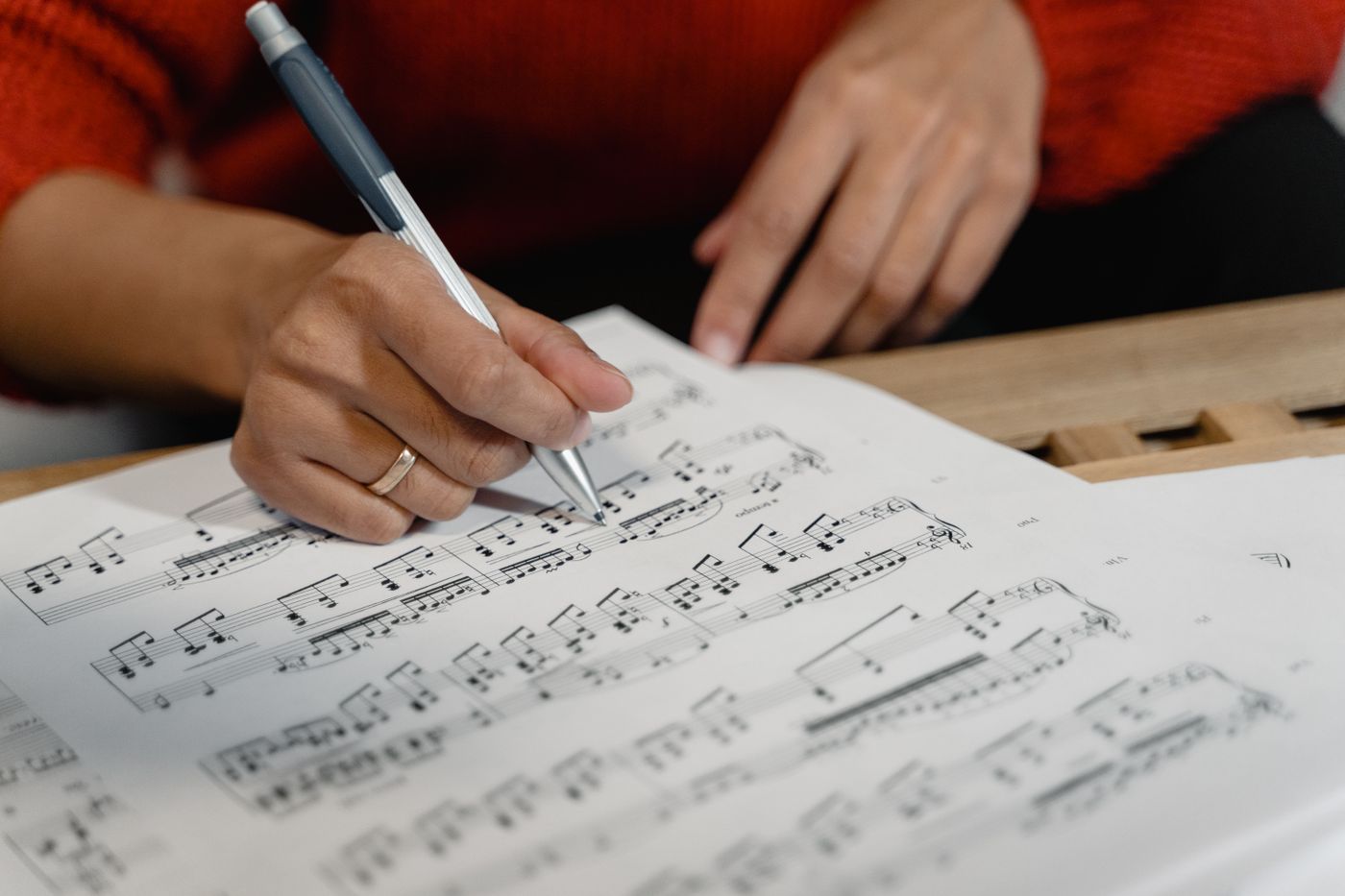
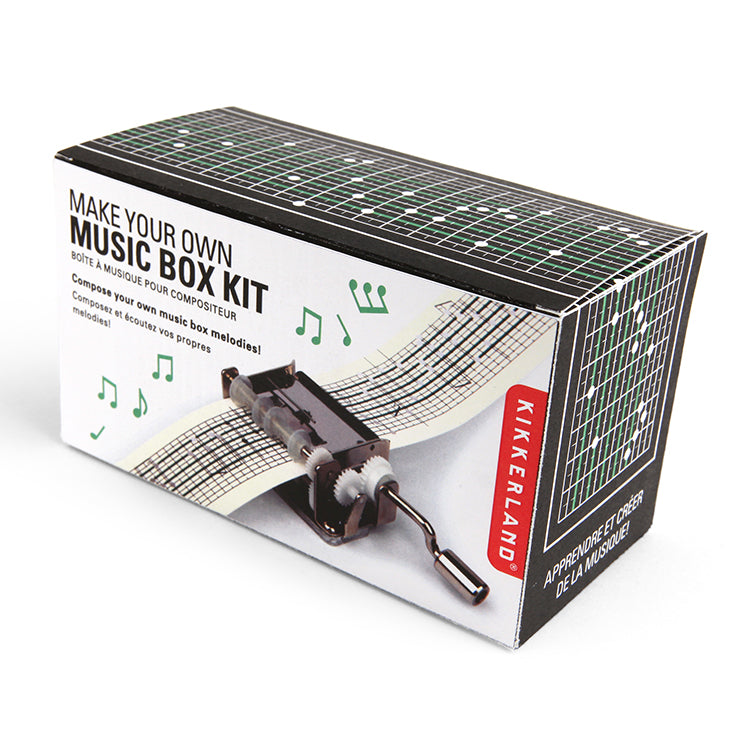
Follow the current instructions for the supplied punch and the material it is designed to process. Do not assume a different card thickness, plastic strip, or improvised sheet will pass through the mechanism appropriately. A sheet of ordinary music notation in an illustrative photo is not compatible refill paper.
Check the maker’s age, handling, and supervision information before involving children. The product’s small size does not establish that its tool or mechanism is suitable for every child. An adult-focused craft review should not be read as an age recommendation.
Avoid adding a decorative enclosure, glue, oil, or a mechanical modification based only on what another project photo shows. Ask for approved methods where needed. We have not tested mounting, cleaning, repair, or changes to the mechanism, and do not treat a cosmetic customization as essential to using the kit.
Store drafts so they remain understandable
Keep the supplied instructions, relevant working strips, and a modest project note together. Identify versions clearly enough that the next session begins with the right strip. A collection of almost-identical punched pieces can become confusing even when it fits in a small box.
Choose storage suitable for the paper and the tool, following their instructions. Keep the punch from moving loosely against a delicate strip. Do not force finished paper into a tight container just to make the whole project occupy the mechanism’s apparent footprint.
Our drawer-organizer review is relevant if you are considering a compartmented return position. Confirm the actual kit and paper fit rather than assuming a clothing-organizer product is a purpose-made music-box case. An existing suitable container may be enough for one modest project.
Include refill paper in the ownership decision
Kikkerland lists a separate five-piece refill product under SKU 1200-R for its mechanical music-box set. That establishes a named refill option, not a current Amazon price, guaranteed stock, or a promise that any similarly printed strip is compatible.
Check the current refill specification and availability before choosing the kit for frequent experimentation. If most sessions will involve several drafts, ongoing paper use is part of the activity. You do not need a large stockpile, but you should know how you intend to replace a genuine consumable.
Do not turn the advertised refill count into a fixed number of complete songs. Your layout, revisions, and the product’s actual directions determine how the material is used. We have not measured the paper supplied or calculated a cost per finished tune.
Agree when sound belongs in the shared room
Repeated listening and revisions may be enjoyable to the maker while interrupting someone else’s quiet activity. Agree a sensible session time and an appropriate place. The kit’s small footprint does not tell you how its sound will carry through your home.
We have not measured loudness, tone, or the effect of a particular supporting surface. Do not buy around a promised therapeutic or relaxation benefit. Judge the activity by whether you want to make and hear short melodies, with no health outcome implied.
If you mainly want a musical atmosphere without making the music, our YINMIT vinyl-rack review addresses storage for a different listening activity in a shared room. You may already have a suitable way to listen. The comparison is between an active paper project and enjoying existing music, not a claim that a rack replaces the kit’s mechanism.
A process-first verdict
Consider the 1200 if you enjoy experimenting by hand, accept a modest musical scope after checking its details, and can give the paper and tool a clear working and return position. Skip it if you want automatic playback, a completed decorative box, or a guarantee that a particular complex melody can be reproduced.
You can check the Kikkerland 1200 Music Box Kit on Amazon using the exact ASIN. Verify the current seller, included components, model information, price, and returns. We do not quote a live offer or interpret customer ratings as evidence of our own listening experience.
The strongest reason to choose the kit is enthusiasm for making the strip, hearing it, and revising it. After confirming the note system and paper requirements, compare the current Silver Kikkerland 1200 kit offer on Amazon with a finished music box and the musical activities you already own. Let the intended experience decide whether this small project deserves a place in the shared room.
Explore related household decisions in our Buying Guides hub.
Sources and editorial scope
Editorial research checked October 16, 2026. Trend-report dates and limitations are stated in the article; these are editorial applications of published signals, not verified October keyword rankings. Research-based product assessment; no hands-on testing, current price, stock, or customer-consensus claim.