A dressing shaker combines mixing, pouring, and storage in one container. That can be useful when homemade dressing is part of your regular meal routine, but it can also duplicate a screw-top jar that already works. The OXO Good Grips 1.5-cup shaker and Whiskware 2.5-cup glass mixer are worth comparing by batch size, material, extra parts, and where the container will live between meals. For the broader setup, OXO Squeeze & Pour vs. Pyrex 2-Cup Measuring Cup: Flexible Body or Glass Handle? is a useful next read.
The OXO is the smaller linked option with a lever-controlled pour opening. The Whiskware glass model has a larger stated capacity and a removable BlenderBall mixing accessory. Start with the OXO for smaller batches and fewer loose mixing parts. Consider the Whiskware when its capacity and glass construction serve a regular routine and you are comfortable managing the additional component.
Research scope: We checked the exact listings and manufacturer information. We have not mixed dressing with these products, tested their seals, timed separation, or compared pouring accuracy. The recommendations are household decision analysis, not hands-on findings. Affiliate disclosure: As an Amazon Associate, we earn from qualifying purchases.
Check the material and capacity in the selected offer
The OXO linked here is the large 1.5-cup Good Grips shaker, ASIN B003L0OOR6. “Large” distinguishes it within OXO’s range; it does not mean it is larger than the Whiskware model. The Whiskware linked here is the glass White/Red mixer, ASIN B07GC9S4VQ, with a listed 2.5-cup capacity.
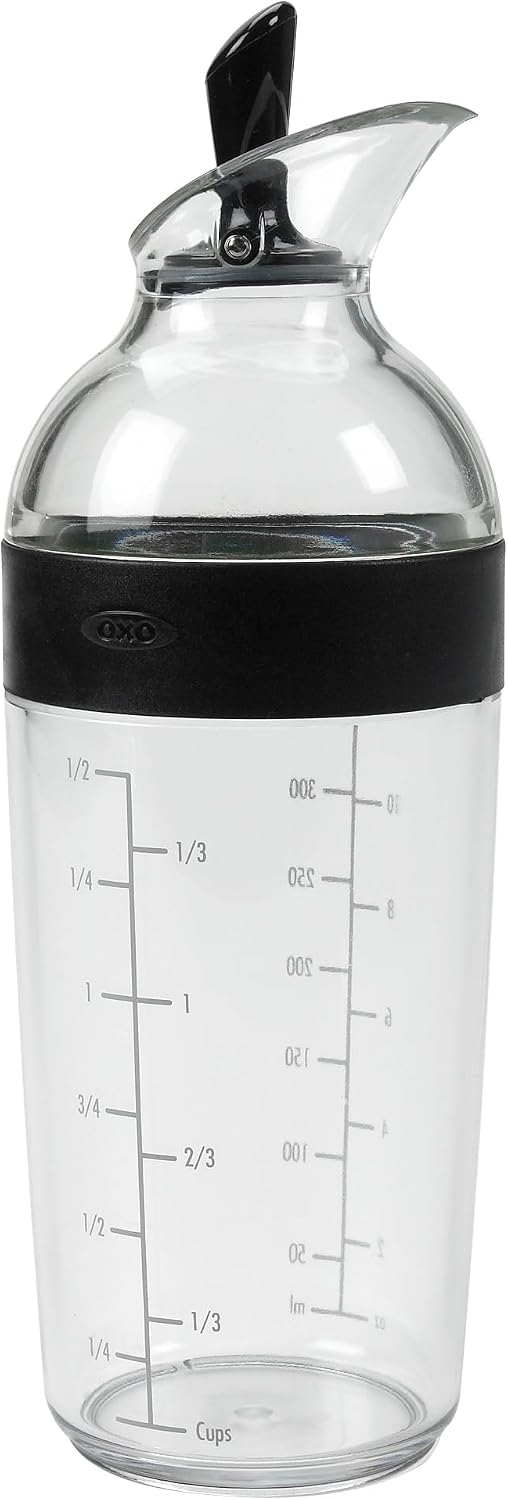
Check OXO’s 1.5-cup dressing shaker on Amazon.
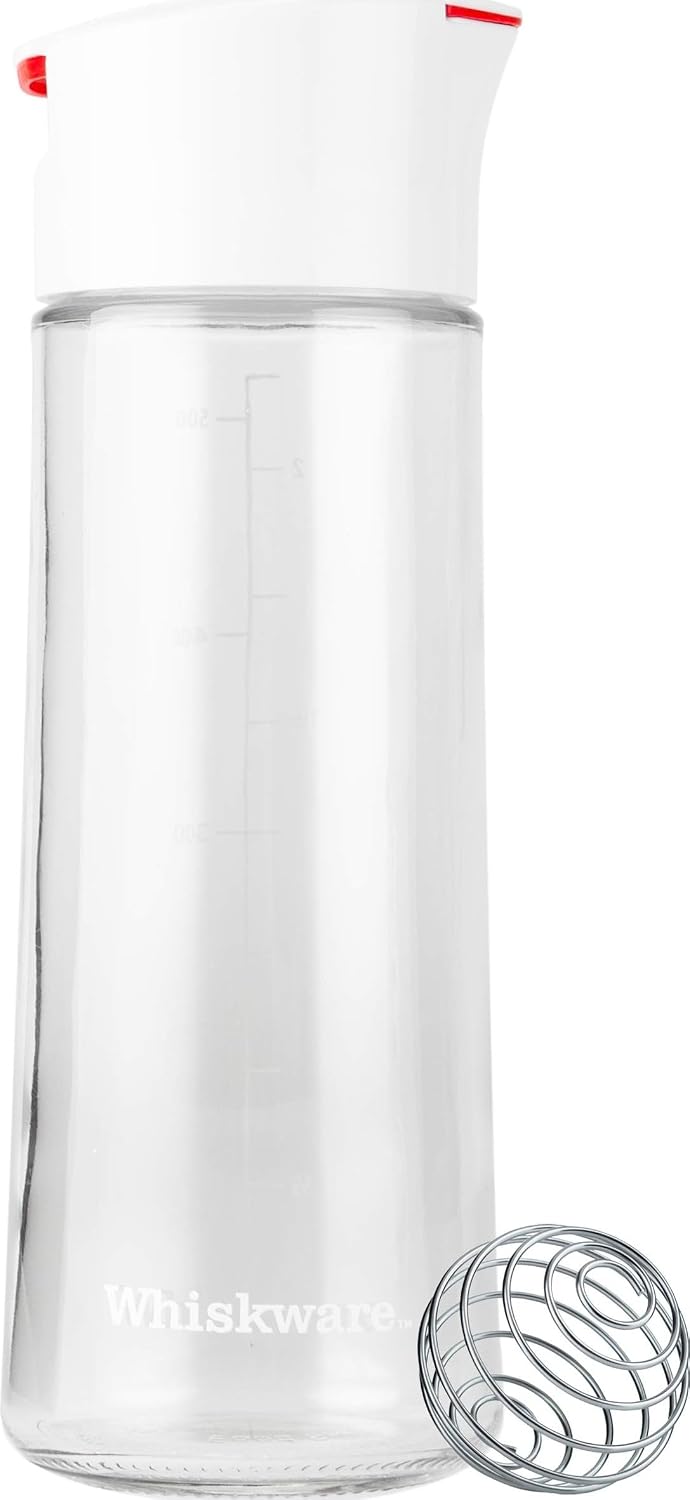
Check the Whiskware glass dressing mixer on Amazon.
Whiskware also offers plastic versions. Do not assume a review of one material applies to the other, or that every photograph in a product family represents the offer selected at checkout. Confirm the actual material, model, capacity, and included BlenderBall in the written offer.
Choose the batch before choosing the bottle
Look at the amount of dressing you actually prepare and use under appropriate food-storage guidance. A larger container can accommodate a larger batch, but that does not make a larger batch sensible for your household. This comparison does not establish storage times for homemade dressings or make an ingredient combination safe to keep.
For one small meal, a broad spare capacity may simply occupy fridge space. For repeated meals using a suitable recipe and storage routine, capacity can matter more. Compare the amount you intend to make with the product’s operating instructions, including the space required for mixing rather than assuming the nominal capacity is a recommended fill level.
Our guide to organizing a small family fridge helps assess where the container belongs. A bottle should have a stable, accessible home that fits the household’s actual food-storage needs.
What the OXO’s smaller design offers
OXO lists a wide opening, measurement markings, a one-handed lever, and dishwasher-safe care for the linked shaker. Its practical appeal is a compact set of functions without a separate mixing ball. You still need to load ingredients, assemble the closure correctly, and clean the parts according to the instructions. For the broader setup, Microplane Premium Classic vs. OXO Etched Zester: Fine Grating, Care, and Drawer Fit is a useful next read.
The wide opening may make loading and cleaning more convenient than a narrow-necked bottle, but we did not test particular brushes, ingredients, or hand sizes. If your current jar already has a useful opening, that feature alone may not justify a dedicated purchase.
OXO describes the seal as leakproof. Treat that as the manufacturer’s claim, not a result we independently verified. Confirm proper assembly and use the product as instructed. Do not assume a tabletop pouring container is automatically suitable for being thrown into a school bag or transported in every orientation.
What Whiskware’s BlenderBall changes
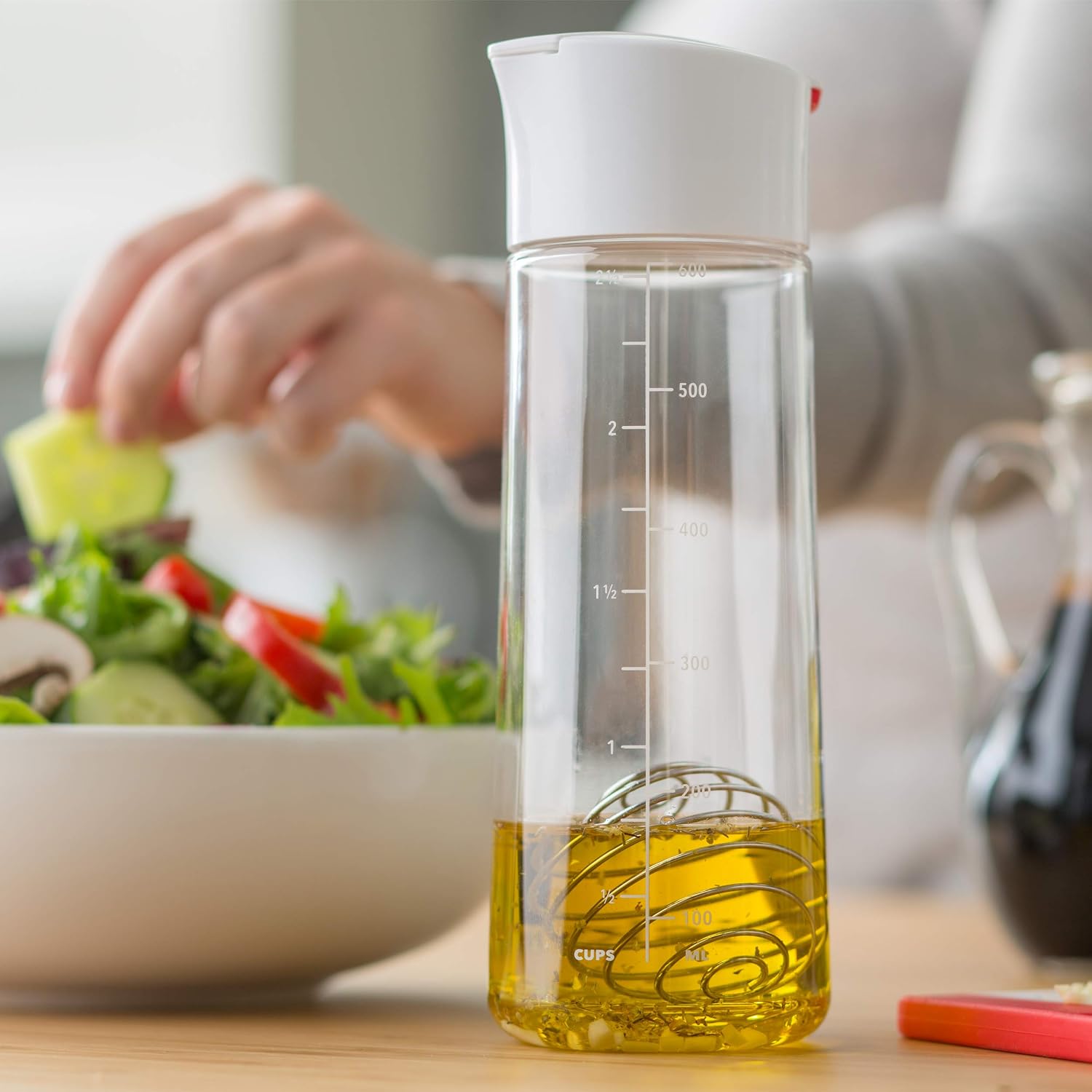
Whiskware uses a removable wire mixing ball and describes it as helping combine dressing ingredients. The extra part is the clearest difference from a simple shaker. It must be included when appropriate, cleaned, and accounted for afterward; otherwise the feature you purchased is absent from the next batch.
The brand makes a claim about keeping oil and vinegar mixed for up to an hour. We have not verified that claim and do not apply it to every recipe. Separation depends on ingredients, proportions, preparation, and other conditions. A product description is not enough to promise how your dressing will behave at the table.
The glass variant also changes handling. Glass can break, and the chosen container must suit the people, surfaces, and transport involved. We did not perform drop, impact, or temperature-change tests. Follow the manufacturer’s limitations and do not treat a glass mixer as interchangeable with a plastic travel bottle.
Check the route from fridge to table
Think through removing the container, remixing if needed, serving, and returning it to the appropriate location. If those steps already work with a jar, the dedicated shaker should improve a named part of the route, such as controlled pouring or reading measurements during preparation.
At a crowded family table, check how the container will be handled and where it will stand. Do not assume a one-handed opening means every child can use it appropriately. Adults should select and manage tableware according to the household’s needs and the product instructions.
For the rest of the serving surface, our guide to a dining table with several jobs shows how to preserve useful space. A dressing bottle should join a manageable serving set, not create a permanent cluster of condiments, utensils, and packaging.
Read measurement markings as a convenience
Both linked products include markings for ingredients. They can simplify preparation by reducing the number of containers involved, but we have not verified measurement accuracy or compared the markings with calibrated equipment. Follow your recipe’s requirements when precision matters.
Consider whether the numbers are practical for your normal batch. A tall bottle with markings far above the amount you prepare may be less useful than a smaller container. Conversely, a small shaker may require two batches for your ordinary meal. The right match depends on actual quantities rather than the most impressive capacity on the listing.
You can assess the routine before purchasing by making the usual recipe with your existing equipment and noting which handoff causes work. If measuring is already easy and pouring is the only problem, focus the purchase on that function rather than paying for a larger mixer you do not need.
Count cleaning parts, not just containers
Follow the care instructions for the bottle, closure, seal, and mixing accessory. A general dishwasher-safe statement does not remove the need to understand disassembly and the permitted placement of each component. Check the maker’s current instructions rather than copying a method from a different model.
Make sure you can reach and clean the areas the instructions require. Dressing may collect around an opening or closure, and a bottle that looks empty can still need attention. We have not tested residue removal or cleaning time for either product.
Let the parts dry appropriately before reassembly and storage. Keep the BlenderBall identifiable with its own product rather than adding it to a drawer of unrelated wire utensils. For a small household, the best container is one whose cleanup is easy to finish, not merely one that replaces a mixing bowl at the beginning.
Keep an existing jar in the comparison
A suitable jar with a compatible closure may already serve your mixing and storage routine. Check that it is appropriate for the intended food and use, and do not assume every reused packaging jar is suitable for shaking or repeated storage. If the existing solution is appropriate and works comfortably, buying nothing is a legitimate decision.
A dedicated shaker is more compelling when you can identify the improvement: a more useful pour control, better suited batch capacity, or a mixing component you will use consistently. It is less compelling when the purchase simply makes the routine look more complete.
The same reasoning guides our test before buying an organizer: identify the failed action, then choose equipment that addresses it. A product should solve the problem you have observed rather than create a reason to store another object.
Our purchase recommendation
| Your need | Starting point | Important limit |
|---|---|---|
| Smaller batches and no separate mixing accessory | OXO 1.5-cup | Confirm usable fill and storage space |
| Larger compatible batches and a preference for glass | Whiskware glass 2.5-cup | Account for glass handling and the BlenderBall |
| An appropriate jar already works | Keep the jar | A dedicated shaker needs a specific advantage |
| A carrier for dressing in a lunch bag | Check a purpose-suited option | Tabletop seals are not our verified transport test |
We would start with OXO for a smaller household batch and a simpler parts routine. We would choose the linked Whiskware only when the larger capacity and glass variant serve an actual preference and the extra part is manageable. Neither receives a performance score because we did not test emulsification, seals, or pouring. You may also find OXO Squeeze Bottles Review: Better Sauce Service or Extra Washing? useful for a closely related small-home problem.
Sources, current offers, and evidence limits
The linked Amazon listings, OXO’s shaker page, and Whiskware’s product information identify the products and listed features. Whiskware’s care guidance explains the maker’s handling approach. Confirm the selected offer’s seller, delivered price, material, and return terms; we do not quote a live price or guarantee availability.
Product photographs come from the linked listings and do not show our own kitchen tests. Explore Kitchen ideas and Buying Guides for the wider routine. A shaker earns its place when its batch size, handling, and cleanup fit the meals you actually make.