As an Amazon Associate, I earn from qualifying purchases.
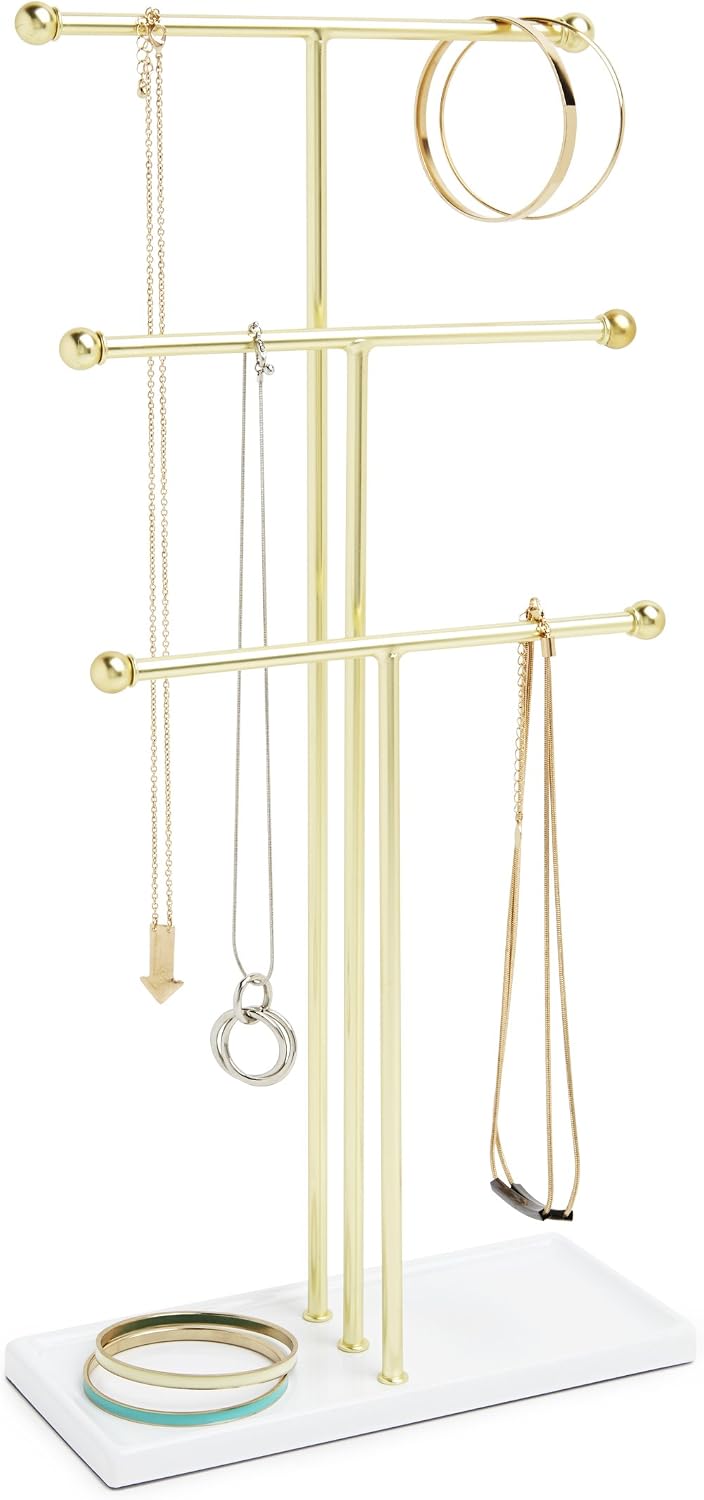
Umbra Trigem offers an open place to hang frequently worn necklaces and keep a few small items on a base. The useful buying question is whether its bar positions fit your own jewelry and dressing surface. For the Brass/White Amazon listing B010XG9TCU, there is an additional issue to resolve before ordering: the manufacturer’s current records do not give one consistent height.
Pinterest’s current creator trend page includes expressive, glamorous styling as seasonal context. That does not establish demand for this exact organizer or make an open stand suitable for every collection. This is a research-based assessment, not a hands-on test. We have not verified stability, surface protection, tangle prevention, or long-term finish performance.
Identify the listing and the unresolved dimensions
The linked Amazon record identifies Brass/White model 299330-524-REM. The current Umbra Trigem page lists SKU 1017310-524-REM, so the catalog identifiers should not be treated as a confirmed generation match. On that same maker page, descriptive copy gives a height of 19 inches while the specification section gives 17.13 inches. Those records were checked on October 23, 2026.
This conflict matters for a stand bought specifically for long necklaces or a tight shelf position. Do not choose one number simply because it makes the proposed arrangement fit. Ask the seller or maker to confirm the exact supplied model and complete dimensions, then check the return terms for your order. The photographs used here come from the linked Amazon listing; they do not resolve the differing current catalog records.
Decide whether open hanging solves your problem
An open stand can make a small frequently worn group visible at the dressing surface. It also leaves that group exposed to the room and requires an appropriate location. Consider whether your actual problem is remembering what you own, avoiding a mixed drawer, protecting pieces, or transporting them. These are different needs, and only some point naturally toward an open bar stand.
If your jewelry already has a workable home, try separating a small daily group before buying another object. You may discover that the useful change is reducing what sits on the dresser rather than adding a taller display. The small-bedroom jewelry storage guide helps distinguish those retrieval decisions from the appeal of a styled product photograph.
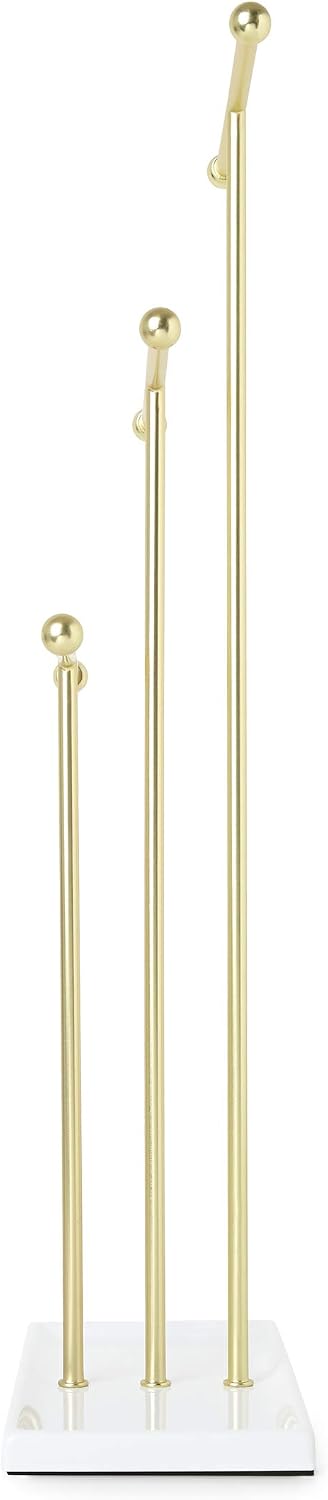
Check each necklace by its hanging drop
Use the actual necklace in the configuration in which you would hang it. Overall chain length is not the same as the downward distance from a bar to the bottom of a clasped necklace and pendant. A bulky pendant or an unusual clasp can change the arrangement. Compare the complete hanging drop with the confirmed usable clearance beneath the bar you intend to use.
Leave room to lift the piece off without dragging it across items below. Do not count a lower bar or the base as useful support unless that arrangement suits the jewelry’s own care guidance. If you must knot, double, or compress a delicate piece solely to make the stand fit, reconsider whether it is an appropriate organizer for that piece.
Evaluate the three-bar arrangement with a small collection
The tiered layout provides different hanging positions, but the number of bars is not a meaningful capacity guarantee. A few broad pieces can occupy more useful space than several fine chains, and pieces on adjacent levels may interact. Decide which specific items would live here and how each would be removed. Do not estimate capacity from a photograph filled with unrelated styling accessories.
Keep neighboring pieces separated enough for your own retrieval routine. The maker’s language about keeping jewelry organized should not be read as a verified promise that any quantity will remain tangle-free. We have not performed a loading or tangling test. A restrained daily selection is a more defensible use case than treating the stand as unlimited storage for an entire collection.
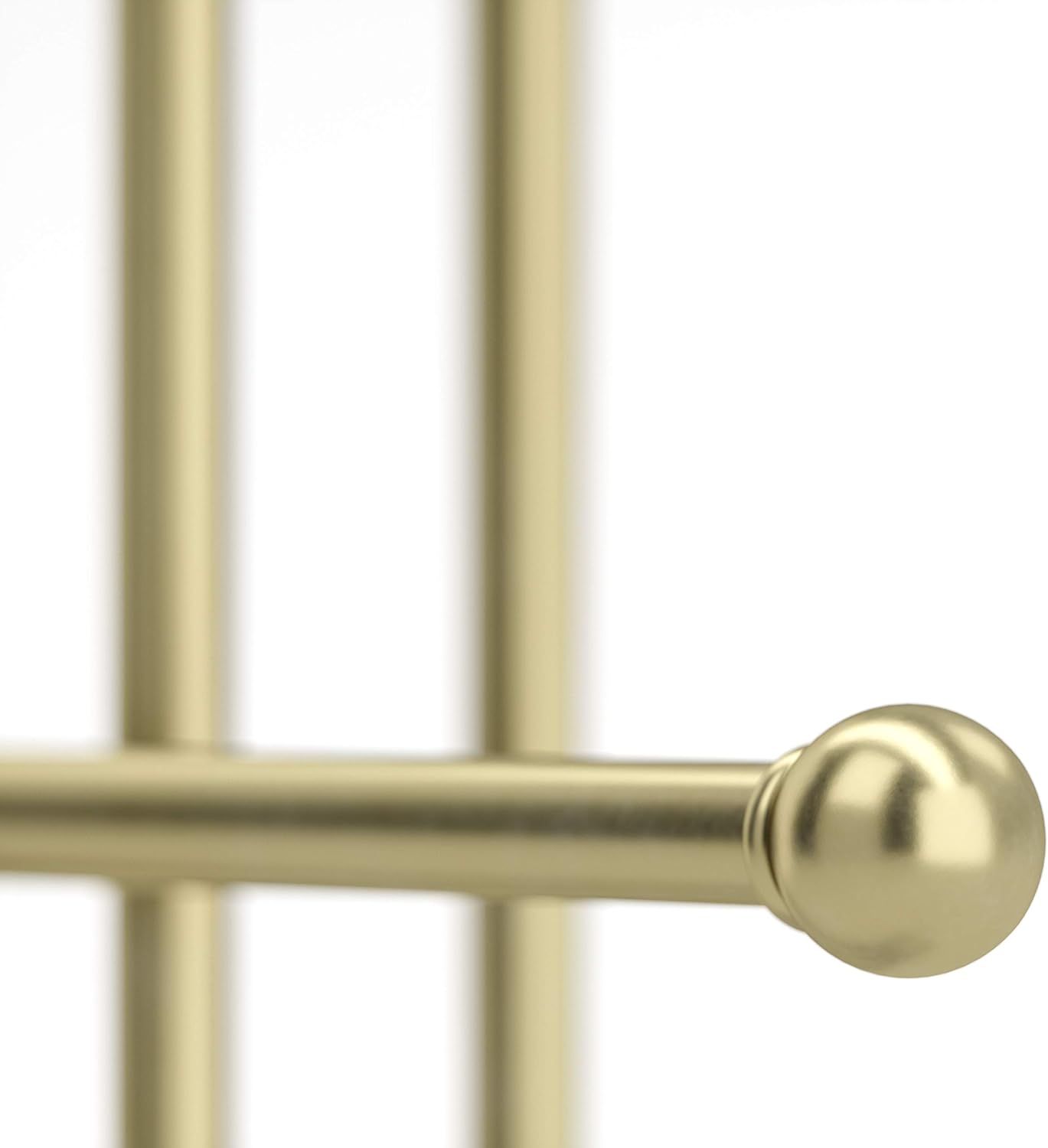
Include the base in the dresser footprint
Measure the complete confirmed base and the practical space around it. The usable dressing surface also needs room for your normal hands, drawer access, and other objects that genuinely belong there. A narrow base does not establish that the entire tall arrangement fits beneath a shelf or beside a moving mirror. Check the stand in three dimensions, including hanging jewelry.
Choose a stable surface appropriate to the household. Keep the arrangement away from edges, frequent bag placement, and other predictable contact. Do not assume that protective padding establishes compatibility with every furniture finish, or that a tall stand has been tested against your particular bump risk. If a child or pet can reach the display, evaluate that placement before ordering.
Keep the tray’s purpose limited
The base can provide a place for small loose items, but it is still open storage. Give it a defined group rather than letting it collect everything removed before bed. If rings, earrings, watches, and unrelated clips all accumulate together, the stand may reproduce the mixed-surface problem it was intended to solve. Choose which items actually benefit from this location.
For a ring-centered routine, the Umbra Dachsie review considers a different open format. For enclosed compartments, the Mini Stowit review addresses a different approach. Neither alternative is automatically better; compare the jewelry, access pattern, footprint, and protection you need. Do not buy all three simply because their roles can be described separately.
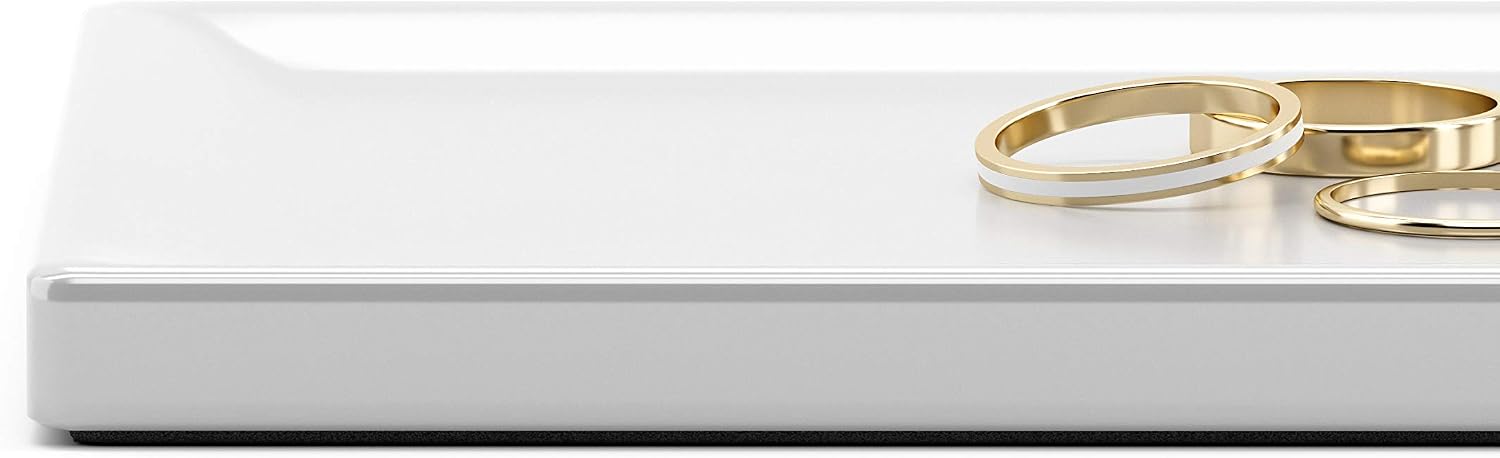
Consider care and exposure before choosing the finish
Follow the organizer’s supplied care instructions and the separate care guidance for the jewelry. The Brass/White description identifies the variation; it should not be interpreted as a promise about every material or finish property. Avoid using jewelry cleaners or polishing products on the organizer unless the maker permits them. A convenient shared display does not create a shared cleaning method.
An open stand is also not a travel case, a locked enclosure, or a documented protective environment for valuable pieces. If those are your needs, choose an appropriate specialist solution. For everyday items, decide whether periodic ordinary surface care and the exposure of an open display are acceptable parts of the routine. That tradeoff matters more than matching a trend photograph.
Who should consider it and who should skip it
Consider this listing if a small visible group of frequently worn necklaces suits your routine, the seller confirms the supplied model, and your measured jewelry and surface fit its actual clearances. You can check the exact Brass/White listing and seller details on Amazon. Confirm the variation and terms at the time you order; no current price or availability is promised here.
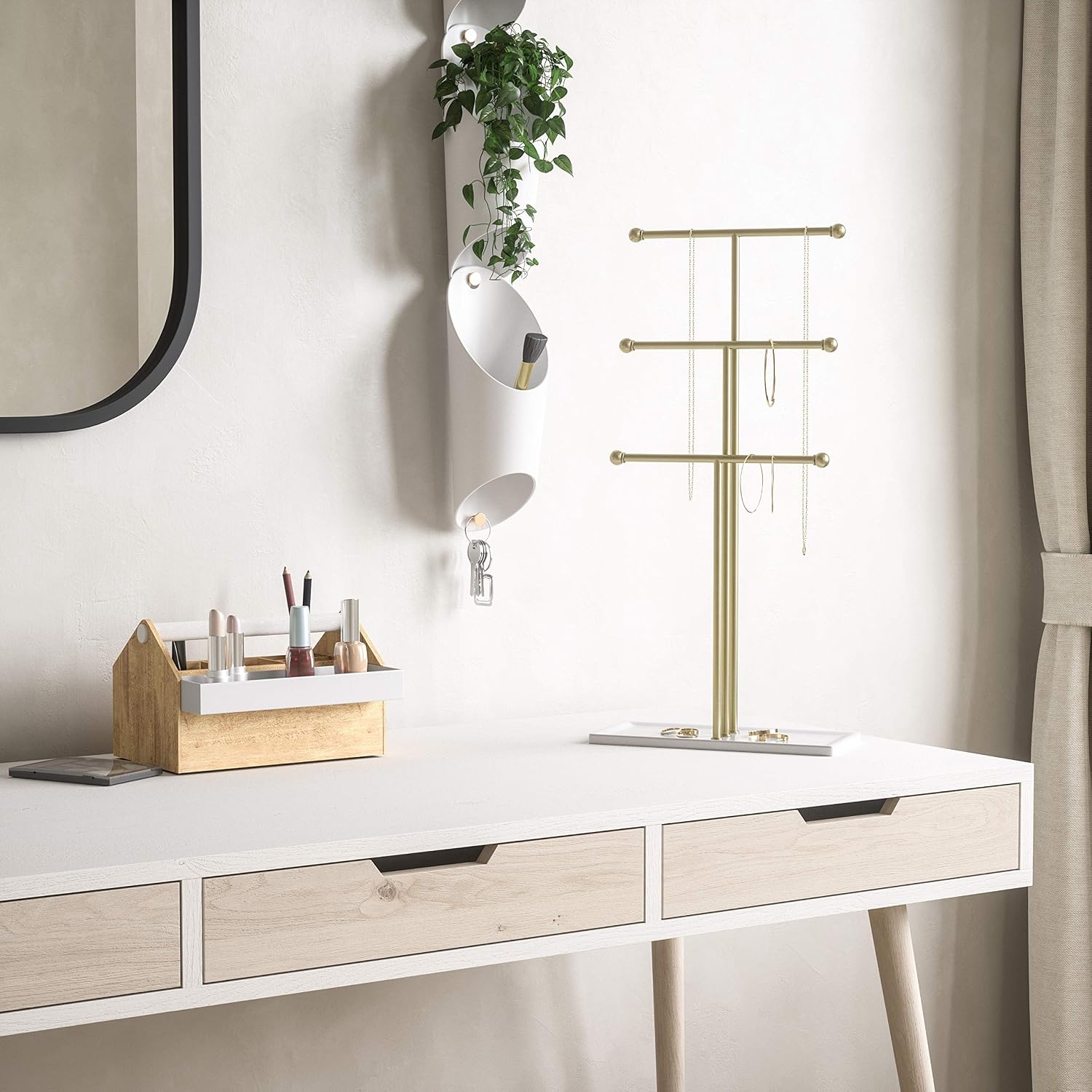
Skip or postpone it if the height discrepancy remains unresolved for a close-fitting space, if your longest pieces require uncertain clearance, or if you need enclosed protection. Also pause if the dresser is already too crowded for easy access. A different container or using an existing suitable compartment may solve the actual problem without adding a tall object.
A conditional verdict
Trigem’s open bars and small-item base are a plausible arrangement for a selected daily collection. The decision becomes less convincing when it depends on an assumed height or on fitting every accessory the household owns. Our assessment is conditional on verifying the supplied dimensions and matching the stand to real pieces, rather than accepting broad capacity or tangle claims.
Before buying, write down the exact model confirmation, required hanging drop, complete surface footprint, and intended jewelry group. If those checks support the purchase, review the current Amazon offer, variation, and return conditions. If they do not, keep the existing usable arrangement and revisit the choice when the missing information or actual storage need has changed.
Explore related decisions in our Buying Guides hub.
Sources and editorial scope
Editorial research checked October 23, 2026. Published trend reports are context for these editorial applications, not verified live keyword rankings. Research-based product assessment; no hands-on testing, live price, availability, or customer-consensus claim.