Disclosure: As an Amazon Associate, Small Home Rhythm may earn from qualifying purchases. Availability and variants can change.
An over-door ironing board removes floor storage, provided its door can open, close and stay steady during use.
The door is part of the equipment
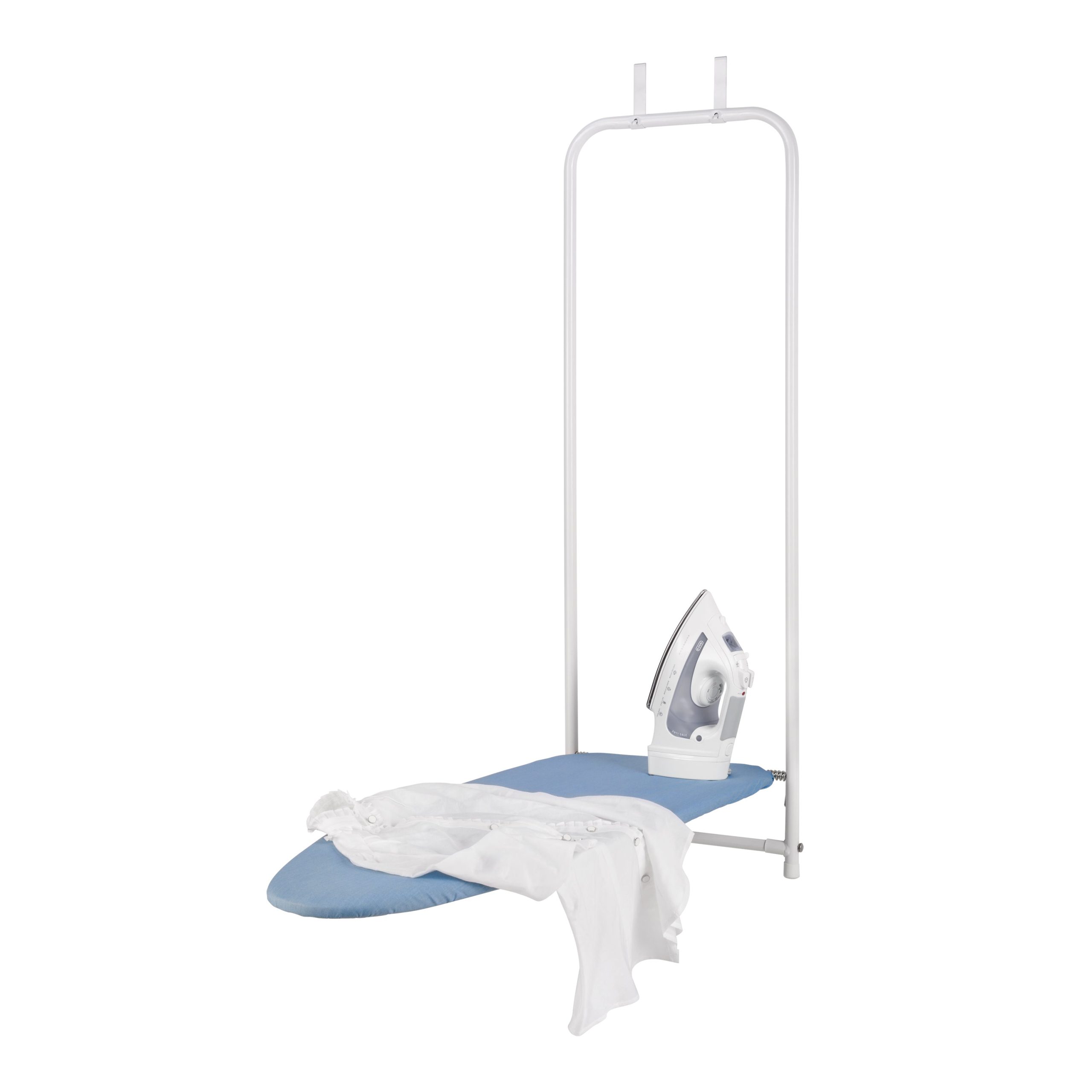
This folding Honey-Can-Do board hangs over a door and folds away when ironing is finished. Unlike a freestanding board, it uses a surface you already have. But the doorway is now occupied by the board and the person standing at it. Identify which side of the door gives you an outlet, clear standing room and access without blocking another household member. Measure door thickness and top clearance, including trim and any closer, against the product’s current specifications. A lightweight hollow door or loose hinges may make the idea less suitable. We did not install or stability-test this board. You may also find Amazon basics vs honey can do gullwing drying rack useful for a closely related small-home problem.
Rehearse one shirt before buying
Stand at the intended door with an ironing motion: can you move an iron across the full surface without hitting a wall, hamper or handle? Where will the hot iron rest between strokes? Does the cord cross a walkway? If the answer requires balancing the iron on a nearby upholstered surface, change the plan. An over-door board is especially appealing for touch-ups and small loads; larger linens may demand the wider workspace of a conventional board. A good storage trick should still provide an unhurried and safe working position. For a related step-by-step approach, see Whitmor Ironing Caddy Review: Can Your Door Store the Board and Iron?.
Check the folded state
Open and close the actual door with the imagined folded depth marked in tape. The frame, hook and cover must clear the wall and trim, and the door still needs to latch. Consider noise when other people sleep and whether a hanging board makes a shared bathroom or laundry door inconvenient. If you use the door constantly, opening it every ironing session may irritate the household. A board hidden behind a rarely used closet door might offer easier access, if the mounting dimensions and safety guidance allow that location.
Care for the cover and the door
Inspect the cover fit, padding and hardware during setup; follow the manufacturer’s cleaning guidance and replace worn parts where available. Protect a finished door from abrasion only with compatible methods that do not defeat secure mounting. Do not operate an iron while the board is folded, and let both the iron and board cool before storing. In a rental, check whether over-door hardware is allowed and whether it will interfere with the door’s normal operation. A scorch, loose hook or dent would outweigh the saved closet floor space.
A door-swing exercise
Open the candidate door fully and stand where the ironer would stand. Mark the board’s approximate working footprint, then ask another person to pass through the room without moving the door. If that movement is impossible during ironing, choose another door or a folding tabletop board. Check both sides of the door for knobs, hooks, towel bars and furniture that will collide when the unit is stored. Top-mounted hardware may prevent a tight-fitting door from closing, so test the exact top gap and any weather stripping against the specification. An over-door solution is only space saving when the door remains useful every day. This matters especially in a small laundry space shared with a bathroom or bedroom.
Ironing board versus steaming and pressing mat
A garment steamer can handle some wrinkles while the garment hangs, but it needs a safe water and heat routine and does not create a crisp pressed seam. A pressing mat on a suitable heat-resistant surface occupies less dedicated storage, yet the underlying table must be appropriate and fully protected. A freestanding board works for sheets and garments that need a long, stable surface, but often steals closet floor space. The Honey-Can-Do board is attractive for short touch-ups where a suitable door and nearby outlet exist. Pick the tool for the garment you actually iron each week rather than the largest occasional project. If you rarely iron, borrowing a conventional board may be more sensible than dedicating a door permanently.
Heat, cord and household traffic
Find a safe resting place for the iron before you begin and keep the cord from crossing the doorway. Hot equipment should not be left unattended around children or pets. Confirm that the door can be held securely without someone accidentally swinging it into your arm. Do not rest the iron on a shelf or hamper simply because the board is narrow. Let the iron cool in a safe separate location before storage, and inspect the board cover for scorches or loose padding. If the cover becomes worn, investigate the correct replacement rather than ironing on exposed hardware. This safety routine is an essential part of the board’s true footprint even though a product photograph shows only its folded shape.
Door compatibility deserves a trial run
An over-door board depends on more than door width. Measure the thickness at the top, the gap to the frame when closed and any raised trim or closer. Check whether a hanging hook would rub paint, prevent latching or strike a wall when the door swings fully. On the working side, mark the expected board reach and the space needed for an elbow and a garment. Ask whether a housemate needs to pass through while ironing. A door used constantly for a bathroom or bedroom can make a clever folded board impractical. If it is a hollow or loose door, review the manufacturer’s mounting limits rather than assuming the board’s modest size makes it safe. There is no substitute for checking the exact hardware against the actual door.
The hidden footprint is the hot iron
The board folds away, but the iron, cord, spray bottle and freshly pressed garments still need places. Choose an outlet that does not put the cord across a doorway and a heat-safe rest position that follows the iron’s directions. Keep children and pets from entering the working area while an iron is hot. A narrow board may be comfortable for collars and shirts yet frustrating for a bedsheet or long trouser leg. If ironing is occasional, a compact mat on an approved heat-resistant surface may be simpler. If you press large linens regularly, a full freestanding board may still earn its storage footprint. Compare the complete ironing routine, not only the folded board’s depth behind the door.
What to check in week one
After fitting, open and close the door several times with the board folded and then unfolded according to the instructions. Look for shifting hooks, rubbing points and any change in the way the door latches. During use, notice whether the board moves under ordinary pressure and whether the cover stays taut. Let every component cool before folding or storing and inspect fabric for damage. If the door cannot be held securely against accidental movement, choose a different location. Keep packaging and return details until the setup passes this real-home check. We have not conducted a hands-on stability or heat test; the listing alone cannot confirm how a specific rental door behaves.
Choose the installation by your largest routine task
If your typical job is a quick shirt collar before work, the ability to unfold a board at a nearby outlet may justify using a door. If your typical job is several pairs of trousers and large linens, a full-size board’s working surface can be worth its bulk. If ironing happens a few times a year, a suitable pressing mat or borrowed board may be enough. Write down your most common garment and the largest one you tackle monthly, then compare their dimensions with the usable board surface. The hot iron still needs a safe rest and a cord route outside foot traffic. A door that cannot remain closed, latches poorly under the hooks, or has people passing through during use is a poor candidate. Check the exact variant’s hook dimensions and board cover at checkout. An over-door board is a storage compromise rather than a promise of full-size pressing performance; the decision is strongest when both the door and the weekly laundry routine fit. For the broader setup, GORILLA GRIP Ironing Mat Review: Can a Temporary Station Replace Your Board? is a useful next read.
Rented door, shared schedule
In a rental, a hook that does not require screws can still mark a door or keep it from closing. Test the top clearance and the swing without forcing the hardware. Decide when ironing happens: a board on the only bathroom door may conflict with morning routines, while a closet door opened less often may be a better candidate. If the door is part of an escape path or must remain available to another person, choose a different location. Record the original condition of the door and keep the packaging until the setup is stable. Space saved in the closet is valuable only if access remains simple.
The right household for it
Choose this board if you iron small garments regularly, have a suitable solid door and a safe nearby outlet, and need the floor footprint back. Skip it if the door must move during use, the hinges feel unstable, or your most common task is a large sheet. Confirm the exact hook dimensions, cover and return terms on Amazon. This review is a fit assessment based on available product information rather than hands-on heat or stability testing.
A two-minute pre-purchase check
Measure the working and storage positions, read the current installation and care instructions, and check whether the item you already own solves the task. Confirm the exact model, variation, pack quantity, seller and return terms. Product pages and prices change; this editorial recommendation reflects the documented design and the room-specific constraints above, not a hands-on performance trial.
Keep the room system working
Read How to Dry Laundry in a Small Apartment Without Letting Clothes Take Over the Room. Read How to Organize Laundry Supplies When the Washer Is in the Kitchen or Bathroom. Read A Family Laundry Handoff System Kids Can Actually Help With. Browse Buying Guides for more small-home product decisions.
Check the exact Amazon listing
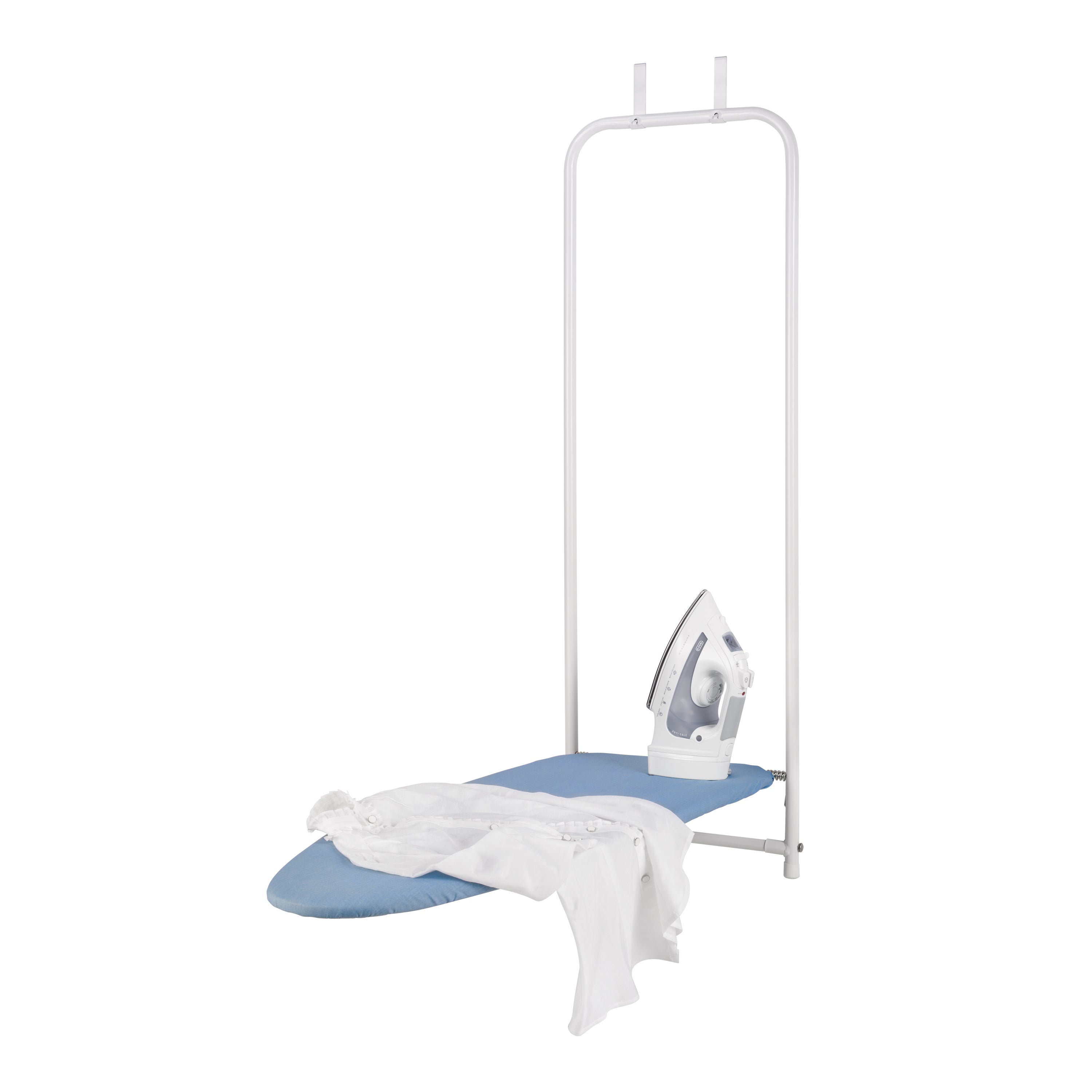
View Honey-Can-Do Over-the-Door Folding Ironing Board on Amazon. Verify compatibility and the current offer before checkout.
Frequently asked questions
Does it fit any door?
Measure the door thickness, trim clearance and swing against the current listing.
Can I iron sheets on it?
A compact board can be awkward for large linens; consider your largest regular task.
Can I store the iron on the folded board?
Follow the manual and store a cooled iron in a separate safe place.
Sources
- Amazon product listing — https://www.amazon.com/dp/B001F51A44
- Product documentation — https://www.amazon.com/clp/B001F51A44