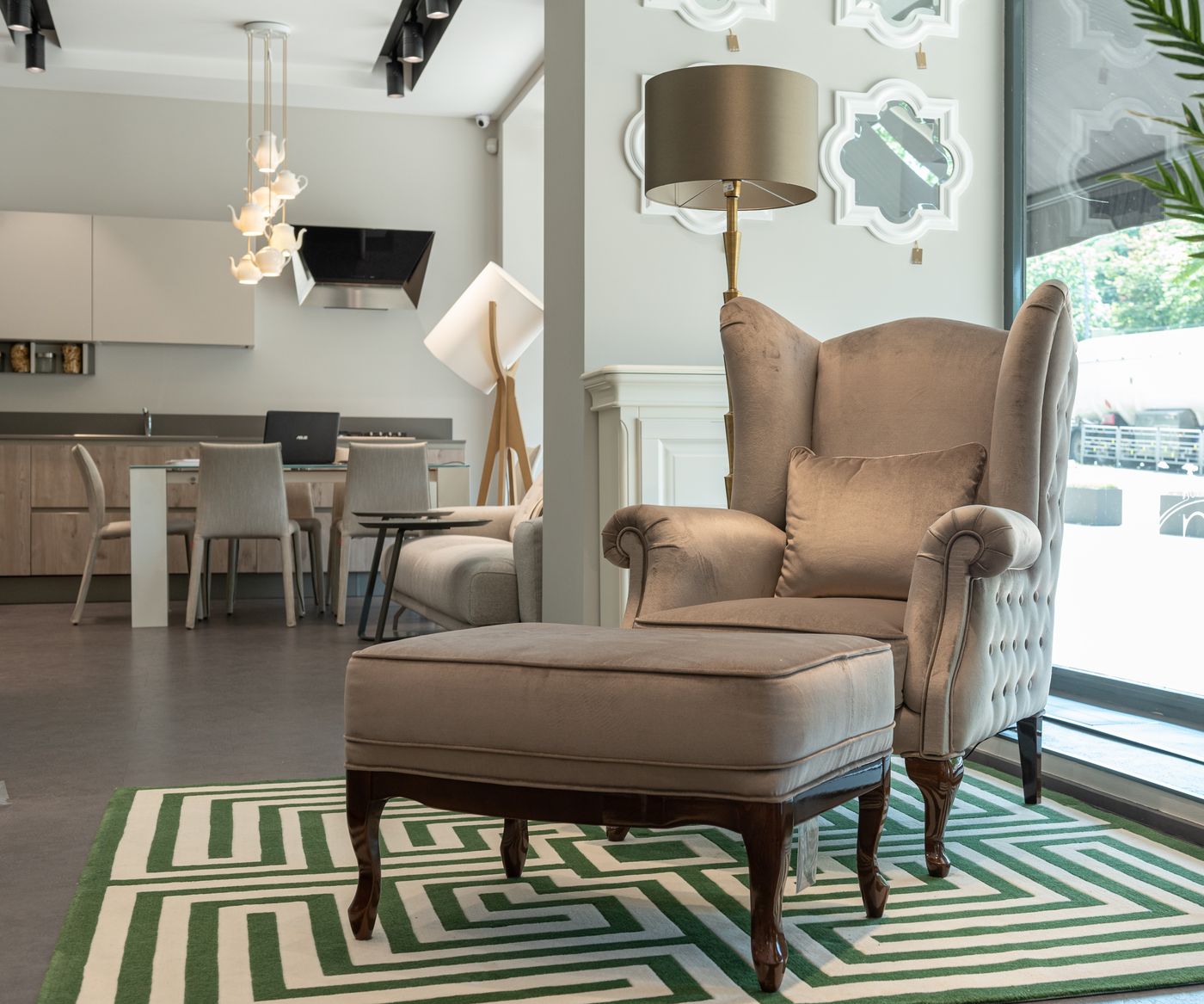
Test an accent rug against the reading chair’s working space before judging its color or pattern. Include the chair, feet or footrest, side table, and the route used to sit down and stand up. A rug can contribute warmth to a small room while still being the wrong shape or size for its actual use.
Houzz’s fall 2026 report describes increasing interest in warmth and layered materials. This guide applies that direction to one modest seating area. It does not establish that a particular rug fiber, pattern, or brand is currently a bestseller, and a useful bare-floor arrangement remains a reasonable option.
Begin with the reading position you already enjoy. If the chair itself is uncomfortable or badly placed, an accent rug will not resolve that problem. Settle the seat and its ordinary use before adding a new layer underneath it.
Describe the activity around the chair
Notice what happens during a normal reading session. You approach the chair, put down a book, move your feet, perhaps use a footrest, and stand again. Those movements occupy more space than the chair’s empty footprint.
Include the person who actually uses the seat. A layout chosen around a product photo can miss the direction their knees extend or the side from which they stand. If two people use the chair differently, test both routines instead of choosing one idealized pose.
Our chair-clearance and walkway guide develops a movement-first approach for dining. Apply the principle rather than copying a dining arrangement into a reading corner. The useful question here is whether this chair and its surrounding objects allow comfortable movement in your room.
Mark the proposed rug outline
Use dimensions from the actual candidate rug and a suitable temporary marking method for the floor. Check the permitted method before applying tape or another material to a delicate finish. A visual outline should not create a new trip or surface-care problem during the trial.
Distinguish the rug’s outer dimensions from any fringe or other projecting detail. Ask the seller how the listed size is measured if that matters to the location. A nominal label such as small does not tell you where the edges will sit beside your chair.
Compare more than one sensible outline if you are uncertain. You do not need to trial ten nearly identical sizes. One compact option and one larger alternative may reveal whether the corner needs a defined small accent or a rug that relates to the surrounding furniture.
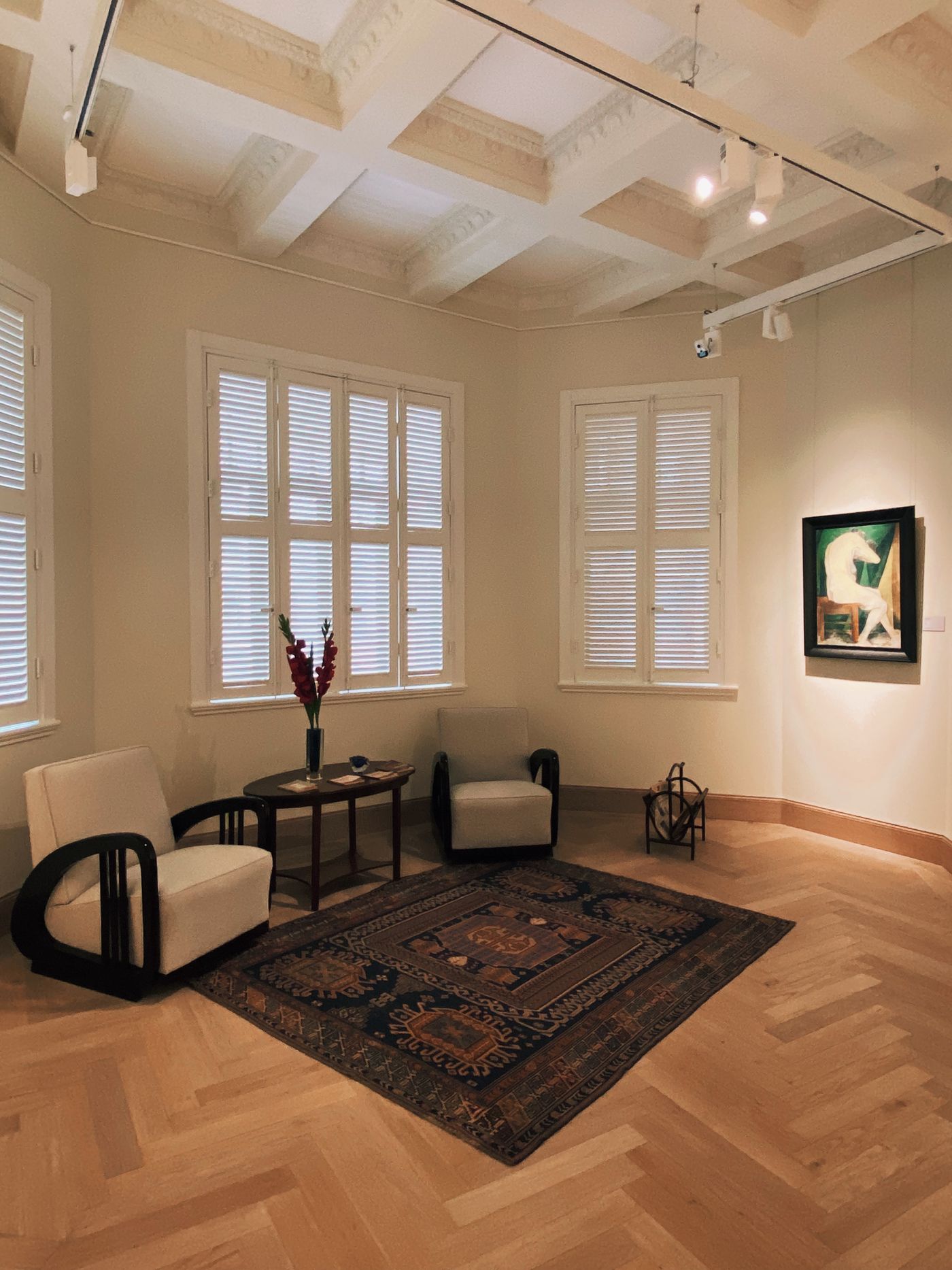
Test the chair in its ordinary positions
Place the chair where it is intended to remain and consider its manufacturer’s floor and support requirements. Do not assume that partially resting on a rug edge is suitable for every chair. Check how the feet or base relate to the proposed rug and any approved underlay.
If the chair swivels, rocks, reclines, or moves in another way, include that operating space. A rug placed for the upright closed chair can interact differently with its extended form. The decorative outline should follow the real product’s operation rather than limit it unexpectedly.
Do not use a rug to conceal an unstable chair or damaged floor. Those conditions need their own appropriate attention. A visually pleasing surface layer should not make a practical problem harder to notice.
Include the footrest and side table
Set the footrest in the position used during reading, not where it is pushed between sessions. Check both positions if it moves. A rug that fits the stored footrest while leaving its working support awkwardly across an edge has exposed a real fit question.
Include the side table’s useful reach and the way you enter the chair. Our table, ottoman, and no-table comparison can help you decide whether an extra surface earns its place. You might already have a suitable nearby position for a book without adding another piece of furniture.
Avoid purchasing a new footrest and table simply to complete the rug arrangement. Test the items you already own first. If a small rug only looks convincing after expanding the furniture group, the proposed refresh may be larger than the household actually wanted.
Keep rug edges out of awkward movement points
Walk through the ordinary route and look at where each proposed edge falls. Pay attention to the step into the chair, the turn around a table, and the way a nearby door opens. Do not rely on an empty-room photograph to establish a workable path.
Check the rug maker’s and flooring maker’s requirements for placement, backing, and any underlay. A product described as nonslip does not establish compatibility with every finish or household condition. Obtain the information for the actual combination instead of assuming a generic pad solves the fit.
Consider fringe and raised details where feet, chair legs, cleaning equipment, or household devices will pass. A texture that looks attractive in a close photograph may add a repeated handling task in that position. Choose the detail deliberately rather than discovering it through daily interruptions.
Judge pattern at the scale of the small room
Look at the rug from the doorway and from the chair. A bold motif can make a clear focal point, while a quieter pattern may let the existing chair remain visually prominent. Neither choice requires matching every other textile in the room.
Use an existing color or material as a reference if it helps. Compare a sample under ordinary room light where the seller offers one. Online images and screens can vary, so check the seller’s current return terms before relying on a precise color match.
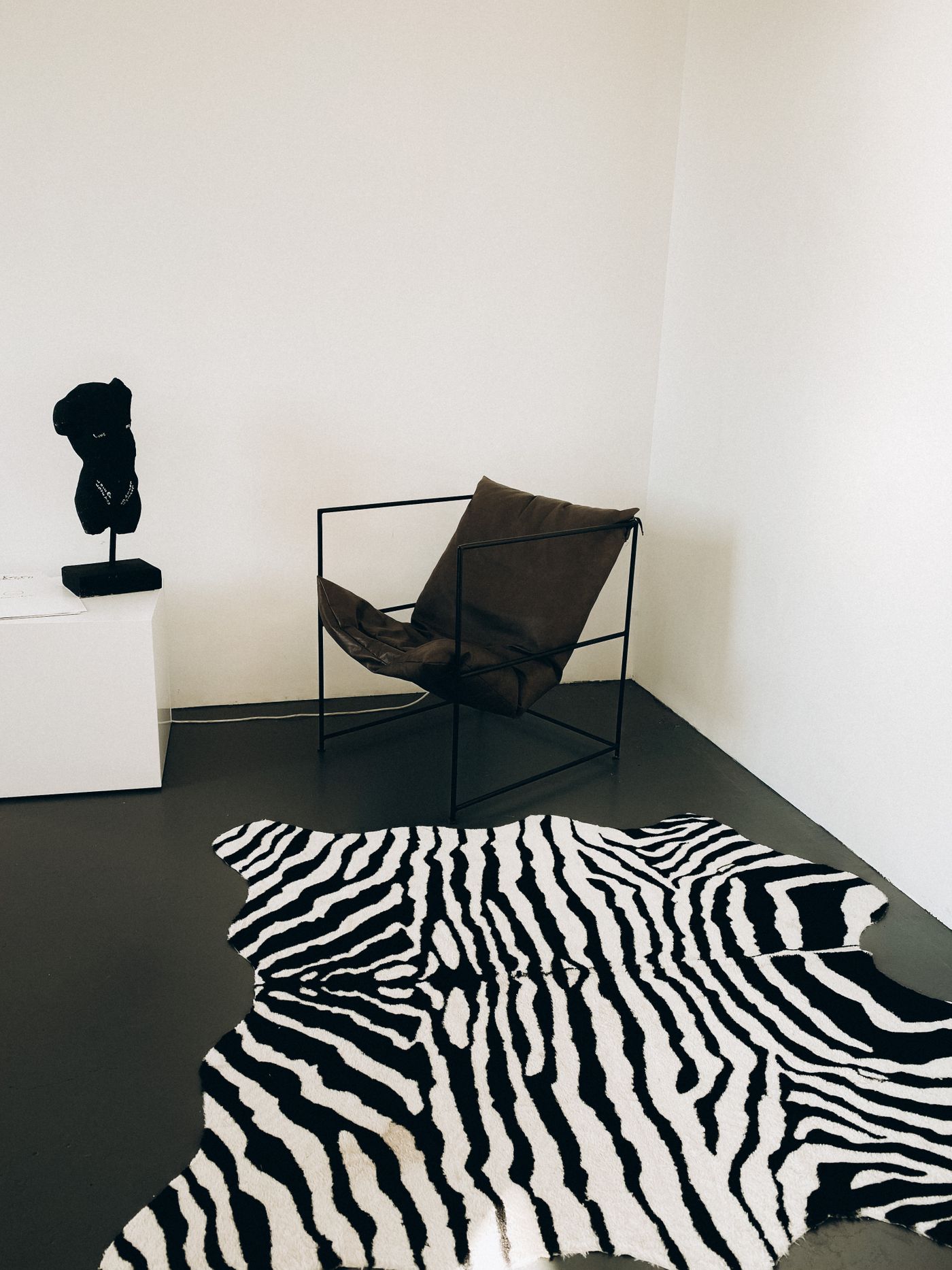
Keep the surrounding surface editing modest. You can remove one unnecessary object from the corner instead of adding several new accessories to explain the rug’s colors. A small room often gains more from a clear relationship between a few pieces than from a complete decorative theme.
Decide whether you want texture or easy maintenance
Read the care requirements for the exact fiber, construction, backing, and decorative details. A broad label such as natural does not establish how the rug should be vacuumed, spot-cleaned, washed, or dried. Follow the product’s instructions and consider whether the household can realistically perform them.
Our area-rug cleaning guide can help you plan the surrounding routine. Keep any particular product’s directions in charge. A reading chair may see fewer crumbs than a family dining area, but it still collects ordinary household dust and may share space with pets or children.
Think about access beneath the chair. If cleaning requires moving a large piece that the household cannot handle appropriately, choose a more maintainable arrangement. The decorative benefit should include the effort of keeping the whole corner usable.
Check the rest of the room before ordering
Look beyond the reading group. Does the new outline crowd the room’s main rug, compete with another strong pattern, or leave a narrow strip of floor that is difficult to clean? A smaller object can still create a visually complicated relationship in a small room.
Our small-living-room refresh without new furniture offers a useful starting point if the whole area feels crowded. Resolve the layout with existing objects before making a rug the answer to several unrelated concerns. You may find that moving the chair slightly makes the corner feel complete already.
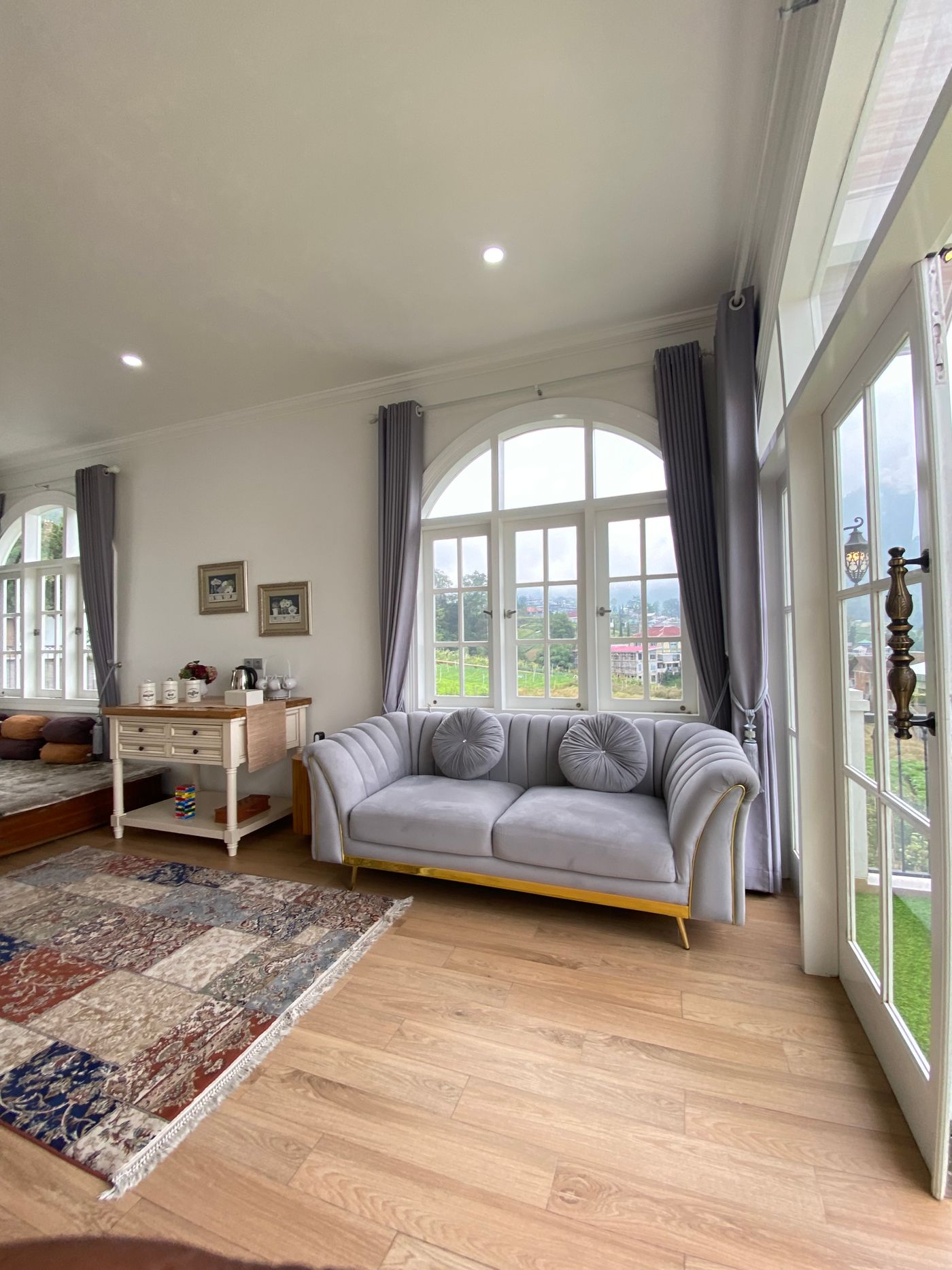
Check delivery, unpacking, and the seller’s instructions for allowing the rug to settle. Reserve an appropriate inspection area and keep packaging until you understand the current return conditions. Do not discard the label or care information while deciding where the piece belongs.
Compare it with the room as it is
Remove the temporary outline and use the corner without a rug for another ordinary session. Notice what is actually missing: a visual anchor, a particular surface feel, or nothing significant. That comparison is more useful than judging the new rug only against other shopping options.
If you still want an accent, choose the candidate whose dimensions, care, and appearance work together. Skip the attractive one that requires sacrificing a useful route or buying extra furniture. A reading corner is successful because it invites reading and remains easy to live around.
The final choice can be a new rug, a suitable rug moved from elsewhere with the owner’s agreement, or the existing bare floor. Keep the outcome tied to the chair’s real working footprint. Warmth and character are worthwhile additions when they fit the room you actually use.
Explore related household decisions in our Small-Space Living hub.
Sources and editorial scope
Editorial research checked October 16, 2026. Trend-report dates and limitations are stated in the article; these are editorial applications of published signals, not verified October keyword rankings. Practical household guidance; illustrations do not document a tested household or authenticate a pictured material.