
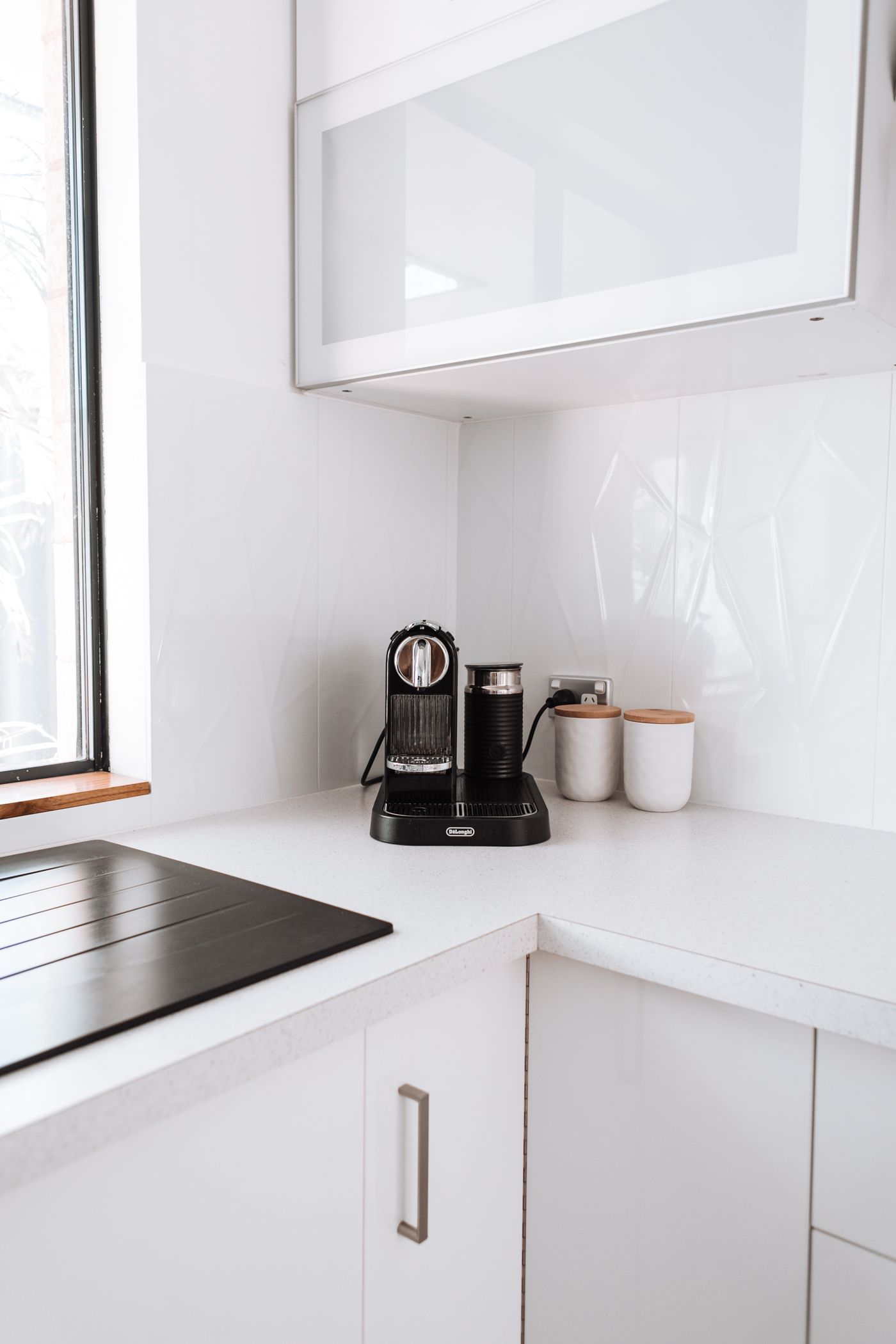
A small home cafe works when one person can make a preferred drink without clearing the whole kitchen first. Start with the drink, then arrange the filling, preparation, pouring, and washing steps around one realistic piece of counter. Add the visual details after that sequence works.
Pinterest’s fall 2026 creator trends include Home café engineering, focused on an at-home drink experience. This layout is an editorial response to that published direction. It does not establish that a particular machine is popular now, and a well-used kettle or manual brewer can be as relevant to your routine as an espresso setup.
The goal is not to reproduce a coffee shop’s equipment list. It is to give the drink you actually make a dependable place within a working household kitchen. A modest arrangement that is easy to refill and clean can feel more considered than a counter packed with rarely used accessories.
Start with your usual drink and its actual steps
Write the sequence for an ordinary morning. For filter coffee it might be filling the kettle, measuring coffee, placing a filter, brewing, disposing of grounds, and rinsing the brewer. For a milk drink, include retrieving cold milk and returning it, as well as cleaning any milk-contact parts according to the equipment instructions.
Do the routine once without rearranging the room. Notice where you turn, what you reach over, and which items you temporarily put in the sink or on another counter. Those interruptions tell you what the layout needs. A photo of a beautiful station cannot show whether its owner must move everything to fill a reservoir.
If two people make different drinks, identify what is truly shared. Cups may be shared while one person’s grinder is not. A tea drinker does not need to navigate an espresso accessory display simply to reach the kettle. Give the common step the clearest access rather than allowing the largest appliance to claim every useful inch.
Treat the counter as working space, not empty frontage
Measure the usable width and depth, then examine what happens above and around it. Include cupboard doors, nearby handles, socket access, and the path to the sink. Check appliance instructions for required ventilation, operating clearances, suitable surfaces, and electrical use. Do not infer those requirements from a stock photograph.
Leave space to place and remove the cup. A machine may fit within its stated footprint while its tank, lid, handle, or drip tray needs additional room during use. Include the equipment’s ordinary maintenance movements in the measurement. If a part can be removed only after lifting the entire appliance, the daily arrangement may be too crowded.
Our guide to organizing countertop appliances in a small kitchen covers the wider competition for surface space. For the cafe, choose one main working position rather than scattering the same process across several unrelated corners. A setup that looks compact but depends on another counter for every action has displaced the work instead of accommodating it.
Reserve a landing place for the drink
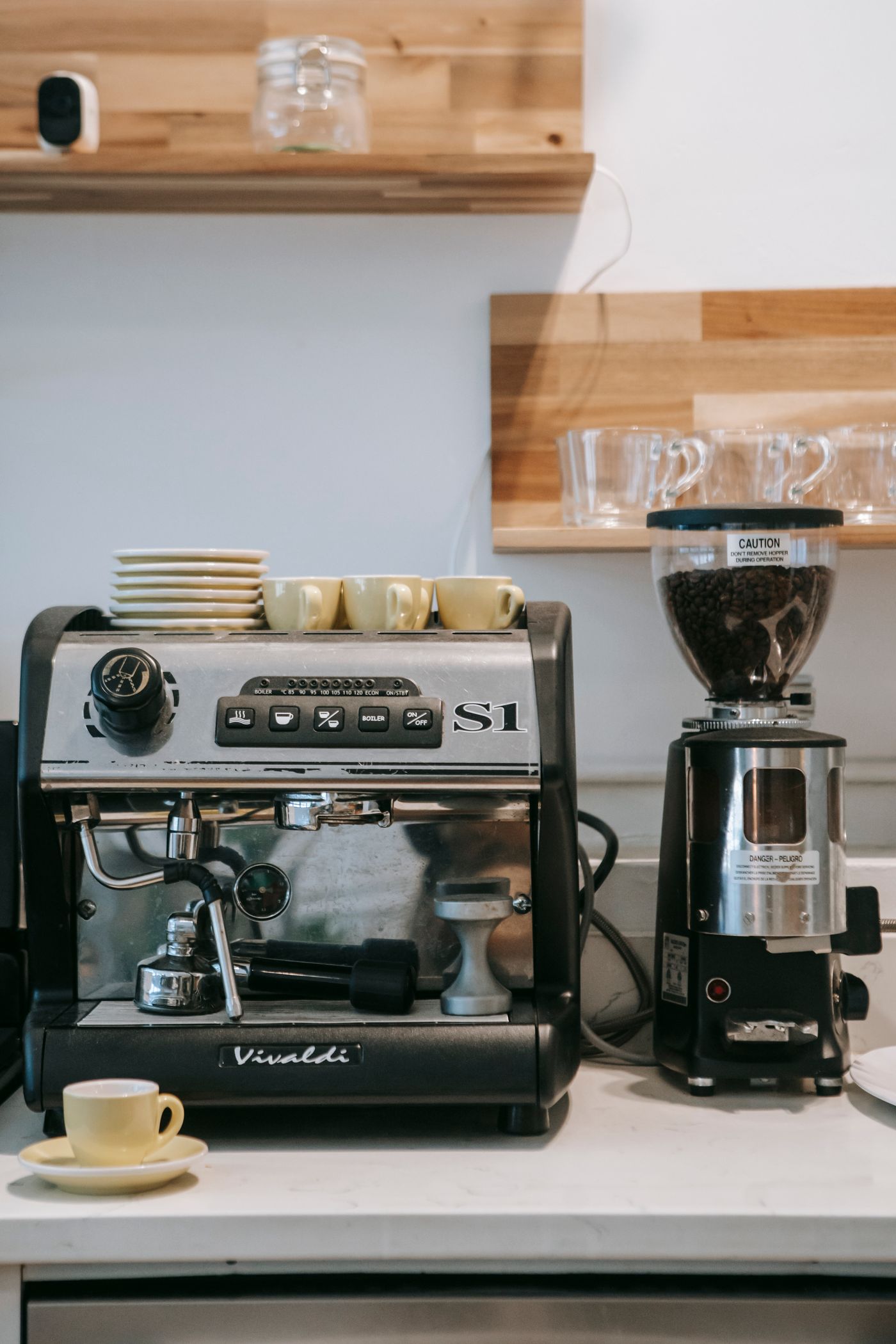
Keep a stable, suitable place where you can set a cup before and after brewing. It should be reachable without crossing a hot appliance or balancing the drink on a storage lid. Follow the appliance and surface makers’ advice for heat, steam, and spills. Do not add a decorative tray underneath equipment unless that arrangement is permitted.
Try the largest cup you use and the smallest everyday cup. Check whether each can be placed and lifted comfortably. A tall travel mug may change how you use a drip tray or spout; follow the machine’s intended adjustments rather than improvising supports to gain height.
If you carry a finished drink elsewhere, make the exit from the station simple. A spoon, lid, or coaster stored at the far end of the kitchen can create a final cross-room detour. Keep the one or two items needed for that last step nearby if they can fit without obstructing preparation.
Keep daily ingredients close and backup stock elsewhere
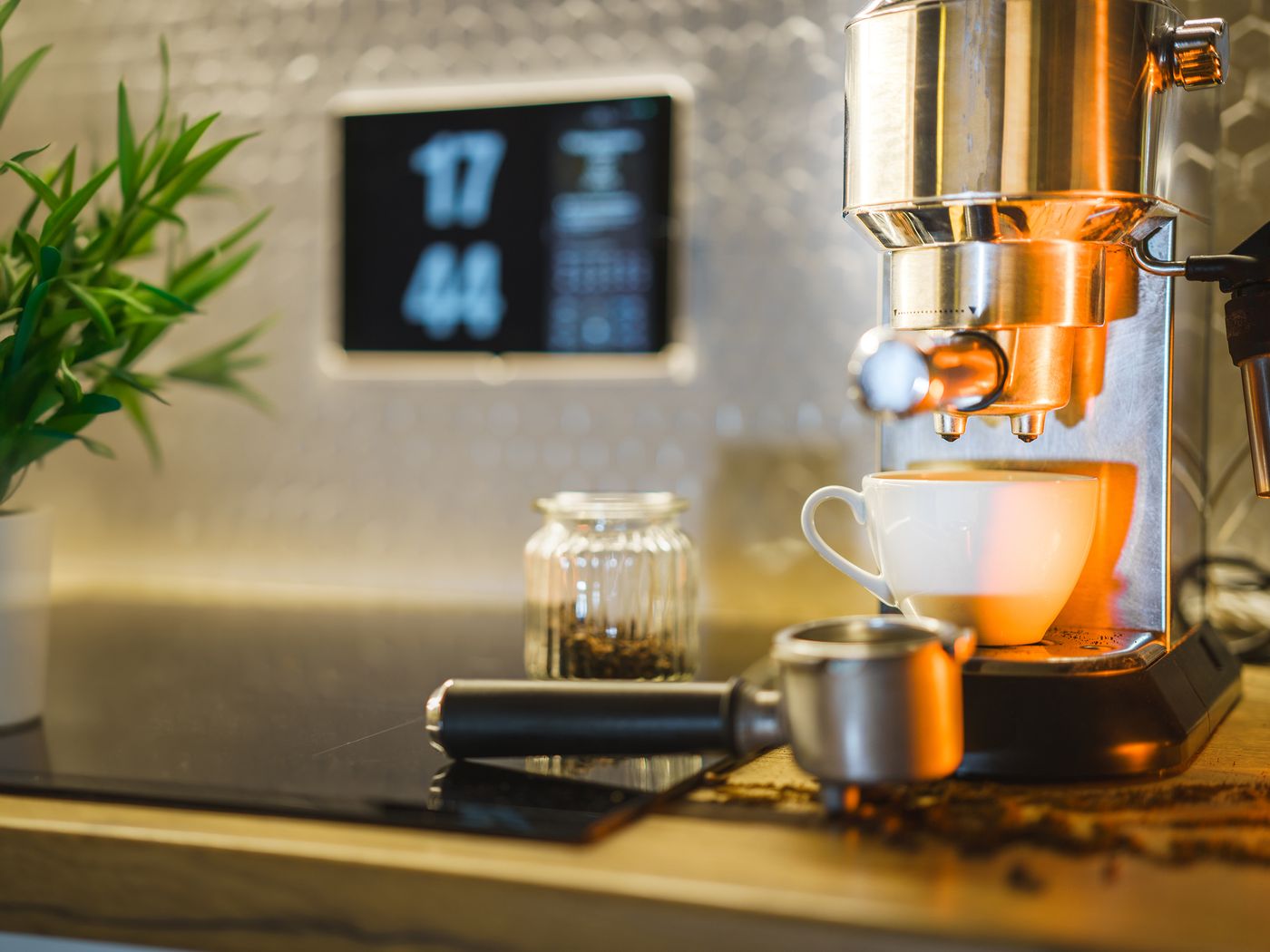
Use a small quantity of the ingredients you actually reach for. Follow the storage directions for coffee, tea, syrups, and other additions; display does not override those instructions. Return refrigerated ingredients promptly rather than leaving them out to make the station look complete.
Do not put every flavor on the counter just because you own it. Choose the regular option and perhaps one current alternative. Keep unopened backups in the appropriate pantry location, labeled so the daily container can be replenished without searching. Avoid buying a row of new canisters until you know what needs transferring and whether the original packaging already works.
The same reasoning supports keeping small-kitchen counters clear without hiding everything. Visible items should earn their place through use. A container that must be moved every morning to open the brewer is not helping the routine, however well its color matches the backsplash.
Place cups according to the real household
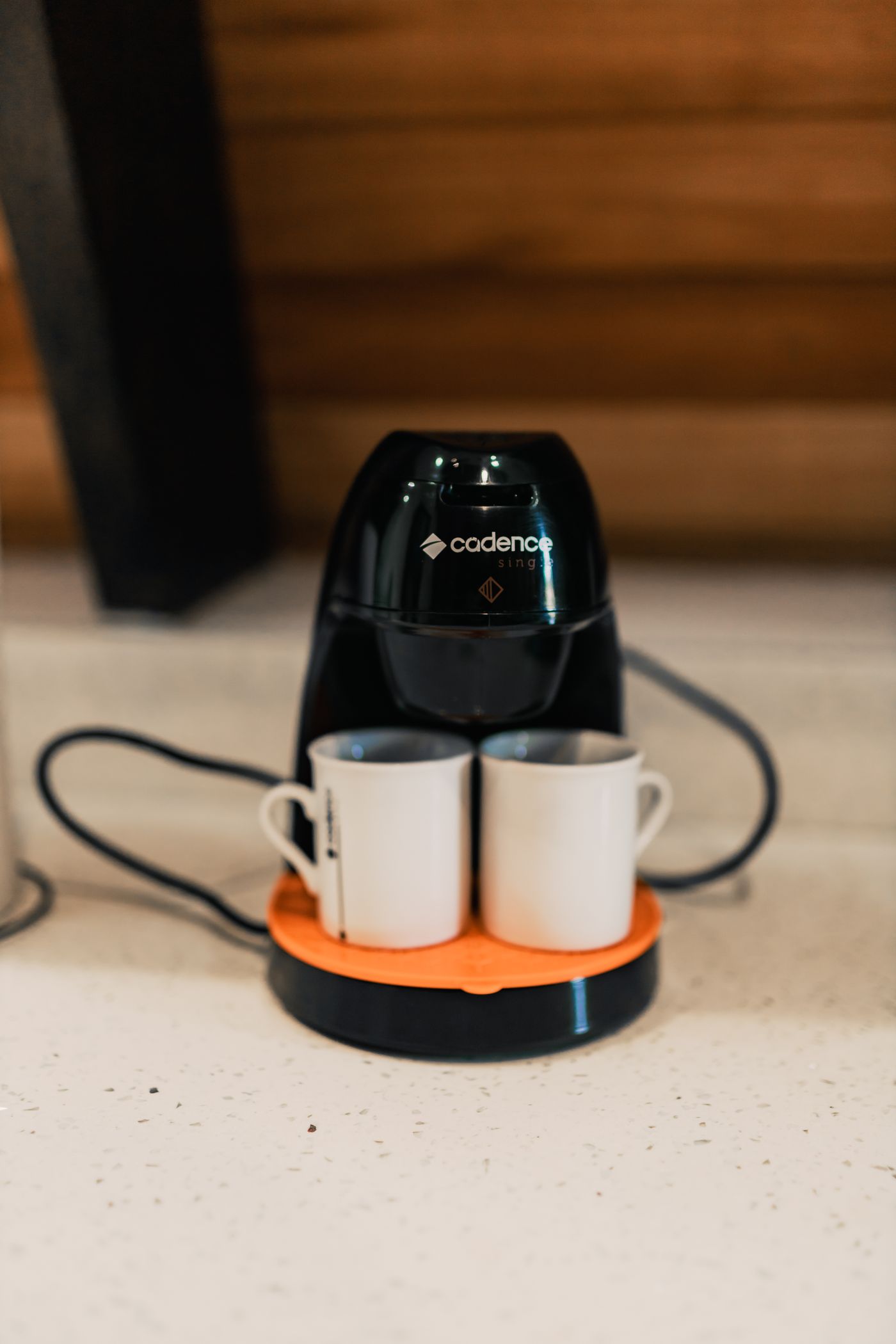
Count the cups used between normal washing cycles, rather than displaying a whole collection. Keep the everyday cups in a cupboard or other suitable position you can reach comfortably. If overhead storage requires you to stretch across equipment, look for another position before adding a mug rack.
A guest cup can remain elsewhere until you need it. The station does not have to carry the full capacity of a holiday gathering all year. Keep delicate, sentimental, or rarely used cups separate if frequent retrieval would put them in the way of ordinary work.
Think about handles and access when arranging an open shelf. A row can appear to fit but still require pulling the front cup over another item. Try removing the middle cup with one hand while the rest remain undisturbed. If that simple action is awkward, reduce the number or change the spacing.
Let cleanup have a place in the layout
Identify where grounds, filters, pods, used spoons, and washable parts go after the drink is made. Follow the equipment’s cleaning directions and your local waste arrangements. Do not assume every item can go into the same bin, compost container, or dishwasher.
A small rinse or drying need should connect with the kitchen’s existing system. Our comparison of compact dish-drying arrangements can help if a damp brewer has nowhere suitable to wait. A second elaborate rack just for the cafe may consume more space than it saves, especially when the main kitchen already has a workable drying location.
Keep any designated cleaning cloth maintained and separate from incompatible tasks. A cloth used to wipe a spill should not be tucked wet behind the appliance indefinitely. Decide where it will be washed and dried so the station can close down cleanly each day.
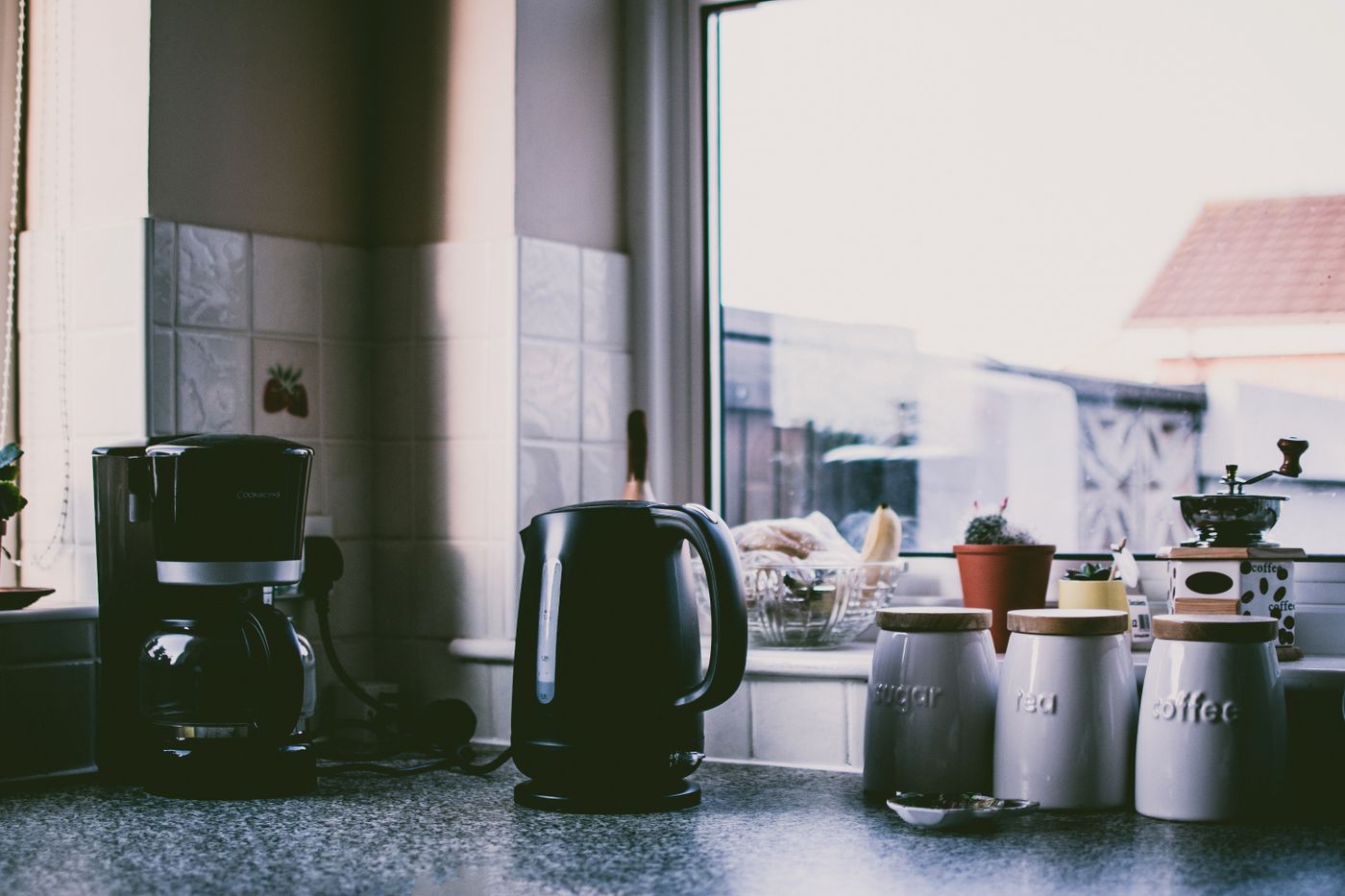
Introduce cafe character through one personal choice
Once the steps work, choose a detail with a reason to be there: a favorite cup, one suitable small vessel, or a simple written recipe kept away from splashes and heat. You can make the station feel personal without adding a sign, a tower of cups, and several new pieces of furniture.
Choose a color or material that already appears in the kitchen. Repeating a cup glaze or a wooden handle can make the area feel intentional without requiring a complete matching set. Keep decor outside appliance clearances and away from paths where a cord, hand, or removable part could catch it.
Photograph the station only after an ordinary day of use if you want to assess its appearance. Ask whether the setup still looks inviting when the brewer is drying and the coffee is half used. That is a better design reference than a display that works only while no one is making a drink.
Protect the rest of the kitchen routine
Make a meal with the cafe in place. Can you still prepare food, empty the dishwasher, and reach frequently used tools? If the drink area pushes food preparation onto the table every evening, reduce its permanent footprint. Our guide to meal prep in a small kitchen can help you identify which surface needs priority at that time of day.
A temporary boundary can work well. You might leave the main brewer in its permitted position and keep loose accessories in one cupboard section between uses. This is useful when the kitchen serves several people with different schedules, provided setup and return remain simple enough to happen consistently.
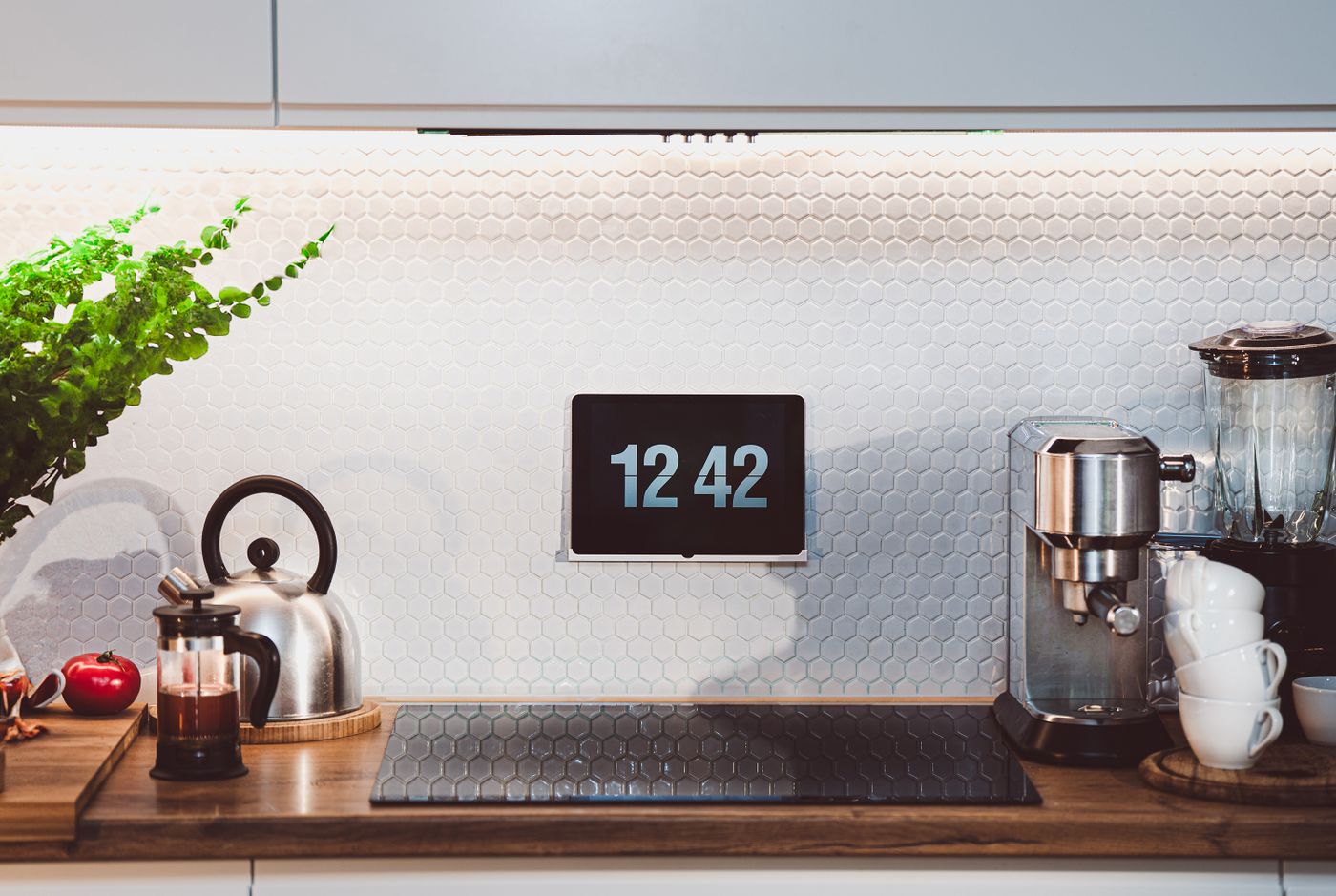
Test before shopping for the missing piece
Use the arrangement for several ordinary drink-making sessions. Note one recurring problem, such as awkward tank access, no place for a used filter, or too many cup choices. Solve that problem directly. A new shelf or accessory is justified only if it improves the task and fits the room’s constraints.
If a machine is the problem, check whether a permitted position adjustment resolves it before buying a replacement. If the process itself is too involved for weekday mornings, keep the elaborate version for the days you enjoy it. A simple daily method and an occasional slower ritual can share the kitchen without both being permanently displayed.
The cafe is ready when you can make the drink, carry it away, and restore the surface with ordinary effort. Its character then comes from a routine you enjoy using, with enough room left for the kitchen to do everything else.
Explore related household decisions in our Small-Space Living hub.
Sources and editorial scope
Editorial research checked October 15, 2026. Trend-report dates and limitations are stated in the article; these are editorial applications of published signals, not verified October keyword rankings. Practical household guidance; illustrations do not document a tested household or authenticate a pictured material.
