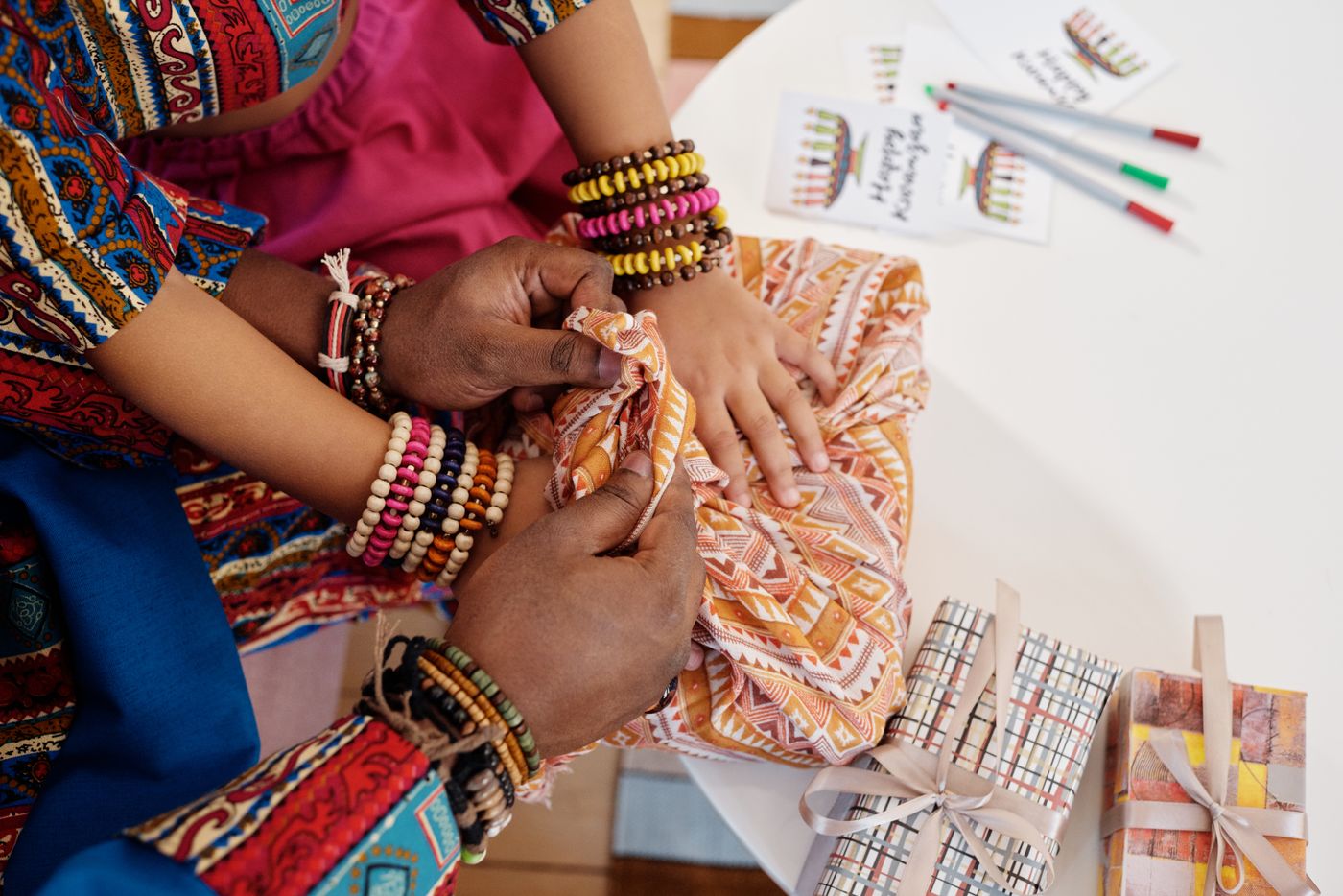
Practice fabric gift wrapping with a light, closed box before using it for a real present. Let each child choose a suitable cloth and a finish they can manage, then decide whether the fabric is part of the gift or will come home afterward. Those choices make reuse a family habit rather than a decorative extra that disappears after one holiday.
Etsy’s October 14, 2026 Craftmas direction includes making together. This activity applies that idea to wrapping and unwrapping. It is an editorial family project, not evidence that every fabric parcel has a lower environmental impact than every paper-wrapped gift.
Lush offers reusable Knot Wrap cloths and wrapping guidance, showing how fabric can be folded and tied for different objects. You do not need that branded product to practice with a suitable cloth you already own. Follow the cloth’s care instructions and choose materials appropriate for the children and objects involved.
Make the first attempt a practice session
Use an empty lightweight box with a secure lid and no sharp edges. A practice object allows everyone to unwrap, try again, and change their mind without exposing a surprise present or handling something fragile. Keep the session separate from last-minute departure preparations.
Choose a table or other suitable working surface at a comfortable height. Keep bedding, drinks, open craft products, and unrelated small objects clear. Although the finished parcel may belong in the children’s room, the wrapping process can happen wherever the household has an appropriate surface.
Our shared dining-table guide can help define the start and finish if that table is your available workspace. Bring out the materials for this activity only, and put them away before the table returns to meals or homework. Fabric wrapping does not require a permanent wrapping station.
Choose cloth for the actual object
Start with a clean suitable fabric that can fold around the box without extreme stretching or a very bulky knot. The cloth needs enough usable area for the method you choose, but more fabric is not always easier. A very large square around a tiny box can create a confusing bundle for a beginner.
Check the material’s condition and care directions. Avoid a precious scarf that its owner has not agreed to use, fabric that sheds onto the gift, or anything with loose details inappropriate for the participating children. A suitable practice cloth can have a simple pattern and still produce a pleasing parcel.
Do not assume that wrapping transforms an ordinary cloth into a food-safe liner, heat barrier, or secure carrying handle. Use the gift’s normal appropriate packaging underneath. The fabric is an outer wrap unless the actual products and their instructions establish another intended use.
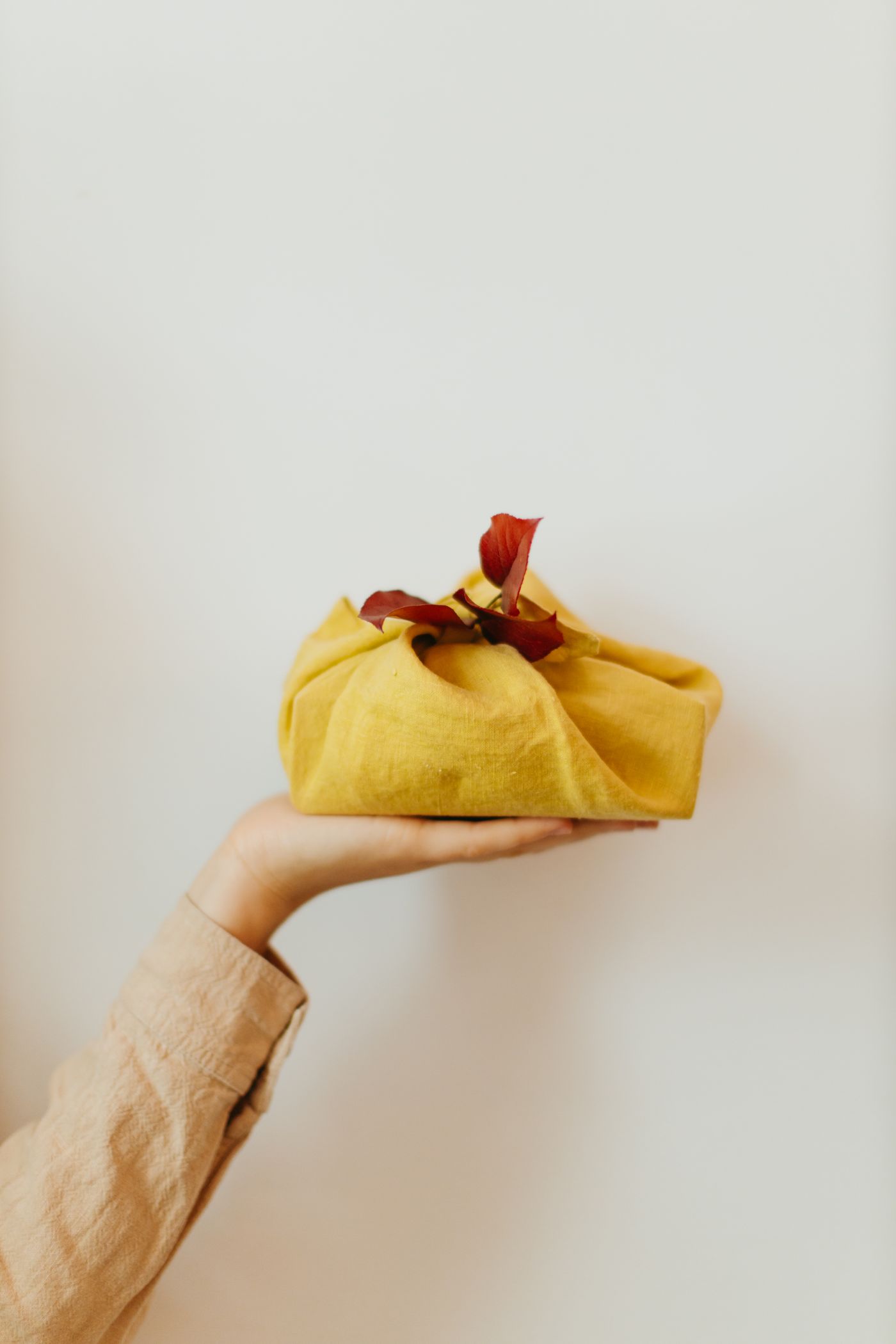
Show one simple wrapping approach
Choose a maker’s or other reliable wrapping demonstration that suits your object, and practice it yourself before guiding the children. Lush’s linked guide offers fabric-wrapping ideas. Keep the first session to one approachable format rather than attempting bottles, irregular shapes, and multiple objects at once.
For a simple closed-box practice, show how placing the object near the center changes the amount of fabric available on each side. Let the child reposition it and see the difference. Encourage them to notice which corners can meet comfortably instead of pulling harder at a cloth that is clearly too small.
Fold and tie according to the chosen method, then check the result over the work surface. Keep the object supported from underneath while moving it. A decorative knot is not a tested load rating, and the practice parcel should not be swung around by loose fabric ends.
Let children choose the visible finish
Offer a small selection of suitable cloths or color combinations. One child may enjoy a tidy compact knot while another prefers visible loose ends. Keep their choice where it works with the wrapping method and the object’s practical needs. The parcels do not have to become a matching set.
Use a separate practice example if you want to demonstrate a change. Avoid repeatedly undoing the child’s result to make it look more like the adult’s version. Ask whether they want help with the process before changing their design.
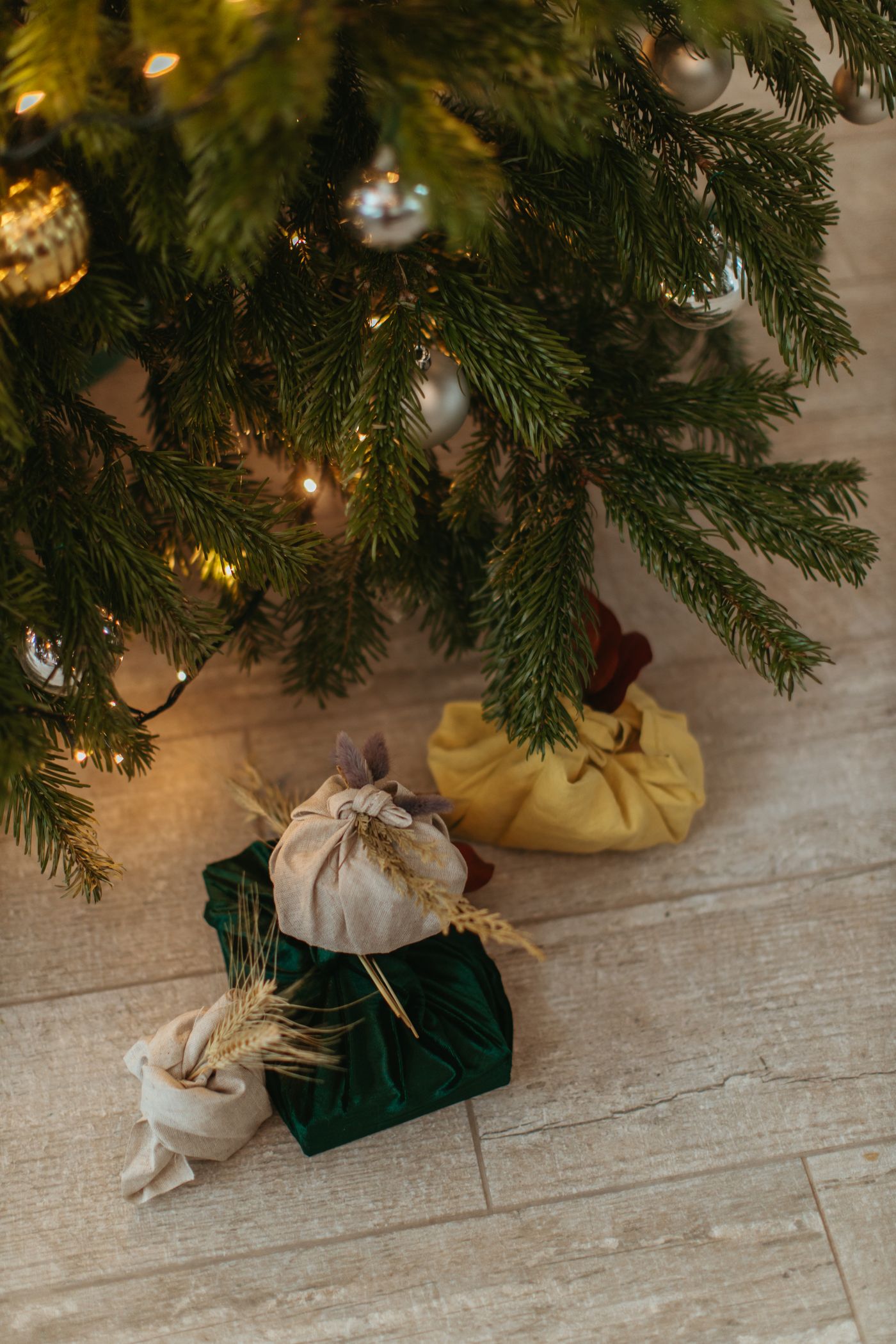
If a label is needed, attach it in a manner appropriate to the cloth and gift. Do not use a method that damages a borrowed textile. Keep identifying information modest, especially if a photograph may be shared. A recipient’s first name may be all the parcel needs within the family.
Practice unwrapping as part of the same skill
Let the child open the parcel and see how the knot or fold releases. If the first attempt is difficult to undo, adjust it during practice rather than leaving the recipient to cut through a reusable wrap later. A successful parcel can be opened without damaging the gift or turning the cloth into a disposable obstacle.
Take turns being the wrapper and the recipient. Ask what made the opening clear and what was confusing. The feedback can be concrete: which end to pull, where to hold the box, or whether the label blocked access to the knot.
Do not promise that any knot will remain secure under all handling. Check the actual parcel and use appropriate underlying packaging for transport. For a fragile or awkward gift, choose a suitable protective package first and let the outer fabric remain a decorative layer.
Agree who owns the fabric after the gift is opened
Choose between two clear arrangements: the cloth is included as part of the gift, or it is the giver’s reusable wrap to collect later. State the arrangement naturally before or during the handoff. Avoid presenting a fabric parcel as a complete gift and then unexpectedly asking the recipient to return part of it.
For a cloth that will come home, agree a simple return moment that suits the gathering. Keep the request low pressure. If collecting it would be awkward, use a different wrapping plan for that event or choose a cloth you are happy to give.
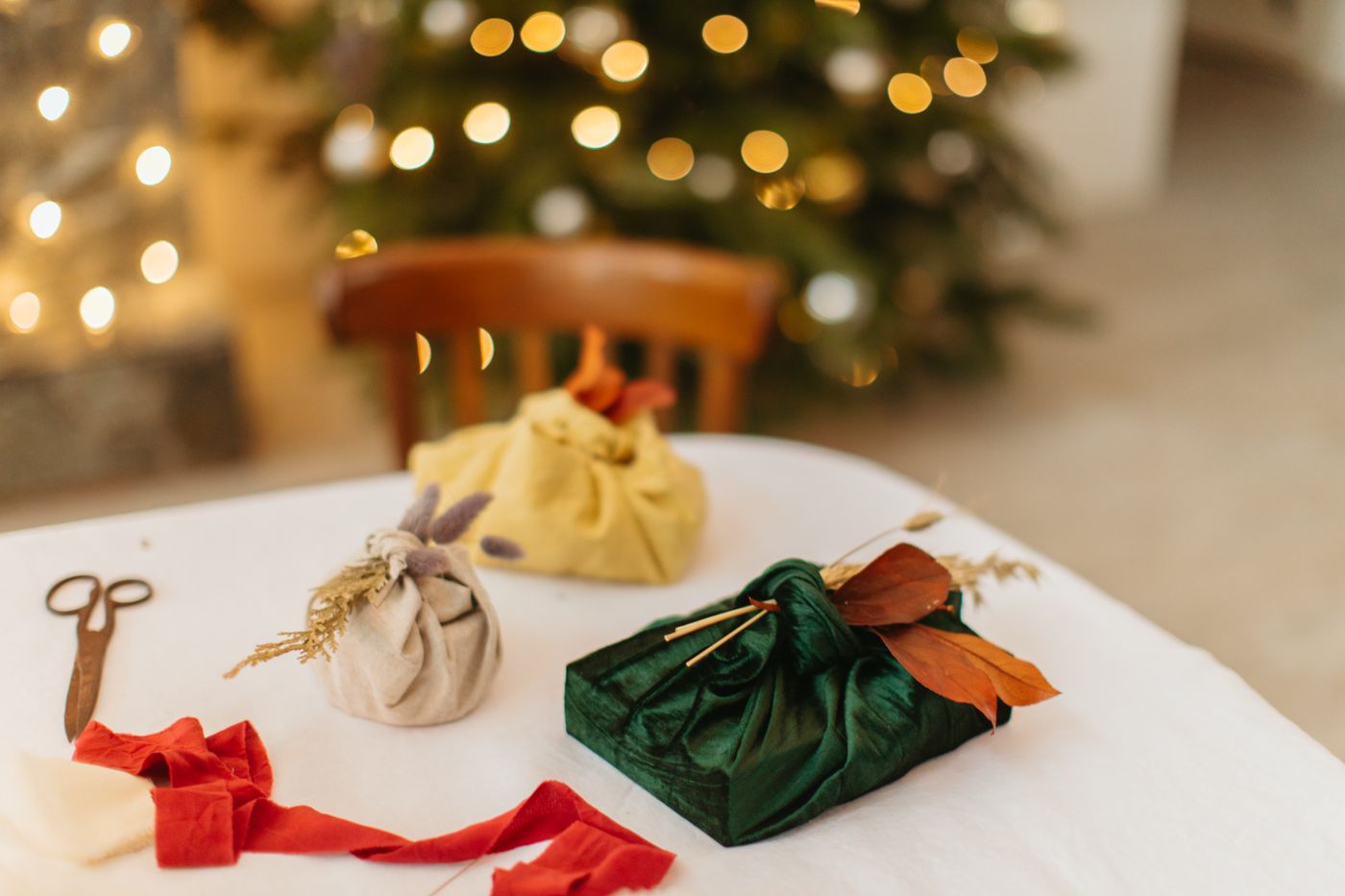
Children can help communicate the decision, but an adult should support the agreement. Do not leave a child responsible for chasing an expensive borrowed scarf after a busy family celebration. The practice cloth and the real-event cloth need not be the same item.
Keep reusable pieces in one modest place
After unwrapping, check whether the cloth needs care and follow its instructions. Fold and store it appropriately once ready. Keep only the quantity the household expects to use rather than turning every attractive textile remnant into future wrapping stock.
Our gift-wrap and party-supply storage guide covers the broader collection. Within that system, separate reusable cloths from disposable papers, damaged ribbons, and unknown scraps. You should be able to choose a suitable wrap without emptying an entire holiday box.
If the activity exposes a larger pile of general craft materials, use a manageable art-supply arrangement for those supplies instead of expanding the gift-wrap container. Different projects can share a room while keeping their materials and closing routines understandable.
Move from practice to a real gift
Choose one uncomplicated present for the first real attempt. Let the child repeat the method with enough time to start over if needed. Check the completed parcel together, including the recipient label, underlying package, and the plan for the cloth afterward.
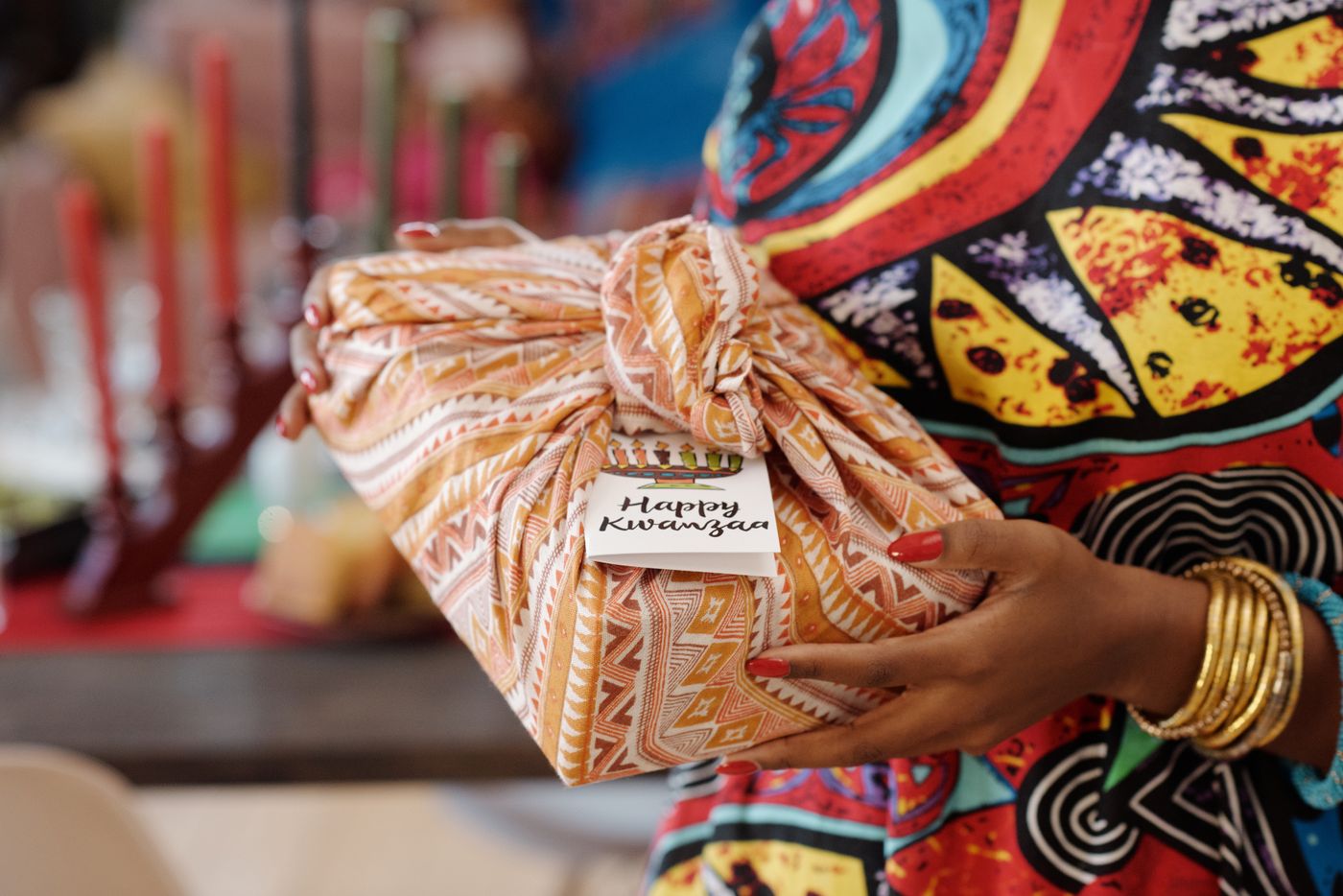
Give the child credit for the work without promising a perfect result. A visible fold or uneven knot can be part of an object made by someone the recipient knows. The aim is a usable parcel and a skill the child feels able to repeat, not an adult-standard photograph.
Keep the family ritual small enough to repeat
Do not replace every household gift wrap in one session. Try fabric where it suits the object, the people, and the return plan. Keep other appropriate wrapping options available. Reuse becomes practical through repeated suitable choices, not through a large purchase of matching materials that the family does not actually use.
As children learn the routine, invite them to handle age-appropriate closing tasks. Our family chore-system guide offers a way to make shared tasks clear without covering the home in charts. Here, the tasks can be simple: gather the cloths, pair labels with parcels, and return dry practice materials to their place.
The activity is finished when the gift is ready or the practice box is unwrapped, the cloth’s ownership is clear, and the small kit has returned to storage. Keep the part the family enjoyed and simplify what felt cumbersome. A pleasant repeatable skill is a better outcome than a large collection of parcels no one knows how to open.
Explore related household decisions in our Family Home hub.
Sources and editorial scope
Editorial research checked October 15, 2026. Trend-report dates and limitations are stated in the article; these are editorial applications of published signals, not verified October keyword rankings. Practical household guidance; illustrations do not document a tested household or authenticate a pictured material.