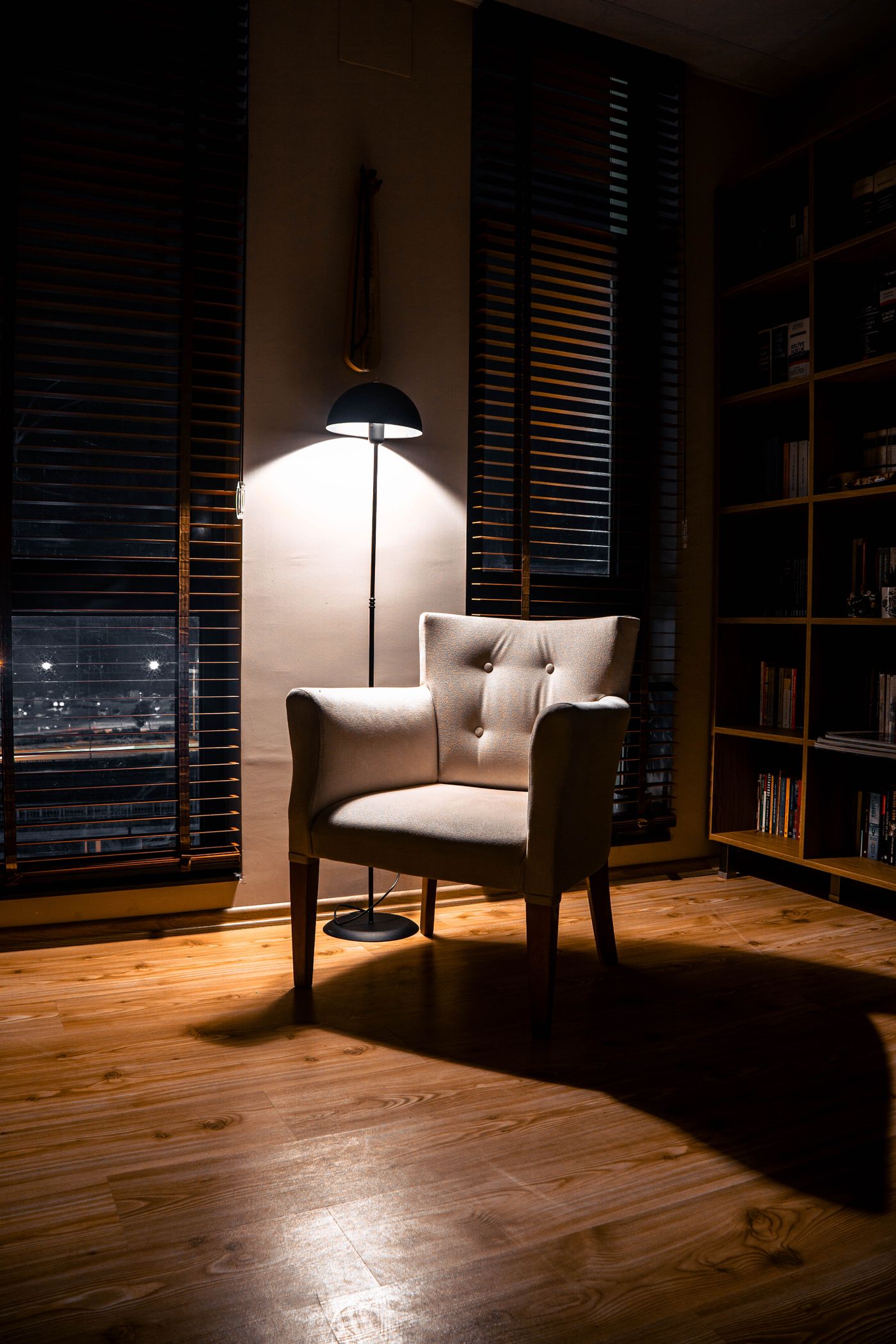
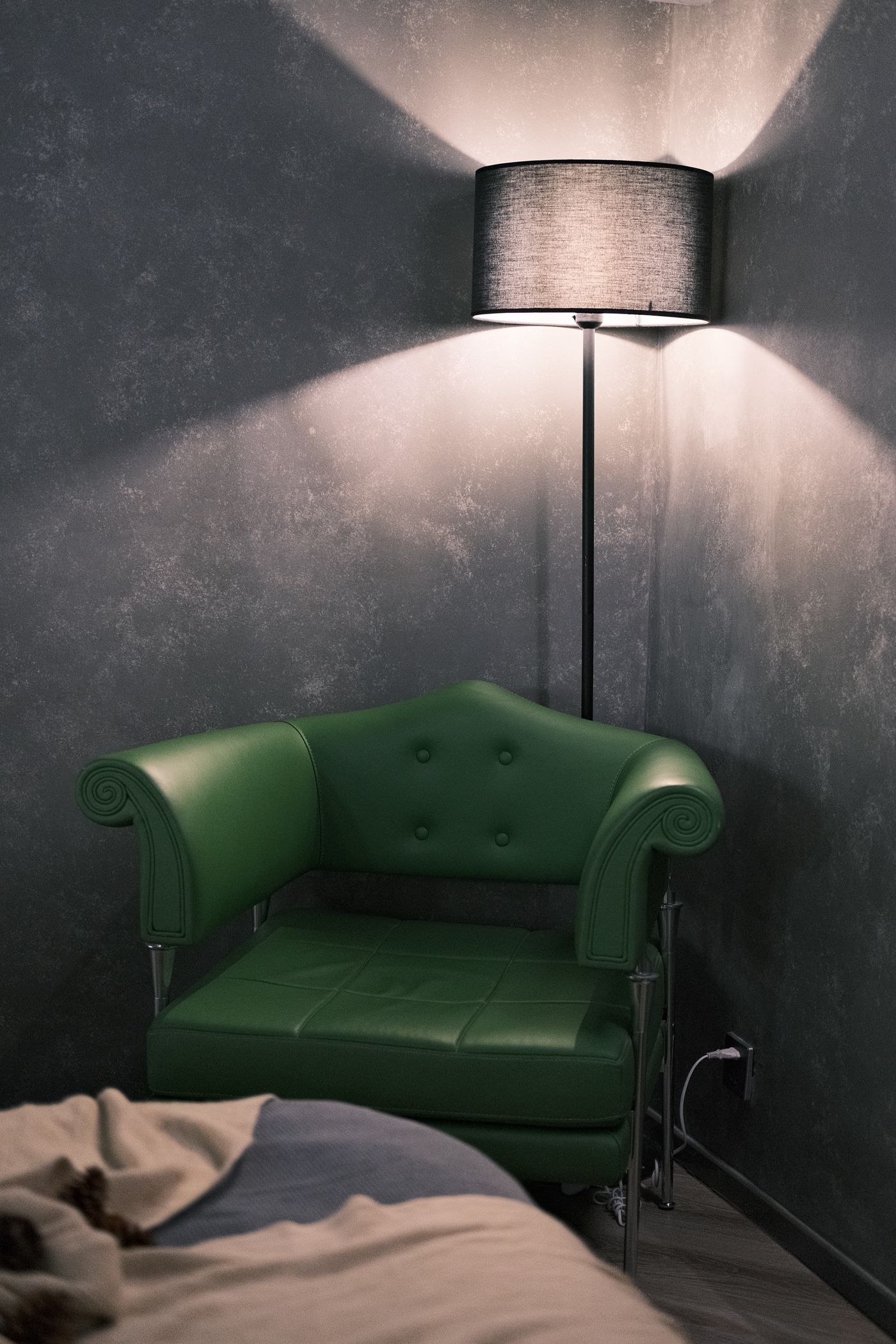
A floor lamp occupies several parts of a small room at once. Its base uses floor space, its shade projects above nearby furniture, and its cable needs an appropriate route to power. When the lamp serves a reading chair, plan those parts around the occupied seat and the way someone approaches it during an ordinary day.
The Houzz fall 2026 report provides context for rooms shaped around personal routines. This guide applies that direction to a chair-and-lamp arrangement. It focuses on usable space rather than prescribing a universal light level, electrical installation, or fixture clearance.
Start with the chair in everyday use
Put the chair where you actually sit, with the furniture and household objects that normally surround it. Include a footstool if you use one, and account for any movement the chair is designed to make. A layout drawn around a tightly parked empty chair may fail as soon as someone sits down and extends their legs.
Walk through sitting down, reaching for a book, and standing again. Note which side you naturally approach from and where your feet go. Keep these movements visible in the plan. A floor lamp should not occupy the small clear patch that currently makes the chair easy to use.
Measure the whole lamp, including projections
Use the complete product dimensions for the base, stem, shade, and any projecting arm. A listing’s nominal height does not describe the floor area or the space above an armrest. Check whether the shade or arm can move and what adjustment positions the maker actually permits.
For an existing suitable lamp, inspect the real outline in its normal working position. For a proposed purchase, use the maker’s drawings and measurements. A paper outline can help represent scale in a room without pretending to verify the real fixture’s balance, light output, or installation requirements.
Keep the chair’s approach route available
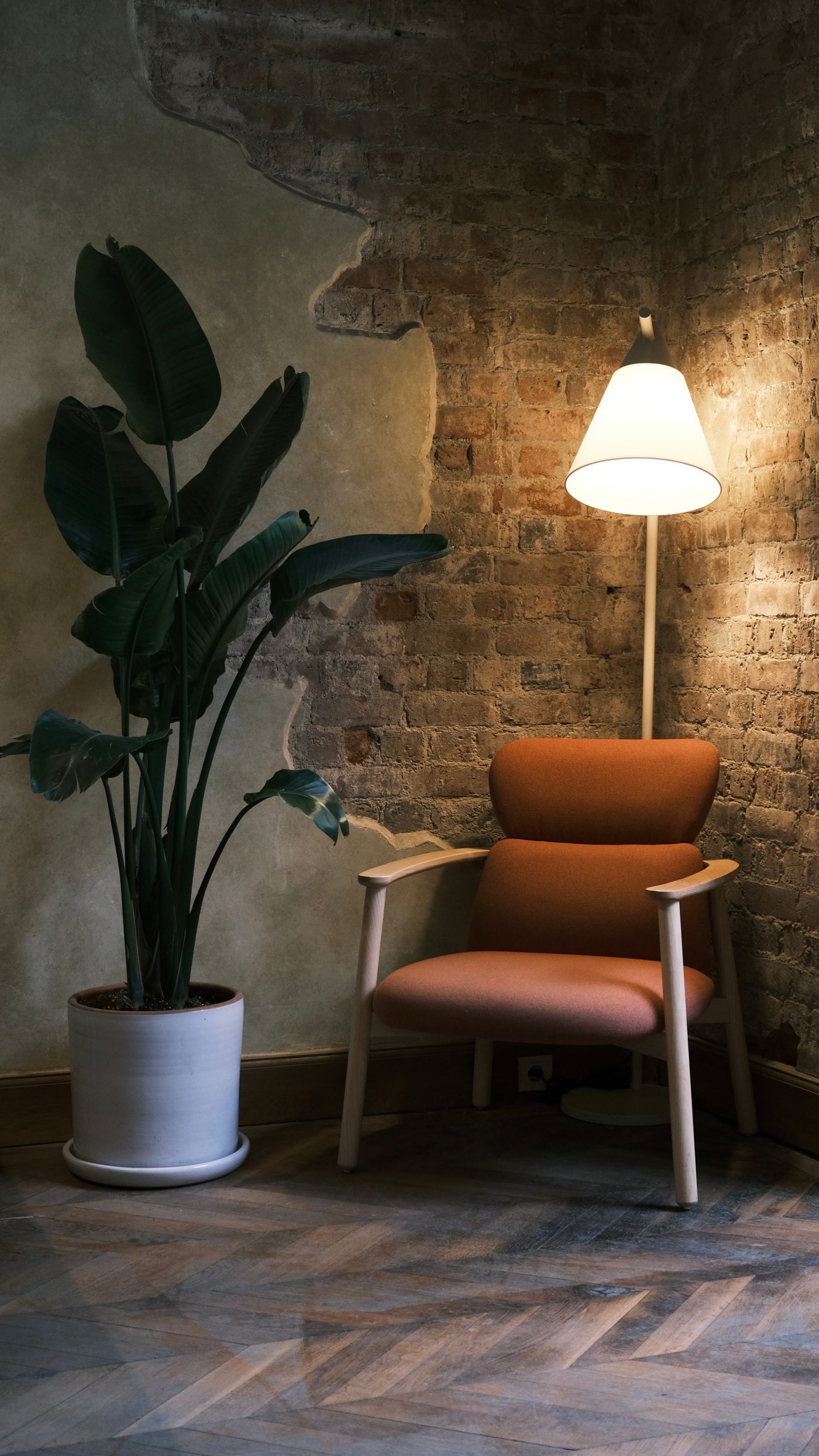
Place the proposed base outside the path used to enter the seat and stand up. Check the arrangement while another household member passes through the room if that reflects normal use. A lamp base can be easy to overlook when its upper shape appears visually light.
Look at the complete route rather than one gap beside the armrest. If the chair must shift slightly for another household task, include that ordinary change too. Do not solve a conflict by assuming everyone will remember a special stepping pattern around the base. A different lamp position or a different suitable fixture may serve the chair more naturally.
Check the relationship with the rug
If the chair sits on or beside a rug, evaluate the base position using the lamp maker’s stability and placement requirements. Do not assume a base that feels stable on one surface will behave the same across a change of level or a thick textile. Follow the actual product’s guidance for its support.
The reading-chair rug guide addresses the surrounding furniture footprint. Keep that decision connected to the lamp layout without treating the rug as a way to conceal a problem. The required support and appropriate cable route still need to work with the actual floor and textile.
Reserve the movement above the armrest
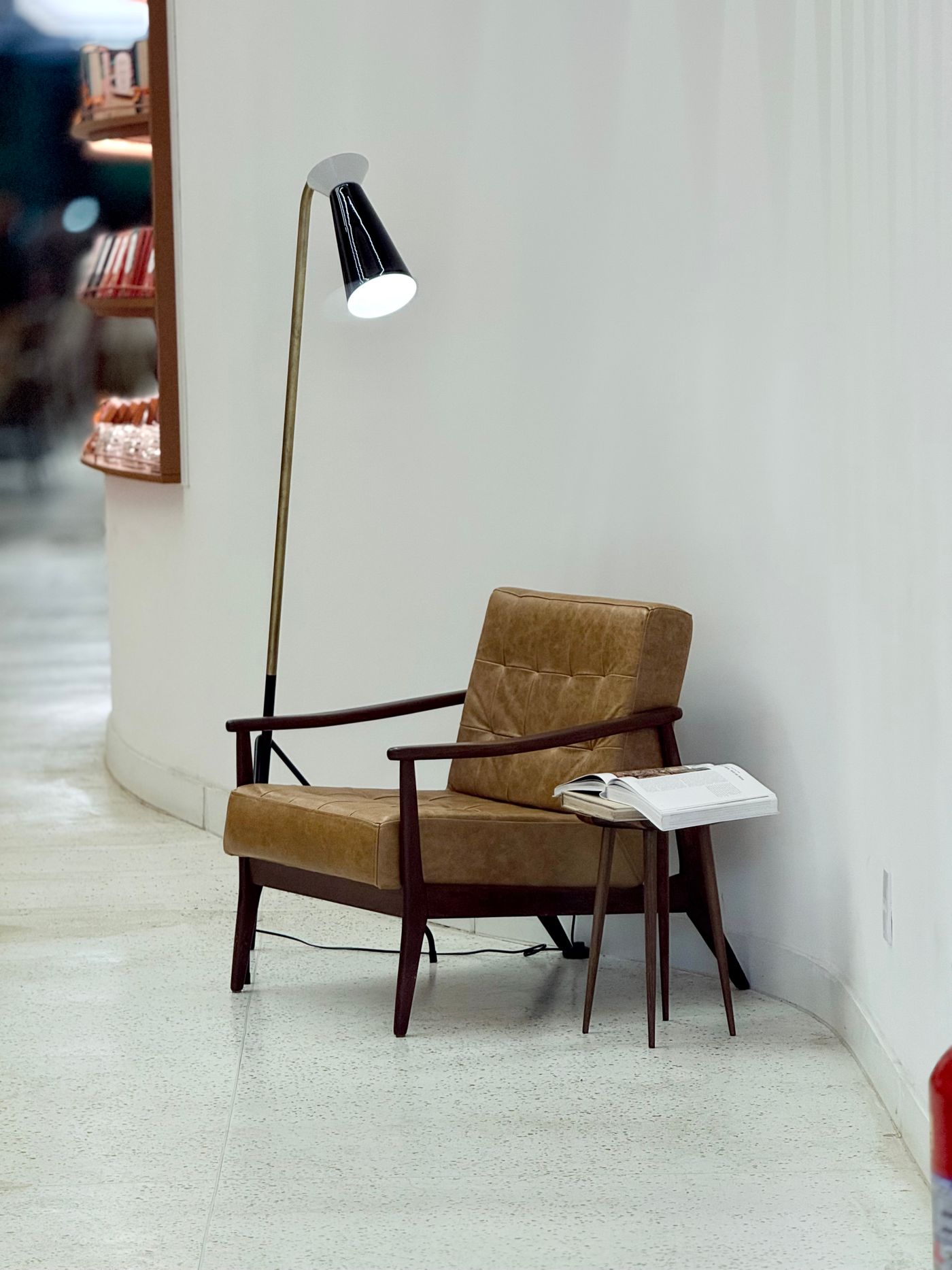
A shade or projecting arm can overlap space that a person uses when sitting, reaching, or standing. Check its actual height and position with the intended reader. Avoid relying on the view from the doorway, where the shape may appear neatly separated from the chair.
If the fixture is adjustable, assess only the movements its instructions permit. A long reach is not automatically useful if the base or arm must occupy an unsuitable position to achieve it. Keep the fixture supported as designed throughout any trial. Do not improvise a clamp or support for a freestanding product.
Plan the power route with the furniture in place
Identify the exact product’s power arrangement and follow its instructions. For a corded lamp, check the whole route to an appropriate outlet while the chair and nearby furniture remain in their working positions. A cable hidden in a photograph can still require a substantial real-world route.
Avoid making the normal chair approach depend on stepping over a cable. Do not invent an unsupported extension, routing method, or furniture modification to make a proposed lamp fit. If the appropriate route cannot be arranged, use that constraint to narrow the fixture choice before purchasing.

Make the controls reachable during the real routine
Find the switch or control from the position in which you usually begin and end reading. A control may be on the fixture, cable, or another part of the supplied arrangement. Its location affects the furniture plan. Check the actual action rather than assuming every floor lamp turns on at a convenient hand height.
If another person uses the chair, let them try the permitted controls as well. A setup can suit one person while asking another to reach awkwardly behind the seat. Keep the household’s users part of the choice instead of selecting a fixture only because it matches the room’s other metal or wood finishes.
Preserve the space the product requires
Use the supplied instructions for permitted lamps, bulbs, placement, and clearances. Keep those requirements separate from a decorative styling preference. Nearby curtains, shelves, and other objects may affect whether a proposed position is appropriate. This guide does not supply clearance numbers for an unidentified fixture.
Observe any furniture that moves near the lamp, including doors and drawers. A cabinet door can enter the shade’s space even when its closed outline appears well clear. Test the complete movement before making the lamp’s location permanent, just as you test the occupied chair rather than its parked position.
Compare the room’s other seating tasks
If the chair is part of a conversation arrangement, make sure the lamp does not disrupt the way people face one another or move between seats. The two-seat planning guide helps evaluate the occupied arrangement. A lamp that serves solo reading can still need a different position during shared use.
For a flexible room, compare the actual demands of occasional floor seating using the floor-cushion guide. Keep the lamp’s support and cable route appropriate during those changes. A portable-looking fixture should not become something the household repeatedly moves without a clear, suitable destination.
Give care access a place in the plan
Check whether you can reach the fixture appropriately for its ordinary care and permitted bulb or other component changes. Retain the product identity and instructions. A lamp wedged behind several heavy objects may be enjoyable to look at while remaining inconvenient to maintain.
Keep the chair-and-lamp group within the room’s actual usable space. If every care task requires dismantling the reading corner, note that burden before choosing more furniture for the same area. A smaller complete footprint or a simpler arrangement may provide a more repeatable routine.
Choose the change the trial actually needs
Use an existing suitable lamp for a trial where its instructions and conditions allow. Record the concrete failure if one remains: the base blocks the approach, controls are awkward, the permitted shade position conflicts with movement, or the power route is unsuitable. Those observations form a useful buying brief.
The arrangement is successful when the person can approach, sit, use the light, and leave while the lamp remains appropriately supported and powered. Style matters, but it belongs within that practical relationship. A floor lamp earns its position by serving the chair without making the small room harder to use around it.
Explore related decisions in our Small-Space Living hub.
Sources and editorial scope
Editorial research checked October 24, 2026. Published trend reports are context for these editorial applications, not verified live keyword rankings. Practical household guidance; photographs do not document a tested household or authenticate pictured materials.