
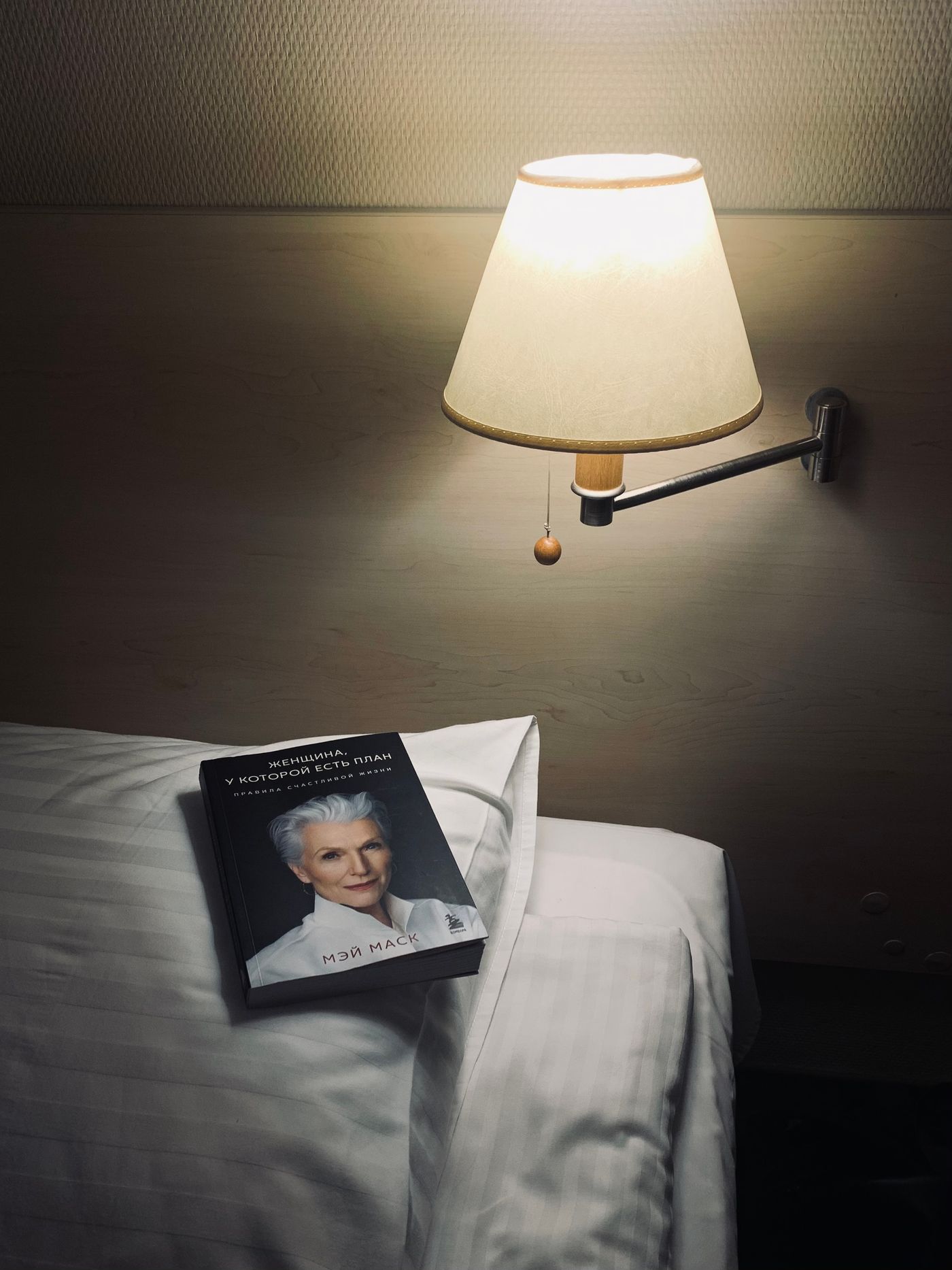
A bedside light needs to work from the place where you read. A fixture that looks balanced from the doorway may put its bright opening directly in your eyes once you settle against the pillows. Test the page, your ordinary sitting position, and the controls together before choosing where a new reading light should go.
The Houzz fall 2026 report describes homes shaped by personal routines. A useful bedside reading position is one application of that approach. This is a room-planning guide, not electrical installation advice or a claim that a particular fixture will suit every reader.
Start with the actual reading position
Set the bed up as you ordinarily use it, including the mattress, pillows, and support you choose for reading. Sit in that position with a typical book or other reading material. A showroom image of a perfectly flat bed does not describe the height of your head and page during an evening session.
Notice where you naturally hold the book and whether you change sides or positions. If the reading position is uncomfortable before the light is considered, address that separately. Do not plan the fixture around a temporary pose that you maintain only long enough to take a measurement. The ordinary routine is the useful reference.
Check the existing light before choosing another
Use the current suitable light in its intended manner and see what is actually missing. You may need a different permitted adjustment, a clearer bedside surface, or another appropriate location. Record the specific problem: your hand casts a shadow over the page, the switch is hard to reach, or the bright opening remains in view.
Keep observations concrete. Looks too small is a style judgment, while cannot reach the switch from the usual position is a functional problem. Both can matter, but they lead to different buying decisions. An existing usable lamp may remain the best choice after a small layout adjustment.
Evaluate the page and the visible opening together
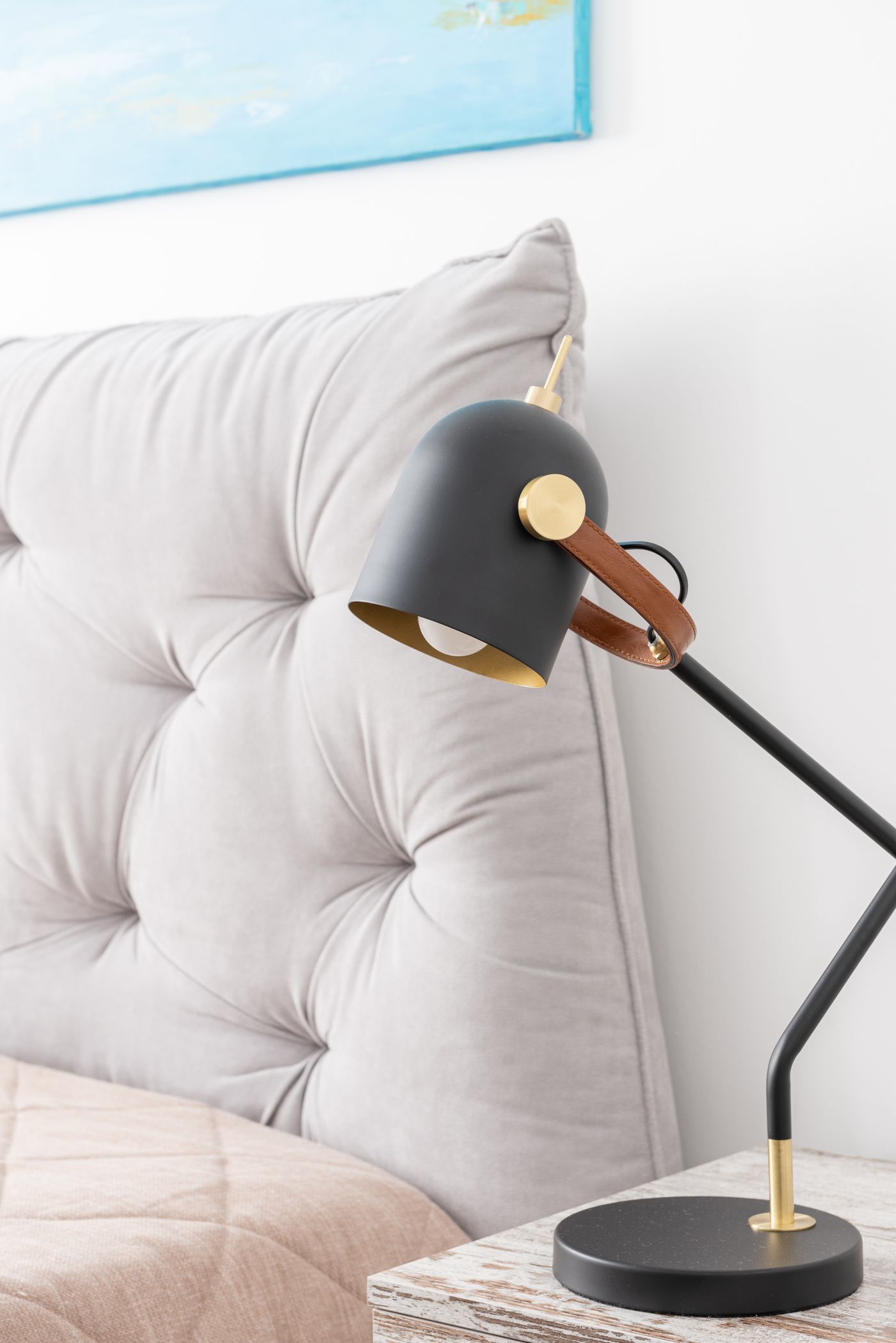
Look at the reading material while using the fixture according to its instructions. Check whether the area you need is usefully lit and whether you can keep a comfortable view of it. Then notice how much of the bulb or bright opening you see directly. A shade’s decorative appearance alone does not explain what it will look like from below.
For an adjustable fixture, try only its permitted movements and keep it supported as designed. Do not hold an unsuitable lamp above the bed or improvise a mounting point to test an idea. If you are planning an uninstalled fixture, compare its drawings and adjustment range with your measured position, then obtain appropriate product or installation advice where needed.
Account for shadows from your own hands
Turn a few pages or move a pen if you regularly write beside the bed. Check where your hands and the book’s binding create shadows. A light positioned for one person’s usual hand may behave differently for another. Try the actual routine rather than assuming that one side of every bed is the correct side for a reading lamp.
A small change in the permitted angle or the page position may resolve the problem. If it does not, record the adjustment range you would need before shopping. Avoid choosing a fixture solely from its maximum reach; its usable position, shade shape, and intended mounting arrangement matter as a whole.
Place controls within the real routine
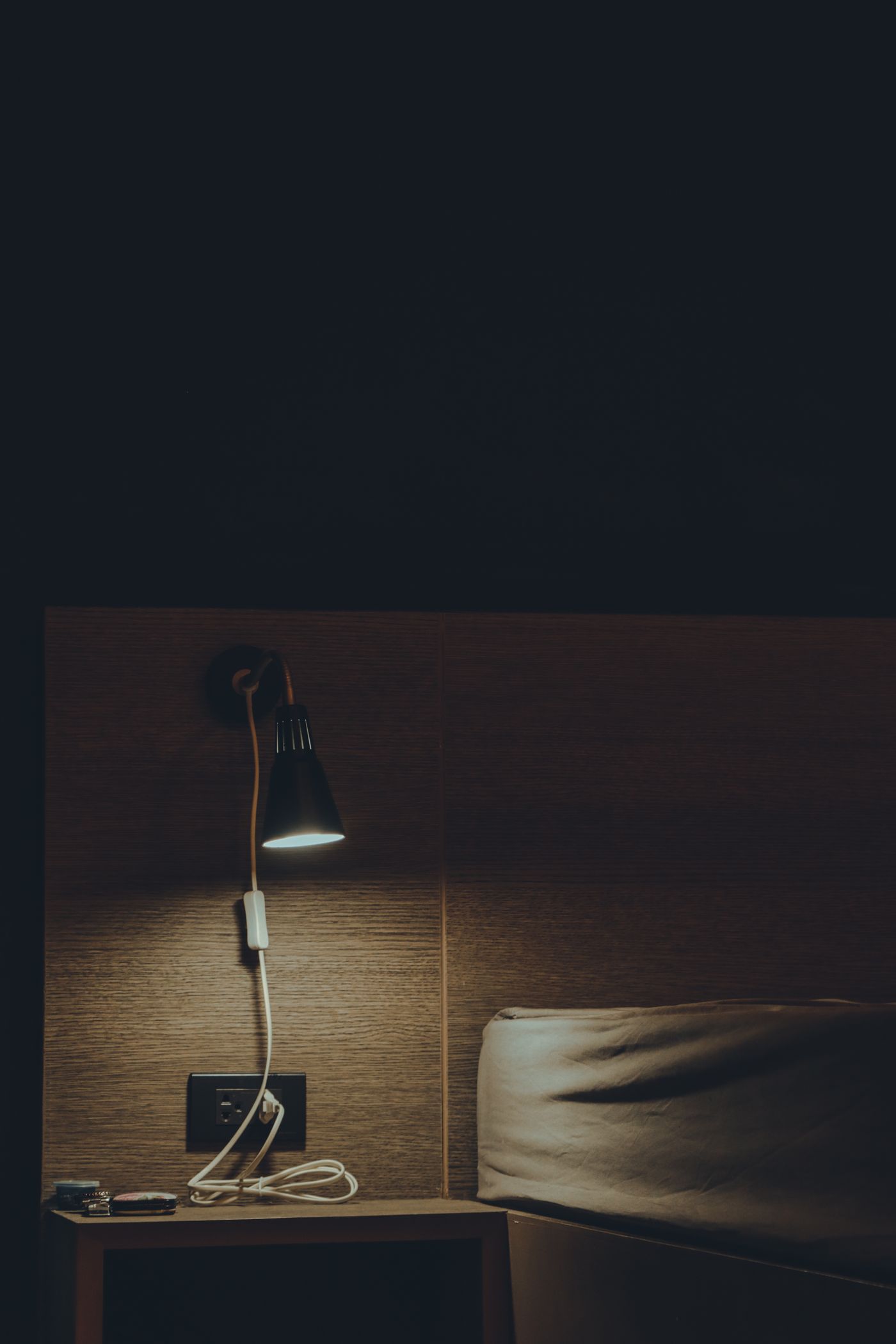
Find the switch or control while sitting in your ordinary position, then check the action needed when you finish reading. You should understand where the control is without searching behind pillows or reaching over a fragile object. If another person shares the bed, each person’s access may need its own assessment.
A smart control can add options only when the exact device and setup support them. It should not be assumed to solve an awkward physical arrangement. Keep the fixture’s ordinary controls and manufacturer instructions part of the decision. The bedroom door-and-dresser planning guide uses the same principle of checking moving actions rather than judging the room only while everything is still.
Include the bed’s movement and daily changes
People turn, sit up, adjust pillows, and change bedding. Assess whether the proposed fixture and any projecting arm remain clear of those ordinary movements. Check the product’s actual dimensions and required clearances. A small reading light can still occupy an important space near someone’s head or shoulder.
Consider the bed-making routine too. The small-room duvet-cover guide describes the space that bedding changes can require. Your fixture choice should work with those ordinary tasks. If the only apparent position interferes with handling pillows or moving the bed as needed, reconsider the layout before committing to a mounting location.
Assess the whole bedside surface
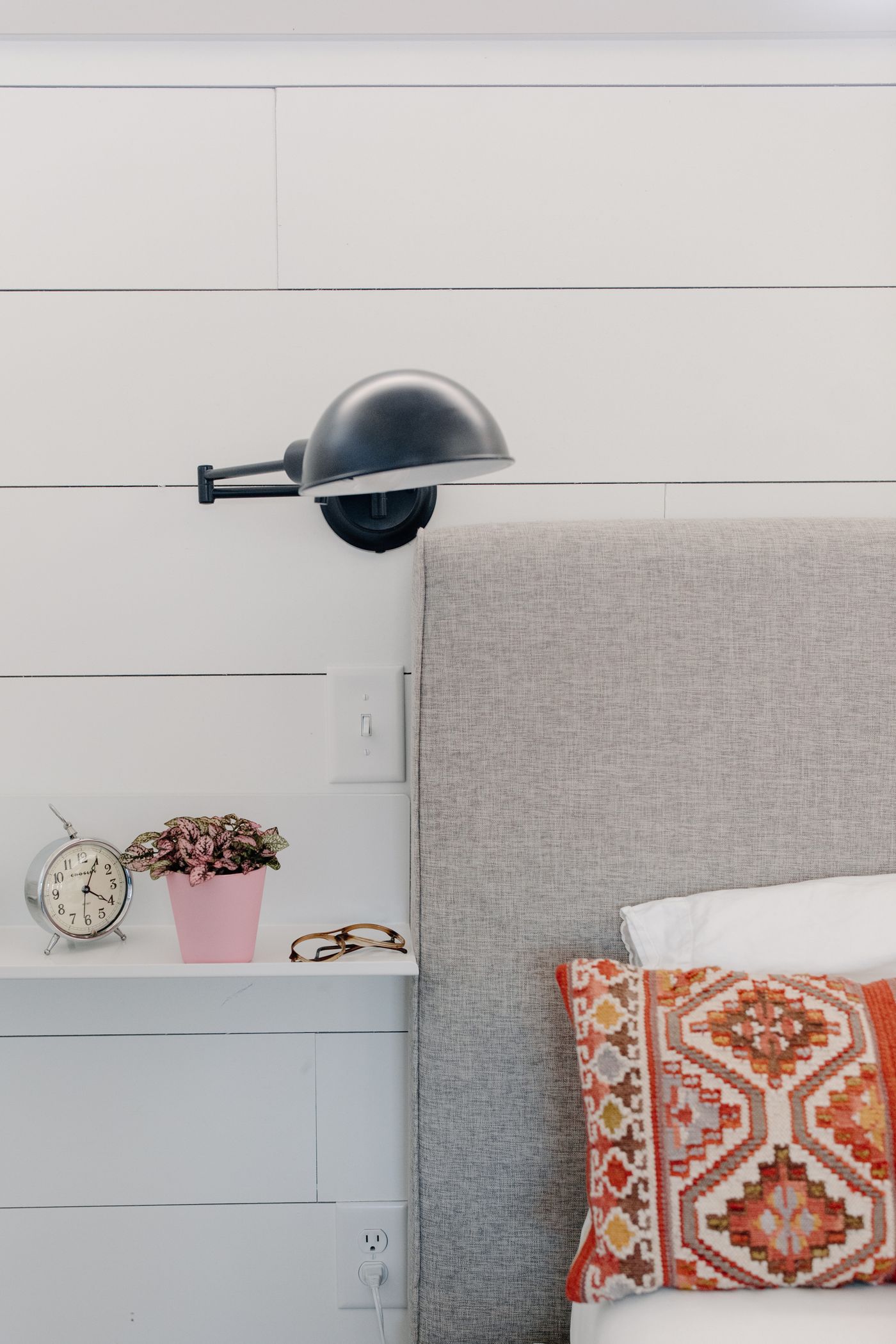
A table lamp needs its complete base supported on a suitable surface, plus room for appropriate access and any required clearance. Measure the actual bedside table, not just the space between the bed and the wall. A lamp can fit within that gap while still leaving no practical place for the book you are reading.
Keep the genuinely needed items in the trial: perhaps glasses, a small alarm clock, or the book itself. Remove unrelated accumulation before deciding you need a larger table. For a separate look at an extra bedroom surface, the dressing-bench guide helps distinguish a genuine daily use from adding furniture because a corner looks empty.
Plan power access as part of the fixture decision
Check the exact light’s power arrangement and supplied instructions. For a corded product, assess the complete route to an appropriate outlet without inventing an unsupported extension or routing method. A wall-mounted light is not automatically cordless, and a decorative image may hide a cable that still needs an appropriate real-world route.
Follow the manufacturer’s requirements and obtain qualified installation assistance where the product or circumstances require it. This guide does not prescribe wiring, mounting hardware for an unknown wall, or clearance numbers for an unidentified fixture. Those details belong to the actual product and installation. Resolve them before buying a light that depends on assumptions about the room.

Try the shared evening arrangement
If another person uses the room, check the reading setup while their ordinary evening arrangement is also in place. Ask what they notice about the light and controls. A successful position for the reader may still need a change in timing or routine to work for both people. Keep that discussion about the actual experience rather than promising that a particular shade will isolate all light.
Compare a reading light with the neck-light review only if that alternative fits the reader’s preferences and use. It addresses a different form of equipment. A product that avoids a lamp base can still require its own comfort, control, charging, and storage assessment.
Choose the smallest useful change
Write a brief buying note only after the trial: the normal page position, the required useful adjustment, the complete supported footprint or appropriate mounting location, the control action, and the power route. Add style preferences after these practical requirements. A fixture should support the reading routine as well as the room’s appearance.
When the light is in use, keep its care information and inspect its position again if the bed or bedside furniture changes. A new mattress or headboard can alter the relationship that made the earlier setup work. The useful outcome is a reading position you can repeat comfortably, with ordinary access to the page and controls and a clear plan for the room around it.
Explore related decisions in our Small-Space Living hub.
Sources and editorial scope
Editorial research checked October 24, 2026. Published trend reports are context for these editorial applications, not verified live keyword rankings. Practical household guidance; photographs do not document a tested household or authenticate pictured materials.
