
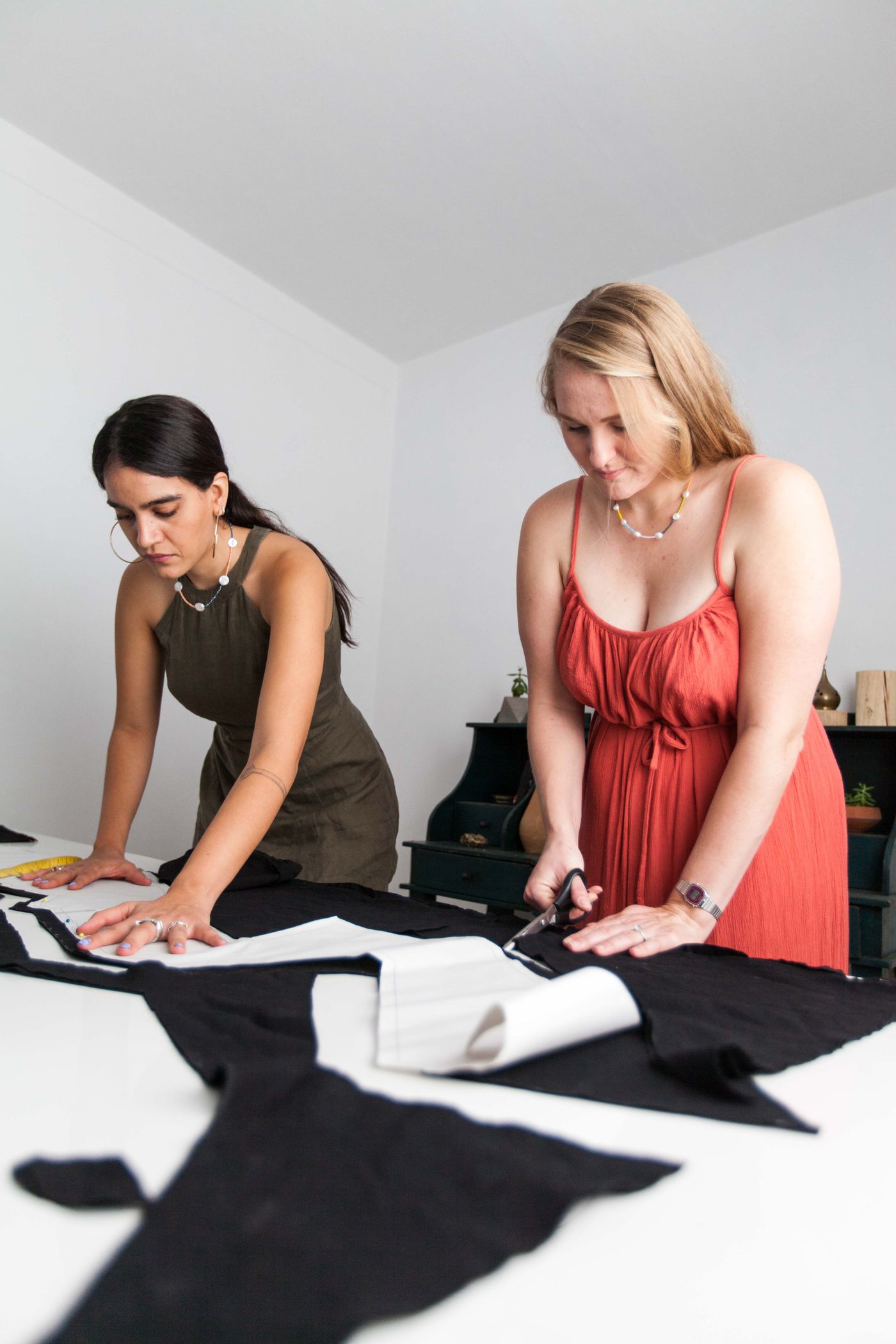
Cutting sewing fabric requires a different space from running a sewing machine. The complete pattern layout may be wider or longer than the machine’s working area, and the fabric needs appropriate support while the pieces remain in position. Before using a small room for the task, compare the actual pattern and fabric with the surface you can provide.
Etsy’s fall and winter 2026 report highlights visible making, while Houzz’s fall report describes interiors shaped around personal routines. This guide applies those directions to an existing sewing project. It plans the working surface and room transition; it does not replace the pattern’s cutting instructions or teach a universal fabric layout.
Begin with the current pattern and fabric
Read the instructions for the exact version and size you intend to use. Identify the relevant layout and the actual fabric width, rather than assuming the first diagram in the packet applies. A pattern may provide different arrangements for different sizes, widths, views, or material characteristics. Keep the correct information beside the project before moving furniture.
Our pattern-organization guide can help distinguish the working version from older printouts and unrelated pieces. Make sure the pieces you are about to arrange belong to the intended project. A complete cutting surface is of little help if two nearly identical sleeves came from different versions of the pattern.
Check any preparation the fabric requires before cutting and follow the appropriate instructions. Do not use a space-planning session as a reason to bypass preparation that affects the project. The room should accommodate the material in the condition and layout required, rather than the project being altered to suit an available corner of the table.

Measure the arrangement rather than just the table
Record the usable surface dimensions after allowing for anything that cannot be moved. Include the working layout, not only the largest single paper piece. A long narrow table and a shorter wide table can offer similar area while accommodating very different arrangements. The outline matters, especially where the pattern requires a fold or a particular directional layout.
Use the pattern instructions to understand how the fabric and pieces should lie. Do not rotate pieces away from required grain, nap, print direction, or other constraints merely to make them fit a smaller rectangle. If the layout cannot be accommodated appropriately, choose another surface or a different workable project plan before cutting begins.
Keep unverified assumptions visible. If a table leaf changes the usable area, check the actual furniture instructions and surface rather than relying on a remembered expanded length. If a protective cutting mat is required for your tools, include its usable dimensions too. A narrow mat cannot safely be treated as though it protects the whole table.
Support the fabric where it needs support
Look beyond the paper pieces to the fabric extending around them. Material hanging from an edge can affect the arrangement, and a folded bundle placed casually beside the layout may interfere with access. Follow the project’s instructions for handling the actual fabric and choose a surface that supports the task appropriately.
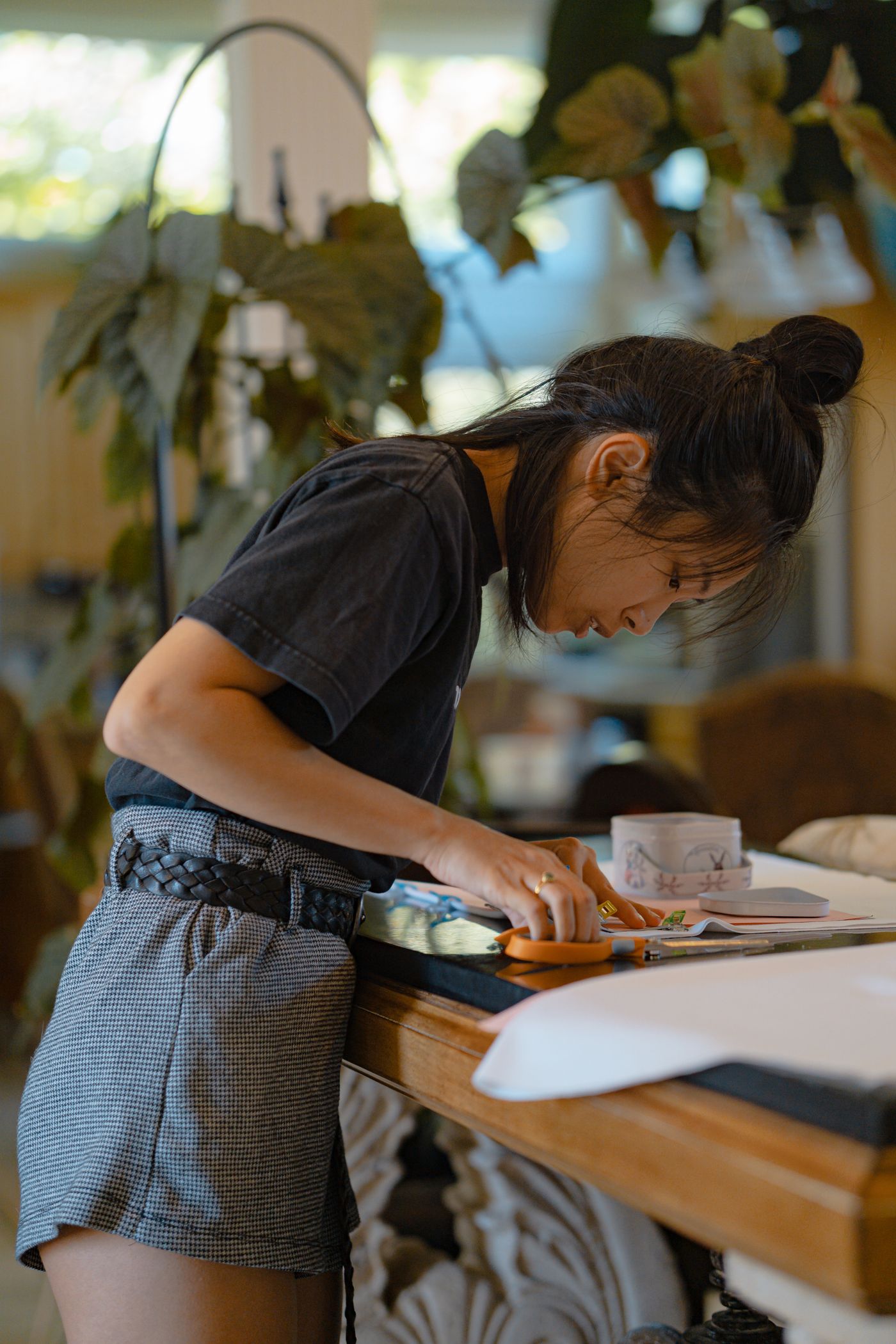
Avoid bridging a gap with an improvised board or two unrelated pieces of furniture without an appropriate supported arrangement. A surface that looks level in a photograph is not proof of stability or suitability for cutting. Use furniture and equipment intended for the work, within their instructions, and keep the surface protected as the actual tools require.
If the only appropriate surface is a shared dining table, use our shared-table transition guide to agree on the working interval. Clear it properly rather than cutting around meals, laptops, and household paperwork. A fabric project benefits from a predictable session more than from squeezing into an interrupted surface all day.
Include the person and the tools in the plan
The layout needs room, but so do you. Check where you will stand or sit, how you will reach the intended cutting area, and whether access from another side is needed. A large tabletop pushed tightly against two walls may provide area without providing comfortable access to its far corner.
Use suitable cutting tools according to their instructions and your ability to handle them. Keep the work within comfortable reach instead of stretching across the fabric. This article does not establish an ergonomic height for every person or a safe method for an unfamiliar cutter. The right setup depends on the actual tool, user, surface, and task.
Keep tools in a clear appropriate position when they are not in use, following their directions. Do not let small sharp items disappear among fabric offcuts or loose pattern paper. If children or pets share the room, plan the task and storage accordingly rather than assuming the table height alone controls access.
Separate cutting from machine sewing
Do not assume a compact sewing-machine station also provides the complete cutting layout. Our temporary sewing-machine station guide covers another stage of the project. The two tasks can share furniture at different times while needing different equipment positions, clear surface areas, and finishing steps.
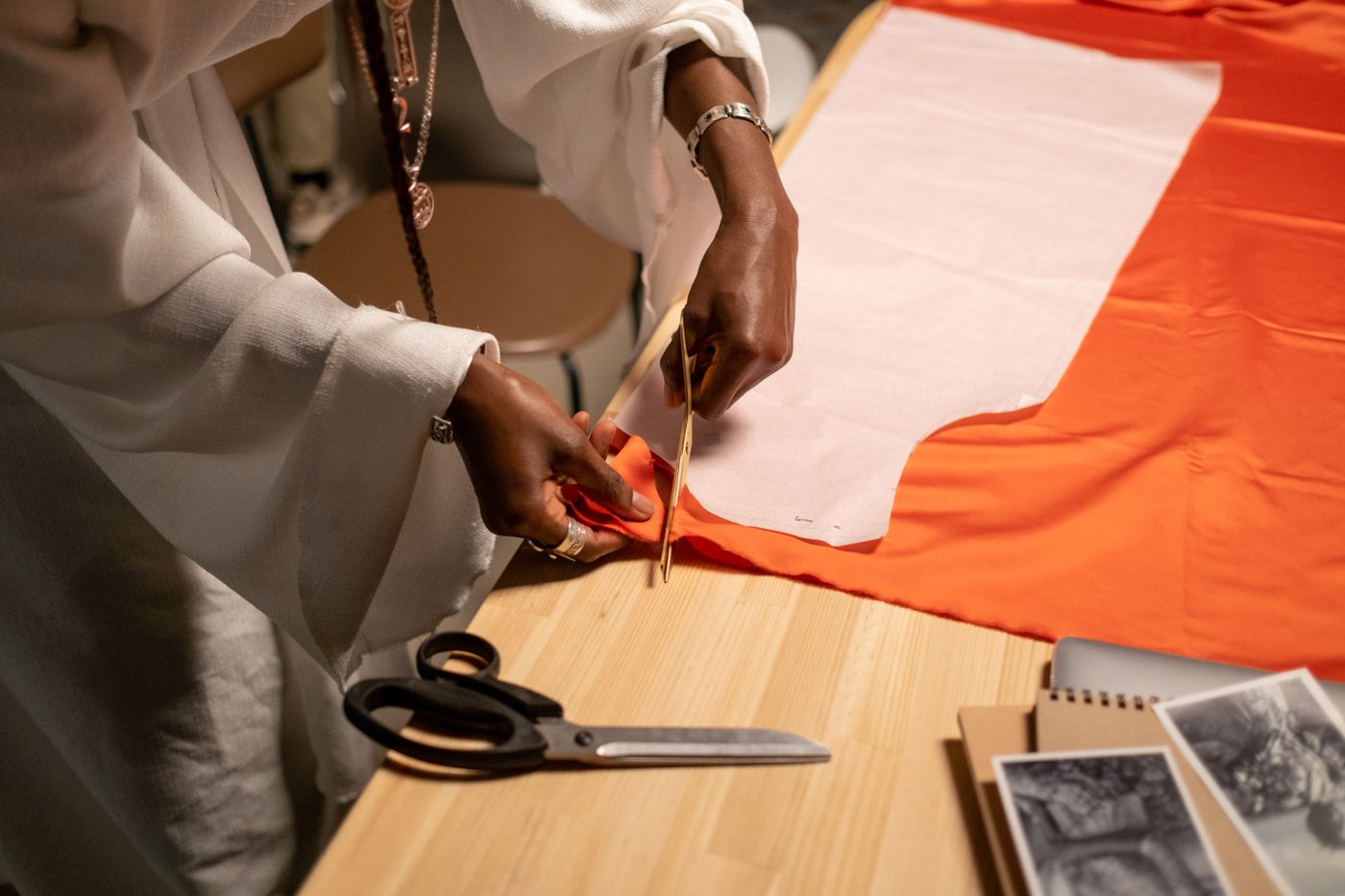
If the machine remains on the same table, assess whether it occupies space required by the cutting arrangement. Moving it appropriately to a suitable temporary home may be part of the session. Do not lift or relocate equipment beyond what you can comfortably handle, and follow the machine’s transport and storage instructions.
Keep cut pieces identifiable as the project directs. A set of similarly shaped fabric sections is easier to manage when the relevant pattern information remains connected. Do not leave identification until the whole tabletop must be cleared for dinner. Returning a confusing pile to a project bag simply postpones the work until the next stage.
Choose a stopping point before the room is needed
Estimate the session around a realistic project stage, with time to restore the room. If you cannot complete the intended layout and cutting appropriately within the available interval, arrange a longer session or a suitable way to pause. Do not cut hurriedly because someone needs the table sooner than expected.
Follow the pattern and material requirements when deciding whether a layout can be moved or stored between sessions. A photograph of the arrangement may be a useful reference, but it does not physically secure pieces or preserve a required alignment. Plan a pause you can actually carry out without guessing how to reconstruct the work.
Our guide to making room for furniture assembly illustrates the value of planning the active working area and the final clear-up separately. Keep the tasks distinct, but use that same attention to the space around the work. A project is easier to finish when the route out of the room has not become a storage position for everything moved aside.
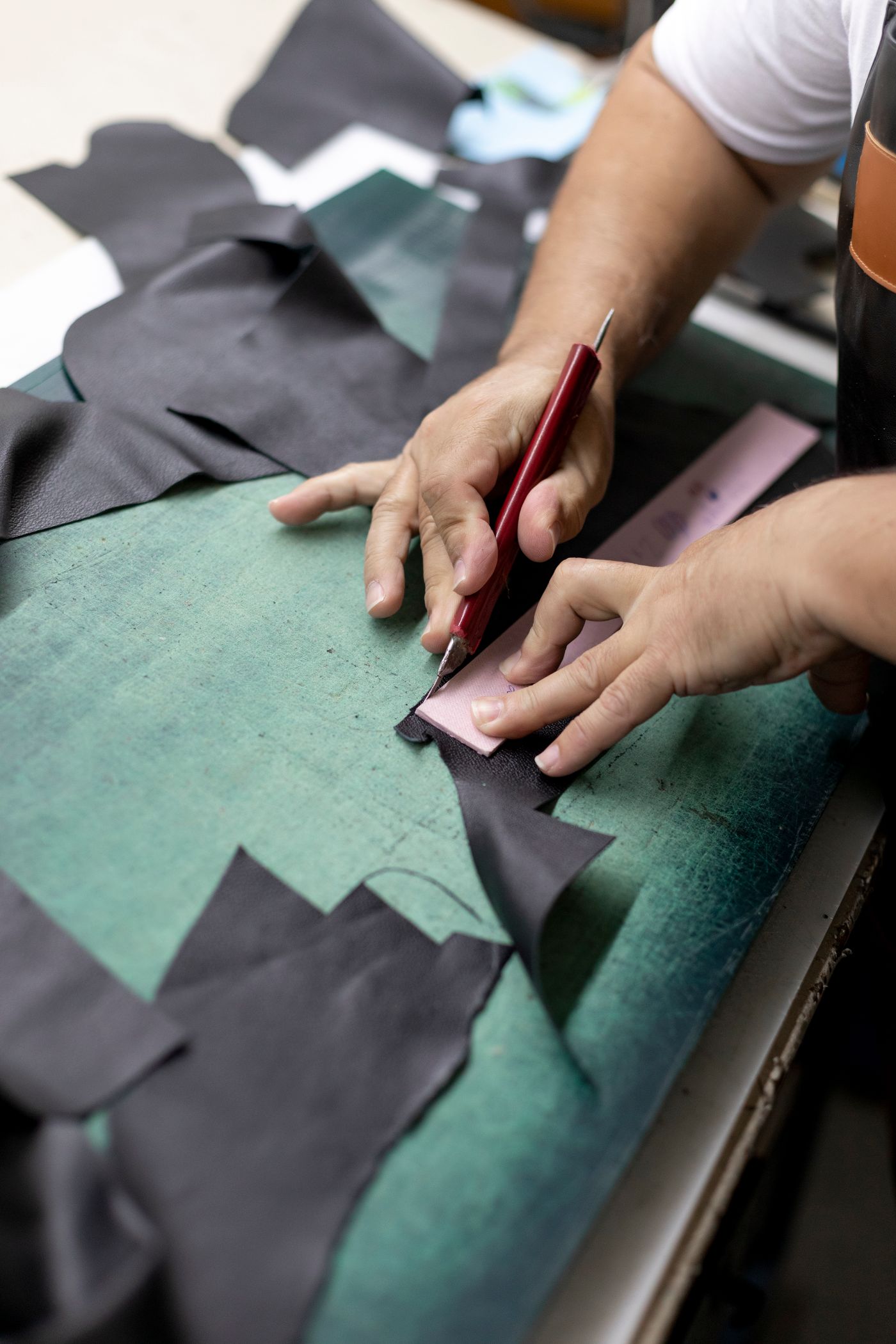
Clear the surface in a useful order
Return cutting tools and small components to their appropriate secure homes first. Reunite the pattern, notes, and cut fabric pieces in the arrangement the next project stage needs. Handle remaining fabric according to its intended use, distinguishing useful material from scraps that no longer serve a purpose.
Check the shared surface and surrounding floor before returning the room to normal use. Use cleaning methods appropriate to the furniture and materials involved. The cutting task should not leave a hidden tool, pin, or loose fragment for the next person to discover while working or eating.
Before buying a dedicated cutting table, remember what the trial showed. Was the difficulty surface size, access, storage, or simply an interrupted session? Choose a purchase only when it addresses the actual problem and can be used and stored appropriately. A workable cutting surface supports the pattern, fabric, and person together; it does not have to remain a permanent studio in a small room.
Explore related decisions in our Small-Space Living hub.
Sources and editorial scope
Editorial research checked October 21, 2026. Published trend reports are context for these editorial applications, not verified live keyword rankings. Practical household guidance; photographs do not document a tested household or authenticate pictured materials.
