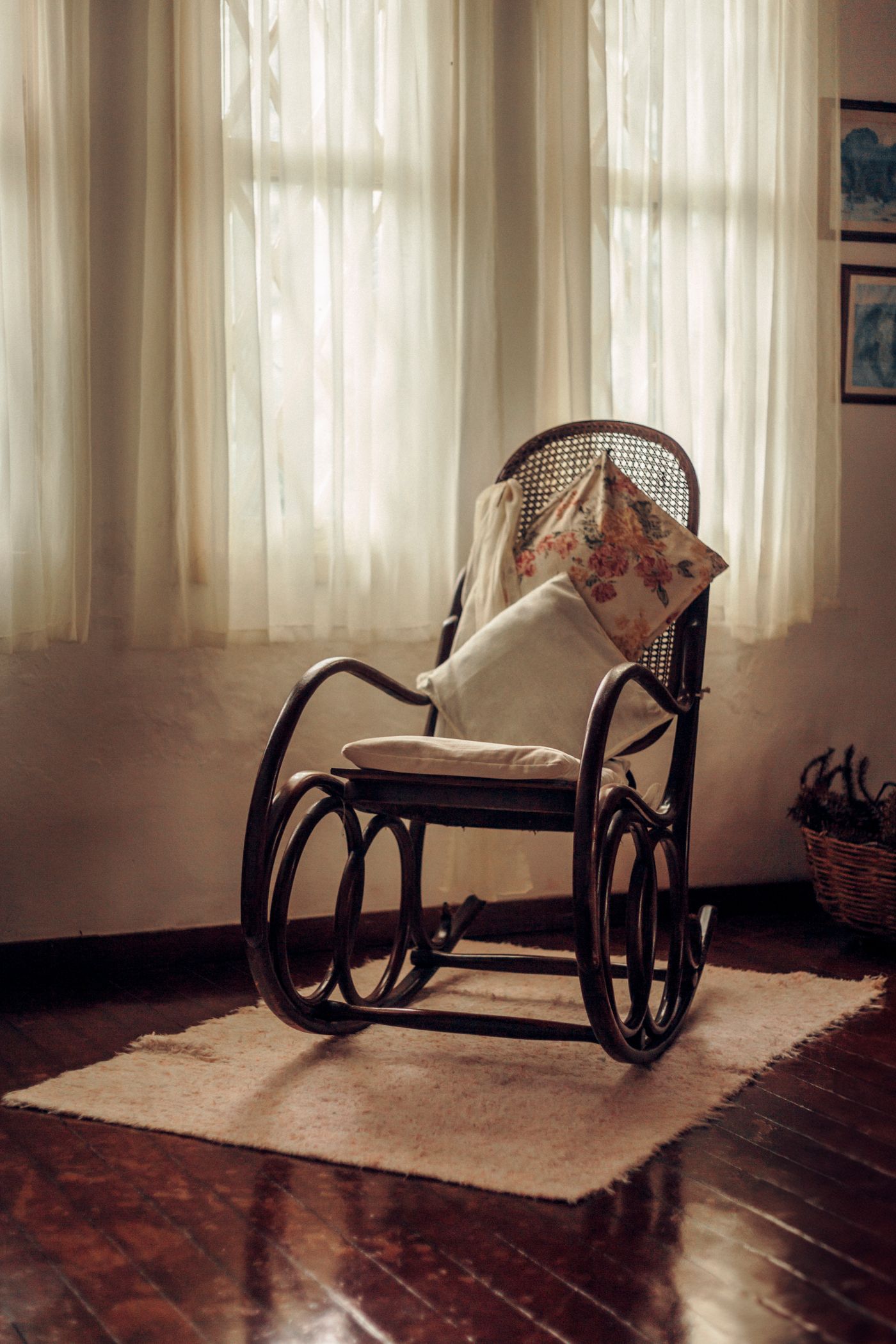
A rocking chair can fit between two pieces of furniture while still having no sensible room to rock. Its runners may extend beyond the seat, its back moves through an arc, and the person using it needs a clear way to sit down and stand up. A measurement taken while the chair is stationary answers only part of the placement question.
Assess the actual chair through its intended use before committing a small room to it. Check the manufacturer’s dimensions, assembly and use instructions, suitable floor support, and the surrounding route. A comfortable-looking corner in a photograph does not establish the clearance your chair requires.
Choose the purpose of the seat
Decide what the chair is for in this room. It might be a regular reading seat, a place to pause during the day, or a personal piece you already own and want to use. A chair chosen primarily for its shape still needs a practical role if it occupies limited floor space.
The Houzz fall 2026 report describes interiors with personal character and layered materials. An existing rocking chair can contribute to that direction, but the report does not establish a demand ranking or prove that a rocker suits a particular room.
Keep a needed stationary seat in the discussion. Replacing it with a rocker may change how the room is shared, how people converse, or where someone places their feet. Do not count both seats as available if only one can be used without moving the other.
If the room serves several people, ask whether the proposed location works for those who will actually use the chair and those passing nearby. A personal preference for rocking does not require the entire room to become a dedicated chair corner.
Read dimensions as a complete object
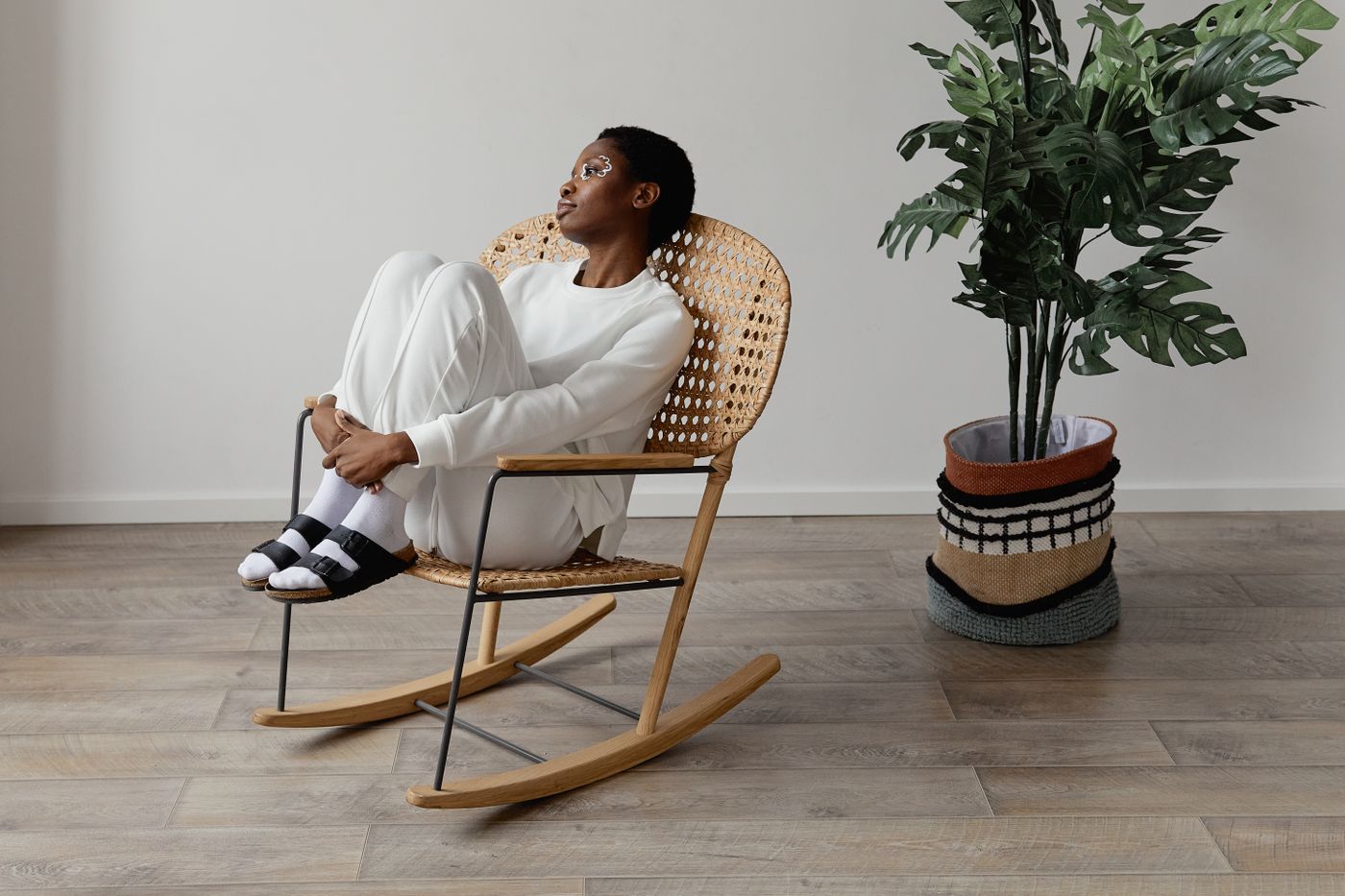
Check the width, depth, and height for the exact chair, including its runners and other projections. A seat-width figure may describe only the sitting area. A product photograph taken from above can also make long runners appear less prominent than they will be at floor level.
Confirm which dimensions describe the chair at rest and whether the maker gives additional movement or placement guidance. Do not calculate a universal rocking allowance from a different model. Runner shape, chair geometry, and any movement-limiting mechanism can differ.
Include the chair back and arms in the assessment. The floor outline may clear a cabinet while the upper back approaches a wall or curtain during use. A room arrangement needs to account for the complete moving object.
For a chair being bought, check the route into the room as well. The furniture delivery-route guide addresses real openings and turning points. A successful moving-day fit still needs a separate in-room use check afterward.
Check condition and assembly before a placement trial
For a chair you own, follow the maker’s assembly and condition checks before using it to evaluate the room. A loose fitting, damaged runner, or uncertain repair changes the task. Placement planning should not become an improvised structural test.
Use the chair within its intended use and any stated limits. Do not force it beyond its normal movement to discover an extreme clearance or lean against a wall to see what stops it. Follow the manufacturer’s instructions instead of treating a room trial as a way to establish a load rating.
If the chair is secondhand and the relevant information is missing, investigate its identity and condition appropriately. A previous owner’s statement that it always worked is not a replacement for resolving a visible fault or an unclear assembly.
Keep the floor area clear while checking the position. Loose objects, cables, and other movable items can obscure what the chair is actually doing or create an avoidable interruption during the assessment.
Plan for the intended movement
With a suitable chair correctly assembled and supported, assess its normal permitted use in the proposed location. Check front, back, and sides against the maker’s placement guidance. Do not bring fingers or objects into moving contact areas to measure a gap while someone is rocking.
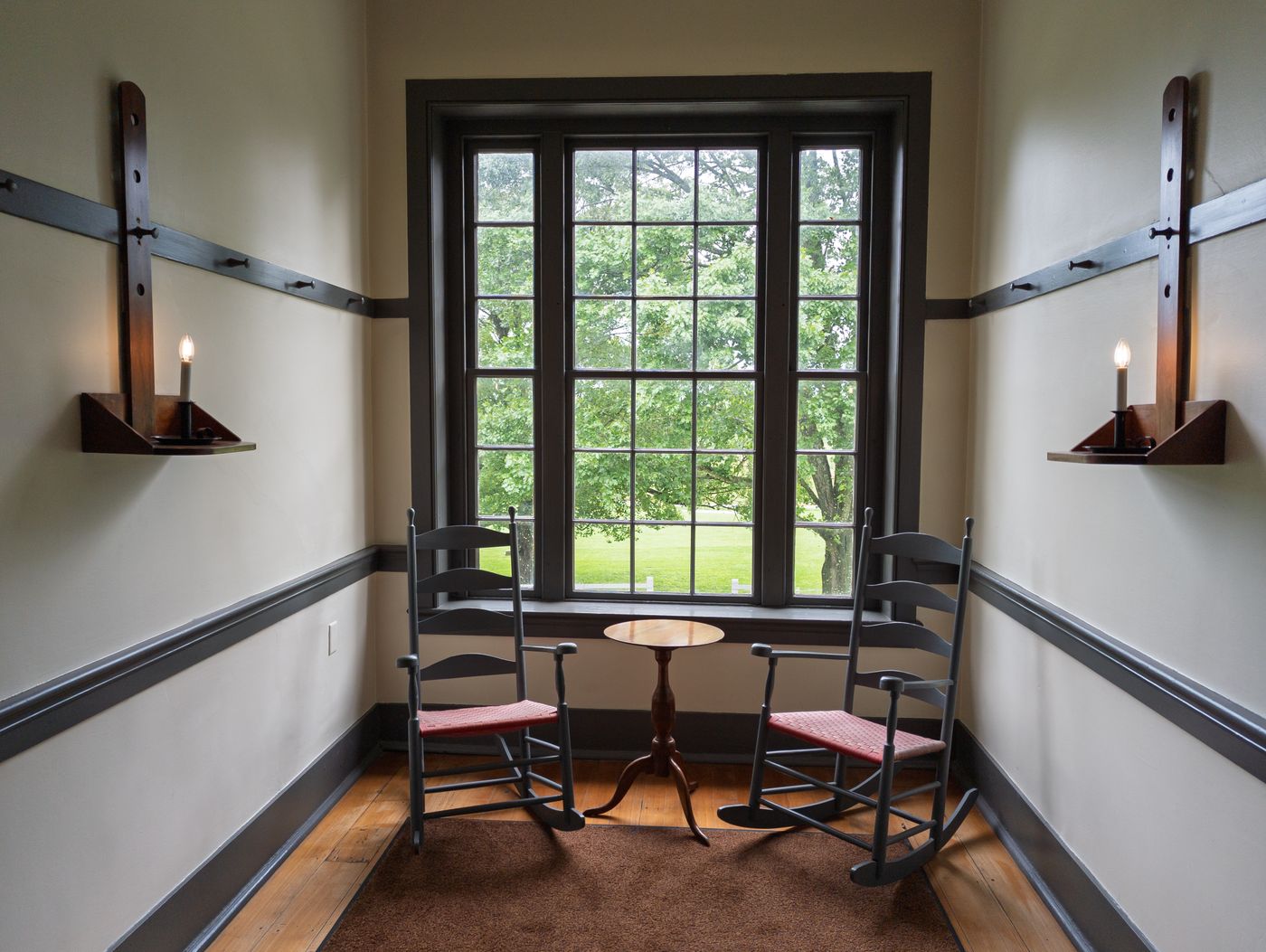
Look at the nearest surfaces throughout that intended movement. A wall, low shelf, side table, or plant pot can be clear at rest and become too close in use. Move the neighboring object or reconsider the location rather than relying on the chair to stop against it.
Watch soft furnishings as well. A curtain or blanket should not be arranged where it can catch or interfere with movement. Use the actual textile arrangement rather than evaluating the chair beside an empty window and adding long curtains afterward.
If the available space cannot meet the chair’s requirements, a smaller stationary seat may be the more useful option. The aim is to choose a workable room arrangement, not to prove that a particular purchase must fit.
Leave an approach and an exit
Check how a person reaches the seat and leaves it in normal use. A chair that can rock in a narrow opening may still be awkward to approach. Avoid requiring someone to step over a runner or squeeze between the chair and a cabinet.
Keep the room’s main route available to everyone else. A moving chair near a doorway can create a different boundary from a static chair tucked beside a wall. Consider routine traffic rather than assessing only the quiet moment when nobody passes.
Our two-conversation-seat arrangement guide emphasizes usable seating positions. Apply the same priority here: a room with one well-placed chair can serve people better than a room with two seats that cannot be used together.
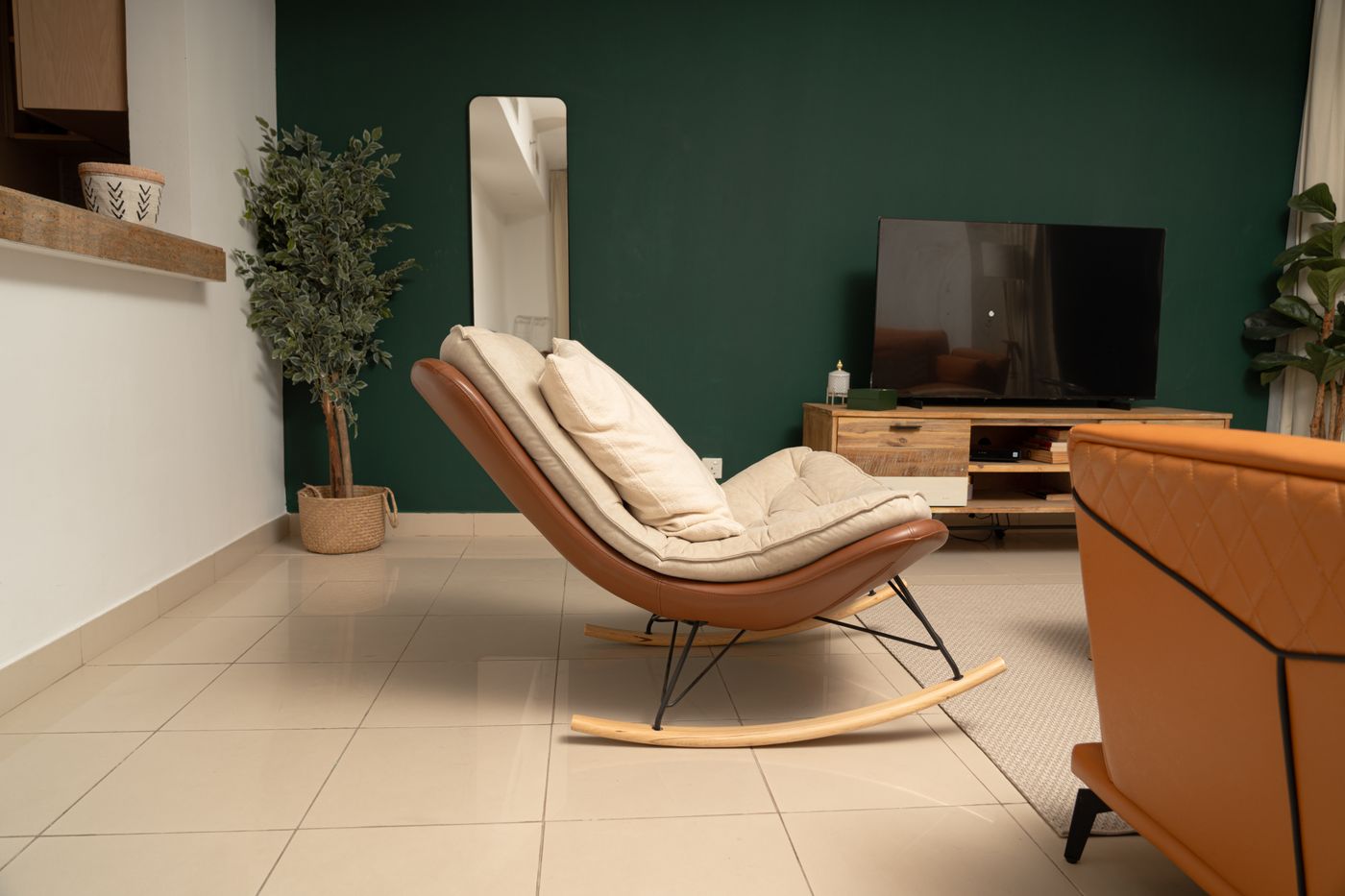
If a side table is needed, check its role from the seated position while respecting the chair’s movement requirements. It should not become an object someone must drag closer during rocking. Try an existing suitable surface before buying a matching table.
Evaluate rugs and floor support together
Follow the chair maker’s requirements for a suitable floor and check the flooring manufacturer’s care guidance where relevant. Do not assume every rug or mat creates an appropriate rocking surface. Thickness, edges, support, and movement can affect the actual arrangement.
If a rug is present, assess the whole runner position in normal use. An arrangement that repeatedly crosses a raised edge needs reconsideration. Do not add an unverified adhesive or modify the runners as a quick placement fix.
The reading-chair rug-fit guide addresses a related stationary seating decision. A rocking chair introduces movement, so check that additional requirement rather than copying the same rug boundary automatically.
Keep a proposed rug trial honest. A taped paper outline can help visualize space but cannot reproduce how an actual chair moves on a particular floor covering. Use it as a preliminary layout aid, not evidence that the final setup has been tested.
Add reading items after the movement works
Only consider a lamp, book storage, or cushion once the chair’s basic placement is workable. An attractive accessory can make an unsuitable corner look finished without resolving its use. Keep the first arrangement simple enough to understand what still needs changing.
For a floor lamp, check its complete base, controls, and cable route independently of the chair. The floor-lamp and reading-chair guide can help with those interactions. A cable should not become hidden under a moving runner merely because the lamp looks well positioned from the doorway.
Choose any added textile according to the chair’s instructions and actual household use. Do not assume a cushion improves every seat or that a long throw belongs over every rocker. Keep movement and access visible in the final arrangement.
Recheck during ordinary room activity
After the preliminary assessment, notice the arrangement during normal use. Can people still open the cupboard, walk past, and sit in neighboring seats? Does the chair’s position remain appropriate when the curtains are in their usual place?
If the chair works only while another useful object is removed, include that tradeoff in the decision. It may still be acceptable, but it should be deliberate. A small room cannot gain capacity merely by describing a frequently moved chair as permanent.
The best location lets the chair perform its intended job while preserving the room’s other important functions. Leave that balance in place, even if it produces a simpler corner than the one in the inspiration photograph.
Explore related decisions in our Small-Space Living hub.
Sources and editorial scope
Editorial research checked October 28, 2026. Published trend reports are context for these editorial applications, not verified live keyword rankings. Practical household guidance; photographs do not document a tested household or authenticate pictured materials.