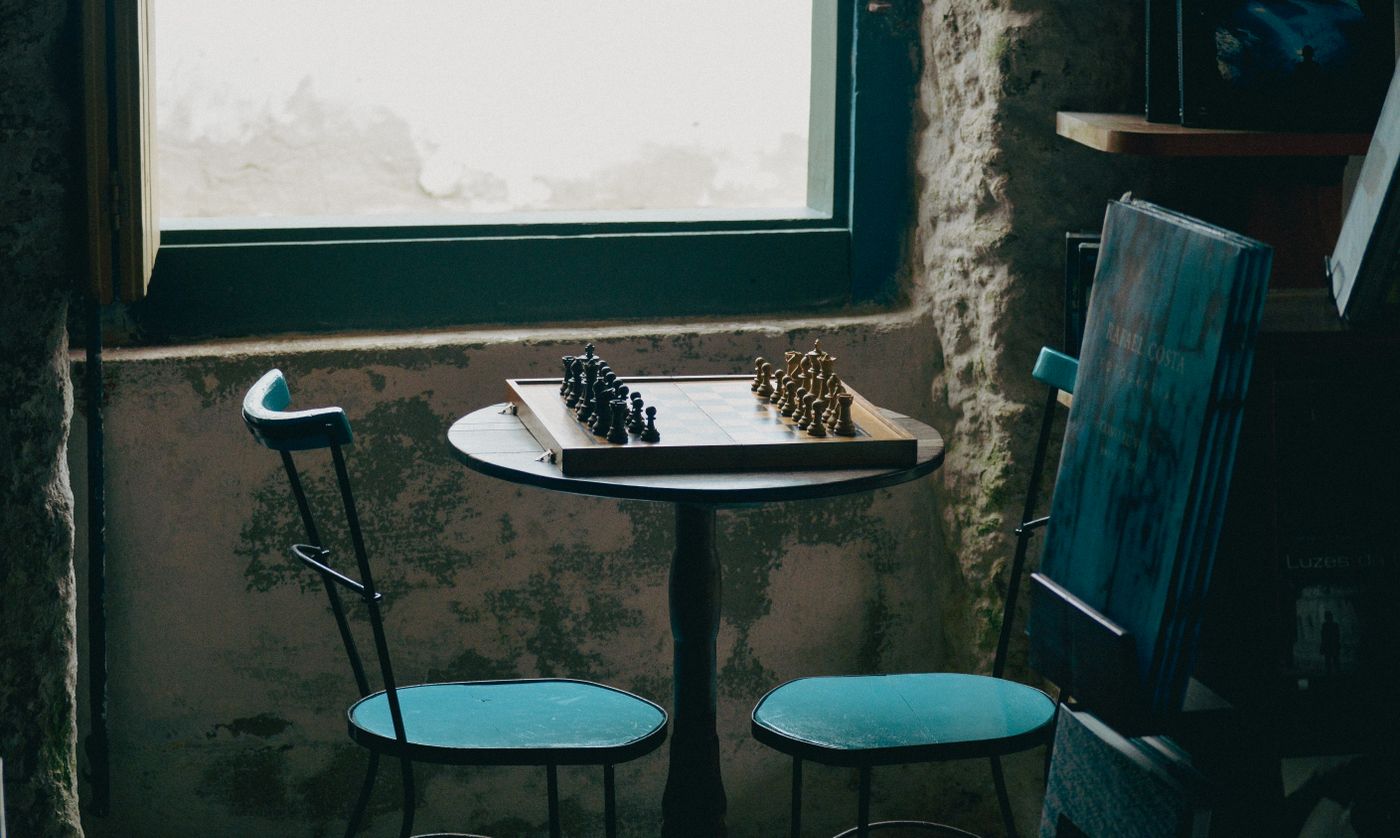
A small chess table works only when the players fit around it as comfortably as the board fits on top. The board’s advertised square size does not account for its border, the players’ knees, the captured pieces, or the chair someone must pull out to leave. Start with a real game arrangement before choosing a dedicated table.
The Houzz fall 2026 report gives context for interiors shaped around personal routines. Pinterest’s published hobbies report also offers broader context for hands-on activities. Neither source establishes a current increase in chess-table demand. This is a practical layout application for a game your household already wants to play.
Measure the board you will actually open
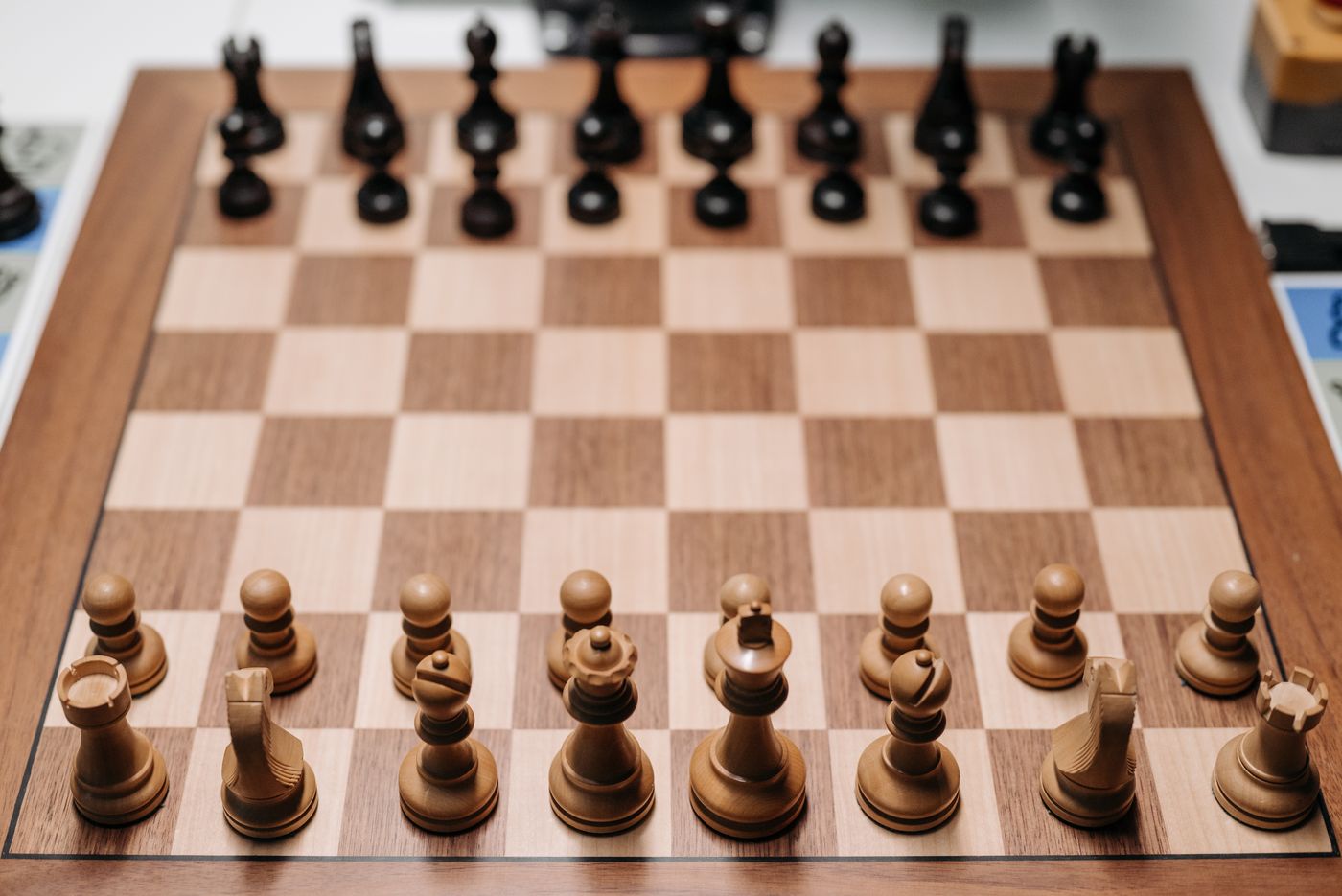
Use the board in its playing configuration. A folding set’s closed case measurements do not describe its open footprint, and a board with a wide border occupies more space than its grid alone. Place the actual pieces on it and look at their height and visual clarity from the intended seats. Do not choose a table from the box dimensions alone.
If you are still choosing a set, verify the maker’s complete open dimensions rather than estimating from a lifestyle photo. Decide whether the set will remain assembled between sessions or return to storage afterward. These are different household arrangements. A permanent display may justify a dedicated position, while an occasional game can often use an existing table that is already comfortable.
Try the occupied chairs, not empty outlines
Sit in the proposed chairs with the board between you. Check knees, feet, table supports, seat height, and whether either player must lean around an obstruction. A pedestal or crossbar may occupy the exact place someone expects to put a foot. Move through a few ordinary reaches without knocking the table or pulling the board toward one side.
Keep the seating suitable for the actual players. A low decorative table and a deep sofa may look inviting but leave a player bent forward for the entire game. If one person needs a different seat or more support, test that combination directly. The two-conversation-seat layout guide provides a related way to assess occupied seating before shopping for more furniture.
Reserve a place for captured pieces
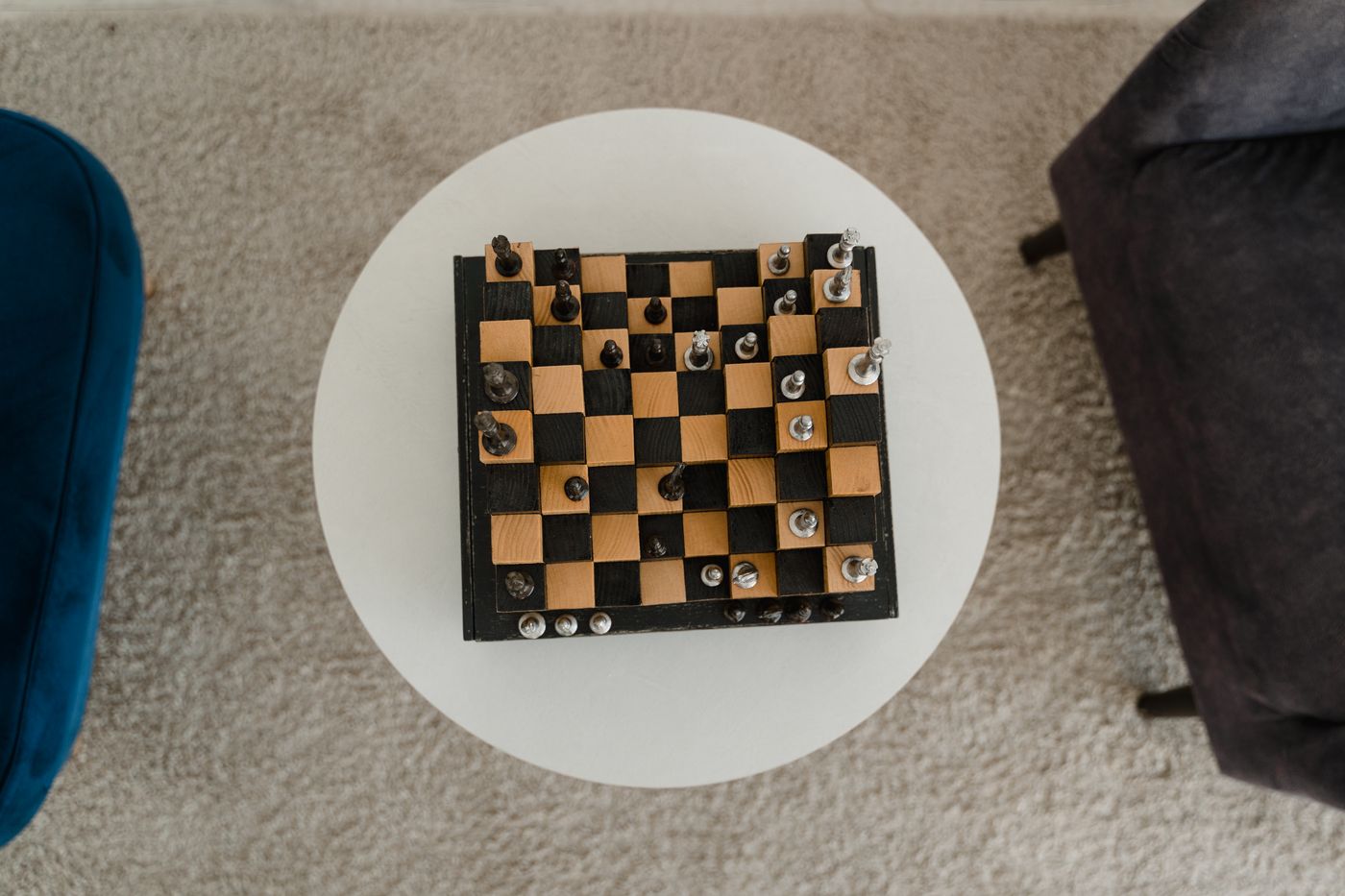
Captured pieces should have a defined location that does not cover the board’s active squares or fall into the route past the table. Use the set’s existing suitable container or a stable area of the table if that serves the game. Keep each player’s captured group clear enough that nobody mistakes an off-board piece for one still in play.
Check the whole sequence, including the point when many pieces are off the board. A tiny spare corner that works after the first exchange may not work later. Avoid adding a narrow raised tray that makes pieces easier to knock over. If the table cannot accommodate the board and the ordinary progression of a game, it may be the wrong surface even though the board technically fits.
Add optional equipment only when the game needs it
A chess clock, score sheet, reference book, or tablet increases the required space. Include those items in the trial only if the household actually uses them. A casual untimed game does not need a clock because a styled photograph shows one. Conversely, a player who genuinely records moves needs a writing position that does not push the board toward the table’s edge.
Keep drinks and food in an appropriate separate position when the board, table finish, or household routine calls for it. Do not balance a cup beside a dense cluster of captured pieces simply because another surface would be less symmetrical. The layout should support attention to the game without asking someone to guard an unstable drink throughout it.
Check the room while both players are seated
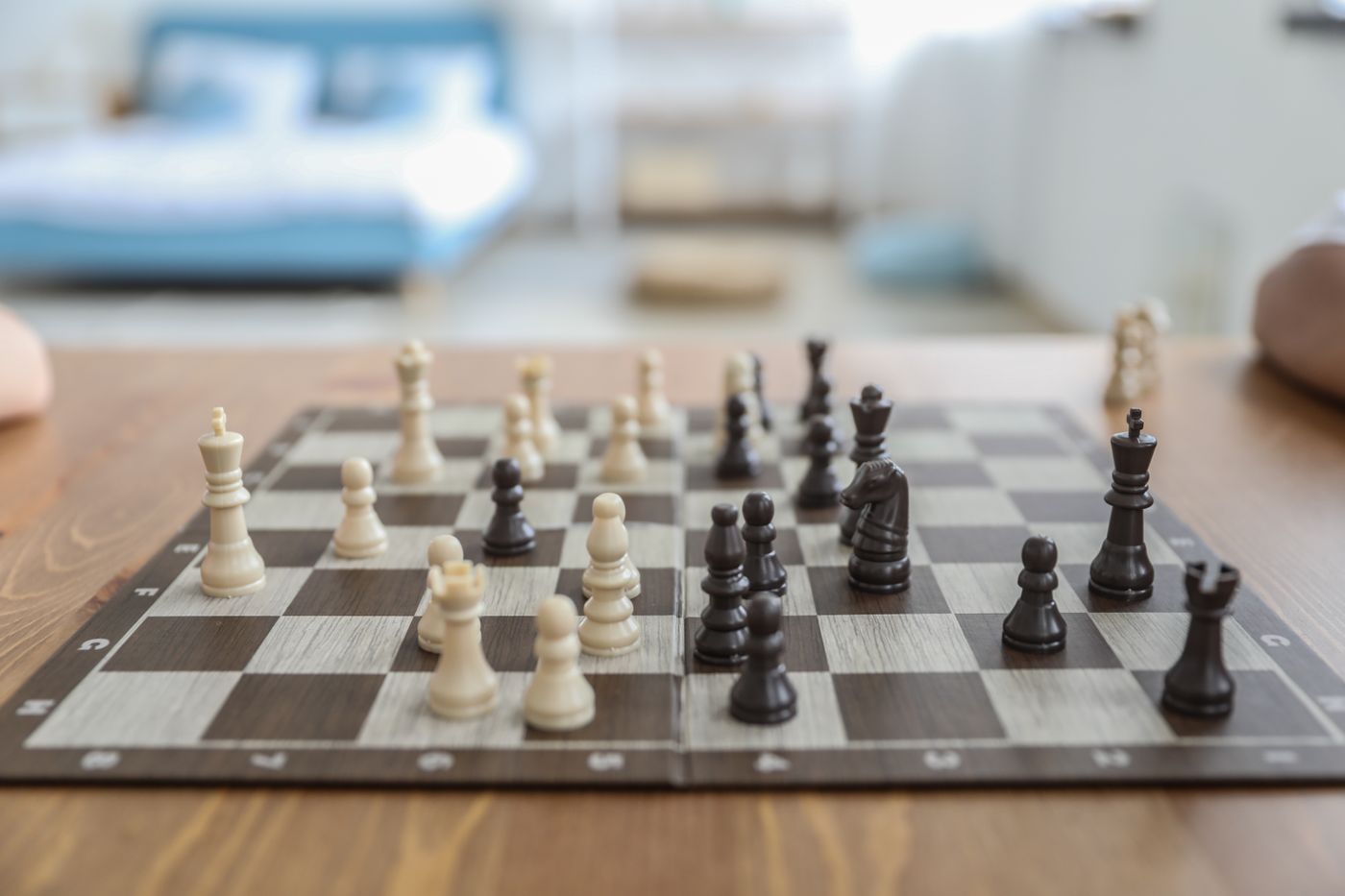
Have another household member try the normal route past the occupied table, or leave the seats in their real positions and inspect the route yourself. Test doors and drawers that must remain accessible. A gap that exists when both chairs are tucked in can disappear during play. Do not reserve the only practical exit from a shared room for a hobby table.
The folding-screen planning guide makes a similar distinction between fitting an object and preserving the room’s use. Here, the test is the complete game arrangement. If someone must move the table every time another person crosses the room, choose a different position or make chess a temporary table activity rather than a permanent installation.
Decide what a paused game means
Before leaving a game set up, agree whether the room can keep that arrangement until the next session. Consider children, pets, cleaners, visitors, and anyone who needs the same table. A visible board is not protected storage. Do not promise that a memory aid or photograph will restore every detail unless the players have agreed how they will record and reconstruct the position.
If the household is comfortable recording a paused position, include whose turn it is and any other game information the players need. Let the players verify that record before moving pieces. If recording feels like more work than the game warrants, choose a session length and stopping agreement that allow the table to clear naturally. Storage should match the household’s level of commitment.
Keep pack-away storage complete
At the end, return the full piece set using the maker’s storage arrangement where available. Check the board and the surrounding floor before closing the container. Keep the set’s identity and any included instructions with it. A missing-piece problem is easier to resolve before the table is cleared and household activity resumes around it.
Use storage that suits the board’s construction. Follow the maker’s directions for folding, rolling, handling, and cleaning rather than forcing an unfamiliar board into a narrow shelf. A set that packs neatly but is awkward to retrieve may discourage the next game. The best storage position is one the intended players can use appropriately without displacing unrelated fragile objects.
Choose a table only after the trial reveals a need
If an existing surface passes the board, seating, captured-piece, and route tests, use it for several sessions. Note the actual annoyance, if any: a table that wobbles, insufficient leg space, difficult storage access, or interference with meals. Those observations create a useful buying brief. A generic wish for a chess corner does not yet tell you which table would improve the experience.

For a replacement, verify the complete table dimensions and construction information, then check its delivery route through the home. If it needs assembly, allow the temporary work area needed to put furniture together. Neither of those stages is solved by measuring the finished tabletop. Keep the current usable arrangement until the proposed replacement has a clear practical advantage.
Keep the game easy to start again
Store optional equipment with a clear purpose and remove anything that has become decorative clutter around the board. If the table has gradually gathered mail or unrelated projects, reset its shared-use agreement rather than buying another small side table to compensate. A chess setup should not quietly take away the room’s only convenient place to do another necessary task.
The arrangement succeeds when two people can sit comfortably, see the board, handle the pieces, and finish or pause without disrupting the rest of the room. That may be a dedicated table, but it may also be a familiar dining surface cleared for an evening. Let the repeated game experience determine the furniture decision.
Explore related decisions in our Small-Space Living hub.
Sources and editorial scope
Editorial research checked October 23, 2026. Published trend reports are context for these editorial applications, not verified live keyword rankings. Practical household guidance; photographs do not document a tested household or authenticate pictured materials.